
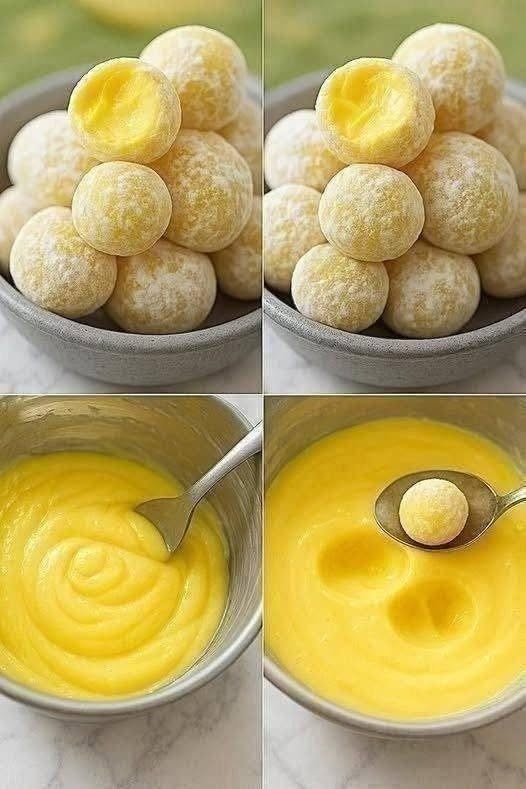
Lemon Custard Cream Balls
These irresistible lemon custard cream balls are the kind of dessert that disappear almost as soon as you put them on the table! Soft, delicate little lemon-flavoured balls are coated in a light dusting of powdered sugar and served with a silky, creamy lemon custard for dipping.
They have a wonderful combination of textures: slightly crisp and powdery on the outside, soft and tender inside, with a bright citrus flavour throughout. The creamy lemon custard adds an extra layer of richness and makes every bite feel like a little piece of sunshine.
If your hubby is already asking when you’re making them again, you’re definitely going to want to save this recipe! 😄🍋
Ingredients
For the Lemon Balls
- 1 cup all-purpose flour
- ¼ cup cornflour
- ⅓ cup powdered sugar
- ¼ cup finely ground almond flour
- ½ cup unsalted butter, softened
- 1 tablespoon fresh lemon zest
- 2 tablespoons fresh lemon juice
- 1 teaspoon vanilla extract
- ¼ teaspoon salt
- ½ cup powdered sugar, for coating
For the Creamy Lemon Custard
- 2 large egg yolks
- ¼ cup granulated sugar
- 1 tablespoon cornflour
- ¾ cup whole milk
- ½ cup heavy cream
- 2 tablespoons fresh lemon juice
- 1 tablespoon finely grated lemon zest
- 1 teaspoon vanilla extract
- 1 tablespoon unsalted butter
- Pinch of salt
Servings
Makes approximately 20–24 lemon balls
Serves 6–8, depending on portion size.
Preparation Time
Prep: 25 minutes
Chill: 30 minutes
Bake: 12–15 minutes
Custard: 10 minutes
Total: Approximately 1 hour 20 minutes
Instructions
Step 1: Prepare the Lemon Ball Dough
Preheat your oven to 350°F (175°C).
Line a baking sheet with parchment paper.
In a medium bowl, whisk together the flour, cornflour, almond flour, powdered sugar, and salt.
In a separate large bowl, beat the softened butter until smooth and creamy.
Add the lemon zest, lemon juice, and vanilla extract. Mix until well combined.
Gradually add the dry ingredients to the butter mixture.
Mix gently until a soft dough forms.
The dough should be soft but firm enough to shape. Avoid overmixing because this can make the finished balls less tender.
Step 2: Chill the Dough
Cover the bowl and refrigerate the dough for approximately 30 minutes.
Chilling makes the dough easier to handle and helps the balls maintain their shape during baking.
If your kitchen is particularly warm, you can chill the dough for an additional 10–15 minutes.
Step 3: Shape the Balls
Scoop out approximately 1 tablespoon of dough at a time.
Roll each portion gently between your palms to form a smooth ball.
Place the balls on the prepared baking sheet, leaving about 1 inch between each one.
Try to keep them similar in size so they bake evenly.
Step 4: Bake
Bake the lemon balls for approximately 12–15 minutes.
They should look set but remain relatively pale. The bottoms should be lightly golden.
Don’t overbake them. The goal is a delicate, tender texture rather than a hard cookie.
Remove from the oven and allow them to cool on the baking sheet for approximately 5 minutes.
Step 5: Coat With Powdered Sugar
Place about ½ cup powdered sugar in a shallow bowl.
While the lemon balls are still slightly warm, gently roll each one in the powdered sugar.
Transfer them to a wire rack and allow them to cool completely.
For the beautiful snowy appearance shown in the photo, roll them in powdered sugar a second time after they have completely cooled.
This second coating gives them a much more pronounced white, powdery finish.
How to Make the Lemon Custard
Step 6: Whisk the Egg Yolks
In a medium saucepan, whisk together the egg yolks, granulated sugar, and cornflour until smooth.
There should be no visible lumps of cornflour.
Step 7: Add the Milk and Cream
Slowly whisk in the whole milk and heavy cream.
Add the lemon zest and salt.
Place the saucepan over medium-low heat.
Step 8: Cook the Custard
Cook the mixture while whisking constantly.
After several minutes, the custard will gradually begin to thicken.
Continue cooking until it becomes smooth and creamy and coats the back of a spoon.
Do not allow it to boil vigorously, as this can cause the egg yolks to scramble.
Step 9: Add Lemon and Butter
Remove the saucepan from the heat.
Stir in the fresh lemon juice, vanilla extract, and butter.
Whisk until the butter has completely melted and the custard is silky smooth.
Taste the custard.
If you prefer a stronger lemon flavour, add another teaspoon of fresh lemon juice or a little extra zest.
Step 10: Cool the Custard
Transfer the custard to a bowl.
Place plastic wrap directly against the surface of the custard to prevent a skin from forming.
Allow it to cool slightly.
You can serve it warm, at room temperature, or chilled depending on your preference.
For a thicker dipping consistency, refrigerate it for approximately 30–60 minutes.
How to Serve
Arrange the powdered lemon balls in a serving bowl or on a platter.
Place the creamy lemon custard in a small bowl in the centre, or serve individual portions of custard alongside the lemon balls.
For a presentation similar to the photo, place several lemon balls in a shallow bowl and serve the custard underneath or alongside them.
You can also place one lemon ball on a spoon over the custard for a beautiful dessert presentation.
Finish with a little fresh lemon zest.
Recipe Notes
Use fresh lemon.
Freshly squeezed lemon juice gives this dessert a much brighter flavour than bottled lemon juice.
Fresh lemon zest is equally important because much of the lemon aroma comes from the natural oils in the zest.
Don’t overbake.
The lemon balls should remain light in colour.
If they become dark golden all over, they have probably baked too long.
Chill before shaping.
If the dough feels sticky, don’t add a large amount of extra flour. Instead, refrigerate it for another 10–15 minutes.
Double coating
For the prettiest powdered appearance, coat the balls twice.
The first coating can partially disappear as the cookies cool. A second coating gives them the snowy look seen in the photograph.
Custard consistency
The lemon custard should be thick enough to coat a spoon but still soft enough for dipping.
If it becomes too thick after refrigeration, whisk in 1–2 teaspoons of milk until you reach your preferred consistency.
Helpful Tips
Use room-temperature butter: soft butter incorporates much more easily.
Don’t pack the flour: Too much flour can make the lemon balls dry. Spoon flour into the measuring cup and level it, or weigh it for accuracy.
Use finely grated zest: a microplane produces fine zest that blends beautifully into the dough and custard.
Keep the custard moving: Constant whisking helps prevent lumps and keeps the egg yolks from scrambling.
Strain the custard if needed: If you notice tiny lumps, pour the finished custard through a fine-mesh strainer.
Cool completely before storing: Warm cookies can create condensation inside a container and affect their texture.
Make the custard ahead: The custard can be prepared a day ahead and stored covered in the refrigerator.
Easy Variations
Coconut Lemon Balls
Replace the almond flour with finely shredded unsweetened coconut for a tropical variation.
White Chocolate Lemon Balls
Dip the cooled lemon balls halfway into melted white chocolate and sprinkle with finely chopped pistachios.
Lemon Pistachio Version
Add ¼ cup finely chopped pistachios to the dough and garnish the finished dessert with additional pistachios.
Orange Custard Balls
Replace the lemon zest and juice with orange zest and juice for a sweeter citrus version.
Raspberry Lemon
Serve the lemon balls with a spoonful of raspberry sauce alongside the lemon custard.
The tart berries pair beautifully with the bright lemon flavour.
Storage
Store the baked lemon balls in an airtight container at room temperature for approximately 3–4 days.
For the best texture, keep the lemon custard refrigerated.
The custard can generally be stored in an airtight container in the refrigerator for up to 3 days.
Keep the lemon balls and custard separate until serving.
Make-Ahead Instructions
These are excellent for preparing ahead of time.
The lemon ball dough can be prepared up to 2 days in advance and refrigerated.
The baked balls can also be prepared a day before serving.
The lemon custard can be made ahead and refrigerated.
When you’re ready to serve, allow the custard to sit at room temperature for a few minutes and whisk it until smooth.
Dust the lemon balls with a fresh layer of powdered sugar just before serving.
Approximate Nutritional Information
Nutrition will vary according to the exact ingredients and portion sizes.
Approximate nutrition per serving, assuming 8 servings:
- Calories: 330–370
- Protein: 5–6 g
- Carbohydrates: 38–43 g
- Fat: 19–21 g
- Saturated Fat: 10–12 g
- Fibre: 1–2 g
- Sugar: 20–24 g
- Sodium: Approximately 100–140 mg
These values include both the lemon balls and a portion of the lemon custard.
Benefits
Lemon Provides Vitamin C
Fresh lemons provide vitamin C and add a bright, natural citrus flavour to the recipe.
Almond Flour Adds Nutrients
The small amount of almond flour contributes healthy fats, protein, and some fibre while adding a subtle nutty flavour.
Portion-Friendly Dessert
The individual size of these lemon balls makes portioning easy. Instead of cutting slices of a large cake or pie, you can simply serve a few individual pieces.
Homemade Treat
Making the dessert at home allows you to control the sweetness and choose fresh ingredients.
Fresh Citrus Flavour
The combination of lemon juice and zest creates a naturally bright flavour that can make the dessert taste lighter and fresher.
Frequently Asked Questions
Can I make these without almond flour?
Yes. You can replace the almond flour with an additional ¼ cup all-purpose flour.
The texture will be slightly different, but the recipe will still work.
Can I use bottled lemon juice?
Fresh lemon juice is recommended because it provides a brighter flavour. Bottled lemon juice can work in a pinch.
Why are my lemon balls spreading?
The dough may have been too warm. Chill it thoroughly before shaping and baking.
Also make sure your butter isn’t melted when preparing the dough.
Why did my lemon balls become hard?
They may have been overbaked, or too much flour may have been added.
Bake only until the balls are set and lightly golden on the bottom.
Can I make the custard without heavy cream?
Yes. You can replace the heavy cream with additional whole milk, although the custard will be somewhat lighter.
How do I thicken the custard?
Cook it slightly longer over medium-low heat while whisking continuously. The cornflour will help it thicken.
Avoid adding large amounts of cornflour directly to hot custard because it can create lumps.
Can I make these gluten-free?
Yes. Use a good-quality gluten-free all-purpose flour blend in place of regular flour.
Make sure the other packaged ingredients are also certified gluten-free if necessary.
Can I freeze the lemon balls?
Yes. The baked lemon balls can be frozen in an airtight freezer-safe container for up to approximately 2 months.
Thaw at room temperature and add a fresh dusting of powdered sugar before serving.
The custard is best made fresh rather than frozen because freezing can affect its smooth texture.
Can I make them more lemony?
Absolutely. Add another teaspoon of lemon zest to the dough and increase the lemon juice in the custard slightly.
Can I use lime instead?
Yes! Lime juice and zest create a delicious variation with a slightly sharper citrus flavour.
Final Thoughts
These Lemon Custard Cream Balls are an absolutely delightful dessert for anyone who loves bright citrus flavours and creamy treats. The tender powdered lemon balls are delicious on their own, but dipping them into the silky lemon custard takes them to another level.