
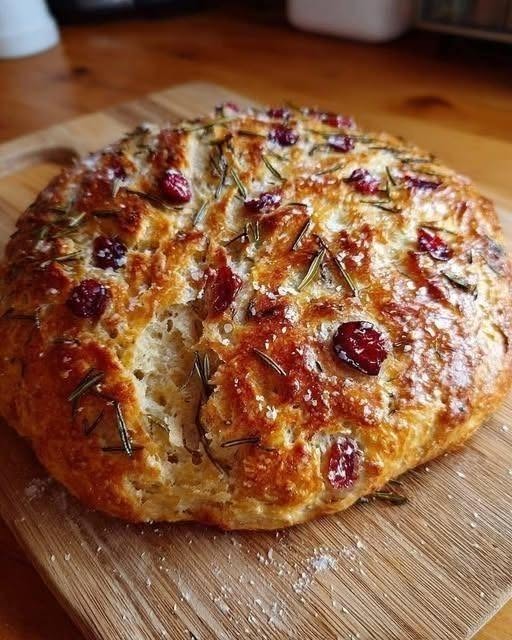
No-Knead Rosemary Cranberry Bread with Olive Oil & Sea Salt
Description
This no-knead rosemary cranberry bread is rustic, fragrant, slightly sweet, and wonderfully savory. It combines a crisp golden crust with a soft, airy interior filled with tart dried cranberries and aromatic rosemary.
The beauty of this recipe is that there is absolutely no kneading required. Instead, a long resting period allows the flour, yeast, and water to develop flavor and structure naturally. Once the dough has risen, it is simply shaped and baked until beautifully golden.
Fresh rosemary adds an earthy, savory aroma, while dried cranberries provide little bursts of sweetness throughout the bread. A drizzle of extra-virgin olive oil and a sprinkle of flaky sea salt before serving make the finished loaf especially delicious.
This bread is perfect alongside soups, salads, roasted vegetables, grilled chicken, or a Mediterranean-inspired dinner. It is also wonderful toasted for breakfast or served as part of a simple appetizer board.
Recipe Information
Recipe Name: No-Knead Rosemary Cranberry Bread with Olive Oil & Sea Salt
Category: Bread / Side Dish / Baking
Cuisine: Rustic European-inspired
Prep Time: 15 minutes
Resting Time: 12–18 hours
Second Rise: 30–45 minutes
Bake Time: 40–50 minutes
Total Time: Approximately 13–20 hours, mostly unattended
Servings: 10–12 slices
Difficulty: Easy
Ingredients
For the Bread
- 3 cups (360 g) all-purpose flour
- 1 1/4 teaspoons (7 g) salt
- 1/2 teaspoon instant yeast
- 1 1/2 cups (360 ml) lukewarm water
- 1/2 cup dried cranberries
- 1 1/2 tablespoons fresh rosemary, finely chopped
- 1 tablespoon olive oil
For Finishing
- 1–2 tablespoons extra-virgin olive oil
- Flaky sea salt, for sprinkling
- 1 teaspoon chopped fresh rosemary, optional
Ingredient Notes
All-Purpose Flour
All-purpose flour works beautifully for this no-knead bread and produces a tender, chewy interior.
For the most accurate results, measure the flour by weight when possible. Too much flour can make the dough dry and difficult to work with.
Dried Cranberries
Use sweetened dried cranberries for a pleasant sweet-tart flavor. If you prefer a less sweet loaf, unsweetened dried cranberries can be used.
If your cranberries are particularly dry, soak them in warm water for 5–10 minutes, then drain and pat them completely dry before adding them to the dough.
Rosemary
Fresh rosemary gives the bread the best aroma and flavor. Finely chop it before adding it to the dough so its flavor distributes evenly.
Dried rosemary can be used if fresh isn’t available, but use less because dried herbs are more concentrated.
Olive Oil
Extra-virgin olive oil adds richness and complements both the rosemary and cranberries.
A drizzle over the finished bread creates a beautiful glossy finish and adds Mediterranean-inspired flavor.
Instructions
Step 1: Combine the Dry Ingredients
In a large mixing bowl, whisk together the flour, salt, and instant yeast.
Add the chopped rosemary and dried cranberries.
Stir gently to distribute everything evenly throughout the flour.
Step 2: Add the Water and Olive Oil
Pour the lukewarm water into the flour mixture.
Add 1 tablespoon olive oil.
Using a wooden spoon, sturdy spatula, or your hands, mix until all the flour is incorporated.
The dough should look shaggy, sticky, and somewhat rough.
Do not knead it.
This is exactly how the dough should look at this stage.
If the dough seems extremely dry, add another tablespoon of water. If it seems unusually wet and soupy, sprinkle in a small amount of flour.
Step 3: Cover and Rest
Cover the bowl tightly with plastic wrap or a reusable lid.
Leave the dough at room temperature for approximately 12–18 hours.
During this long fermentation, the yeast slowly develops flavor and creates air pockets throughout the dough.
The dough is ready when it has noticeably expanded and the surface is covered with bubbles.
A longer fermentation generally produces deeper flavor, but avoid leaving the dough in a very warm environment for too long.
Step 4: Prepare the Work Surface
Lightly flour a clean work surface.
Remove the cover from the dough.
The dough will be sticky and soft, which is normal.
Using lightly floured hands or a dough scraper, gently transfer the dough onto the floured surface.
Try not to aggressively deflate it because the air bubbles help create the bread’s rustic texture.
Step 5: Shape the Dough
Gently fold the dough toward the center from each side.
Turn it over so the seam is underneath.
Shape it into a loose round loaf.
You don’t need to knead or work the dough extensively.
The goal is simply to create enough surface tension for the loaf to hold its shape.
Step 6: Second Rise
Place the shaped dough on a sheet of parchment paper or a lightly floured piece of parchment.
Cover loosely with a clean kitchen towel.
Allow it to rest for approximately 30–45 minutes.
Meanwhile, begin heating the oven.
Step 7: Preheat the Oven and Dutch Oven
Place a large Dutch oven with its lid inside the oven.
Preheat the oven to 450°F (230°C).
Allow the Dutch oven to heat for at least 30 minutes.
The preheated pot creates a hot environment that helps the bread develop a beautiful crust.
Step 8: Transfer the Dough
Carefully remove the extremely hot Dutch oven from the oven.
Using the parchment paper, gently lower the dough into the pot.
Be extremely careful because both the pot and lid will be very hot.
If desired, use a sharp knife or bread lame to make one or two shallow cuts across the top of the dough.
These cuts allow steam to escape and give the loaf an attractive rustic appearance.
Step 9: Bake Covered
Cover the Dutch oven with its lid.
Bake at 450°F (230°C) for approximately 25–30 minutes.
Keeping the pot covered traps steam, which helps the loaf rise and creates a crisp crust.
Step 10: Bake Uncovered
Carefully remove the lid.
Continue baking for another 15–20 minutes.
The bread should become deep golden brown.
If you prefer a darker crust, bake for a few additional minutes while watching carefully.
Step 11: Finish with Olive Oil and Sea Salt
Remove the bread from the Dutch oven.
Transfer it to a wire rack.
While the loaf is still warm, lightly brush or drizzle the top with extra-virgin olive oil.
Sprinkle with flaky sea salt and a little fresh rosemary.
The olive oil adds richness, while the sea salt provides a delicious contrast to the sweet cranberries.
Step 12: Cool Completely
Allow the bread to cool for at least 45–60 minutes before slicing.
Although it may be tempting to cut into it immediately, cooling allows the interior crumb to finish setting.
Use a serrated bread knife to slice it cleanly.
Notes
Don’t Knead the Dough
The long fermentation does the work for you. Mixing the dough thoroughly is enough.
The dough should remain soft and sticky.
Don’t Rush the First Rise
The long resting period is one of the most important parts of the recipe.
The dough needs enough time to develop structure and flavor.
Water Temperature Matters
Use lukewarm water rather than very hot water. Water that is too hot can damage the yeast.
Watch the Dough, Not Just the Clock
Room temperature affects fermentation. A cool kitchen may require more time, while a warm kitchen may require less.
The dough should become visibly puffy and bubbly.
Use a Dutch Oven.
A Dutch oven is ideal because its enclosed environment traps steam and produces a crisp artisan-style crust.
If you don’t have one, see the alternative baking method below.
Tips for the Best Bread
- Weigh the flour when possible for consistent results.
- Use lukewarm rather than hot water.
- Don’t add excessive flour to the sticky dough.
- Allow plenty of time for fermentation.
- Use fresh rosemary for the strongest flavor.
- Pat soaked cranberries completely dry before adding them.
- Preheat the Dutch oven thoroughly.
- Handle the dough gently to preserve the air bubbles.
- Don’t skip the cooling period.
- Use flaky sea salt rather than adding too much fine salt.
- Drizzle olive oil over the loaf just before serving.
- Store the finished bread properly to preserve its crust and texture.
Alternative Baking Method Without a Dutch Oven
If you don’t have a Dutch oven, you can still make this bread.
Place the shaped dough on parchment paper on a heavy baking sheet.
Preheat the oven to 450°F (230°C).
Place an empty metal baking pan on the bottom rack while the oven preheats.
Put the bread on the middle rack and carefully pour about 1 cup of hot water into the empty pan on the bottom rack.
Immediately close the oven door.
Bake for approximately 35–45 minutes, until the bread is deeply golden and sounds hollow when tapped.
The steam helps create a crisp crust, although the result may differ slightly from a Dutch oven loaf.
Recipe Variations
Orange Rosemary Cranberry Bread
Add 1 teaspoon finely grated orange zest to the dough.
Orange and cranberry create a beautiful sweet-tart combination that works especially well during the holiday season.
Cranberry Walnut Bread
Add 1/2 cup chopped walnuts along with the cranberries.
The walnuts provide a delicious crunchy texture.
Garlic Rosemary Bread
Add 1 teaspoon garlic powder to the dough and increase the fresh rosemary slightly.
This version is especially good with soups and roasted vegetables.
Parmesan Rosemary Cranberry Bread
Add 1/3 cup finely grated Parmesan cheese to the dough.
The salty cheese complements the sweet cranberries beautifully.
Honey Rosemary Bread
Add 1 tablespoon honey to the water before mixing.
This creates a slightly sweeter loaf with a beautifully balanced flavor.
Whole Wheat Version
Replace up to 1 cup of the all-purpose flour with whole-wheat flour.
You may need a little additional water because whole-wheat flour absorbs more liquid.
Serving Suggestions
With Soup
Serve thick slices alongside tomato soup, vegetable soup, lentil soup, or creamy mushroom soup.
The crusty bread is perfect for dipping.
With Salads
Pair with Greek salad, Mediterranean chopped salad, roasted vegetable salad, or a simple green salad.
With Cheese
Arrange slices on a cheese board with soft cheese, nuts, olives, and fresh fruit.
Toasted for Breakfast
Toast a slice and drizzle it with olive oil.
For a sweeter option, top with ricotta and fresh fruit.
With Eggs
Serve toasted slices alongside scrambled eggs, poached eggs, or an omelet.
With Roasted Vegetables
The rosemary and olive oil flavors pair especially well with roasted carrots, squash, Brussels sprouts, and potatoes.
As an Appetizer
Cut the bread into small slices and serve with olive oil, sea salt, and a selection of dips.
Storage Instructions
Allow the bread to cool completely before storing.
Store at room temperature in a paper bag or bread box for up to 2–3 days.
Avoid storing crusty bread in a sealed plastic bag at room temperature because the crust can become soft.
For longer storage, slice the bread and freeze it in an airtight freezer-safe bag.
Frozen slices can be toasted directly from frozen.
How to Refresh the Bread
If the crust becomes soft, place the loaf in a 350°F (175°C) oven for approximately 8–10 minutes.
This can help restore some of its crisp exterior.
Nutritional Information
Approximate values per slice, assuming 12 slices.
| Nutrient | Amount |
|---|---|
| Calories | 175 kcal |
| Protein | 5 g |
| Total Fat | 4 g |
| Saturated Fat | 0.6 g |
| Carbohydrates | 30 g |
| Fiber | 2 g |
| Natural and Added Sugars | 5 g |
| Sodium | 290 mg |
| Calcium | 15 mg |
| Iron | 2 mg |
Nutrition is an estimate and will vary depending on the exact ingredients, cranberry brand, olive oil, and slice size.
Benefits
1. Provides Carbohydrates for Energy
Flour provides carbohydrates, which are an important source of energy for the body.
2. Contains Dietary Fiber
The flour and dried cranberries contribute some dietary fiber, supporting normal digestion.
3. Provides Healthy Fats from Olive Oil
Extra-virgin olive oil contributes primarily monounsaturated fat and is a flavorful alternative to some heavier spreads.
4. Contains Plant Compounds
Rosemary contains naturally occurring plant compounds that contribute to its aroma and flavor.
5. Provides Some Iron
Flour contributes iron, an essential mineral involved in normal oxygen transport in the body.
6. Can Complement a Balanced Meal
Served with vegetables, beans, soup, eggs, or lean protein, this bread can be part of a balanced meal.
7. Homemade and Customizable
Making bread at home allows you to control the amount of salt, cranberries, herbs, and olive oil.
Healthy eating note: Bread is primarily a carbohydrate food, while dried cranberries can contain added sugar. Enjoy appropriate portions as part of a varied diet.
Frequently Asked Questions
Can I make this bread without kneading?
Yes! That is the main advantage of this recipe. The long fermentation develops the dough’s structure without traditional kneading.
Can I use active dry yeast?
Yes. Active dry yeast can generally be used, although it may be helpful to dissolve it in the lukewarm water first and allow it to sit briefly before mixing.
Can I use instant yeast?
Yes. Instant yeast can be mixed directly with the flour.
Why is my dough so sticky?
No-knead bread dough is naturally sticky and wet. Avoid adding too much flour because this can make the finished loaf dense.
Can I use dried rosemary?
Yes. Use approximately 1–2 teaspoons dried rosemary instead of fresh rosemary, adjusting according to taste.
Can I use fresh cranberries?
Fresh cranberries are much more tart and contain more moisture than dried cranberries. Dried cranberries are recommended for this particular recipe.
Can I add nuts?
Absolutely. Walnuts and pecans are especially delicious with rosemary and cranberries.
Why didn’t my bread rise?
Possible reasons include inactive yeast, water that was too hot or too cold, insufficient fermentation time, or a very cool room.
How do I know when the dough has finished its first rise?
It should look noticeably expanded, bubbly, and airy. The exact time depends on your kitchen temperature.
Why do I need to preheat the Dutch oven?
A hot Dutch oven provides strong initial heat and traps steam around the dough, helping create a tall loaf with a crisp crust.
Can I make this recipe gluten-free?
This exact recipe uses wheat flour and is not gluten-free. A gluten-free version would require a suitable gluten-free bread flour blend and a modified recipe because gluten-free dough behaves differently.
Can I reduce the cranberries?
Yes. Reduce them to 1/4 cup if you prefer a more savory bread.
Can I make the bread sweeter?
You can add a tablespoon of honey or maple syrup to the dough, although this changes the recipe’s sugar content.
Can I make it more savory?
Reduce the cranberries and add extra rosemary, garlic, Parmesan, olives, or black pepper.
How should I slice the bread?
Use a serrated bread knife and wait until the loaf has cooled for at least 45–60 minutes.
Can I freeze the bread?
Yes. Slice it before freezing so you can remove individual pieces as needed.
How do I keep the crust crispy?
Store the cooled loaf in a paper bag or bread box rather than an airtight plastic container at room temperature.
Final Thoughts
This No-Knead Rosemary Cranberry Bread is a beautiful combination of rustic simplicity and incredible flavor. You get a crisp, golden crust, a soft and airy center, sweet-tart cranberries, fragrant rosemary, and the richness of extra-virgin olive oil.
Because there is no kneading involved, most of the work is simply waiting while the dough develops its flavor. Once baked, the result is an impressive homemade artisan loaf that looks and tastes far more complicated than it actually is.
Serve it warm with olive oil and flaky sea salt, pair it with your favorite soup or salad, or toast it for breakfast.