
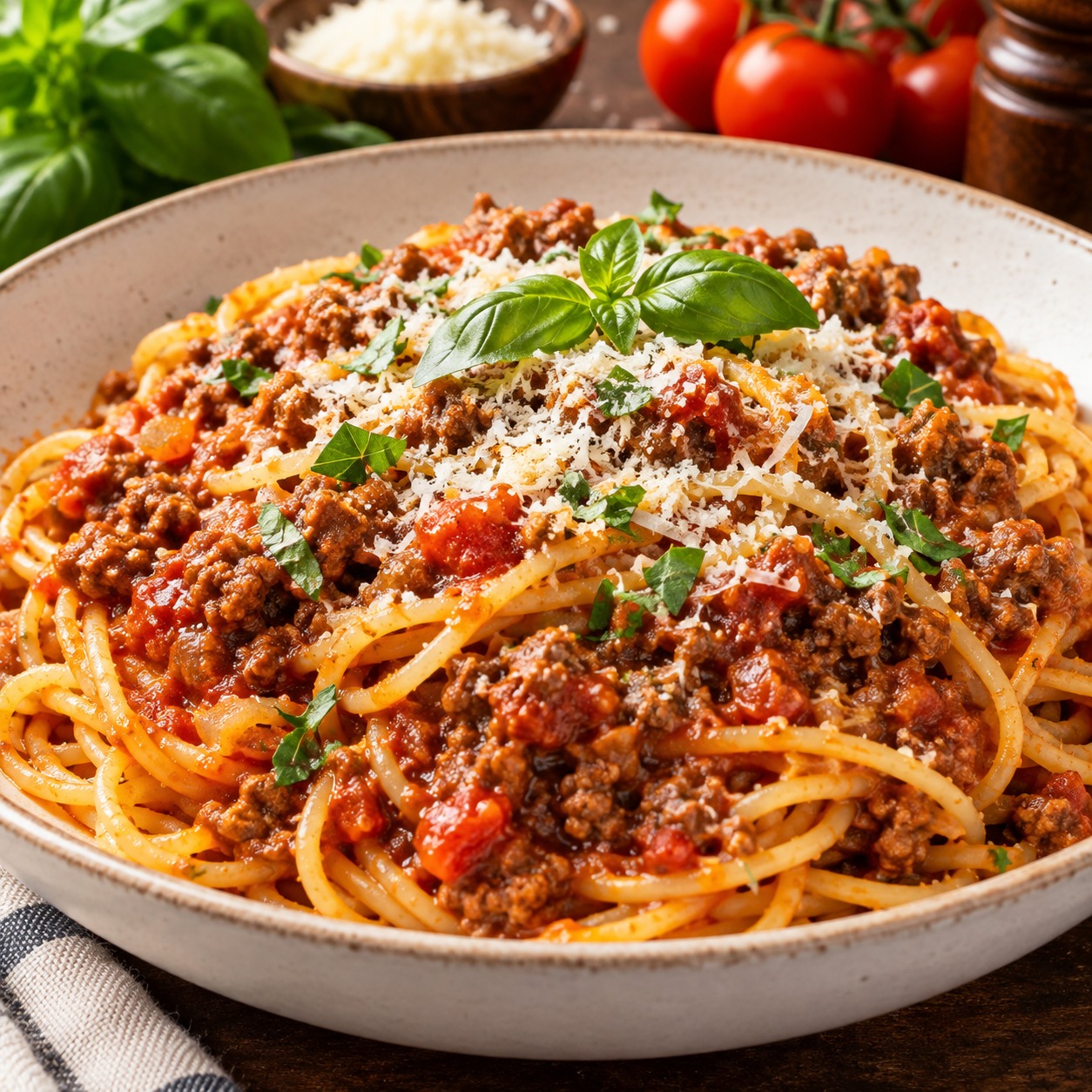
Classic Spaghetti Bolognese
Classic Spaghetti Bolognese is a comforting Italian-inspired pasta dish made with rich ground beef, pancetta, aromatic vegetables, tomatoes, red wine, and a splash of milk. The sauce is slowly simmered until the flavors become deep, savory, and wonderfully balanced.
Served over tender spaghetti with freshly grated Parmesan and fragrant basil, this homemade Bolognese makes a satisfying family dinner that feels both hearty and special.
Prep Time: 20 minutes
Cook Time: 1 hour 15 minutes
Total Time: 1 hour 35 minutes
Servings: 6
Ingredients
The Flavour Base (Soffritto)
Olive oil: 1–2 tablespoons, for sautéing
Onion: 1 medium, finely diced
Carrots: 2 medium, finely diced
Celery: 2 stalks, finely diced
Garlic: 3–4 cloves, minced
The Meats
Ground beef: 1 pound, lean or ground chuck
Pancetta or bacon: 4 ounces, finely diced
Liquids & Tomatoes
Dry red wine: 1 cup, such as Chianti or Merlot
Tomato paste: 2 tablespoons
Crushed tomatoes: 1 can, 28 ounces
Beef or chicken broth: 1 cup
Whole milk: ½ cup
Herbs & Seasonings
Bay leaves: 2 dried leaves
Dried oregano: 1 teaspoon
Salt and black pepper: To taste
Pasta & Serving
Spaghetti: 1 pound dried pasta
Parmesan cheese: Freshly grated, for serving
Fresh basil: A few torn leaves, for garnish
Instructions
Prepare the Soffritto
Heat the olive oil in a large heavy-bottomed pot or Dutch oven over medium heat. Add the finely diced onion, carrots, and celery. Cook for about 8–10 minutes, stirring occasionally, until the vegetables become soft and fragrant.
Add the minced garlic and cook for another 30–60 seconds. Keep the heat moderate so the garlic does not burn.
Brown the Meat
Add the diced pancetta or bacon and cook for 3–4 minutes until it begins to render its fat and lightly brown.
Add the ground beef and break it apart with a wooden spoon. Cook until the meat is thoroughly browned and most of the excess moisture has evaporated, about 7–10 minutes.
Proper browning at this stage gives the finished sauce a much deeper savory flavor.
Deglaze with Wine
Pour in the red wine and scrape the bottom of the pot to loosen any browned bits. Allow the wine to simmer for about 5 minutes, or until it has reduced noticeably.
This step adds richness and helps balance the meaty flavor of the sauce.
Build the Tomato Sauce
Stir in the tomato paste and cook for about 1–2 minutes. Add the crushed tomatoes and broth, followed by the bay leaves and dried oregano.
Season lightly with salt and black pepper. Stir everything together and bring the sauce to a gentle simmer.
Slow Simmer
Reduce the heat to low and partially cover the pot. Let the Bolognese simmer gently for about 45–60 minutes, stirring occasionally.
If the sauce becomes too thick before the simmering time is finished, add a small splash of broth or water. The finished sauce should be thick, rich, and spoonable rather than watery.
Add the Milk
Stir in the whole milk during the final 15 minutes of cooking. The milk softens the meat, rounds out the acidity of the tomatoes, and gives the sauce a smoother, richer character.
Taste and adjust the salt and black pepper as needed. Remove the bay leaves before serving.
Cook the Spaghetti
Bring a large pot of generously salted water to a boil. Cook the spaghetti according to the package directions until al dente.
Before draining, reserve about ½ cup of the pasta water.
Combine and Serve
Drain the spaghetti and add it to the Bolognese sauce, tossing gently to coat. If needed, add a small splash of reserved pasta water to loosen the sauce and help it cling to the noodles.
Divide among serving bowls and finish with freshly grated Parmesan and torn fresh basil. Serve immediately while hot.
Tips
Finely Dice the Vegetables
For the best texture, dice the onion, carrots, and celery very finely. The vegetables should soften into the sauce rather than remain as large pieces.
Take Time to Brown the Beef
Do not rush the browning process. Let the beef develop some color before adding the liquids. Those browned bits contribute significant depth to the finished sauce.
Use a Heavy Pot
A Dutch oven or heavy-bottomed pot distributes heat evenly and is ideal for slow simmering. It also helps prevent the sauce from sticking or scorching.
Do Not Skip the Wine Reduction
Allowing the wine to reduce before adding the tomatoes concentrates its flavor and prevents the sauce from tasting overly sharp or wine-heavy.
Simmer Gently
A slow, gentle simmer gives the meat and vegetables time to blend with the tomatoes. Avoid a vigorous boil, which can make the sauce reduce too quickly.
Reserve Pasta Water
Starchy pasta water can help loosen the sauce while also helping it coat the spaghetti beautifully. Add it gradually rather than all at once.
Grate Parmesan Freshly
Freshly grated Parmesan melts and blends into the hot pasta much better than pre-shredded cheese, giving the finished dish a richer flavor.
Variations
Use Ground Beef and Pork
For an even richer sauce, replace part of the ground beef with ground pork. The combination adds extra tenderness and savory flavor.
Make It Extra Vegetable-Rich
Add finely diced mushrooms, zucchini, or additional carrots to the soffritto. Chop them small so they blend naturally into the sauce.
Try Different Pasta
Although spaghetti works beautifully, the sauce can also be served with tagliatelle, pappardelle, rigatoni, or penne.
Make It Creamier
For a slightly richer finish, stir an additional splash of milk into the sauce just before serving.
Add Heat
If you enjoy a little spice, add a pinch of red pepper flakes while cooking the garlic and vegetables.
Make It Ahead
Bolognese often tastes even better the next day. Cool the sauce, refrigerate it in an airtight container, and gently reheat it before serving with freshly cooked pasta.
Q&A
Can I make Bolognese without red wine?
Yes. Replace the wine with additional broth. The sauce will still be flavorful, although the wine adds extra depth and complexity.
Can I use ground turkey instead of beef?
Yes. Ground turkey can be used, although the sauce will have a lighter flavor. Adding pancetta can help provide additional richness.
Why is milk added to Bolognese?
Milk helps mellow the acidity of the tomatoes and creates a smoother, more rounded sauce while keeping the meat tender.
Can I freeze Bolognese sauce?
Yes. Allow the sauce to cool completely, then store it in an airtight freezer-safe container. Thaw it in the refrigerator and reheat gently on the stovetop.
How long does homemade Bolognese last in the refrigerator?
Properly stored, the cooked sauce can generally be refrigerated for several days. Reheat it thoroughly before serving.
Can I make the sauce in a slow cooker?
Yes. Brown the meat and vegetables first, then transfer everything to a slow cooker and cook gently until the sauce becomes rich and tender.
Nutrition
Approximate nutrition per serving:
Calories: 620 kcal
Protein: 34 g
Carbohydrates: 70 g
Fat: 22 g
Saturated Fat: 8 g
Fiber: 6 g
Sugar: 10 g
Sodium: 650 mg
Calcium: 180 mg
Nutrition values are estimates and can vary depending on the specific ingredients and portion sizes used.
Conclusion
This Classic Spaghetti Bolognese brings together simple ingredients to create a deeply flavorful, comforting meal. The slow-simmered beef sauce, tender vegetables, wine, tomatoes, and milk create the kind of rich homemade flavor that makes every bite satisfying.
Finish it with Parmesan and fresh basil, and you have an easy family favorite that works beautifully for both weeknight dinners and relaxed weekend meals.