
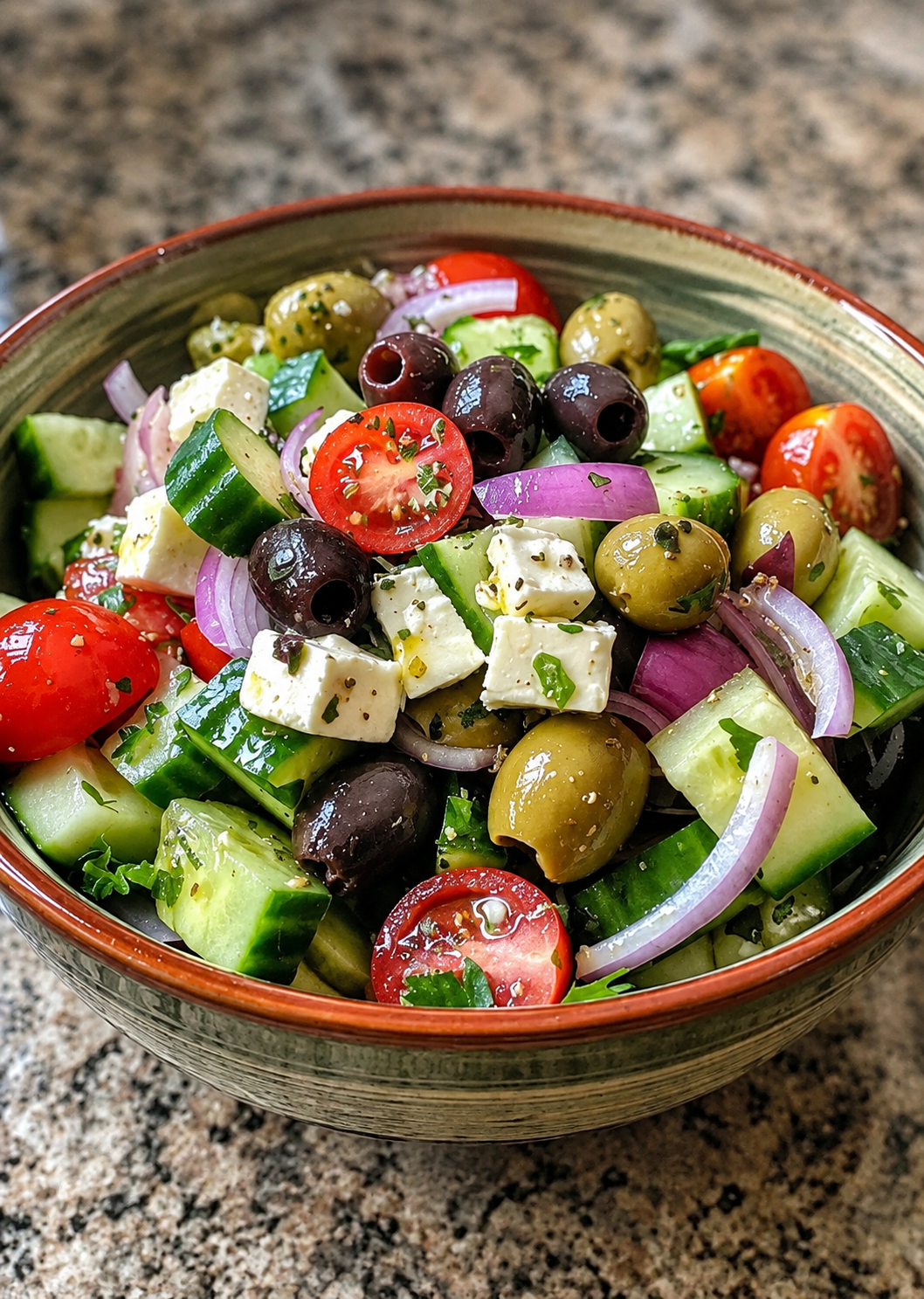
Classic Greek Salad
Recipe Description
Classic Greek salad is a fresh, colourful, and incredibly easy Mediterranean salad made with crisp cucumber, juicy tomatoes, red onion, Kalamata olives, green olives, creamy feta cheese, and fresh herbs. Everything is tossed in a simple homemade dressing made with extra-virgin olive oil, red wine vinegar, lemon juice, oregano, and garlic.
The beauty of Greek salad is its simplicity. There is no need for a complicated dressing or long cooking process. Fresh vegetables do most of the work, while salty olives and creamy feta add richness and depth.
This salad is perfect as a quick lunch, light dinner, side dish, BBQ accompaniment, picnic recipe, or part of a Mediterranean-style meal. It pairs especially well with grilled chicken, fish, lamb, roasted vegetables, pita bread, hummus, and tzatziki.
Servings
Serves: 4–6
Prep Time: 10 minutes
Cook Time: None
Total Time: 10–15 minutes
Difficulty: Easy
Course: Salad / Side Dish
Cuisine: Greek-inspired
Ingredients
For the Salad
2 large cucumbers, chopped
2 cups cherry tomatoes, halved
1/2 medium red onion, thinly sliced
1/2 cup Kalamata olives
1/2 cup green olives
5 ounces of feta cheese, cut into cubes or crumbled
1/4 cup fresh parsley, chopped
1 tablespoon fresh oregano, optional
1/2 green bell pepper, thinly sliced, optional
1/2 cup romaine lettuce, optional
For the Greek Dressing
1/4 cup extra-virgin olive oil
2 tablespoons red wine vinegar
1 tablespoon fresh lemon juice
1 teaspoon Dijon mustard, optional
1 garlic clove, finely minced
1 teaspoon dried oregano
1/2 teaspoon salt
1/2 teaspoon freshly ground black pepper
1/2 teaspoon honey or sugar, optional
Instructions
1. Prepare the Cucumbers
Wash and dry the cucumbers.
Cut them into thick half-moons or bite-sized chunks.
English cucumbers work particularly well because they are crisp and have relatively small seeds, but regular cucumbers are also perfectly suitable.
Place the cucumber pieces in a large serving bowl.
2. Prepare the Tomatoes
Wash the cherry tomatoes and dry them thoroughly.
Cut them in half.
If using larger tomatoes, cut them into wedges or chunks.
Add the tomatoes to the bowl with the cucumber.
3. Prepare the Onion
Peel the red onion and slice it very thinly.
If you prefer a milder onion flavour, place the slices in cold water for 5–10 minutes, then drain and pat dry.
Add the onion to the salad bowl.
4. Add the Olives
Add the Kalamata olives and green olives.
You can leave them whole or slice them in half.
For easier eating, pitted olives are recommended.
5. Add the Feta
Add large cubes or generous crumbles of feta cheese.
For a more traditional presentation, keep the feta in larger pieces rather than mixing it aggressively into the vegetables.
The creamy feta provides a wonderful salty contrast to the crisp cucumber and sweet tomatoes.
6. Add the Herbs
Add fresh parsley and, if available, fresh oregano.
Fresh herbs give the salad a much brighter flavour.
You can also add a little chopped mint for an extra refreshing variation.
7. Make the Dressing
In a small bowl or jar, combine olive oil, red wine vinegar, lemon juice, optional Dijon mustard, minced garlic, oregano, salt, black pepper, and optional honey or sugar.
Whisk thoroughly until the dressing is well combined.
Alternatively, place everything in a jar, seal it tightly, and shake until emulsified.
Taste the dressing and adjust the flavour according to your preference.
8. Dress the Salad
Pour approximately three-quarters of the dressing over the vegetables and olives.
Gently toss using salad tongs or two large spoons.
Try not to break up the feta too much.
Taste the salad.
Add additional dressing if needed.
9. Rest the Salad
Allow the salad to rest for approximately 10 minutes before serving.
This gives the vegetables time to absorb the dressing while keeping their texture fresh and crisp.
For a colder salad, refrigerate for 15–20 minutes.
10. Garnish and Serve
Finish the salad with additional feta, fresh oregano or parsley, freshly cracked black pepper, and a light drizzle of extra-virgin olive oil.
Serve with lemon wedges if desired.
Recipe Notes
The quality of the ingredients makes a big difference in a simple Greek salad.
Choose firm, ripe tomatoes and crisp cucumbers.
Good-quality extra-virgin olive oil adds richness and flavour to the dressing.
Feta packed in brine generally has a creamier texture and stronger flavour than very dry pre-crumbled feta.
Kalamata olives provide the classic Mediterranean flavour, while green olives add variety and colour.
The salad is best when the vegetables are cut into fairly large, rustic pieces.
Helpful Tips
Dry all vegetables thoroughly before preparing the salad.
Slice the onion thinly so its flavour doesn’t overpower the other ingredients.
Don’t add too much salt before tasting because feta and olives are naturally salty.
Use fresh lemon juice rather than bottled lemon juice when possible.
Add the dressing shortly before serving if you want maximum crunch.
Keep some feta pieces intact for a more attractive presentation.
For a stronger oregano flavour, sprinkle a little dried oregano directly over the finished salad.
A small amount of lemon zest can brighten the dressing even further.
How to Prevent a Watery Greek Salad
Cucumbers and tomatoes naturally contain a lot of water.
Use firm vegetables and dry them well.
If your cucumber is particularly watery, remove some of the seeds before chopping.
If your tomatoes are very juicy, you can gently remove some of their seeds.
Don’t add excessive salt too early because salt draws additional moisture from vegetables.
For the freshest texture, dress the salad shortly before serving.
Variations
Greek Salad with Chicken
Add sliced grilled chicken breast for a filling protein-rich meal.
Greek Salad with Chickpeas
Add 1 cup of drained and rinsed chickpeas for additional protein and fibre.
Creamy Greek Salad
Serve with a spoonful of tzatziki or drizzle with a light Greek yoghurt dressing.
Avocado Greek Salad
Add diced avocado just before serving.
Spicy Greek Salad
Add sliced pepperoncini, jalapeño, or red pepper flakes.
Mediterranean Pasta Salad
Add cooked orzo, rotini, or another short pasta.
Greek Salad with Grilled Shrimp
Top with seasoned grilled shrimp for a flavourful seafood variation.
Make-Ahead Instructions
The vegetables can be chopped several hours in advance.
Store the vegetables, feta, olives, and dressing separately in the refrigerator.
Combine everything approximately 10–20 minutes before serving.
If preparing the salad for a party, place the vegetables in a large serving bowl and keep the dressing in a jar. Toss immediately before serving.
This keeps the salad crisp and attractive.
Storage
Store leftover dressed Greek salad in an airtight container in the refrigerator.
For the best texture, consume within 1–2 days.
The vegetables will gradually soften as they sit in the dressing.
If possible, store undressed vegetables separately from the dressing.
Avocado should always be added immediately before serving.
Estimated Nutritional Information
Approximate nutrition per serving, based on 6 servings:
Calories: 230–280 kcal
Protein: 7–9 g
Carbohydrates: 9–13 g
Fat: 19–23 g
Fibre: 3–4 g
Sugar: 5–7 g
Sodium: 600–850 mg
These values are estimates and vary depending on the amount of feta, olives, olive oil, and vegetables used.
Adding chicken, chickpeas, avocado, or pasta will change the nutritional profile.
Potential Benefits
Cucumbers contribute water and a refreshing crunch.
Tomatoes provide vitamin C and other plant compounds.
Olives and extra-virgin olive oil contribute predominantly unsaturated fats.
Feta provides protein and calcium.
Fresh vegetables and herbs add fibre and a variety of vitamins and minerals.
Adding chickpeas, grilled chicken, fish, or another protein source can turn the salad into a more complete meal.
Frequently Asked Questions
What type of cucumber is best?
English cucumbers are an excellent choice, but regular garden cucumbers can also be used.
Can I use regular tomatoes?
Yes. Roma, vine-ripened, heirloom, or cherry tomatoes all work well.
Can I use only Kalamata olives?
Absolutely. Kalamata olives alone provide a classic Greek flavour.
Can I use another cheese?
Feta is the classic choice, but goat cheese can be used for a softer, creamier variation.
Can I make this salad ahead?
Yes, but keep the dressing separate until shortly before serving for the best crunch.
Can I make it vegan?
Yes. Simply omit the feta or replace it with a suitable plant-based feta alternative.
Can I add lettuce?
Yes. Romaine can be added if you like, although a traditional Greek salad does not require lettuce.
Can I add chicken?
Absolutely. Grilled chicken makes this a satisfying complete meal.
Can I add chickpeas?
Yes. Chickpeas are an excellent addition for extra protein and fibre.
Why is my salad watery?
The vegetables may have been very juicy or the salad may have been dressed too early. Dry the vegetables and dress shortly before serving.
Can I use bottled Greek dressing?
Yes, but homemade dressing is quick and allows you to control the oil, salt, acidity, and sweetness.
Can I make the dressing without mustard?
Yes. Dijon is optional and simply adds a little extra body and flavour.
Serving Suggestions
Classic Greek salad is excellent served alongside grilled chicken, fish, lamb, steak, or shrimp.
Serve it with warm pita bread and hummus for a simple Mediterranean lunch.
Pair it with tzatziki, roasted vegetables, or grilled halloumi for a larger Mediterranean-style spread.
Add chickpeas and quinoa for a filling vegetarian bowl.
It also works beautifully as a side dish for pasta, roasted potatoes, burgers, or sandwiches.
For an attractive presentation, arrange the salad in a wide ceramic bowl, keep the feta visible on top, and finish with olives, oregano, and a drizzle of olive oil.
Final Note
Classic Greek salad is one of those recipes where simple ingredients create an incredibly satisfying result. Crisp cucumber, juicy tomatoes, sharp red onion, briny olives, creamy feta, and fresh herbs come together with a bright olive-oil and lemon dressing.
For the best flavour, use fresh ingredients, keep the vegetables dry, don’t oversalt, and dress the salad shortly before serving. The combination of crunchy vegetables, creamy feta, and tangy dressing makes this salad versatile enough for everyday lunches, family dinners, BBQs, picnics, and Mediterranean-inspired gatherings.