
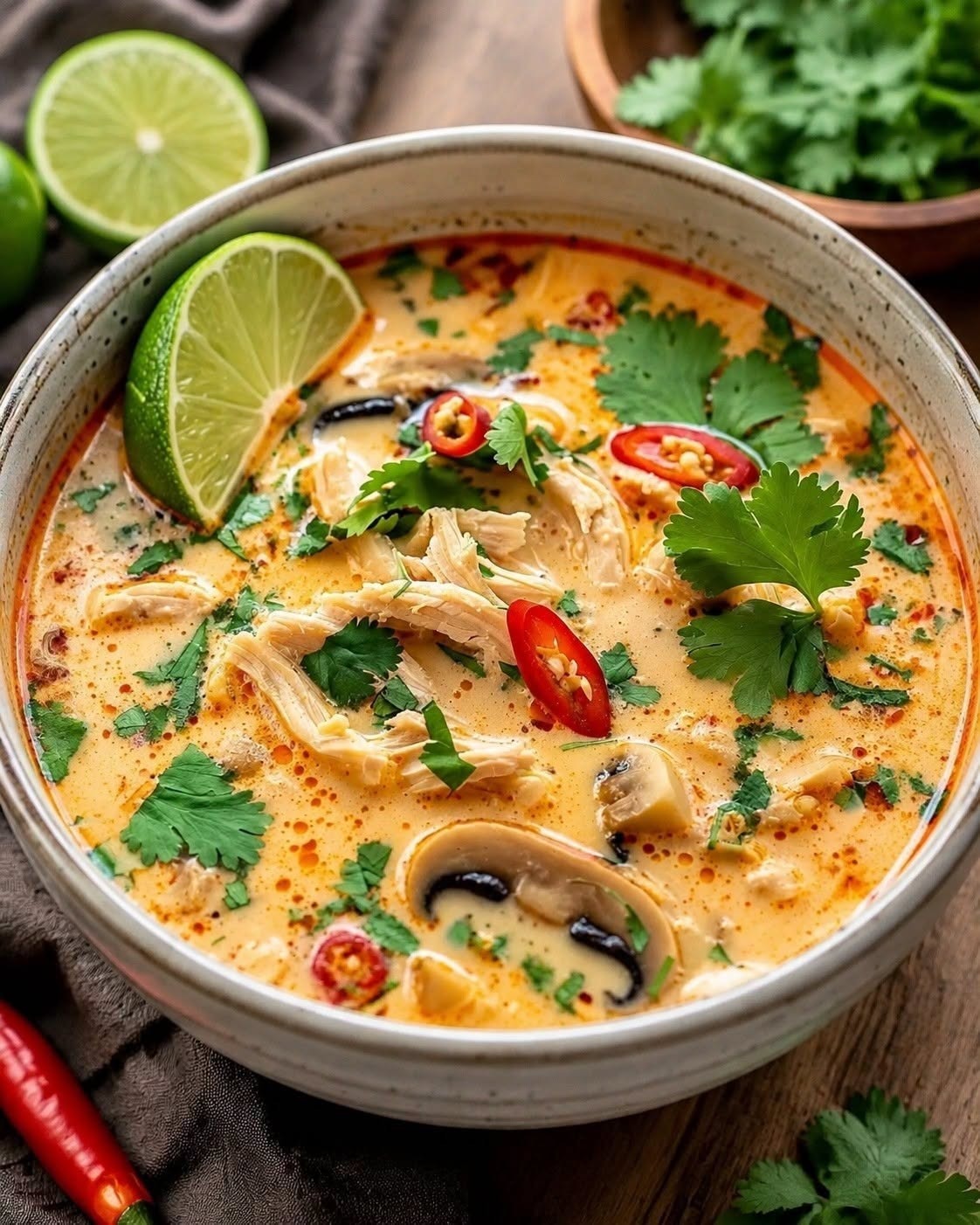
Thai Coconut Chicken Soup
Description
Thai Coconut Chicken Soup is a creamy, aromatic soup inspired by the classic flavors of Thai cuisine. Tender chicken is simmered in a fragrant coconut broth infused with lemongrass, ginger, garlic, lime, and chili. The result is a comforting soup that tastes rich and satisfying while remaining light and refreshing from the citrus and fresh herbs.
The full-fat coconut milk creates a silky texture without needing flour or heavy cream. Lemongrass adds a bright citrus aroma, while ginger and garlic provide warmth and depth. Fresh lime juice brings everything together with a tangy finish.
This soup works beautifully as a cozy weeknight dinner, especially when served with fresh cilantro and sliced green onions. It can also be customized with mushrooms, bell peppers, spinach, or additional vegetables.
Prep Time: 15 minutes
Cook Time: 25 minutes
Total Time: 40 minutes
Servings: 4
Calories: Approximately 390 per serving
Ingredients
For the Soup
- 1 lb boneless, skinless chicken breast, thinly sliced
- 2 cups full-fat coconut milk, 1 can
- 2 cups low-sodium chicken broth
- 2 stalks of lemongrass, smashed and cut into 2-inch pieces
- 1 tablespoon fresh ginger, thinly sliced or grated
- 3 cloves garlic, minced
- 1 small yellow onion, thinly sliced
- 1 cup mushrooms, sliced
- 1 red bell pepper, thinly sliced
- 1–2 Thai red chilies, thinly sliced, optional
- 1 tablespoon fish sauce
- 1 tablespoon fresh lime juice
- 1 teaspoon brown sugar or honey, optional
- 1 tablespoon olive oil or neutral cooking oil
- ½ teaspoon salt, or to taste
- ¼ teaspoon freshly ground black pepper
For Garnish
- ¼ cup fresh cilantro, chopped
- 2 green onions, thinly sliced
- Lime wedges
- Thinly sliced red chili, optional
- Fresh Thai basil, optional
Instructions
Step 1: Prepare the Chicken
Pat the chicken breasts dry with paper towels and slice them thinly against the grain.
Thin slices cook quickly and remain tender in the coconut broth. Try to keep the pieces relatively similar in size so they cook evenly.
Set the chicken aside while you prepare the aromatics.
Step 2: Prepare the Lemongrass
Remove the tough outer layers from the lemongrass stalks if necessary. Cut the stalks into approximately 2-inch pieces.
Use the flat side of a knife or the bottom of a heavy spoon to gently smash each piece. This helps release the aromatic oils into the soup.
The lemongrass pieces are primarily used to flavor the broth and should be removed before serving.
Step 3: Sauté the Aromatics
Heat the oil in a large soup pot or Dutch oven over medium heat.
Add the sliced onion and cook for 2–3 minutes until it begins to soften.
Add the garlic, ginger, and sliced chili. Cook for another 30–60 seconds, stirring constantly, until fragrant.
Be careful not to burn the garlic because it can become bitter.
Step 4: Add the Lemongrass
Add the smashed lemongrass to the pot and stir with the aromatics.
Cook for approximately 1 minute to help release its citrusy aroma.
Step 5: Build the Broth
Pour the chicken broth into the pot and bring the mixture to a gentle simmer.
Add the mushrooms and red bell pepper.
Allow the broth to simmer for approximately 5 minutes so the vegetables begin to soften and the lemongrass infuses the liquid.
Step 6: Add the Coconut Milk
Pour in the full-fat coconut milk and stir gently.
Keep the heat at medium-low and bring the soup back to a gentle simmer. Avoid aggressively boiling the coconut milk because a gentle simmer helps maintain the smooth texture of the broth.
Step 7: Add the Chicken
Carefully add the thinly sliced chicken to the simmering soup.
Stir gently to separate the pieces.
Cook for approximately 5–8 minutes, depending on the thickness of the chicken slices, until the chicken is completely cooked through.
The chicken should reach an internal temperature of 165°F (74°C).
Step 8: Season the Soup
Add the fish sauce, lime juice, and optional brown sugar or honey.
Taste the broth and adjust the seasoning.
If you prefer more acidity, add another squeeze of lime. For more savory depth, add a small amount of fish sauce. If the soup tastes too sharp, a tiny amount of honey or brown sugar can balance the flavors.
Step 9: Finish the Soup
Remove the lemongrass pieces before serving.
Taste once more and add salt or black pepper if needed.
The final soup should have a creamy coconut base with savory, citrusy, spicy, and slightly tangy flavors.
Step 10: Garnish and Serve
Ladle the hot soup into bowls.
Top with chopped cilantro, sliced green onions, fresh chili, and Thai basil if desired.
Serve immediately with lime wedges on the side.
Notes
Full-fat coconut milk gives this soup its signature creamy consistency. Light coconut milk can be used, but the soup will be thinner and less rich.
Fresh lemongrass provides the best flavor, but refrigerated or frozen lemongrass can also work if fresh stalks are unavailable.
Fish sauce contributes the characteristic savory flavor found in many Thai-inspired soups. If you do not use fish sauce, soy sauce can be substituted, although the flavor will be somewhat different.
The amount of chili can be adjusted according to your preferred level of heat.
If you are using canned coconut milk, shake the can well before opening if the coconut cream and liquid have separated.
Tips for the Best Thai Coconut Chicken Soup
Slice the chicken thinly: Thin pieces cook quickly and stay tender.
Do not boil aggressively: Keep the soup at a gentle simmer after adding coconut milk.
Use fresh lime at the end: Adding lime juice near the end preserves its bright citrus flavor.
Smash the lemongrass: Simply cutting lemongrass does not release as much aroma as gently crushing it first.
Taste before adding salt: Fish sauce and chicken broth already contain sodium, so additional salt may not be necessary.
Customize the vegetables: Mushrooms, baby spinach, zucchini, snow peas, carrots, or bok choy can all work well.
Make it spicier: Add Thai chilies, chili flakes, or a small amount of chili paste.
Make it milder: Leave out the chilies completely and add extra lime for brightness.
Don’t overcook the chicken: Chicken breast can become dry if simmered for too long.
Serving Suggestions
Thai Coconut Chicken Soup is satisfying on its own, but it can also be served with a variety of sides.
For a heartier meal, serve it with steamed jasmine rice or brown rice.
For a lighter option, pair it with a simple cucumber salad dressed with lime juice and herbs.
You can also serve the soup with fresh spring rolls, roasted vegetables, or a small Thai-inspired salad.
For a low-carbohydrate meal, enjoy the soup on its own or add extra mushrooms, spinach, zucchini, or other low-carb vegetables.
Variations
Thai Coconut Shrimp Soup: Replace the chicken with peeled and deveined shrimp. Add the shrimp during the final few minutes of cooking because shrimp cook quickly.
Coconut Chicken Vegetable Soup: Add carrots, zucchini, spinach, snow peas, or baby bok choy for extra vegetables.
Spicy Coconut Chicken Soup: Add additional Thai chilies or a spoonful of red curry paste.
Coconut Curry Chicken Soup: Add 1–2 tablespoons of Thai red curry paste with the garlic and ginger for a stronger curry flavor.
Creamy Mushroom Version: Increase the mushrooms and reduce the chicken slightly for a mushroom-forward soup.
Nutritional Information
Approximate nutrition per serving, assuming the recipe makes 4 servings:
Calories: 390
Protein: 30–32 g
Carbohydrates: 12–14 g
Fat: 25–27 g
Saturated Fat: 19–21 g
Fiber: 2–3 g
Sugar: 5–6 g
Sodium: Approximately 700–900 mg, depending on the broth and fish sauce
Nutritional values are estimates and can vary depending on the brands and exact quantities of ingredients used.
Potential Benefits
Protein: Chicken provides high-quality protein, which contributes to maintaining muscles and supporting normal body functions.
Coconut milk: Full-fat coconut milk provides fat and creates a rich, satisfying texture. Because it is relatively high in saturated fat and calories, portion size can be considered as part of your overall diet.
Ginger: Fresh ginger provides naturally occurring plant compounds and adds a warming flavor to the soup.
Garlic: Garlic contributes aromatic flavor and contains naturally occurring sulfur compounds.
Lemongrass: Lemongrass provides aromatic plant compounds and adds a fresh citrus-like flavor without requiring much additional sugar.
Bell peppers: Red bell peppers contribute vitamin C and other nutrients while adding natural sweetness and color.
Lime: Fresh lime juice provides acidity and vitamin C while helping balance the richness of the coconut milk.
Overall, this soup can be part of a balanced meal, particularly when paired with vegetables and an appropriate portion of carbohydrates if desired.
Frequently Asked Questions
Q: Can I use chicken thighs instead of chicken breast?
Yes. Boneless, skinless chicken thighs work very well and tend to remain juicy because they contain more fat than chicken breast. Slice them thinly and cook until they reach 165°F (74°C).
Q: Can I make this soup without fish sauce?
Yes. You can replace fish sauce with soy sauce or tamari. The flavor will be slightly different but still delicious.
Q: Can I use light coconut milk?
Yes. Light coconut milk will reduce the richness and calorie content of the soup, but the broth will be thinner.
Q: Can I freeze Thai Coconut Chicken Soup?
You can freeze it, although coconut milk may separate slightly after thawing. Reheat it gently over low to medium heat and stir well to bring the broth back together.
Q: How long does it last in the refrigerator?
Store leftovers in an airtight container and refrigerate promptly. For best quality and food safety, use refrigerated leftovers within 3–4 days and reheat thoroughly.
Q: Can I make this soup ahead of time?
Yes. You can prepare the soup ahead of time and gently reheat it when ready to serve. For the freshest flavor, add fresh lime juice and herbs after reheating.
Q: Why is my coconut milk separating?
Coconut milk can naturally separate, especially when exposed to high heat. A gentle simmer and regular stirring can help maintain a smoother broth.
Q: Can I add noodles?
Absolutely. Rice noodles are particularly good with this soup. Cook them separately according to the package directions and add them to individual bowls before ladling the soup over them.
Q: Can I make it more spicy?
Yes. Add Thai red chilies, crushed red pepper flakes, chili paste, or a small amount of Thai red curry paste.
Q: Can I make this soup dairy-free?
Yes. The recipe already uses coconut milk rather than dairy cream, so it can be made without milk, cream, or butter. Check the labels of packaged ingredients such as broth and curry paste if you need to avoid dairy completely.
Q: Can I make it gluten-free?
Yes, provided that all packaged ingredients are gluten-free. Use gluten-free chicken broth and check the fish sauce or soy sauce label. Tamari labeled gluten-free can be used instead of regular soy sauce.
Q: What makes this soup taste Thai-inspired?
The combination of coconut milk, lemongrass, ginger, lime, chili, fish sauce, and fresh herbs creates the characteristic balance of creamy, savory, spicy, citrusy, and aromatic flavors associated with many Thai-inspired soups.
Q: Can I add more vegetables?
Definitely. Mushrooms, spinach, zucchini, carrots, bok choy, snow peas, and bell peppers are excellent additions. Add vegetables according to their cooking times so they remain tender rather than mushy.
Final Notes
This Thai Coconut Chicken Soup is an easy, comforting meal that brings together creamy coconut milk, tender chicken, fragrant lemongrass, ginger, garlic, fresh lime, and herbs in one flavorful bowl. It is flexible enough for a quick weeknight dinner and can easily be adapted with different vegetables, protein, and spice levels.
For the best flavor, keep the broth at a gentle simmer, avoid overcooking the chicken, and add fresh lime juice and herbs just before serving. The result is a creamy yet bright soup with layers of savory, citrusy, aromatic, and gently spicy flavor.