
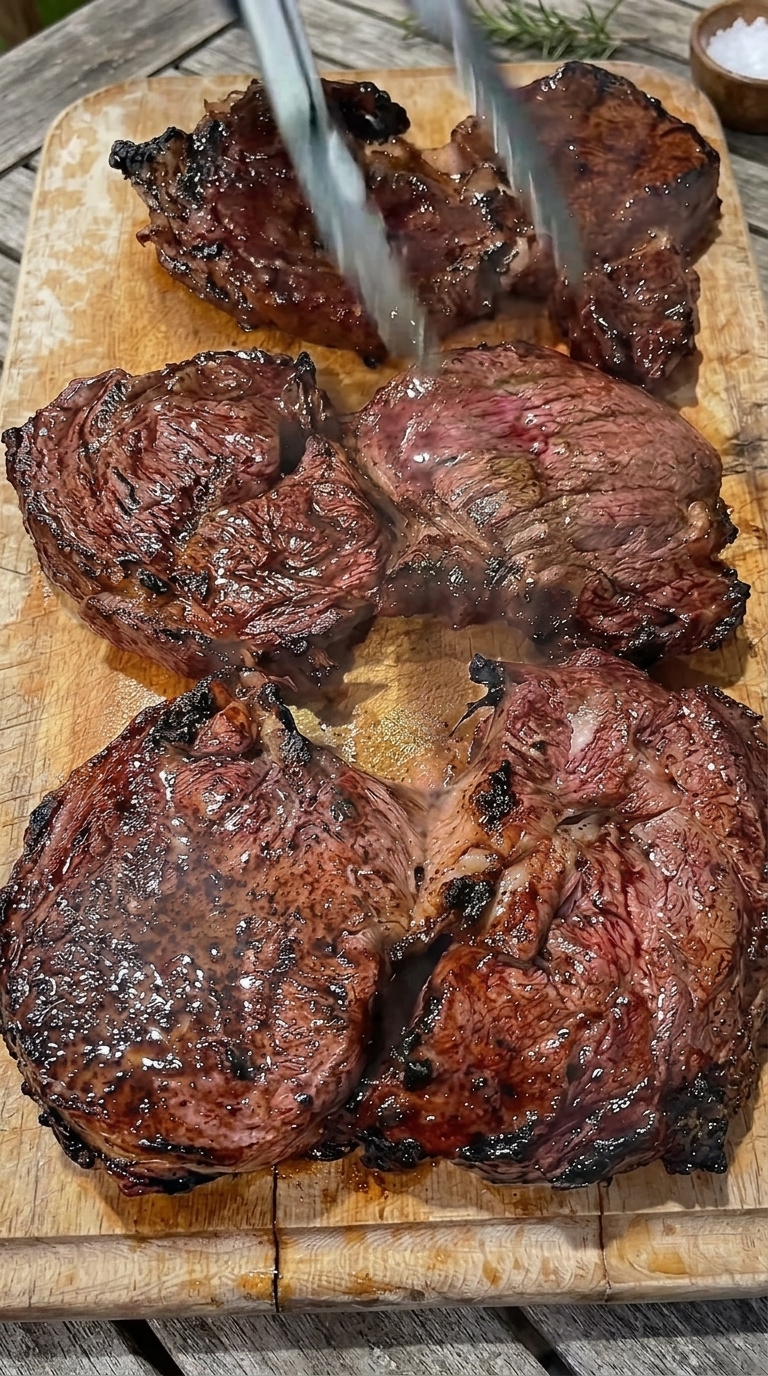
Juicy Grilled Steak Recipe – Tender, Flavorful & Easy
There is nothing quite like a perfectly grilled steak with a beautifully caramelized crust, a tender, juicy center, and rich, smoky flavor. Whether you’re preparing a special weekend dinner, hosting a backyard barbecue, or simply craving a restaurant-quality steak at home, this Juicy Grilled Steak Recipe is an excellent choice.
The secret to a delicious steak is surprisingly simple: high-quality beef, the right seasoning, a hot grill, and proper resting time. With just a few ingredients and easy cooking techniques, you can create a steak that tastes like it came straight from your favorite steakhouse.
This recipe features thick, juicy beef steaks seasoned with garlic, black pepper, salt, and fresh herbs. The steaks are grilled over high heat to develop a flavorful golden-brown crust while keeping the inside tender and moist. A finishing touch of garlic herb butter adds richness and makes every bite irresistible.
Perfect for summer cookouts, family dinners, holiday gatherings, or high-protein meals, this grilled steak recipe is easy enough for beginners and impressive enough for special occasions.
Recipe Information
-
Recipe Name: Juicy Grilled Steak
-
Prep Time: 15 minutes
-
Marinating Time: 30 minutes (optional)
-
Cook Time: 8–14 minutes
-
Resting Time: 5–10 minutes
-
Total Time: Approximately 30–40 minutes, excluding optional marinating
-
Servings: 4
-
Cooking Method: Outdoor Grill or Cast-Iron Grill Pan
-
Difficulty Level: Easy
-
Cuisine: American
-
Course: Main Course
Ingredients
For the Grilled Steak
-
4 beef steaks, approximately 8 oz (225 g) each, 1–1½ inches thick
-
2 tablespoons olive oil
-
1½ teaspoons kosher salt
-
1 teaspoon freshly ground black pepper
-
1 teaspoon garlic powder
-
½ teaspoon smoked paprika
-
1 teaspoon fresh rosemary, finely chopped
-
1 teaspoon fresh thyme leaves
For the Garlic Herb Butter
-
3 tablespoons unsalted butter, softened
-
2 garlic cloves, finely minced
-
1 teaspoon fresh parsley, chopped
-
½ teaspoon fresh thyme
-
½ teaspoon lemon juice
Optional Garnish
-
Fresh rosemary sprigs
-
Fresh parsley
-
Lemon wedges
-
Flaky sea salt
Step-by-Step Instructions
Step 1: Choose the Right Steak
The first step toward preparing juicy grilled steak is selecting a good cut of beef.
Ribeye, New York strip, sirloin, and filet mignon are excellent options for grilling. Ribeye is especially popular because its natural marbling melts during cooking, creating a rich flavor and tender texture.
For this recipe, choose steaks approximately 1–1½ inches thick. Thicker steaks are generally easier to cook with a flavorful crust without overcooking the center.
Look for beef with good marbling, a fresh appearance, and an even thickness. Steaks of similar size will cook more consistently.
Step 2: Prepare the Steaks
Remove the steaks from the refrigerator approximately 20–30 minutes before grilling while you prepare the other ingredients. Keep them covered and avoid leaving raw beef at room temperature for more than two hours.
Pat each steak completely dry using paper towels.
Removing excess surface moisture is important because it allows the steak to develop a beautiful brown crust instead of steaming.
Place the steaks on a clean tray or cutting board.
Step 3: Season the Steak
In a small bowl, combine the kosher salt, black pepper, garlic powder, smoked paprika, rosemary, and thyme.
Lightly brush both sides of each steak with olive oil.
Sprinkle the seasoning mixture evenly over both sides, gently pressing it into the meat.
Make sure the edges are seasoned as well.
For additional flavor, refrigerate the seasoned steaks for 30 minutes. Alternatively, you can season them immediately before grilling.
Avoid adding too much seasoning because the natural beef flavor should remain the star of the dish.
Step 4: Prepare the Garlic Herb Butter
In a small bowl, combine the softened butter, minced garlic, parsley, thyme, and lemon juice.
Mix everything until smooth and evenly combined.
Transfer the butter onto a small piece of parchment paper, shape it into a log, and refrigerate until firm.
This homemade garlic herb butter adds a delicious finishing touch to the grilled steak.
When placed over freshly cooked steak, the butter slowly melts into the warm surface, creating a rich, aromatic coating.
Step 5: Preheat the Grill
Preheat your outdoor grill to medium-high or high heat, approximately 450–500°F (230–260°C).
Clean the grill grates thoroughly and lightly oil them to prevent sticking.
A properly preheated grill is essential for creating a flavorful crust and attractive grill marks.
If using a cast-iron grill pan, heat it over medium-high heat until very hot.
The cooking surface should be hot before adding the steak.
Step 6: Grill the First Side
Place the seasoned steaks directly onto the hot grill.
Allow them to cook undisturbed for approximately 4–5 minutes, depending on their thickness and the heat of the grill.
Avoid pressing down on the steaks with a spatula because doing so can squeeze out flavorful juices.
During this stage, the steak develops a rich brown crust through the Maillard reaction, which creates the savory flavor associated with perfectly grilled meat.
Once the steak releases easily from the grates, it is ready to flip.
Step 7: Flip and Finish Cooking
Using stainless steel grilling tongs, carefully flip each steak.
Cook the second side for approximately 3–6 minutes, depending on your preferred doneness.
For thick steaks, cooking times may vary significantly.
Use an instant-read meat thermometer to check the center rather than relying only on time or appearance.
For food safety, the USDA recommends cooking whole beef steaks to an internal temperature of 145°F (63°C), followed by at least a 3-minute rest.
Some people prefer lower temperatures for rare or medium-rare steak, but these are below the USDA-recommended minimum.
Step 8: Add Garlic Herb Butter
Once the steaks are cooked, transfer them to a clean serving platter.
Place a small slice of prepared garlic herb butter on top of each steak.
The residual heat will gently melt the butter, allowing it to coat the caramelized surface.
For extra flavor, sprinkle a little freshly chopped parsley or rosemary over the top.
The combination of smoky grilled beef and melted garlic butter creates an irresistible steakhouse-style finish.
Step 9: Rest the Steak
Allow the steaks to rest for approximately 5–10 minutes before slicing or serving.
Resting is one of the most important steps in preparing juicy steak.
During cooking, moisture inside the meat moves and redistributes. Giving the steak time to rest helps reduce the amount of juice lost when it is cut.
Loosely cover the steaks with foil if desired, but avoid wrapping them tightly because trapped steam can soften the crust.
Step 10: Slice and Serve
Transfer the rested steaks onto a wooden cutting board.
Using a sharp knife, slice the steak against the grain into thick, juicy pieces.
Cutting against the grain shortens the muscle fibers, making the steak easier to chew.
Arrange the slices on a serving platter and spoon any remaining melted garlic herb butter over the top.
Garnish with fresh parsley, rosemary, and a light sprinkle of flaky sea salt.
Serve immediately while warm.
Helpful Cooking Tips for Perfect Grilled Steak
1. Choose Well-Marbled Beef
Marbling refers to the thin streaks of fat within the meat. These help create a tender texture and rich flavor during grilling.
Ribeye and New York strip steaks are particularly good choices.
2. Always Pat the Steak Dry
Excess moisture prevents proper browning. Drying the steak before seasoning helps create a delicious caramelized crust.
3. Preheat the Grill Properly
A hot cooking surface is essential for achieving restaurant-quality results. Avoid placing steaks on a cold or insufficiently heated grill.
4. Avoid Flipping Too Frequently
Allow the steak enough time to develop a crust before turning it. One or two flips are generally sufficient, although more frequent flipping can also produce good results.
5. Use a Meat Thermometer
A thermometer provides the most reliable way to determine whether your steak has reached the desired internal temperature.
6. Never Skip Resting Time
Cutting immediately after cooking can cause excess juices to escape. Resting helps maintain a moist, flavorful texture.
7. Add Butter at the End
Adding butter after grilling prevents it from burning over high heat and preserves its delicious garlic-herb flavor.
Best Side Dishes to Serve with Grilled Steak
Juicy grilled steak pairs beautifully with a variety of classic American side dishes.
Creamy Garlic Mashed Potatoes: Smooth, buttery mashed potatoes complement the rich flavor of grilled beef.
Roasted Asparagus: Lightly seasoned asparagus adds freshness and balances the richness of the steak.
Grilled Corn on the Cob: Sweet, smoky corn is perfect for summer barbecue meals.
Garlic Butter Mushrooms: Sautéed mushrooms add earthy flavor and make the meal feel extra special.
Crispy Roasted Potatoes: Golden potatoes seasoned with garlic and rosemary are a satisfying accompaniment.
Fresh Garden Salad: A simple green salad with tomatoes, cucumber, and vinaigrette provides a refreshing contrast.
For a classic steakhouse dinner, serve the steak with mashed potatoes, grilled asparagus, and garlic butter mushrooms.
Recipe Notes
-
Steak Thickness: Cooking times are based on steaks approximately 1–1½ inches thick. Thinner steaks require less time.
-
Steak Selection: Ribeye provides rich flavor, while sirloin is generally leaner.
-
Seasoning: Adjust the amount of black pepper, garlic, and herbs according to your preference.
-
Grill Temperature: High heat helps create a flavorful crust, but monitor the steak carefully to prevent burning.
-
Butter Alternative: Olive oil can replace the finishing butter for a dairy-free version.
-
Indoor Cooking: A cast-iron skillet works well when an outdoor grill is unavailable.
Storage and Reheating Instructions
Refrigeration
Allow leftover steak to cool slightly, then transfer it to an airtight container.
Refrigerate within two hours of cooking and store at 40°F (4°C) or below for up to 3–4 days.
Freezing
Wrap cooked steak tightly in freezer-safe packaging and place it in a sealed container or freezer bag.
For best quality, use within 2–3 months.
Reheating
For the best texture, reheat steak gently in a covered skillet over low heat with a small amount of broth or butter.
Alternatively, reheat in a low-temperature oven until warmed through.
For food safety, reheat leftovers to 165°F (74°C).
Avoid overheating because it can make the steak dry and tough.
Nutritional Information
Estimated values per serving, based on an 8 oz raw ribeye steak, seasoning, and a portion of the garlic herb butter. Actual values depend on the cut, fat trimming, and cooking losses.
-
Calories: Approximately 620 kcal
-
Protein: 45 g
-
Total Fat: 48 g
-
Saturated Fat: 20 g
-
Carbohydrates: 2 g
-
Fiber: 0 g
-
Sugar: 0 g
-
Sodium: Approximately 950 mg
-
Iron: Approximately 3.5 mg
-
Vitamin B12: Approximately 3 mcg
Health and Nutrition Benefits
Excellent Source of Protein
Beef steak provides high-quality complete protein, containing all nine essential amino acids. Protein supports muscle maintenance, tissue repair, and normal body functions.
Rich in Iron
Beef contains heme iron, which is generally absorbed more efficiently than non-heme iron from plant foods. Iron helps transport oxygen throughout the body.
Provides Vitamin B12
Vitamin B12 supports healthy nerve function, red blood cell formation, and normal energy metabolism.
Contains Zinc
Zinc contributes to normal immune function, wound healing, and protein synthesis.
Naturally Low in Carbohydrates
Plain grilled steak contains very few carbohydrates, making it suitable for many lower-carbohydrate eating patterns.
For a meal lower in saturated fat, choose lean sirloin, trim visible fat, and use less finishing butter.
Frequently Asked Questions (Q&A)
Q1: What is the best steak for grilling?
Ribeye, New York strip, sirloin, and filet mignon are all excellent choices. Ribeye is especially flavorful because of its marbling.
Q2: How do I keep grilled steak juicy?
Choose an appropriately thick steak, avoid overcooking, check its temperature with a thermometer, and allow it to rest before slicing.
Q3: Should I marinate steak before grilling?
Marinating is optional. A high-quality steak often needs only salt, pepper, garlic, and a few herbs.
Q4: Can I make this recipe without an outdoor grill?
Yes. Use a heavy cast-iron skillet or grill pan over medium-high heat. Cook until the steak reaches a safe internal temperature.
Q5: Why is my grilled steak tough?
Steak can become tough from overcooking, using a naturally firm cut, or slicing with the grain. Choose a suitable cut and slice against the grain for better tenderness.
Final Thoughts
This Juicy Grilled Steak Recipe proves that delicious, restaurant-quality steak does not require complicated ingredients or professional cooking skills.
With properly seasoned beef, a hot grill, careful temperature monitoring, and a flavorful garlic herb butter finish, you can prepare a satisfying steak dinner at home.
The beautifully browned crust, rich beef flavor, and tender interior make this recipe ideal for family dinners, weekend barbecues, special celebrations, and high-protein meals.
Pair your steak with creamy mashed potatoes, roasted vegetables, or a fresh garden salad for a complete and delicious meal.
Whether you’re a beginner or an experienced home cook, this easy grilled steak recipe is one you’ll want to make again and again.