
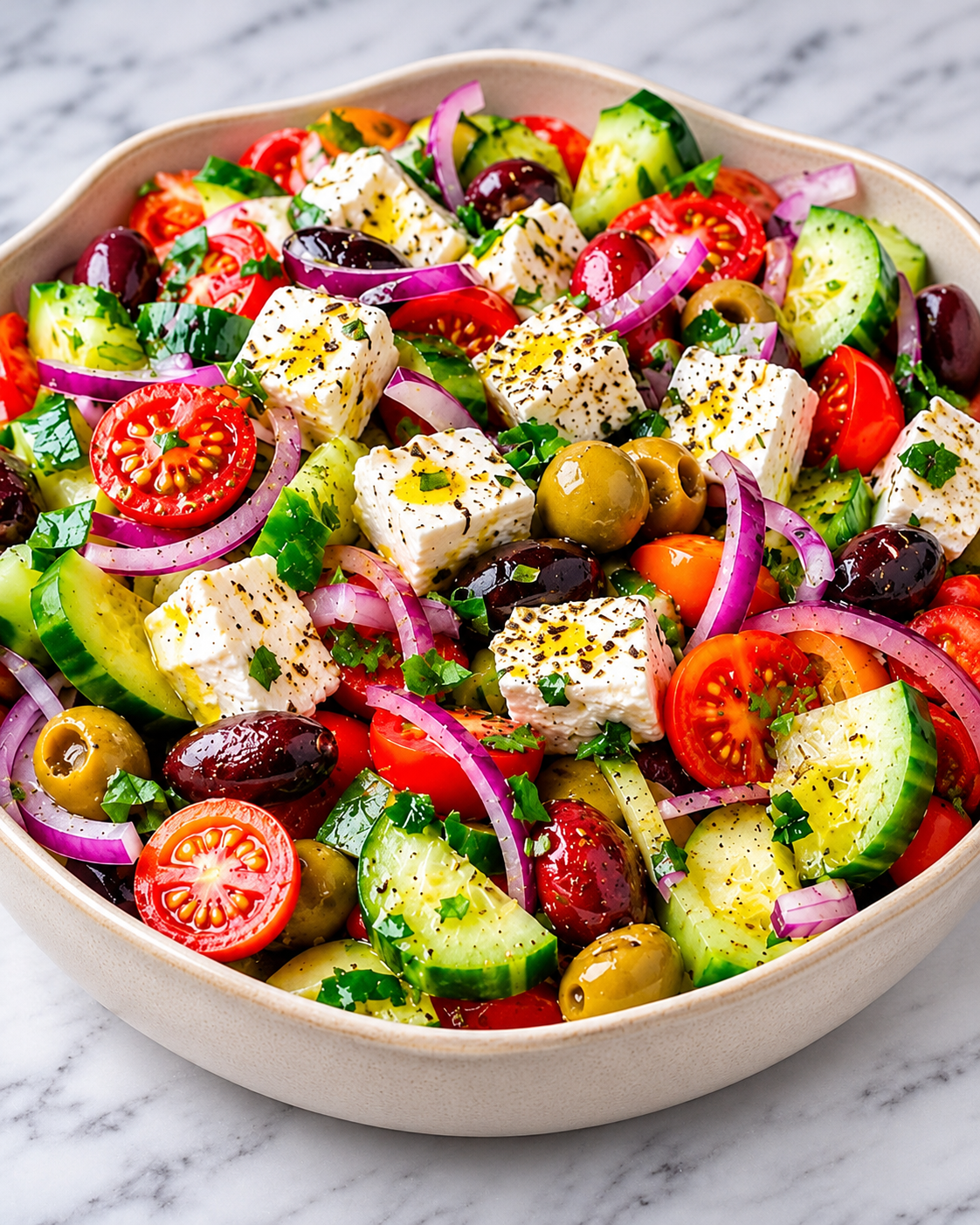
Mediterranean Greek Salad with Feta and Olives
This Mediterranean Greek Salad is a refreshing combination of crisp cucumbers, juicy cherry tomatoes, creamy feta cheese, red onions, and flavorful green and Kalamata olives tossed in a homemade lemon and olive oil dressing. Packed with fresh ingredients and authentic Mediterranean flavors, this colorful salad is naturally low in carbohydrates, vegetarian, and perfect for a healthy lunch, light dinner, or delicious side dish.
Prep Time: 15 minutes
Cook Time: 0 minutes
Total Time: 15 minutes
Servings: 4
Ingredients
For the Mediterranean Greek Salad
-
1 large English cucumber, chopped
-
2 cups cherry tomatoes, halved
-
½ medium red onion, thinly sliced
-
¾ cup feta cheese, cut into cubes
-
½ cup pitted Kalamata olives
-
¼ cup pitted green olives
-
¼ cup fresh parsley, chopped
-
2 tablespoons fresh basil, chopped (optional)
For the Mediterranean Dressing
-
3 tablespoons extra virgin olive oil
-
2 tablespoons fresh lemon juice
-
1 tablespoon red wine vinegar
-
1 garlic clove, finely minced
-
1 teaspoon dried oregano
-
½ teaspoon Dijon mustard
-
¼ teaspoon freshly ground black pepper
-
¼ teaspoon salt, or to taste
Instructions
Step 1: Prepare the Cucumber
Wash the cucumber thoroughly and pat it dry. Slice it lengthwise and cut it into thick, bite-sized half-moons.
Leave the skin on for additional texture, color, and fiber. English cucumbers work particularly well because they have thinner skin and fewer seeds.
Step 2: Prepare the Tomatoes
Wash the cherry tomatoes and slice them in half.
You can also use a combination of red and yellow cherry tomatoes to make your Mediterranean Greek Salad even more colorful.
Step 3: Slice the Red Onion
Peel the red onion and slice it into thin half-moons.
For a milder flavor, soak the onion slices in cold water for 5–10 minutes. Drain thoroughly before adding them to the salad.
Step 4: Prepare the Feta and Olives
Cut the feta cheese into small cubes. Using block feta instead of pre-crumbled cheese creates a creamier texture and more attractive presentation.
Drain the Kalamata and green olives to remove excess brine.
Step 5: Make the Homemade Dressing
In a small mixing bowl, combine extra virgin olive oil, fresh lemon juice, red wine vinegar, minced garlic, dried oregano, Dijon mustard, black pepper, and salt.
Whisk thoroughly until the ingredients are well combined and the dressing becomes slightly creamy.
Taste and adjust the lemon juice or seasoning according to your preference.
Step 6: Assemble the Salad
Place the chopped cucumber, cherry tomatoes, sliced red onion, Kalamata olives, green olives, and fresh parsley in a large serving bowl.
Pour the homemade Mediterranean dressing over the vegetables and gently toss until everything is evenly coated.
Step 7: Add the Feta Cheese
Arrange the feta cheese cubes over the salad. Gently fold them into the vegetables without breaking the cubes.
Sprinkle additional dried oregano and freshly ground black pepper over the top.
Step 8: Serve and Enjoy
Serve the Mediterranean Greek Salad immediately for the freshest flavor and crunch.
Alternatively, refrigerate it for 10–15 minutes before serving to allow the vegetables to absorb the delicious dressing.
Tips
-
Choose firm cucumbers and ripe cherry tomatoes for the freshest flavor.
-
Use high-quality extra virgin olive oil for an authentic Mediterranean taste.
-
Buy feta cheese packed in brine for a richer, creamier texture.
-
Avoid adding too much salt because feta cheese and olives are naturally salty.
-
Use freshly squeezed lemon juice instead of bottled lemon juice whenever possible.
-
Add the feta cheese after tossing the vegetables to prevent excessive crumbling.
-
Pat the vegetables dry before assembling to prevent a watery salad.
-
Prepare the dressing separately if you plan to serve the salad later.
-
Use fresh herbs to enhance the flavor without adding unnecessary calories.
-
Avoid overdressing the salad, as the vegetables should remain crisp and refreshing.
Variations
High-Protein Mediterranean Greek Salad
Add grilled chicken breast, cooked shrimp, boiled eggs, or chickpeas to increase the protein content. This variation transforms the salad into a satisfying main meal.
Mediterranean Avocado Salad
Add one ripe avocado, diced into bite-sized pieces. Avocado provides a creamy texture and additional unsaturated fats.
Greek Chickpea Salad
Add one cup of cooked and drained chickpeas. Chickpeas provide plant-based protein, dietary fiber, and a satisfying texture.
Low-Carb Greek Salad
Prepare the original recipe without adding grains, beans, or sweetened dressing. Enjoy it alongside grilled chicken or fish for a lower-carbohydrate meal.
Mediterranean Tuna Salad
Add one can of tuna packed in water or olive oil, drained thoroughly. The tuna complements the lemon dressing, olives, and fresh vegetables beautifully.
Vegan Mediterranean Greek Salad
Replace the traditional feta cheese with plant-based feta or seasoned tofu cubes. Check the remaining ingredient labels to ensure they are vegan-friendly.
Spicy Mediterranean Greek Salad
Add crushed red pepper flakes, sliced jalapeños, or a pinch of cayenne pepper to the dressing for an extra kick of heat.
Serving Suggestions
This Mediterranean Greek Salad pairs wonderfully with a variety of healthy meals and traditional Mediterranean dishes.
-
Grilled lemon garlic chicken
-
Mediterranean baked salmon
-
Garlic butter shrimp
-
Homemade chicken souvlaki
-
Warm whole-grain pita bread
-
Roasted Mediterranean vegetables
-
Grilled turkey patties
-
Homemade hummus
-
Lemon herb quinoa
-
Baked white fish
For a light lunch, enjoy the salad with boiled eggs or grilled chicken. For dinner, serve it alongside your favorite protein and whole grains for a balanced meal.
It also makes an excellent addition to summer barbecues, picnics, potlucks, and family gatherings.
Make-Ahead Instructions
Mediterranean Greek Salad is an excellent choice for convenient meal preparation.
Chop the cucumbers, tomatoes, and red onions in advance and store them separately in airtight containers. Prepare the dressing and refrigerate it in a small glass jar.
Keep the feta cheese and olives separate until you are ready to assemble the salad.
Before serving, shake the dressing thoroughly and toss it with the prepared vegetables. Finish with feta cheese and fresh herbs.
For the best texture, assemble the salad shortly before eating rather than leaving the vegetables in the dressing overnight.
Storage Instructions
Refrigerator
Store leftover Mediterranean Greek Salad in an airtight container in the refrigerator for up to 2 days.
The cucumbers and tomatoes may release additional moisture over time, so the salad is best enjoyed fresh.
Dressing Storage
Store the homemade dressing in a tightly sealed container in the refrigerator for up to 3 days. Shake well before using.
Freezer
Freezing is not recommended because cucumbers, tomatoes, and feta cheese may lose their original texture after thawing.
Health Benefits
Supports Heart Health
Extra virgin olive oil and olives provide monounsaturated fats. These fats are an important component of the Mediterranean diet and can support cardiovascular health when consumed as part of a balanced diet.
Rich in Antioxidants
Cherry tomatoes contain lycopene, while fresh vegetables and herbs provide a variety of naturally occurring antioxidant compounds.
Supports Healthy Weight Management
Mediterranean Greek Salad combines fresh vegetables, dietary fiber, healthy fats, and protein. This combination can help promote fullness and fit into a balanced, calorie-conscious eating plan.
Supports Digestive Health
Cucumbers, tomatoes, onions, and fresh herbs provide dietary fiber, which contributes to normal digestive function.
Provides Essential Nutrients
Feta cheese provides calcium and protein, while tomatoes and cucumbers contribute vitamin C, potassium, and other important nutrients.
Naturally Low in Carbohydrates
Without pasta, bread, or added sugar, this Mediterranean Greek Salad is suitable for many lower-carbohydrate eating plans.
Nutrition Information
Approximate nutritional values per serving:
| Nutrient | Amount |
|---|---|
| Calories | 235 kcal |
| Protein | 6 g |
| Carbohydrates | 11 g |
| Net Carbohydrates | 8 g |
| Total Fat | 19 g |
| Saturated Fat | 5 g |
| Fiber | 3 g |
| Sugar | 5 g |
| Sodium | 650 mg |
| Cholesterol | 20 mg |
Nutritional values are estimates and may vary depending on the feta cheese, olives, and dressing quantities used.
Frequently Asked Questions
Is Mediterranean Greek Salad good for weight loss?
Yes, it can be included in a balanced weight-management diet. Fresh vegetables provide volume and fiber, while feta cheese and olive oil add flavor and satisfying fats. Adjust the dressing and cheese portions according to your calorie requirements.
Is Greek salad keto-friendly?
Yes, this recipe is relatively low in carbohydrates and can fit into many ketogenic eating plans, depending on individual daily carbohydrate limits.
Can I make Greek salad without feta cheese?
Absolutely! You can omit the feta or replace it with goat cheese, mozzarella, or plant-based feta.
What makes Greek salad different from regular salad?
Greek salad typically combines tomatoes, cucumbers, red onions, olives, feta cheese, olive oil, and oregano. Unlike many traditional green salads, it usually does not contain lettuce.
Can I use bottled Greek dressing?
Yes, but homemade Mediterranean dressing provides fresh flavor and allows you to control the amount of oil, salt, and added sugar.
Can I add lettuce to this salad?
Yes. Although traditional Greek salad does not usually include lettuce, romaine lettuce, arugula, or baby spinach can be added for extra volume and texture.
Can I prepare Mediterranean Greek Salad the night before?
You can prepare the ingredients and dressing separately the night before. Combine everything just before serving to preserve freshness and crunch.
Can I use regular cucumbers instead of English cucumbers?
Yes. If regular cucumbers have thick skin or large seeds, partially peel them and remove the seeds before chopping.
Is Mediterranean Greek Salad gluten-free?
Yes, the ingredients are naturally gluten-free. Check packaged dressing ingredients and seasonings if cross-contamination is a concern.
Final Thoughts
Mediterranean Greek Salad is a beautiful combination of crisp cucumbers, juicy tomatoes, tangy feta cheese, flavorful olives, and a refreshing homemade lemon dressing. With its vibrant colors, simple ingredients, and delicious Mediterranean flavors, this refreshing salad proves that healthy eating doesn’t need to be complicated.
Ready in just 15 minutes without any cooking, it’s perfect for busy days, healthy meal preparation, family dinners, and anyone looking to enjoy more fresh vegetables.