
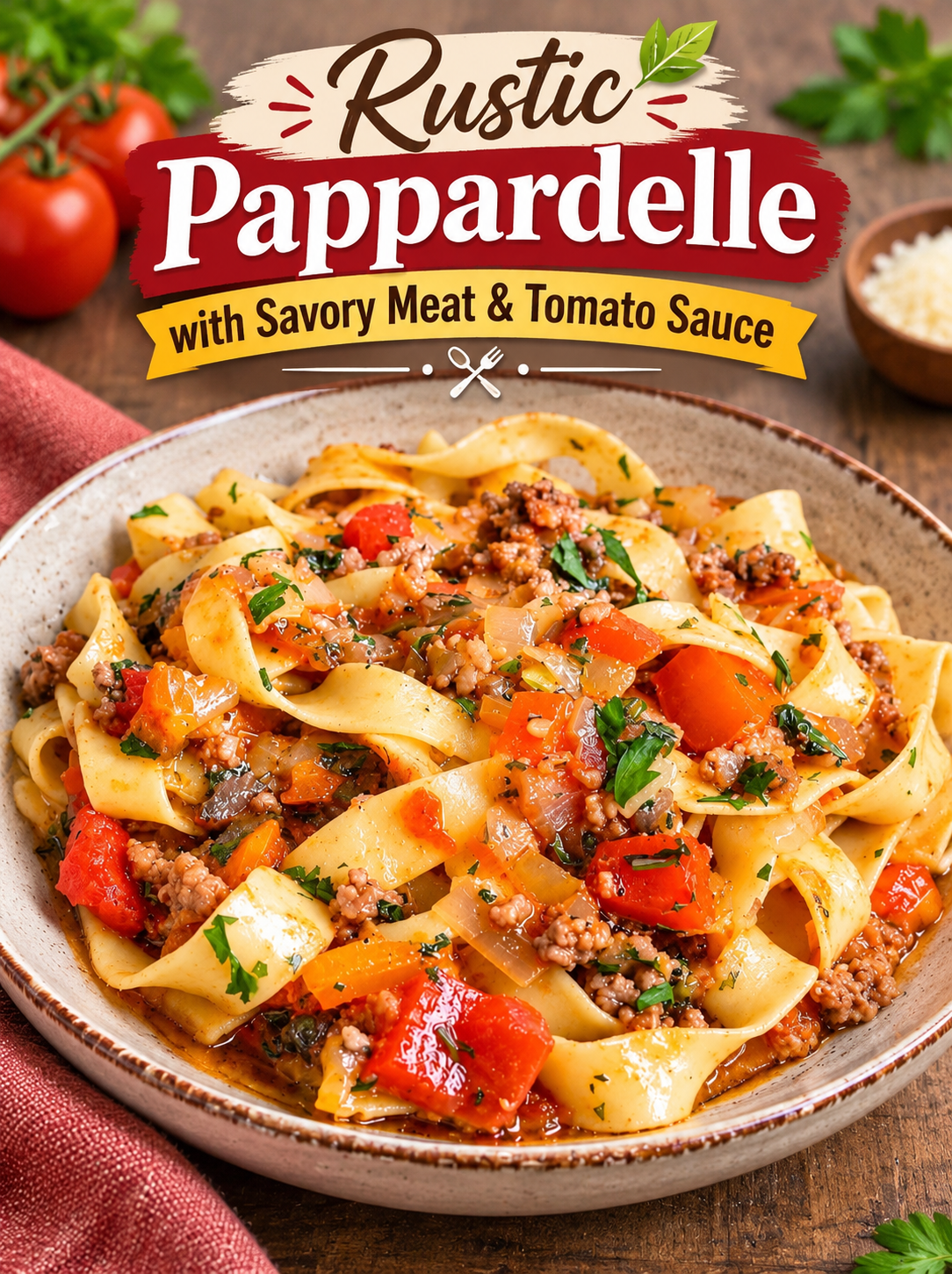
Rustic Pappardelle with Rich, Slow-Simmered Meat & Tomato Sauce
Rustic pappardelle with meat sauce is the kind of comforting pasta dinner that turns simple ingredients into something special. Wide, silky ribbons of pappardelle are tossed with a rich tomato sauce filled with savory ground beef, tender onions, garlic, and juicy tomatoes. A slow simmer allows the ingredients to develop a deep, satisfying flavor that clings beautifully to every ribbon of pasta.
This Italian-inspired recipe combines the heartiness of a homemade meat sauce with the satisfying texture of wide pasta. Tomato paste adds depth, Italian herbs bring fragrant flavor, and freshly grated Parmesan creates a delicious finishing touch. Fresh parsley adds a little brightness to the finished dish.
Although the sauce takes time to simmer, the preparation is straightforward and uses familiar ingredients. It is a wonderful choice for Sunday dinners, cozy evenings, family gatherings, or whenever you want a hearty homemade pasta meal.
Recipe Overview
| Recipe Details | Information |
|---|---|
| Preparation Time | 20 minutes |
| Cooking Time | 1 hour 15 minutes |
| Total Time | 1 hour 35 minutes |
| Servings | 6 |
| Yield | 6 generous portions |
| Cuisine | Italian-inspired |
| Course | Main Course / Dinner |
| Cooking Method | Stovetop |
| Difficulty | Easy to Moderate |
Equipment Needed:
-
Large Dutch oven or heavy-bottomed saucepan
-
Large pasta pot
-
Colander
-
Wooden spoon
-
Sharp knife
-
Cutting board
-
Measuring cups and spoons
-
Cheese grater
-
Pasta tongs
Description
This rustic pappardelle recipe features wide pasta ribbons coated in a hearty, slow-simmered tomato and ground beef sauce.
The sauce begins with browned ground beef, onions, garlic, and Italian seasonings. Crushed tomatoes and diced tomatoes create a thick, chunky base, while tomato paste adds a deeper tomato flavor.
A little beef broth helps the sauce simmer gently and develop its consistency. As it cooks, the flavors of the meat, tomatoes, and herbs come together to create a rich sauce that works particularly well with pappardelle.
Unlike thin spaghetti, pappardelle has wide, flat ribbons that hold onto thick meat sauce. Each bite contains a satisfying combination of pasta, seasoned beef, and tender tomato pieces.
Finish the dish with Parmesan cheese and fresh parsley for a delicious homemade dinner.
Ingredients
For the Pappardelle Pasta
-
12 ounces dried pappardelle pasta
-
1 tablespoon salt for the pasta water
-
½ cup reserved pasta cooking water, as needed
For the Meat and Tomato Sauce
-
1 pound lean ground beef (85% lean recommended)
-
2 tablespoons extra virgin olive oil
-
1 medium yellow onion, finely diced
-
1 medium carrot, finely diced
-
1 celery stalk, finely diced
-
4 garlic cloves, minced
-
2 tablespoons tomato paste
-
1 can (28 ounces) crushed tomatoes
-
1 can (14.5 ounces) diced tomatoes, with juices
-
½ cup low-sodium beef broth
-
1 teaspoon Italian seasoning
-
1 teaspoon dried oregano
-
½ teaspoon dried basil
-
½ teaspoon smoked paprika
-
¼ teaspoon crushed red pepper flakes (optional)
-
¾ teaspoon fine sea salt, or to taste
-
½ teaspoon freshly ground black pepper
-
1 teaspoon granulated sugar, optional, if needed to balance acidity
For Garnishing
-
½ cup freshly grated Parmesan cheese
-
¼ cup chopped fresh parsley
-
Fresh basil leaves
-
Extra freshly ground black pepper
-
A light drizzle of extra virgin olive oil
Optional Additions
-
½ cup finely diced mushrooms
-
½ cup additional beef broth if the sauce becomes too thick
-
¼ cup dry red wine instead of an equal amount of beef broth
-
2 tablespoons butter for a richer finishing sauce
Ingredient Notes
Pappardelle: Wide, flat pasta ribbons are the signature ingredient. Dried pappardelle is convenient, while fresh pappardelle cooks faster and has a softer texture. Tagliatelle can be substituted if pappardelle is unavailable.
Ground Beef: An 85% lean ground beef provides a good balance of meat flavor and fat. Leaner beef can be used, but the sauce may need a little additional olive oil.
Crushed Tomatoes: These create the main body of the sauce. Choose plain canned tomatoes without added Italian seasoning so you can control the flavor.
Diced Tomatoes: Their small pieces give the sauce the rustic, chunky appearance seen in your photograph.
Tomato Paste: Cooking tomato paste briefly before adding the tomatoes helps deepen its flavor.
Beef Broth: Adds savory depth and helps control the consistency. Low-sodium broth makes it easier to adjust the final seasoning.
Fresh Parmesan: Freshly grated Parmesan melts more smoothly and provides a richer finish than many pre-shredded alternatives.
Why You’ll Love This Recipe
A Rich Homemade Meat Sauce
Ground beef, tomatoes, garlic, onions, and Italian herbs create a comforting sauce with plenty of flavor.
Perfect for Wide Pappardelle Ribbons
The broad pasta ribbons hold onto the chunky tomato and meat sauce, giving you a satisfying combination in every bite.
Simple Grocery Store Ingredients
You do not need specialty ingredients or complicated cooking equipment. Most of the ingredients are easy to find in American grocery stores.
Ideal for Family Dinners
Six generous servings make this recipe suitable for family meals, Sunday dinners, or casual entertaining.
Make-Ahead Friendly
The meat sauce can be prepared in advance, refrigerated, or frozen for another meal.
Easy to Customize
Add mushrooms, extra herbs, red pepper flakes, or a little Parmesan to adjust the flavor according to your preferences.
How to Make Rustic Pappardelle with Meat & Tomato Sauce
Step 1: Prepare the Ingredients
Begin by finely dicing the yellow onion, carrot, and celery.
Mince the garlic and measure the tomato paste, crushed tomatoes, diced tomatoes, and beef broth.
Remove the ground beef from the refrigerator shortly before cooking, keeping it refrigerated until you are ready to use it.
Prepare the Parmesan and parsley for garnishing.
Having everything ready before starting makes the cooking process easier and helps prevent the garlic or tomato paste from burning.
Step 2: Brown the Ground Beef
Heat the olive oil in a large Dutch oven or heavy-bottomed saucepan over medium-high heat.
Add the ground beef and break it into small pieces using a wooden spoon.
Cook for approximately 7–9 minutes, stirring occasionally, until the meat is browned and reaches 160°F when checked with a food thermometer.
If there is excessive rendered fat, carefully drain some of it while retaining enough to keep the sauce flavorful.
Properly browning the meat helps develop a deeper savory flavor in the finished sauce.
Step 3: Cook the Aromatic Vegetables
Reduce the heat to medium.
Add the diced onion, carrot, and celery to the browned beef.
Cook for approximately 5–7 minutes, stirring occasionally, until the vegetables soften.
Add the minced garlic and cook for another 30–45 seconds.
The garlic should become fragrant without turning dark brown.
These vegetables create a flavorful foundation for the tomato sauce.
Step 4: Add the Tomato Paste
Stir the tomato paste into the meat and vegetable mixture.
Cook for approximately 1–2 minutes, stirring frequently.
The tomato paste should become slightly darker and coat the beef and vegetables evenly.
This brief cooking step helps develop a deeper, more rounded tomato flavor.
Step 5: Build the Tomato Sauce
Pour the crushed tomatoes and diced tomatoes into the saucepan.
Add the beef broth, Italian seasoning, dried oregano, dried basil, smoked paprika, black pepper, and optional red pepper flakes.
Stir everything together until well combined.
Scrape the bottom of the saucepan with a wooden spoon to release any flavorful browned bits.
If using red wine instead of broth, add it after the vegetables have softened and let it simmer until slightly reduced before adding the tomatoes.
Step 6: Slow-Simmer the Meat Sauce
Bring the sauce to a gentle simmer.
Once small bubbles begin appearing, reduce the heat to LOW.
Cover the saucepan partially, leaving a small opening for steam to escape.
Allow the sauce to simmer gently for approximately 55–65 minutes, stirring every 10–15 minutes.
The sauce should gradually become thicker, darker, and more flavorful.
Avoid boiling it vigorously because excessive heat can cause the sauce to splatter and may cook away too much moisture.
If the sauce becomes too thick before the flavors have developed, add a little warm beef broth.
Step 7: Taste and Adjust the Seasoning
After simmering, taste the meat sauce carefully.
Add additional salt and black pepper if necessary.
If the tomatoes taste particularly acidic, a small pinch of sugar can help balance the flavor.
For a richer finish, stir in one tablespoon of butter.
The finished sauce should be thick enough to coat a spoon while remaining moist and chunky.
Step 8: Cook the Pappardelle
Fill a large pasta pot with water and bring it to a rolling boil.
Add the tablespoon of salt.
Carefully add the pappardelle and stir gently to separate the ribbons.
Cook according to the package instructions until al dente.
Fresh pappardelle generally requires less cooking time than dried pasta, so follow the manufacturer’s instructions.
Before draining, reserve approximately ½ cup of the starchy pasta water.
Drain the pasta without rinsing it.
The starch remaining on the pasta helps the meat sauce cling to the wide ribbons.
Step 9: Combine the Pasta and Meat Sauce
Transfer the drained pappardelle into the saucepan with the meat sauce, or use a large skillet if the saucepan is too small.
Gently toss the pasta using tongs until the ribbons are coated.
Add a small splash of reserved pasta water if the sauce seems too thick.
Continue tossing over LOW heat for approximately 1 minute.
The sauce should become glossy and cling to the pasta without pooling excessively at the bottom.
Be gentle when mixing because pappardelle ribbons can tear if handled roughly.
Step 10: Garnish and Serve
Turn off the heat.
Sprinkle freshly grated Parmesan over the pasta and add chopped parsley.
Use additional basil leaves and freshly ground black pepper if desired.
Transfer the rustic pappardelle to warm serving bowls.
Add another spoonful of meat sauce over each portion and finish with a little extra Parmesan.
Serve immediately while the pasta is warm and the sauce is glossy.
Expert Recipe Tips & Notes
1. Brown the Beef Properly
Do not overcrowd the pan with ground beef. If necessary, brown it in batches so it develops a rich flavor rather than steaming.
2. Use a Heavy-Bottomed Pan
A Dutch oven distributes heat more evenly and helps maintain a gentle simmer. This reduces the chance of sauce sticking or scorching.
3. Do Not Rush the Sauce
The slow simmer gives the tomatoes, vegetables, beef, and herbs time to develop a more integrated flavor.
4. Avoid Overcooking the Pasta
Cook the pappardelle until just al dente. It will continue cooking slightly when tossed with the hot sauce.
5. Save Pasta Water
The starchy water is useful for adjusting the sauce consistency. Add it gradually rather than pouring in the entire reserved amount.
6. Choose Quality Tomatoes
Plain canned crushed and diced tomatoes work well. If possible, select good-quality tomatoes without unnecessary added seasonings.
7. Grate Parmesan Freshly
Freshly grated cheese generally melts more smoothly into warm pasta and provides a better finishing texture.
8. Keep the Sauce Gently Simmering
A vigorous boil can cause excessive evaporation and splattering. Gentle heat gives you better control over thickness and texture.
Easy Recipe Variations
Pappardelle with Italian Sausage
Replace half or all of the ground beef with mild or spicy Italian sausage.
Remove the sausage casings if necessary and brown the meat thoroughly before adding the vegetables.
This variation creates a slightly richer, more seasoned sauce.
Pappardelle with Mushroom and Meat Sauce
Add 1 cup of sliced mushrooms after browning the beef.
Cook until the mushrooms release their moisture and begin to brown before adding the onions and garlic.
Mushrooms contribute an earthy flavor that pairs particularly well with tomato sauce.
Spicy Italian Pappardelle
Add ½ teaspoon crushed red pepper flakes and a little extra black pepper.
For more heat, add a small amount of finely chopped fresh chili.
Creamy Tomato Pappardelle
For a slightly creamier variation, stir ¼ cup heavy cream into the finished meat sauce.
Keep the heat low and stir until the cream is incorporated.
The sauce will become smoother and slightly richer while retaining its tomato flavor.
Serving Suggestions
Rustic pappardelle with meat sauce is a satisfying main course that pairs beautifully with simple sides.
Garlic Bread: Serve with warm garlic bread to soak up the remaining tomato sauce.
Fresh Green Salad: A crisp salad with lettuce, cucumber, tomatoes, and a light vinaigrette balances the richness of the pasta.
Roasted Vegetables: Roasted zucchini, broccoli, asparagus, or seasonal vegetables make excellent accompaniments.
Parmesan and Fresh Herbs: Offer additional freshly grated Parmesan and chopped parsley at the table.
Italian-Inspired Dinner: Serve alongside Italian Drunken Noodles when planning a larger pasta-focused family gathering, or try Creamy Garlic Steak Shell Pasta for another hearty pasta dinner.
Make-Ahead Instructions
One of the most convenient parts of this recipe is that the meat sauce can be prepared before you cook the pasta.
Prepare the Sauce in Advance
Prepare the ground beef and tomato sauce according to the instructions.
Allow it to cool in shallow containers and refrigerate promptly.
The sauce can be prepared up to two days before serving for convenient meal planning.
Prepare the Vegetables
Dice the onion, carrot, and celery ahead of time.
Store them in separate airtight containers in the refrigerator until needed.
Keep the garlic refrigerated after preparation and use it promptly.
Cook the Pasta Fresh
For the best texture, boil the pappardelle shortly before serving.
Freshly cooked pasta combines more easily with the sauce and provides a better texture than pasta that has been refrigerated after cooking.
Reheat and Combine
Warm the sauce gently in a saucepan.
Add a little beef broth or water if necessary to restore its consistency.
Cook the pappardelle separately, then combine everything just before serving.
Storage and Reheating
Refrigerator Storage
Transfer leftover meat sauce and pasta into shallow airtight containers.
Refrigerate within two hours of cooking and maintain a refrigerator temperature of 40°F or below.
USDA guidance recommends using refrigerated leftovers within 3–4 days.
ask.fsis.usda.gov+1
For the best quality, store the sauce and pasta separately when possible.
Freezer Storage
The meat and tomato sauce freezes particularly well.
Allow it to cool, divide it into meal-sized freezer-safe containers, and freeze at 0°F.
For best quality, use the frozen sauce within approximately 2–3 months.
Pasta can also be frozen, but its texture may become softer after thawing.
Stovetop Reheating
Place the sauce in a saucepan over medium-low heat.
Add a few tablespoons of beef broth or water and stir until heated throughout.
For leftover pasta, add a little liquid and toss gently until warmed.
Microwave Reheating
Place an individual portion in a microwave-safe dish.
Add a small splash of water, cover loosely, and heat in short intervals, stirring between intervals.
Reheat leftovers to 165°F, following FDA guidance.
FDA+1
Food Safety Note
Ground beef should reach 160°F during cooking, measured with a food thermometer. Color alone is not a reliable indicator of doneness.
ask.fsis.usda.gov+1
Frequently Asked Questions
What is pappardelle pasta?
Pappardelle is a wide, flat Italian pasta traditionally served with rich sauces. Its broad ribbons hold thick meat and tomato sauces particularly well.
Can I use ground turkey instead of ground beef?
Yes. Ground turkey can replace ground beef, although the sauce may have a lighter flavor. Cook ground turkey to 165°F.
Can I use a different pasta shape?
Yes. Tagliatelle, fettuccine, rigatoni, and wide egg noodles are suitable alternatives. However, pappardelle gives the dish its distinctive appearance.
How do I make the meat sauce thicker?
Simmer it uncovered for a little longer to allow excess moisture to evaporate. Avoid adding too much tomato paste at the end because it can leave a raw tomato flavor.
Can I make the sauce without wine?
Absolutely. This recipe uses beef broth and does not require wine. If you choose to use wine, replace an equal amount of broth with it.
Why should I reserve pasta water?
Pasta water contains starch that helps the sauce cling to the noodles. Add it gradually until the desired consistency is reached.
Can I prepare the meat sauce the day before?
Yes. Refrigerate the prepared sauce promptly in an airtight container and reheat it thoroughly before combining with freshly cooked pasta.
Is pappardelle with meat sauce suitable for freezing?
The meat sauce freezes very well. For the best pasta texture, freeze the sauce separately and prepare fresh pappardelle when serving.
Servings and Nutrition Information
Total Servings: 6
Serving Size: Approximately one-sixth of the prepared pasta and sauce.
Estimated Nutrition Per Serving: 480 calories, 26 g protein, 53 g carbohydrates, 17 g total fat, 6 g saturated fat, 5 g dietary fiber, 7 g total sugar, 650 mg sodium.
Approximate nutritional values based on the listed recipe, including a moderate Parmesan garnish. Actual values may vary depending on pasta brand, beef fat percentage, tomato products, and cheese quantity.
The ground beef provides protein, while tomatoes contribute flavor and naturally occurring nutrients. The carrots, celery, onions, and herbs add additional vegetable variety.
This pasta is best enjoyed as part of a balanced meal with a fresh vegetable side or green salad.
Final Thoughts
Rustic pappardelle with rich, slow-simmered meat and tomato sauce is a wonderful example of how simple ingredients can create a deeply satisfying dinner.
The wide pasta ribbons hold the chunky ground beef sauce beautifully, while the tomatoes, onions, garlic, and Italian herbs create a comforting combination of flavors.
A generous sprinkle of Parmesan and fresh parsley gives the dish a beautiful finishing touch.
Whether you prepare it for Sunday dinner, a family gathering, or a cozy evening at home, this homemade pasta recipe is a delicious addition to your dinner rotation.