
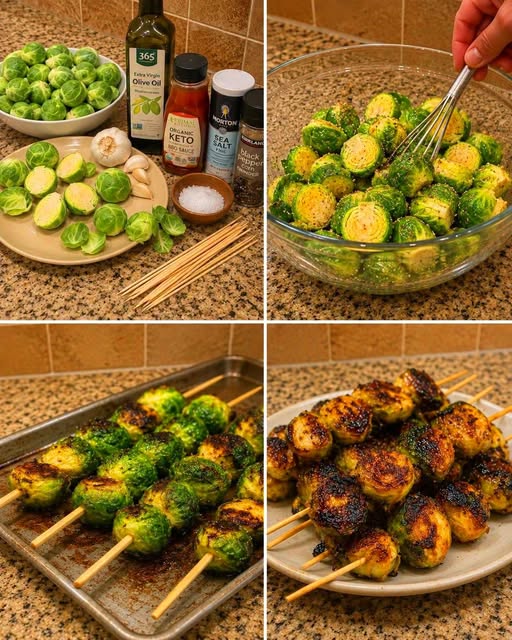
Caramelized Brussels Sprouts
Description
Caramelized Brussels Sprouts are a simple yet flavorful side dish made by pan-searing or roasting Brussels sprouts until their outer leaves become golden brown and slightly crispy while the inside stays tender. The natural sugars in the sprouts caramelize during cooking, creating a delicious balance of sweet, nutty, and savory flavors. This recipe pairs perfectly with roasted meats, grilled chicken, fish, pasta, or holiday dinners.
Recipe Information
- Prep Time: 10 minutes
- Cook Time: 20 minutes
- Total Time: 30 minutes
- Cuisine: American / European
- Course: Side Dish
- Difficulty: Easy
- Servings: 4
- Calories: Approximately 145 per serving
Ingredients
- 1½ pounds (680 g) Brussels sprouts, trimmed and halved
- 2 tablespoons olive oil
- 1 tablespoon butter
- 2 cloves garlic, minced
- 1 tablespoon balsamic vinegar (optional)
- 1 teaspoon honey or maple syrup (optional for extra caramelization)
- ½ teaspoon salt
- ¼ teaspoon black pepper
- ¼ teaspoon red pepper flakes (optional)
- 2 tablespoons grated Parmesan cheese (optional)
- 1 tablespoon chopped fresh parsley for garnish
Instructions
Step 1
Trim the ends of the Brussels sprouts and remove any damaged outer leaves. Slice each sprout in half.
Step 2
Heat olive oil and butter in a large skillet over medium-high heat.
Step 3
Place the Brussels sprouts cut-side down in a single layer.
Step 4
Cook undisturbed for 6–8 minutes until the cut sides develop a deep golden-brown caramelized crust.
Step 5
Stir and continue cooking for another 6–8 minutes until tender.
Step 6
Add garlic and cook for 30 seconds until fragrant.
Step 7
Stir in balsamic vinegar and honey (if using). Toss to coat evenly.
Step 8
Season with salt, black pepper, and red pepper flakes.
Step 9
Transfer to a serving dish and sprinkle with Parmesan cheese and fresh parsley.
Serve immediately while hot.
Chef’s Notes
- Avoid overcrowding the pan for the best caramelization.
- Cut-side contact with the pan is essential for a crispy crust.
- Fresh Brussels sprouts produce the best texture.
- Frozen sprouts should be thawed and thoroughly dried before cooking.
- A cast-iron skillet creates excellent browning.
Tips for Success
- Dry the sprouts thoroughly before cooking.
- Don’t stir too early; let them brown first.
- Use medium-high heat rather than high heat to prevent burning.
- Finish with lemon juice for a bright, fresh flavor.
- Toasted nuts like pecans or walnuts add extra crunch.
- Crispy bacon makes an excellent savory addition.
Flavor Variations
- Add crispy bacon and onions.
- Toss with toasted pecans and cranberries.
- Mix in sautéed mushrooms.
- Finish with lemon zest.
- Sprinkle with feta or goat cheese instead of Parmesan.
- Add Dijon mustard for tanginess.
Serving Suggestions
Serve alongside:
- Roast chicken
- Grilled steak
- Baked salmon
- Pork chops
- Turkey dinner
- Holiday meals
- Pasta dishes
- Grain bowls
Nutritional Information (Per Serving)
| Nutrient | Amount |
|---|---|
| Calories | 145 kcal |
| Carbohydrates | 11 g |
| Protein | 5 g |
| Fat | 10 g |
| Saturated Fat | 2.5 g |
| Fiber | 4 g |
| Sugar | 4 g |
| Sodium | 330 mg |
| Potassium | 430 mg |
| Vitamin C | 95 mg |
| Vitamin K | 150 mcg |
| Folate | 60 mcg |
| Iron | 1.3 mg |
Values are approximate and vary depending on ingredients used.
Health Benefits
- Rich in vitamin C to support immune function.
- Excellent source of vitamin K for healthy bones and blood clotting.
- High in dietary fiber for digestive health.
- Contains antioxidants that help reduce oxidative stress.
- Provides plant compounds that may support overall cellular health.
- Low in calories while being filling, making it suitable for weight management.
- Supplies potassium to help maintain healthy blood pressure.
- Offers folate, which supports healthy cell growth.
Storage
- Refrigerate leftovers in an airtight container for up to 4 days.
- Freeze for up to 2 months (texture may soften after thawing).
- Reheat in a skillet or air fryer for the best crispiness.
Frequently Asked Questions (Q&A)
1. Why are my Brussels sprouts bitter?
Overcooking can increase bitterness. Proper caramelization helps bring out their natural sweetness.
2. Can I roast them instead?
Yes. Roast at 425°F (220°C) for 20–25 minutes, turning halfway through.
3. Can I make this recipe vegan?
Yes. Replace the butter with olive oil or vegan butter and omit the Parmesan or use a dairy-free alternative.
4. Do I have to use balsamic vinegar?
No. It adds depth of flavor but can be omitted or replaced with lemon juice.
5. Can I use frozen Brussels sprouts?
Yes. Thaw and pat them dry thoroughly before cooking to encourage browning.
6. How do I get extra crispy Brussels sprouts?
Dry them well, avoid overcrowding the pan, and let them cook undisturbed until deeply browned.
7. What herbs pair well with Brussels sprouts?
Parsley, thyme, rosemary, sage, and chives all complement their flavor.
8. Can I prepare them ahead of time?
Yes. Trim and halve the sprouts up to 2 days in advance and refrigerate until ready to cook.
9. Are Brussels sprouts healthy?
Yes. They are nutrient-dense, high in fiber, vitamins C and K, and antioxidants while remaining low in calories.
10. What can I add for extra flavor?
Try bacon, toasted nuts, dried cranberries, Parmesan, goat cheese, balsamic glaze, lemon zest, or a drizzle of hot honey.