
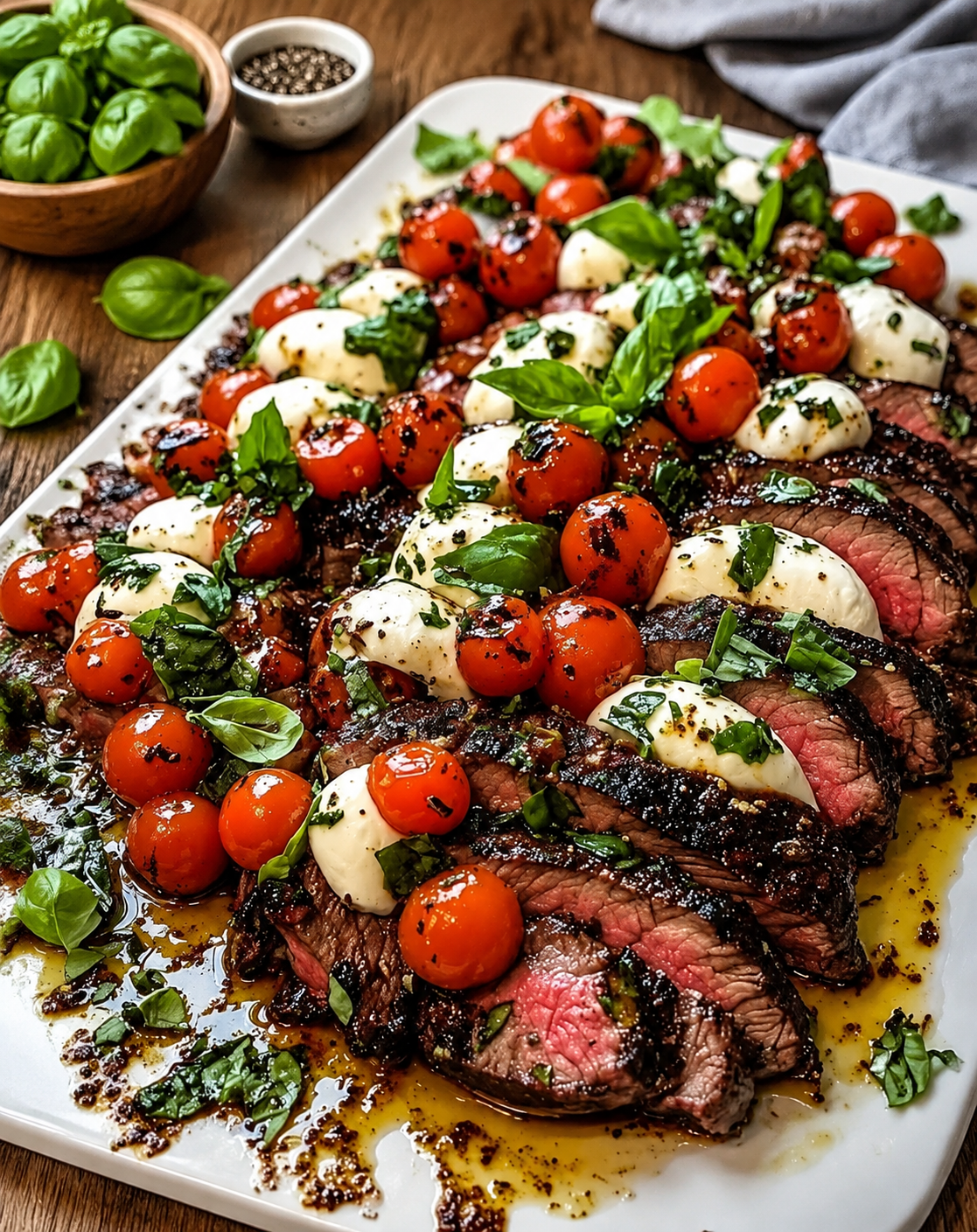
Caprese Steak with Blistered Tomatoes, Mozzarella & Basil
Description
This Caprese Steak with Blistered Tomatoes, Mozzarella & Basil is a beautiful combination of juicy, perfectly seared steak and the fresh Italian flavours of a classic Caprese salad. Tender slices of beef are arranged on a large platter and topped with sweet blistered cherry tomatoes, creamy fresh mozzarella, fragrant basil, garlic-herb olive oil, and a rich balsamic drizzle.
The contrast is what makes this recipe special. You get a deeply browned, savoury steak crust against cool, creamy mozzarella, juicy tomatoes, and fresh basil. A little balsamic adds sweet acidity that balances the richness of the beef and cheese.
This is an impressive recipe for entertaining, summer dinners, holidays, or a weekend family meal, but the cooking process is surprisingly straightforward. The key is cooking the steak properly, resting it before slicing, and adding the mozzarella and basil near the end so they retain their fresh flavour and appearance.
Ingredients
For the Steak
- 2 lb flank steak, sirloin steak, or strip steak
- 2 tablespoons extra-virgin olive oil
- 3 cloves garlic, finely minced
- 1 teaspoon kosher salt
- 1 teaspoon freshly ground black pepper
- 1 teaspoon Italian seasoning
- ½ teaspoon garlic powder
- ½ teaspoon onion powder
- ½ teaspoon smoked paprika
- 1 tablespoon fresh lemon juice
For the Blistered Tomatoes
- 2 pints cherry or grape tomatoes
- 1 tablespoon extra-virgin olive oil
- 2 cloves garlic, minced
- ¼ teaspoon salt
- ¼ teaspoon black pepper
- Pinch of red pepper flakes, optional
For the Caprese Topping
- 12 oz fresh mozzarella pearls or fresh mozzarella, torn into pieces
- 1½ cups fresh basil leaves
- 2 tablespoons chopped fresh parsley, optional
- 1 tablespoon extra-virgin olive oil
- Freshly cracked black pepper
For the Balsamic Drizzle
- ½ cup balsamic vinegar
- 1 tablespoon honey or brown sugar, optional
Alternatively, use approximately ¼ cup prepared balsamic glaze.
For Finishing
- Flaky sea salt
- Fresh basil
- Freshly cracked black pepper
- 1 tablespoon extra-virgin olive oil
Instructions
1. Prepare the Steak
Remove the steak from the refrigerator approximately 20–30 minutes before cooking.
Pat it thoroughly dry with paper towels. A dry surface is important because excess moisture can prevent the steak from developing a good brown crust.
Place the steak on a large plate.
Combine olive oil, garlic, salt, black pepper, Italian seasoning, garlic powder, onion powder, smoked paprika, and lemon juice.
Rub the mixture evenly over both sides of the steak.
Allow the seasoned steak to sit while you prepare the remaining ingredients.
2. Prepare the Balsamic Reduction
Pour the balsamic vinegar into a small saucepan.
If you prefer a sweeter glaze, add honey or brown sugar.
Bring to a gentle simmer over medium heat.
Reduce the heat and simmer for approximately 8–12 minutes, stirring occasionally.
The balsamic should reduce and become slightly syrupy.
Remember that it will continue thickening as it cools, so don’t reduce it until it’s extremely thick.
Remove from the heat and set aside.
3. Prepare the Tomatoes
Heat a large cast-iron skillet over medium-high heat.
Add 1 tablespoon olive oil.
Once hot, add the cherry tomatoes.
Allow them to cook undisturbed for approximately 1–2 minutes so their skins begin developing dark blistered spots.
Toss and continue cooking for another 3–4 minutes.
You want the tomatoes softened and blistered while still maintaining their shape.
4. Add Garlic
Reduce the heat slightly.
Add the minced garlic, salt, pepper, and optional red pepper flakes.
Toss for approximately 30 seconds.
Don’t cook the garlic for too long because it can quickly burn in a hot skillet.
Transfer the tomatoes to a bowl and set aside.
Cook the Steak
5. Heat the pan.
Return the skillet to medium-high or high heat.
Allow it to become very hot.
Add a small amount of oil if the pan looks dry.
6. Sear
Place the steak into the hot skillet.
You should hear an immediate sizzle.
Cook without moving it excessively so a dark golden-brown crust develops.
Cooking time depends heavily on the steak’s thickness and cut, so use temperature rather than time alone to determine doneness.
Flip and cook the second side.
For food safety, USDA guidance calls for whole cuts of beef to reach 145°F (63°C) followed by at least a 3-minute rest.
7. Rest the Steak
Transfer the steak to a cutting board.
Let it rest for approximately 5–10 minutes before slicing.
Resting allows the juices to redistribute rather than immediately running onto the cutting board.
Don’t cut into it immediately.
8. Slice Against the Grain
Look carefully at the direction of the muscle fibres.
Using a sharp knife, slice the steak against the grain.
For flank steak in particular, this makes a major difference in tenderness.
Cut relatively thin slices for an elegant platter presentation.
Assemble the Caprese Steak Platter
9. Arrange the Steak
Choose a large white rectangular platter or serving plate.
Arrange the sliced steak in slightly overlapping rows.
Instead of stacking everything into a tall pile, spread the slices enough that guests can see the browned crust and juicy centres.
10. Add the Tomatoes
Scatter the warm blistered cherry tomatoes generously over and around the steak.
Include some of the flavourful tomato and garlic juices from the skillet.
11. Add Fresh Mozzarella
Arrange mozzarella pearls between the steak slices and tomatoes.
If you’re using a larger ball of fresh mozzarella, tear it into rustic bite-sized pieces.
Adding the mozzarella while the steak and tomatoes are still slightly warm will soften its surface without completely melting it.
That’s exactly what you want.
12. Add Fresh Basil
Tear some basil leaves and leave others whole.
Scatter them generously over the entire platter.
Fresh basil should be added close to serving time so it remains vibrant rather than becoming dark and wilted.
13. Add the balsamic.
Drizzle the balsamic reduction lightly over the steak, mozzarella, and tomatoes.
Don’t completely cover the ingredients.
You want the individual flavours to remain distinct.
14. Finish
Drizzle approximately 1 tablespoon of good-quality extra-virgin olive oil across the platter.
Finish with:
- Freshly cracked black pepper
- A small pinch of flaky sea salt
- Chopped parsley
- Additional fresh basil
Serve immediately.
Notes
The steak is the centrepiece of this recipe, so choose a cut that’s suitable for quick searing or grilling.
Flank steak gives you long, attractive slices and works particularly well for feeding several people.
Sirloin is a versatile, relatively lean option.
New York strip creates a richer, more indulgent version.
Fresh mozzarella is preferable to low-moisture shredded mozzarella because the soft, milky cheese is an essential part of the Caprese-style combination.
Cherry tomatoes are also ideal because they can be blistered without completely breaking down into a sauce.
Tips for the Best Caprese Steak
Dry the Steak
Moisture is the enemy of a deeply browned crust.
Pat the surface thoroughly dry before seasoning.
Don’t Crowd the Tomatoes
If your skillet isn’t large enough, cook them in two batches.
Crowded tomatoes release steam rather than developing those attractive blistered spots.
Use a meat thermometer.
Steak thickness varies, which makes exact cooking times unreliable. An instant-read thermometer provides much better control.
Rest Before Slicing
Resting is essential for a juicy result.
Slice Against the Grain
This is particularly important when using flank or skirt steak.
Don’t Cook the mozzarella.
Fresh mozzarella should become slightly warm from contact with the steak and tomatoes, not completely melted.
Add Basil last.
Fresh basil loses its bright appearance when exposed to high heat for too long.
Don’t Overdo the Balsamic
Balsamic reduction has an intense flavour. A light drizzle should complement rather than overpower the steak.
Serving Suggestions
This caprese steak works beautifully as a centrepiece served directly from the platter.
Pair it with:
- Crispy roasted potatoes
- Garlic Parmesan potatoes
- Grilled asparagus
- Roasted zucchini
- Crusty Italian bread
- Arugula salad
- Grilled vegetables
- Garlic bread
- Pasta salad
For a lighter dinner, serve the steak over arugula with the tomatoes, mozzarella, and basil on top.
For entertaining, place the entire platter in the centre of the table and allow everyone to serve themselves.
Servings
Prep Time: 20 minutes
Cook Time: 25 minutes
Resting Time: 10 minutes
Total Time: Approximately 55 minutes
Servings: 6
Nutritional Information
Approximate Per Serving:
- Calories: 480
- Protein: 42 g
- Carbohydrates: 13 g
- Fat: 29 g
- Saturated Fat: 11 g
- Fiber: 2 g
- Sugar: 8 g
- Sodium: 650 mg
Nutrition is an estimate and will vary considerably depending on the cut of steak, amount of mozzarella, oil, balsamic glaze, and serving size.
Benefits
High in Protein
Steak is an excellent source of complete protein, making this a protein-rich main course. Protein contributes to the maintenance and growth of muscle tissue as part of an overall balanced diet.
Provides Iron and Vitamin B12
Beef naturally contains iron and vitamin B12. Iron contributes to normal oxygen transport in the body, while vitamin B12 has several important roles, including supporting normal red blood cell formation.
Tomatoes Add Nutrients
Tomatoes provide vitamin C, potassium, and carotenoids, including lycopene.
Cooking tomatoes with a little olive oil creates a delicious combination and can improve the absorption of certain fat-soluble compounds.
Fresh basil adds flavour without heavy sauces.
Basil, garlic, tomatoes, and balsamic provide plenty of flavour, reducing the need for a heavy cream-based sauce.
Calcium from Mozzarella
Fresh mozzarella contributes calcium and protein while providing the creamy element that makes Caprese-style dishes so satisfying.
Balanced Main Course
The recipe combines protein, vegetables, cheese, and unsaturated fat from olive oil. Add a whole grain, potatoes, or additional vegetables according to your meal preferences.
Storage
Transfer leftover steak, tomatoes, and mozzarella to an airtight container.
Refrigerate promptly and use within approximately 3–4 days.
For the best texture, consider storing fresh basil separately and adding new basil after reheating.
Reheat the steak gently because excessive heat can make previously cooked beef dry and tough.
Alternatively, enjoy the leftovers cold or at room temperature as part of a steak salad.
Make-Ahead Instructions
You can prepare several components in advance.
The balsamic reduction can be made several days ahead and refrigerated.
The steak can be seasoned earlier in the day.
The tomatoes can also be washed and dried ahead.
For the freshest presentation, however, cook and slice the steak shortly before serving and add the mozzarella and basil during final assembly.
Q&A
Can I grill the steak instead?
Absolutely. This recipe is excellent with grilled steak. Preheat the grill well, cook the steak to your preferred safe doneness, rest it, and slice against the grain.
What steak works best?
Flank steak is particularly good for platter-style presentation because it’s easy to slice thinly. Sirloin, strip steak, skirt steak, or ribeye can also work.
Can I use regular tomatoes?
Yes. Cut Roma or vine tomatoes into thick pieces and quickly sear them. Cherry tomatoes simply retain their shape particularly well.
Can I use burrata instead of mozzarella?
Yes. Burrata creates an especially creamy version. Place one or two balls of burrata on the finished platter and gently open them just before serving.
Can I skip the balsamic glaze?
Yes. The steak is still delicious with olive oil, lemon, tomatoes, mozzarella, and basil. You can also use a small splash of regular balsamic vinegar.
Why is my steak tough?
Possible causes include overcooking, choosing a tougher cut, failing to rest the meat, or slicing with rather than against the grain.
For flank and skirt steak, cutting against the grain is especially important.
Can I make this dairy-free?
Yes. Omit the mozzarella or replace it with a dairy-free alternative that suits your dietary needs.
Can I add pesto?
Yes. A small amount of basil pesto drizzled over the steak works beautifully. Reduce the additional olive oil if your pesto is already oil-rich.
Should the tomatoes be hot?
Warm and blistered is ideal. They should soften and become juicy while retaining their shape.
How do I make it look restaurant-style?
Use a large white platter and arrange the steak slices in overlapping rows. Scatter the bright red tomatoes and white mozzarella naturally between the slices, then add basil at the very end. Finish with glossy olive oil and a thin balsamic drizzle.
What’s the secret to the best caprese steak?
Focus on contrast: deeply seared beef, juicy blistered tomatoes, cool creamy mozzarella, fragrant fresh basil, fruity olive oil, and sweet-tangy balsamic. Rest and slice the steak properly, then assemble everything immediately before serving.