
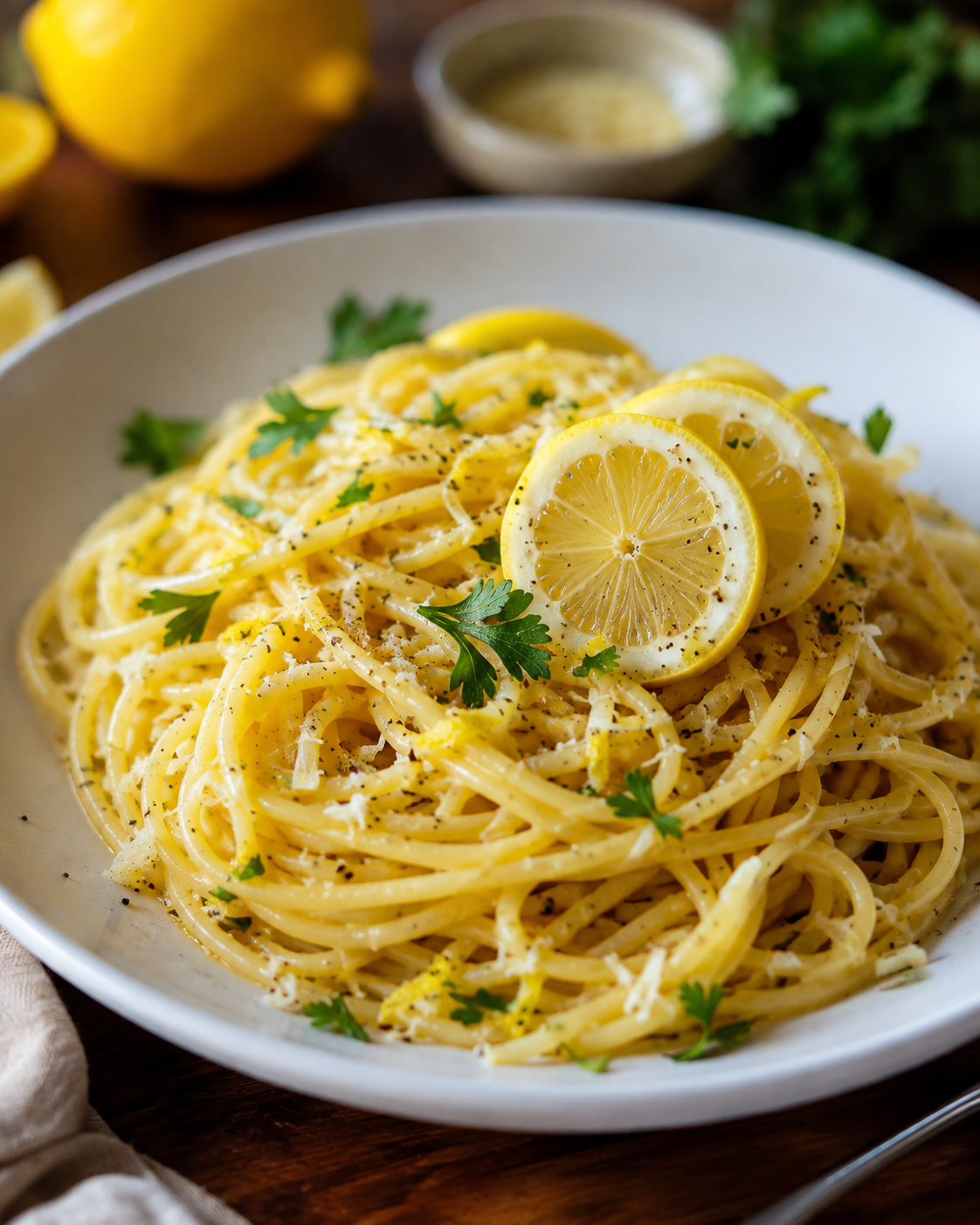
Lemon Pasta (Easy 20-Minute Dinner)
Description
Bright, silky, creamy, and wonderfully simple, lemon pasta is the perfect answer when you want a delicious homemade dinner without spending hours in the kitchen. This easy 20-minute pasta combines tender spaghetti with fresh lemon juice, fragrant lemon zest, garlic, Parmesan cheese, olive oil, and a little reserved pasta water to create a silky sauce that coats every strand.
The flavour is fresh and comforting at the same time. The lemon adds a beautiful citrussy brightness, while Parmesan provides savoury richness and garlic brings warmth. A generous sprinkle of freshly cracked black pepper and parsley finishes the dish beautifully.
This recipe is especially useful for busy weeknights because most of the preparation can happen while the pasta cooks. It requires simple pantry and refrigerator ingredients and can easily be customised with chicken, shrimp, vegetables, or extra herbs.
Serve it immediately while the sauce is glossy and warm for the best texture.
Recipe Information
Recipe Name: Lemon Pasta
Cuisine: Italian-inspired
Preparation Time: 5 minutes
Cooking Time: 15 minutes
Total Time: 20 minutes
Servings: 4
Difficulty: Easy
Ingredients
For the Pasta
- 12 ounces (340 g) spaghetti, linguine, or your favorite pasta
- 2 tablespoons extra-virgin olive oil
- 3 cloves garlic, finely minced
- 1 large lemon, preferably organic, zested and juiced
- ½ cup freshly grated Parmesan cheese
- ½ cup reserved pasta water, plus more if needed
- ½ teaspoon salt, or to taste
- ½ teaspoon freshly ground black pepper
- ¼ cup fresh parsley, finely chopped
- 1 tablespoon unsalted butter, optional
- Extra Parmesan, for serving
- Lemon slices or wedges, for garnish
Optional Additions
- ½ teaspoon red pepper flakes for heat
- 1 cup cooked chicken, sliced
- 8 ounces cooked shrimp
- 1 cup baby spinach
- 1 cup cherry tomatoes, halved
- ½ cup peas
- Fresh basil instead of parsley
- A small pinch of Italian seasoning
How to Make Lemon Pasta
Step 1: Cook the pasta.
Bring a large pot of water to a rolling boil. Add a generous amount of salt and stir.
Add the spaghetti or pasta and cook according to the package directions until al dente. The pasta should be tender but still have a slight bite in the centre.
Before draining the pasta, carefully reserve at least ½ cup of the cooking water.
Drain the pasta and set it aside. Do not rinse it because the natural starch on the pasta helps the lemon sauce become silky and cling to the noodles.
Step 2: Prepare the Lemon and Garlic
While the pasta cooks, zest the lemon using a fine grater or microplane.
Try to remove only the bright yellow outer layer. Avoid grating too deeply into the white part of the peel because the white pith can taste bitter.
Cut the lemon in half and squeeze out the juice. Remove any seeds.
You should have approximately 2–3 tablespoons of fresh lemon juice, depending on the size and juiciness of your lemon.
Finely mince the garlic.
Step 3: Sauté the Garlic
Place a large skillet over medium-low heat.
Add the olive oil and, if using, the butter.
Add the minced garlic and cook for about 30–60 seconds, stirring frequently.
The garlic should become fragrant but should not turn dark brown. Burnt garlic can make the entire sauce taste bitter.
If you enjoy a little heat, add the red pepper flakes at this stage.
Step 4: Add the Lemon
Reduce the heat to low.
Add the lemon zest and about 2 tablespoons of fresh lemon juice to the skillet.
Stir gently to combine.
The combination of warm olive oil, garlic, lemon zest, and juice will create a fragrant base for the sauce.
Step 5: Add the Pasta
Transfer the drained pasta directly into the skillet.
Toss the pasta with the garlic-lemon mixture.
Gradually add about ¼ cup of reserved pasta water, tossing continuously.
The starch from the pasta water helps emulsify the olive oil, lemon juice, and cheese, creating a smooth sauce that coats the noodles.
Add more pasta water a tablespoon or two at a time if the pasta seems dry.
Step 6: Add Parmesan
Remove the skillet from the heat.
Add the freshly grated Parmesan cheese and toss thoroughly.
Add another splash of pasta water if necessary.
Continue tossing until the cheese melts and the pasta becomes glossy and lightly creamy.
Taste the pasta and adjust the seasoning.
Add more lemon juice for extra brightness, more Parmesan for richness, or additional black pepper for a stronger savoury flavour.
Step 7: Garnish and Serve
Transfer the lemon pasta to serving bowls or a large serving dish.
Top with freshly chopped parsley, additional Parmesan, freshly cracked black pepper, and a little lemon zest.
Add a thin lemon slice or wedge to each serving for an attractive presentation.
Serve immediately.
The pasta is at its best when freshly made because the sauce becomes thicker as it cools.
Notes
Use Fresh Lemon
Fresh lemon juice makes a major difference in this recipe. Bottled lemon juice can work in an emergency, but fresh juice and freshly grated zest provide a much brighter and more natural flavour.
Don’t Skip the Pasta Water
Reserved pasta water is one of the secrets to creating the silky sauce. The starch helps bring the ingredients together and prevents the pasta from becoming oily.
Use Freshly Grated Parmesan
Freshly grated Parmesan melts more smoothly than many pre-shredded varieties. It also gives the pasta a richer, more authentic flavour.
Control the Lemon Flavor
If you prefer a mild lemon flavour, begin with 1½ tablespoons of lemon juice and add more after tasting.
If you love bold citrus flavour, add additional zest and another teaspoon or two of lemon juice.
Don’t Burn the Garlic
Garlic should be gently cooked until fragrant. High heat can quickly burn it and create an unpleasant bitterness.
Helpful Tips for Perfect Lemon Pasta
1. Salt the pasta water well.
The pasta absorbs some of the salt as it cooks, seasoning it from the inside.
2. Cook pasta until al dente.
Slightly firm pasta holds its texture better when tossed with the sauce.
3. Reserve more pasta water than you think you’ll need.
It is easier to loosen the sauce than to fix dry pasta.
4. Add Parmesan off the heat.
Very high heat can cause Parmesan to clump rather than melt smoothly.
5. Toss instead of simply stirring.
Tossing helps distribute the sauce evenly over every strand.
6. Adjust the sauce before serving.
A squeeze of lemon, a splash of pasta water, or another sprinkle of Parmesan can completely transform the final texture.
7. Serve immediately.
Lemon pasta tastes best hot and freshly tossed.
Easy Variations
Lemon Chicken Pasta
Add approximately 1 cup of cooked sliced chicken breast. This turns the simple pasta into a more substantial high-protein meal.
Season the chicken with salt, pepper, garlic powder, and Italian herbs before cooking.
Lemon Shrimp Pasta
Cook peeled shrimp separately with olive oil, garlic, salt, and pepper. Toss the cooked shrimp into the finished lemon pasta.
Shrimp pairs particularly well with the bright citrus flavour.
Lemon Spinach Pasta
Add a couple of handfuls of fresh baby spinach during the final minute of cooking. Toss until the spinach gently wilts.
Lemon Tomato Pasta
Add halved cherry tomatoes to the skillet with the garlic. Cook until they soften and release some of their juices.
Spicy Lemon Pasta
Add ½–1 teaspoon of red pepper flakes with the garlic for a spicy, vibrant version.
Creamy Lemon Pasta
For a richer version, stir in ¼ cup of heavy cream after adding the lemon. Keep the heat low and finish with Parmesan.
Serving Suggestions
Lemon pasta makes a wonderful main dish, but it can also be served alongside other foods.
Try pairing it with:
- Grilled chicken
- Garlic shrimp
- Roasted vegetables
- Steamed broccoli
- Green salad
- Roasted asparagus
- Grilled zucchini
- Fresh tomato salad
- Crusty bread
- Sautéed spinach
For a Mediterranean-inspired meal, serve the pasta with a simple cucumber-tomato salad, roasted vegetables, and grilled fish or chicken.
Storage and Reheating
Lemon pasta is best served immediately, but leftovers can be stored in an airtight container in the refrigerator for approximately 3 days.
The sauce may thicken after refrigeration.
To reheat, place the pasta in a skillet over low to medium-low heat. Add a splash of water or broth and gently toss until warmed through.
Avoid overheating because excessive heat can make the Parmesan sauce thick or clumpy.
You can finish reheated pasta with a little fresh lemon juice, Parmesan, and parsley to refresh the flavours.
Nutritional Information
Approximate nutrition per serving, based on 4 servings and the basic recipe:
- Calories: 450–500 kcal
- Protein: 15–18 g
- Carbohydrates: 65–70 g
- Fat: 16–20 g
- Saturated Fat: 5–7 g
- Fiber: 3–4 g
- Sugar: 3–4 g
- Sodium: 450–650 mg
- Calcium: Approximately 180–220 mg
Nutrition values are estimates and can vary depending on the pasta, Parmesan, olive oil, and portion sizes used.
Benefits of Lemon Pasta
1. Provides Energy
Traditional pasta provides carbohydrates, making this dish a satisfying source of energy for lunch or dinner.
2. Contains Protein
Parmesan cheese contributes protein, and the recipe can easily be made higher in protein by adding chicken, shrimp, or another lean protein source.
3. Fresh Lemon Adds Vitamin C
Fresh lemon contributes vitamin C along with a bright citrus flavour.
4. Olive Oil Provides Healthy Fats
Extra-virgin olive oil contributes unsaturated fats and adds richness without requiring a heavy cream-based sauce.
5. Easy to Customize
The recipe can be adapted with vegetables, lean protein, herbs, or spices, making it easy to fit different meal preferences.
6. Quick Homemade Meal
With a total cooking time of about 20 minutes, this recipe is a convenient alternative to takeout when you’re short on time.
Important: While lemon pasta can be part of a balanced diet, its nutritional benefits depend on the complete meal and portion size. Adding vegetables and a lean protein source can make it more nutritionally balanced.
Frequently Asked Questions
Can I make lemon pasta without Parmesan?
Yes. You can omit Parmesan or substitute nutritional yeast or another hard cheese. Keep some pasta water available to help create a silky sauce.
Why does my lemon pasta taste bitter?
The most common reason is using too much lemon zest, especially the white pith underneath the yellow peel. Another possibility is burnt garlic. Use only the bright yellow zest and gently cook the garlic.
Can I use bottled lemon juice?
Fresh lemon juice is recommended because it has a brighter flavour. Bottled juice can still work if fresh lemons aren’t available.
Can I use another type of pasta?
Absolutely. Spaghetti, linguine, fettuccine, angel hair, penne, and bow-tie pasta can all work. Long pasta is especially good because the sauce coats the noodles beautifully.
How can I make this recipe more filling?
Add grilled chicken, shrimp, salmon, chickpeas, or white beans. You can also add vegetables such as broccoli, spinach, zucchini, peas, or asparagus.
Can I make it gluten-free?
Yes. Simply use your favourite gluten-free pasta. Check the Parmesan and other ingredients if you need to avoid gluten completely.
Can I make it dairy-free?
Yes. Omit the Parmesan and butter and use a dairy-free Parmesan alternative if desired.
How do I make the sauce creamier without heavy cream?
The easiest method is to use reserved pasta water and freshly grated Parmesan. Tossing the pasta vigorously helps emulsify the ingredients into a silky sauce.
Can I prepare lemon pasta ahead of time?
You can prepare the ingredients ahead, but the finished pasta is best served immediately. If making it ahead, reserve extra pasta water and gently reheat the pasta with a splash of water.
What protein goes best with lemon pasta?
Chicken, shrimp, salmon, and white fish all pair beautifully with lemon. For a vegetarian option, chickpeas or white beans are excellent additions.
Final Thoughts
Lemon pasta is proof that a delicious dinner doesn’t need a long ingredient list or complicated cooking techniques. In just 20 minutes, simple ingredients come together to create a bright, savoury, silky pasta dish that feels elegant enough for guests but easy enough for a busy weeknight.
The key is using fresh lemon, good-quality olive oil, freshly grated Parmesan, properly salted pasta water, and plenty of tossing to create that glossy sauce.