
Easy Homemade Falafel Recipe
These Easy Homemade Falafel are crispy on the outside, tender and herby on the inside, and packed with the classic flavors of chickpeas, fresh parsley, cilantro, garlic and warm Middle Eastern spices. They are surprisingly easy to make at home and are perfect for stuffing into pita bread, serving with hummus and tahini, or adding to a fresh salad bowl.
The secret to great falafel is using dried chickpeas that have been soaked overnight, rather than canned chickpeas. The soaked chickpeas give falafel its characteristic texture and help the mixture hold together while frying. Fresh herbs provide a beautiful green color and fresh flavor, while cumin and coriander add warmth and depth.
You can shape the mixture into traditional round balls or slightly flattened patties. Fry them until deeply golden and crisp, then serve them hot with creamy tahini sauce, hummus, fresh vegetables and warm pita.
Prep Time: 20 minutes
Soaking Time: 8–12 hours
Cook Time: 15–20 minutes
Total Time: About 9 hours including soaking
Servings: 4–6
Makes: Approximately 18–22 falafel
Ingredients
For the Falafel
1½ cups dried chickpeas
1 small onion, roughly chopped
4 cloves garlic
1 cup fresh parsley, roughly chopped
1 cup fresh cilantro, roughly chopped
1 teaspoon ground cumin
1 teaspoon ground coriander
½ teaspoon salt, or according to taste
½ teaspoon black pepper
½ teaspoon paprika
¼ teaspoon cayenne pepper, optional
½ teaspoon baking soda
1 tablespoon all-purpose flour or chickpea flour, only if needed
1 tablespoon sesame seeds, optional
Oil, for frying
For Serving
Warm pita bread
Tahini sauce
Hummus
Sliced tomatoes
Cucumber
Thinly sliced red onion
Lettuce
Fresh parsley or cilantro
Pickles, optional
Lemon wedges
Instructions
Soak the Chickpeas
Place the dried chickpeas in a large bowl and cover them generously with cold water. The chickpeas will expand considerably as they soak, so make sure there is plenty of water above them.
Leave them to soak for 8–12 hours or overnight.
Drain the chickpeas very well the next day and rinse them with fresh water. Pat them dry with a clean kitchen towel or leave them in a strainer for a few minutes to remove excess moisture.
Do not boil the chickpeas. For traditional falafel, they should be soaked but uncooked before grinding.
Prepare the Falafel Mixture
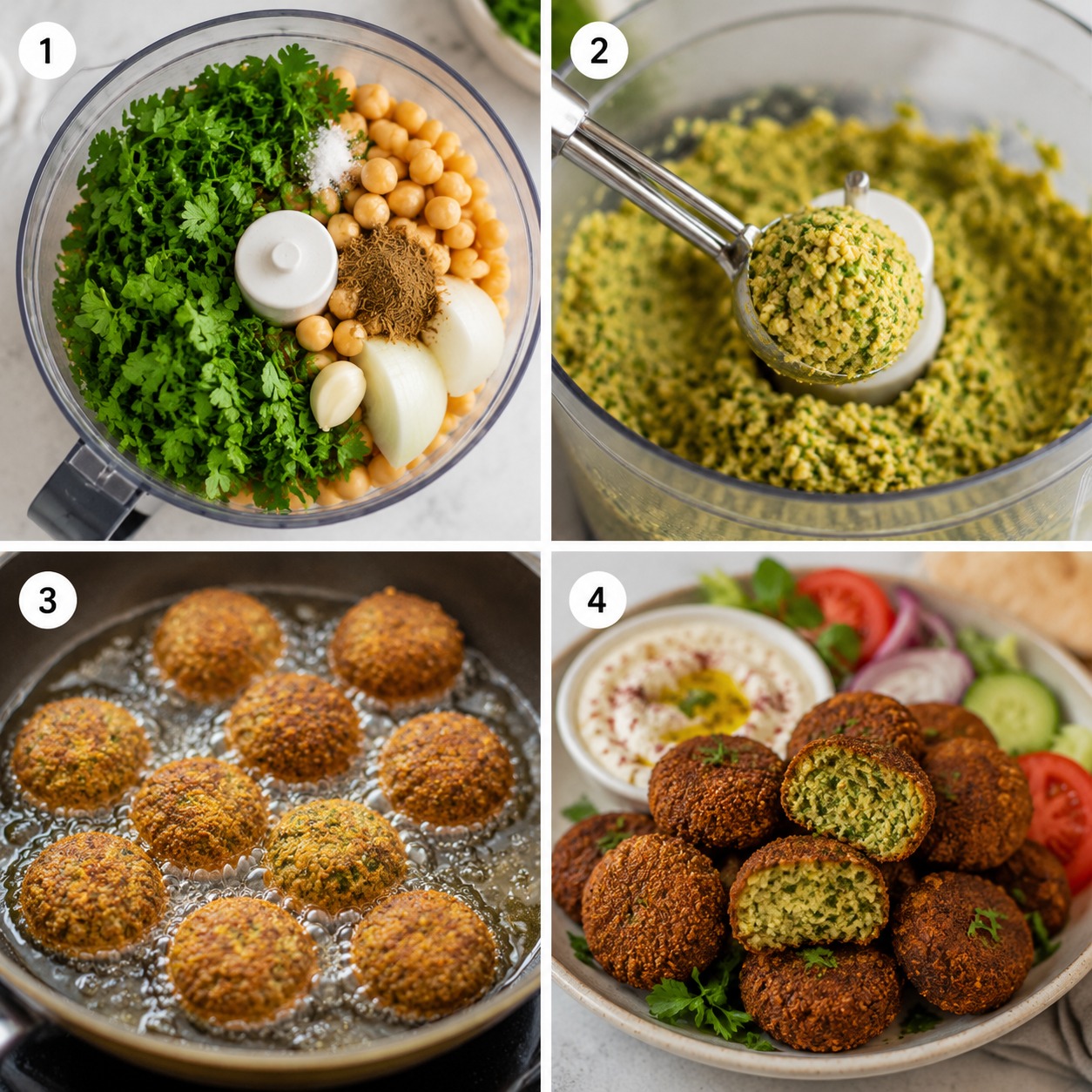
Add the soaked chickpeas to a food processor along with the chopped onion, garlic, parsley and cilantro.
Pulse several times until the mixture becomes finely ground and resembles coarse crumbs. Do not process it into a smooth paste. The mixture should have enough texture to hold together while still being slightly crumbly.
Add cumin, coriander, salt, black pepper, paprika, cayenne pepper and baking soda.
Pulse again briefly until everything is evenly combined.
The mixture should hold together when pressed between your fingers. If it feels too wet or loose, add a small amount of flour or chickpea flour. Avoid adding too much because it can make the falafel heavy.
Transfer the mixture to a bowl, cover it and refrigerate for 30–60 minutes. Chilling helps the mixture firm up and makes shaping much easier.
Shape the Falafel
Take a small portion of the mixture and shape it into a ball or slightly flattened patty.
Traditional falafel is often around the size of a walnut or small golf ball. Flattening the balls slightly helps them cook evenly and gives them more crispy surface area.
If you have a falafel scoop, you can use it to make evenly sized pieces.
Keep the shaped falafel on a plate or tray while preparing the rest of the mixture.
Fry the Falafel
Heat enough neutral oil in a deep skillet or saucepan to allow the falafel to cook properly without touching the bottom too much.
Heat the oil to approximately 175–180°C / 350–355°F.
Carefully place a few falafel into the hot oil. Do not overcrowd the pan because adding too many at once can lower the oil temperature.
Fry for approximately 3–5 minutes, turning them gently when necessary, until they become deep golden brown and crisp on the outside.
Remove the cooked falafel using a slotted spoon and place them on a paper towel-lined plate or wire rack to drain excess oil.
Continue with the remaining falafel.
Serve the Falafel
Serve the falafel hot with warm pita, creamy tahini sauce, hummus, tomatoes, cucumber, lettuce and red onion.
You can make a traditional falafel pita by spreading tahini or hummus inside the pita, adding fresh vegetables and pickles, then filling it generously with crispy falafel.
A squeeze of fresh lemon over the top adds a bright finish.
Tips for Perfect Falafel
Always Use Dried Chickpeas
For the best traditional texture, use dried chickpeas and soak them overnight. Canned chickpeas contain much more moisture and are already cooked, which can make the mixture too soft and cause the falafel to fall apart during frying.
Do Not Over-Process the Mixture
The falafel mixture should resemble fine crumbs rather than hummus. If you blend it until completely smooth, the finished falafel can become dense and heavy.
Pulse the food processor and check the texture regularly.
Drain the Chickpeas Very Well
Excess water can make the mixture difficult to shape. After soaking, drain the chickpeas thoroughly and remove as much surface moisture as possible.
Chill the Mixture
Refrigerating the mixture before shaping gives the ingredients time to settle and makes it firmer. This is especially helpful if your mixture feels slightly soft.
Test One Falafel First
Before frying the entire batch, cook one falafel. If it breaks apart, the mixture may need a little more flour or additional chilling.
If the outside browns too quickly while the inside remains undercooked, reduce the oil temperature slightly.
Keep the Oil Temperature Steady
Oil that is too cool can make falafel greasy, while oil that is excessively hot can burn the outside before the center cooks properly.
A temperature around 175–180°C / 350–355°F works well.
Don’t Overcrowd the Pan
Frying too many falafel at once lowers the oil temperature and prevents proper browning. Fry in small batches for the crispiest results.
Variations
Baked Falafel
For a lighter option, place shaped falafel on a lightly greased baking tray. Brush or spray the tops with a little oil and bake at approximately 200°C / 400°F until browned and crisp, turning halfway through cooking.
The texture will be different from traditionally fried falafel, but they can still be delicious.
Air Fryer Falafel
Place the shaped falafel in a lightly greased air-fryer basket without overcrowding. Lightly spray the tops with oil and cook at approximately 190°C / 375°F until golden and crisp, turning halfway through.
Cooking time can vary depending on the air fryer and the size of the falafel.
Spicy Falafel
Increase the cayenne pepper or add finely chopped fresh green chili to the mixture. A pinch of chili powder can also provide extra heat.
Extra Herby Falafel
For a stronger fresh-herb flavor, increase the parsley and cilantro slightly. Fresh herbs are one of the key ingredients that give homemade falafel its beautiful green interior.
Sesame Falafel
Add sesame seeds directly to the mixture or gently press a few sesame seeds onto the outside before frying. They add a subtle nutty flavor and extra texture.
Falafel Bowl
Instead of pita, serve the falafel over lettuce, cucumber, tomatoes, red onion and hummus. Add rice, pickles, tahini sauce and fresh herbs for a filling meal.
Falafel Wrap
Spread hummus or tahini onto a warm flatbread. Add chopped falafel, lettuce, tomato, cucumber, pickles and red onion. Drizzle with tahini sauce and roll tightly.
Frequently Asked Questions
Can I use canned chickpeas?
You can, but traditional falafel is best made with dried chickpeas that have been soaked overnight. Canned chickpeas are softer and contain more moisture, so they can produce a less authentic texture and may require additional binding ingredients.
Why are my falafel falling apart?
The mixture may contain too much moisture, may not have been processed finely enough, or may need more chilling. Make sure the soaked chickpeas are thoroughly drained and refrigerate the mixture before shaping.
Adding a small amount of chickpea flour can also help if the mixture remains too loose.
Why are my falafel too dense?
Over-processing can turn the chickpeas into a paste, resulting in dense falafel. The mixture should remain slightly coarse and textured.
Can I prepare falafel mixture ahead of time?
Yes. The prepared mixture can be covered and refrigerated before shaping and cooking. This makes falafel especially convenient for meal preparation.
Can I freeze falafel?
Yes. Cooked falafel can be cooled completely and frozen in an airtight container. Reheat them in an oven or air fryer to restore some of their crispiness.
You can also freeze shaped uncooked falafel and cook them after thawing.
What sauce goes best with falafel?
Tahini sauce is one of the classic choices. Hummus, garlic yogurt sauce, tzatziki-style sauces and spicy sauces can also work beautifully.
What should I serve with falafel?
Warm pita, hummus, tahini, chopped salad, pickles, tomatoes, cucumber, red onion and lettuce are excellent choices. French fries or roasted potatoes can also be served alongside.
Nutrition Information
Approximate nutrition for one fried falafel, depending on size and the amount of oil absorbed:
Calories: 60–80
Protein: 2–3 g
Carbohydrates: 7–9 g
Fat: 3–5 g
Fiber: 2–3 g
The complete nutrition of a falafel pita or bowl will be higher and will depend on the amount of bread, tahini, hummus and toppings used.
Conclusion
These Easy Homemade Falafel are crispy, flavorful and packed with fresh herbs and spices. Although the chickpeas require overnight soaking, the actual preparation is simple and requires only a handful of basic ingredients.
For the best results, remember the most important secrets: use dried soaked chickpeas, keep the mixture slightly coarse, drain the chickpeas thoroughly, chill the mixture before shaping and maintain the correct frying temperature.
Serve the golden falafel fresh and crispy with warm pita, creamy tahini, hummus, crunchy vegetables and pickles for a delicious homemade Middle Eastern meal.