
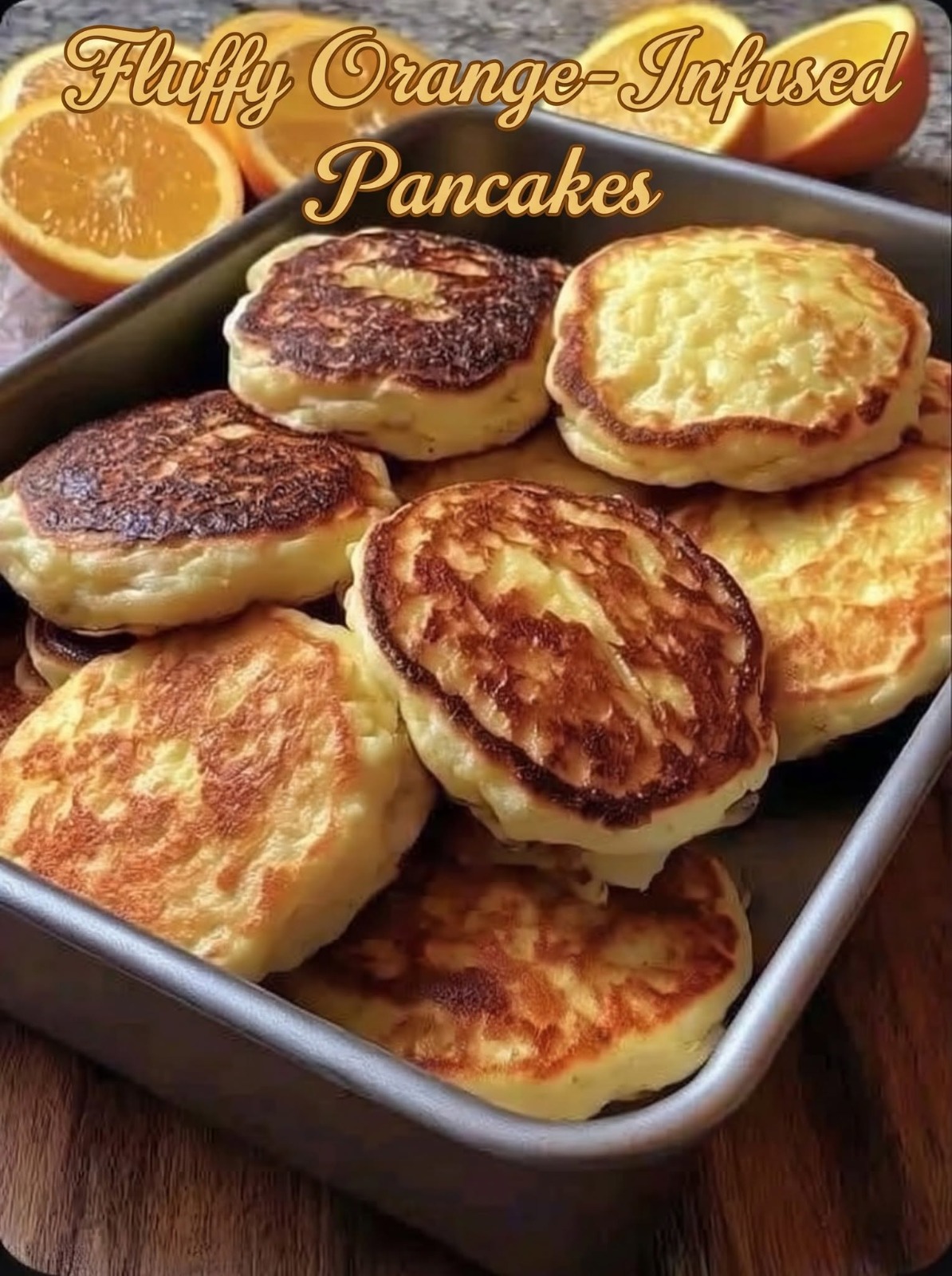
Fluffy Orange-Infused Pancakes
These fluffy orange-infused pancakes are soft, thick, tender, and wonderfully aromatic, with fresh orange juice and zest giving every bite a bright citrus flavour. The orange adds a natural sweetness and freshness that pairs beautifully with the buttery, golden-brown crust.
They’re perfect for a cosy weekend breakfast, brunch, holiday morning, or whenever you want ordinary pancakes to feel a little more special. Serve them warm with butter, maple syrup, powdered sugar, fresh orange slices, or a spoonful of whipped cream.
Servings: 4–6
Makes: About 10–12 pancakes
Prep time: 15 minutes
Cook time: 20 minutes
Total time: About 35 minutes
Ingredients
For the Orange Pancakes
- 2 cups (250 g) all-purpose flour
- 2 tablespoons granulated sugar
- 2 teaspoons baking powder
- ½ teaspoon baking soda
- ½ teaspoon salt
- 2 large eggs, room temperature
- 1½ cups (360 ml) buttermilk
- ¼ cup (60 ml) freshly squeezed orange juice
- 1 tablespoon finely grated fresh orange zest
- 4 tablespoons (57 g) unsalted butter, melted and slightly cooled
- 1 teaspoon pure vanilla extract
- ¼ teaspoon orange extract, optional, for a stronger orange flavor
- Butter or neutral cooking oil, for the pan
Optional Toppings
- Warm maple syrup
- Powdered sugar
- Fresh orange slices
- Fresh orange zest
- Whipped cream
- Butter
- Orange marmalade
- Greek yogurt
- Toasted almonds or pecans
- Fresh berries
Full Recipe Instructions
1. Prepare the orange
Wash and dry the oranges thoroughly. Using a fine grater or microplane, grate the bright orange outer peel until you have about 1 tablespoon of zest.
Try not to grate too deeply into the white part underneath the peel. The white pith can taste bitter, while the colourful outer zest contains the fragrant oils responsible for that wonderful fresh-orange aroma.
Squeeze the oranges until you have ¼ cup of fresh juice. Freshly squeezed juice gives these pancakes a much brighter flavour than bottled orange juice.
2. Combine the dry ingredients
In a large mixing bowl, whisk together:
- Flour
- Sugar
- Baking powder
- Baking soda
- Salt
Mix well so the leavening agents and salt are evenly distributed throughout the flour.
This step is important because it prevents pockets of baking soda or baking powder from ending up in individual pancakes.
3. Mix the wet ingredients
In a separate bowl, whisk together the eggs and buttermilk until smooth.
Add the freshly squeezed orange juice, orange zest, melted butter, and vanilla extract. If you’re using orange extract, add it here as well.
Whisk just until everything is combined.
The melted butter should be warm rather than piping hot. If it’s extremely hot, allow it to cool for a few minutes before adding it to the eggs.
4. Combine wet and dry mixtures
Pour the wet ingredients into the bowl containing the dry ingredients.
Using a whisk or rubber spatula, gently stir until the flour is just incorporated.
Do not overmix.
A few small lumps in the batter are completely fine. In fact, slightly lumpy pancake batter is preferable to perfectly smooth batter because excessive mixing develops gluten and can make pancakes chewy instead of soft and fluffy.
The batter should be thick but pourable.
If it seems unusually thick, add 1–2 tablespoons of buttermilk. If it seems too thin, allow it to rest for several minutes before adjusting.
5. Let the batter rest
Allow the pancake batter to rest for approximately 5–10 minutes.
This gives the flour time to hydrate and allows the leavening agents to begin working.
While the batter rests, heat your skillet or griddle.
6. Heat the pan
Place a large nonstick skillet, cast-iron skillet, or griddle over medium to medium-low heat.
Lightly grease the cooking surface with butter or a small amount of neutral oil.
Avoid using extremely high heat. Pancakes containing sugar can brown quickly, and these orange pancakes can develop a beautifully golden crust before the centre has finished cooking if the pan is too hot.
A moderate temperature gives you that gorgeous golden-brown exterior while keeping the middle soft and fluffy.
7. Cook the pancakes
Pour approximately ¼ cup of batter onto the hot skillet for each pancake.
Leave enough room between pancakes so you can flip them comfortably.
Cook for approximately 2–3 minutes, or until bubbles begin appearing across the surface and the edges look slightly set.
The underside should be golden brown.
Carefully slide a spatula underneath and flip the pancake.
Cook the second side for another 1½–2½ minutes, or until golden brown and cooked through.
Avoid pressing down on the pancakes with your spatula. Pressing them can force out the air that makes them fluffy.
Transfer cooked pancakes to a plate and continue with the remaining batter.
Serving Suggestions
For the ultimate orange pancake experience, stack several warm pancakes on a plate and top them with a small pat of butter.
Drizzle generously with warm maple syrup and finish with a little freshly grated orange zest.
For a more indulgent brunch presentation, add whipped cream and thin orange slices.
You can also combine maple syrup and orange zest for a simple citrus-infused topping. Another delicious option is a spoonful of orange marmalade warmed with a little maple syrup.
For a lighter breakfast, serve the pancakes with Greek yoghurt, fresh berries, and orange segments.
Description & What Makes These Pancakes Special
These pancakes combine the comforting richness of classic buttermilk pancakes with the bright flavour of fresh oranges.
Orange zest provides most of the intense citrus aroma because the essential oils are concentrated in the outer peel. Fresh orange juice contributes additional citrus flavour while adding a subtle natural sweetness.
Buttermilk helps create a tender texture and works with the baking soda to produce bubbles in the batter. Combined with baking powder, it helps give these pancakes their thick, airy texture.
The result is a pancake that is:
- Soft and fluffy inside
- Golden and lightly crisp around the edges
- Buttery and tender
- Brightly citrusy
- Naturally fragrant
- Sweet without being overwhelmingly sugary
Recipe Notes
Use fresh oranges
Freshly squeezed orange juice and freshly grated zest make the biggest difference. Since orange is the star flavour, good-quality fresh oranges will give you the best result.
Don’t skip the zest
The juice provides acidity and citrus flavour, but the zest delivers an especially concentrated orange aroma. For strongly orange-flavoured pancakes, zest is essential.
Buttermilk substitute
If you don’t have buttermilk, combine 1½ cups milk with 1½ tablespoons lemon juice or white vinegar. Stir and let it stand for about 5–10 minutes before using.
The result won’t be identical to traditional buttermilk, but it works well in pancakes.
Watch the heat
Because these pancakes contain sugar and orange juice, they can brown relatively quickly. Medium-low heat is better than high heat.
Don’t overmix
This is one of the most important pancake rules. Stir only until the dry ingredients are incorporated.
Pancake size
For thick, fluffy pancakes, use approximately ¼ cup batter per pancake. Larger pancakes can be more difficult to flip without breaking.
Helpful Tips for Extra-Fluffy Pancakes
1. Use room-temperature eggs and buttermilk.
Cold ingredients can make the melted butter seize up and can result in less evenly mixed batter.
2. Measure flour correctly.
Too much flour can make pancakes dense. Ideally, weigh the flour. If measuring by cups, spoon flour into the measuring cup and level it rather than scooping directly from the flour container.
3. Let the batter rest.
Five to ten minutes can make a noticeable difference in texture.
4. Don’t flatten them.
Let the pancakes rise naturally while cooking.
5. Flip only once when possible.
Repeated flipping can interfere with the pancakes’ rise and make them less tender.
6. Keep cooked pancakes warm.
Place them on a baking sheet in a low oven, around 200°F/95°C, while you finish cooking the batch.
7. Add extra zest for a stronger citrus aroma.
An additional teaspoon of zest can intensify the orange flavour without making the pancakes overly acidic.
Storage & Reheating
Refrigerator
Allow leftover pancakes to cool completely. Store them in an airtight container or zip-top bag and refrigerate for up to 3–4 days.
Freezer
Place cooled pancakes in a single layer and freeze until firm. Then transfer them to a freezer-safe container or bag, separating layers with parchment paper.
They can generally be frozen for up to 2–3 months for best quality.
Reheating
Reheat individual pancakes in the microwave for about 20–30 seconds, depending on your microwave.
For a slightly crisp exterior, warm them in a toaster, toaster oven, or skillet.
Estimated Nutritional Information
The following is an approximate estimate per pancake, assuming the recipe produces 12 pancakes and excluding toppings such as butter and maple syrup:
- Calories: ~165
- Protein: ~4 g
- Carbohydrates: ~23 g
- Fat: ~6 g
- Saturated fat: ~3 g
- Fiber: ~1 g
- Sugar: ~4 g
- Sodium: ~250 mg
Actual nutrition will vary depending on the exact brands and quantities of flour, buttermilk, butter, sugar, and other ingredients used.
Toppings can significantly increase the calorie and sugar content, particularly maple syrup, whipped cream, and additional butter.
Potential Benefits
These pancakes can be part of a balanced breakfast, especially when paired with fruit or a protein-rich topping.
Oranges provide vitamin C, while the zest contains naturally occurring aromatic plant compounds. Fresh orange also adds flavour without requiring a large amount of additional sugar.
Eggs and buttermilk provide protein, which can make breakfast more satisfying.
Flour provides carbohydrates, the body’s primary readily available source of energy. Using whole-wheat flour for part of the flour can increase fibre, although it will produce a somewhat denser pancake.
For a more balanced meal, serve these pancakes with Greek yoghurt, eggs, nuts, or fresh fruit rather than relying only on syrup.
Frequently Asked Questions
Can I use regular milk instead of buttermilk?
Yes. However, buttermilk is recommended because its acidity works with the baking soda and contributes to the pancakes’ tender texture.
You can make a quick substitute by adding lemon juice or vinegar to milk and letting it stand for several minutes.
Can I make these pancakes without orange extract?
Absolutely. Orange extract is optional. Fresh orange zest and juice provide plenty of natural citrus flavour.
Can I make the batter ahead of time?
It’s best to cook the batter relatively soon after mixing because the chemical leaveners begin reacting once the wet and dry ingredients meet. For the fluffiest result, mix and cook the pancakes the same day.
Why are my pancakes dense?
The most common causes are overmixing, too much flour, expired leavening agents, or cooking at an inappropriate temperature.
Mix the batter gently and only until combined.
Why did my pancakes burn before the middle cooked?
Your skillet was probably too hot. Reduce the heat to medium-low and give the pancakes more time to cook.
Can I add more orange juice?
A small increase is fine, but too much liquid or acidity can alter the batter’s consistency and affect how the leavening agents work. For stronger flavour, it’s generally better to add more zest or a small amount of orange extract rather than substantially increasing the juice.
Can I add chocolate?
Definitely! Dark or semi-sweet chocolate chips pair beautifully with orange. Add about ½ cup to the batter or sprinkle it onto each pancake immediately after pouring the batter onto the skillet.
Can I make these pancakes gluten-free?
Yes. Use a good-quality 1:1 gluten-free all-purpose flour blend designed for baking. Results can vary between blends, so adjust the liquid slightly if the batter appears unusually thick or thin.
Can I make them dairy-free?
Yes. Use a plant-based milk combined with lemon juice or vinegar in place of buttermilk, and replace the butter with melted dairy-free butter or a neutral oil.
What oranges work best?
Navel, Valencia, and other sweet-eating oranges work well. For a more distinctive flavour, you can experiment with blood oranges or mandarins, although the colour and sweetness may differ.
Final Serving Idea
For a beautiful brunch-style presentation, stack 3–4 warm orange pancakes, add a small pat of butter on top, drizzle with maple syrup, and scatter fresh orange zest over the stack. Finish with a few orange segments and berries.
The combination of fluffy buttermilk pancakes + fresh orange zest + warm maple syrup makes these a breakfast that tastes special without being complicated.
Recipe name: Fluffy Orange-Infused Pancakes 🍊🥞 — soft, golden, buttery, citrussy, and perfect for sharing with family.