
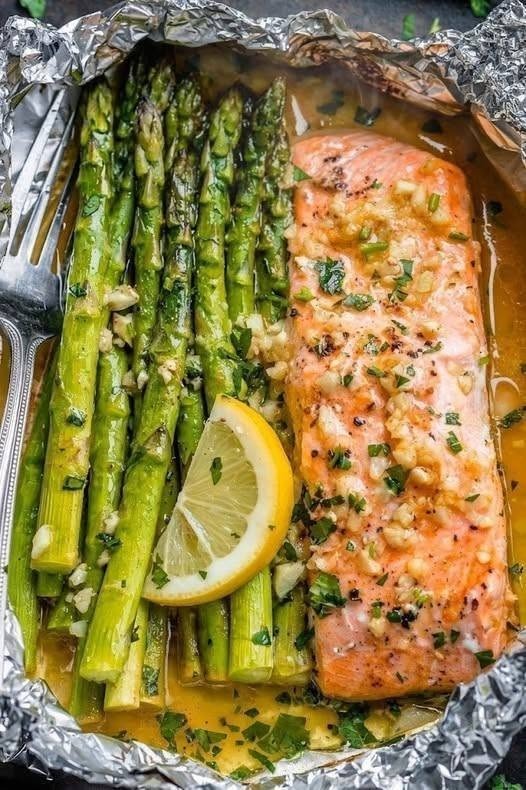
Baked Salmon in Foil with Asparagus and Lemon Garlic Sauce
Description
Baked Salmon in Foil with Asparagus and Lemon Garlic Sauce is an easy, flavourful, and nutritious dinner that brings together tender salmon, crisp-tender asparagus, fresh lemon, garlic, and buttery herbs in one simple foil packet.
The foil locks in moisture as the salmon bakes, helping create perfectly tender fish while allowing the lemon-garlic sauce to infuse every bite. As the salmon cooks, the asparagus absorbs the flavourful juices underneath, making this a complete meal with minimal cleanup.
This recipe is ideal for busy weeknights, meal prep, family dinners, or an elegant dinner when you want something that looks impressive without spending hours in the kitchen. The bright lemon flavour balances the richness of the salmon, while garlic, parsley, and a touch of butter or olive oil create a delicious finishing sauce.
Best of all, everything cooks together on one pan, and cleanup is as simple as folding up the foil.
Prep Time: 10 minutes
Cook Time: 18–22 minutes
Total Time: About 30 minutes
Servings: 4
Course: Dinner
Cuisine: American / Mediterranean-Inspired
Difficulty: Easy
Ingredients
For the Salmon and Asparagus
- 4 salmon fillets, about 5–6 ounces each
- 1 pound fresh asparagus, trimmed
- 2 tablespoons extra-virgin olive oil
- 3 tablespoons unsalted butter, melted
- 4 garlic cloves, finely minced
- 1 large lemon
- 1 teaspoon dried Italian seasoning
- ½ teaspoon paprika
- ½ teaspoon salt
- ¼ teaspoon freshly ground black pepper
- 2 tablespoons fresh parsley, chopped
- Lemon slices, for serving
Optional Garnishes
- Fresh dill
- Extra parsley
- Crushed red pepper flakes
- Lemon zest
- Freshly cracked black pepper
Instructions
1. Preheat the Oven
Preheat your oven to 400°F (200°C).
Place four large pieces of aluminium foil on a baking sheet. Each piece should be large enough to comfortably hold one salmon fillet and a portion of asparagus, with enough extra foil around the edges to create a sealed packet.
For easier cleanup, you can place parchment paper underneath the foil, although this is optional.
2. Prepare the Asparagus
Wash the asparagus thoroughly and pat it dry.
Trim the tough woody ends from the asparagus. You can snap the ends off naturally or use a knife to remove approximately 1–2 inches from the bottom.
If the asparagus spears are very thick, consider cutting them in half lengthwise or giving them a few extra minutes of cooking time.
Divide the asparagus evenly among the four foil sheets and arrange it in the centre of each.
Drizzle the asparagus with a little olive oil and season lightly with salt and black pepper.
3. Prepare the Lemon-Garlic Sauce
In a small bowl, combine:
- Melted butter
- Olive oil
- Minced garlic
- Juice from half of the lemon
- Italian seasoning
- Paprika
- Salt
- Black pepper
Whisk everything together until well combined.
The combination of butter and olive oil creates a rich but balanced sauce, while lemon and garlic provide the bright flavour that makes this dish so delicious.
Reserve the remaining lemon half for slicing and serving.
4. Season the Salmon
Pat the salmon fillets dry with paper towels.
This small step is important because removing excess moisture helps the seasonings adhere to the salmon and encourages better browning.
Place one salmon fillet on top of each portion of asparagus.
Brush the salmon generously with the lemon-garlic sauce.
Make sure the sauce covers the top and sides of the salmon. Some of the sauce will naturally run down over the asparagus, which is exactly what you want.
Sprinkle each fillet with a little additional Italian seasoning, paprika, salt, and black pepper if desired.
5. Add Lemon Slices
Cut the remaining lemon into thin slices.
Place 1–2 lemon slices on top of each salmon fillet.
The lemon slices release their juices as the salmon cooks, adding another layer of fresh citrus flavour.
You can also sprinkle a little lemon zest over the salmon before sealing the packets.
6. Seal the Foil Packets
Bring the long sides of the foil together over the salmon.
Fold the foil tightly to create a sealed packet, then fold or crimp the short ends.
Don’t wrap the salmon so tightly that the foil touches the fish everywhere. Leave a little space inside the packet so steam can circulate.
The sealed foil traps moisture and helps keep the salmon tender while the garlic, lemon, and herbs infuse the fish.
7. Bake
Place the foil packets on the prepared baking sheet.
Bake at 400°F (200°C) for approximately 18–22 minutes, depending on the thickness of the salmon fillets.
Thinner fillets may cook more quickly, while thicker centre-cut pieces may require additional time.
The salmon should be opaque and should flake easily with a fork.
For the most accurate result, check the thickest part with an instant-read thermometer. Salmon reaches the USDA-recommended safe internal temperature at 145°F (63°C).
8. Optional Broiling Step
If you want a slightly more golden surface, carefully open the foil packets after the salmon is cooked.
Switch the oven to broil and place the uncovered salmon under the broiler for approximately 1–2 minutes.
Watch it carefully because the garlic and butter can brown quickly.
This step is completely optional. The salmon will still be delicious without broiling it.
9. Garnish and Serve
Carefully open each packet because hot steam will escape.
Sprinkle the salmon with fresh chopped parsley and dill if desired.
Add another squeeze of fresh lemon juice just before serving.
Serve the salmon directly over the asparagus, spooning some of the lemon-garlic juices from the bottom of the packet over the top.
Recipe Notes
Choose Fresh Salmon
Look for salmon fillets that have a fresh appearance, firm texture, and no strong fishy odour. Center-cut fillets tend to cook evenly and work especially well for foil packets.
Don’t Overcook the Salmon
The biggest mistake with baked salmon is cooking it too long. Salmon should be moist and tender, not dry.
Start checking the fish toward the lower end of the recommended cooking time, especially if your fillets are thinner.
Keep the Asparagus Even
Try to choose asparagus spears of similar thickness so they cook at approximately the same rate.
If using very thick asparagus, consider placing the asparagus in the oven for about 5 minutes before adding the salmon packets.
Fresh Lemon Is Best
Fresh lemon juice gives the sauce a much brighter flavour than bottled lemon juice. Lemon zest can provide an even stronger citrus aroma.
Helpful Tips for the Best Baked Salmon
Pat the salmon dry: This helps the sauce and seasonings stick to the fish.
Don’t skip the garlic: fresh minced garlic provides much more flavour than garlic powder.
Use enough sauce: Some sauce will remain in the foil packet, so don’t be afraid to brush the salmon generously.
Seal the packets properly: A good seal helps retain moisture and flavour.
Don’t open the packets repeatedly: every time you open them, steam escapes and cooking time can increase.
Check thick salmon first: cooking time depends heavily on the thickness of the fillets.
Rest briefly: Let the salmon rest for 2–3 minutes after removing it from the oven before serving.
Add fresh herbs at the end: parsley and dill provide a fresh contrast to the warm garlic butter sauce.
Easy Variations
Honey Lemon Garlic Salmon
For a slightly sweet version, add 1 tablespoon honey to the lemon-garlic sauce.
The honey caramelises slightly during cooking and creates a beautiful sweet-savoury flavour.
Mediterranean Salmon
Add cherry tomatoes, sliced red onion, Kalamata olives, oregano, and a little extra olive oil to the foil packet.
Spicy Lemon Garlic Salmon
Add ¼–½ teaspoon crushed red pepper flakes or cayenne pepper to the sauce.
Garlic Herb Salmon
Add fresh dill, parsley, thyme, and rosemary to the butter mixture.
Parmesan Salmon
After opening the foil packets, sprinkle a small amount of grated Parmesan over the salmon and broil briefly until golden.
Low-Carb Version
The basic recipe is already naturally low in carbohydrates. Serve it with additional roasted vegetables or a leafy green salad for a simple low-carb meal.
What to Serve With Salmon and Asparagus
Although the salmon and asparagus make a complete light meal, several side dishes pair beautifully with this recipe.
Try serving it with:
- Brown rice
- Quinoa
- Cauliflower rice
- Roasted potatoes
- Sweet potatoes
- Couscous
- Wild rice
- Green salad
- Cucumber salad
- Roasted vegetables
- Whole-grain bread
For a Mediterranean-inspired dinner, serve the salmon with quinoa, a tomato-cucumber salad, and a spoonful of hummus.
Storage and Reheating
Store leftover salmon and asparagus in an airtight container in the refrigerator for up to 3 days.
For the best texture, reheat gently.
Place the salmon in a covered baking dish with a small splash of water or lemon juice and warm it in a 300°F (150°C) oven until heated through.
You can also reheat it in the microwave at reduced power, but be careful not to overheat the salmon because it can become dry.
Cold leftover salmon is also delicious flaked over salads, mixed into grain bowls, or added to wraps.
Nutritional Information
Approximate nutrition per serving, including salmon, asparagus, and sauce:
- Calories: 470
- Protein: 40–43 g
- Carbohydrates: 8–10 g
- Fat: 31 g
- Saturated Fat: 8 g
- Fiber: 4 g
- Sugar: 3–4 g
- Sodium: Approximately 450–550 mg
Nutrition values are estimates and may vary depending on the type and size of salmon fillets, amount of butter or olive oil used, and exact seasonings.
Benefits of Baked Salmon in Foil
1. Excellent Source of Protein
Salmon provides high-quality protein, making this meal satisfying and suitable for a protein-focused diet.
2. Rich in Omega-3 Fatty Acids
Salmon is naturally rich in EPA and DHA omega-3 fatty acids, which are important components of a balanced diet.
3. Provides Important Nutrients
Salmon provides nutrients including vitamin B12, vitamin D, selenium, and other essential micronutrients.
4. Asparagus Adds Fiber
Asparagus contributes dietary fibre along with folate, vitamin K, and other nutrients.
5. Naturally Low in Carbohydrates
Salmon contains virtually no carbohydrates, while asparagus contributes only a modest amount, making this recipe suitable for many lower-carbohydrate meal patterns.
6. Minimal Added Sugar
The basic recipe contains no added sugar, making the lemon-garlic version a simple savoury dinner option.
7. Easy Cleanup
Cooking everything inside foil means the baking sheet stays relatively clean, making this recipe particularly convenient for busy nights.
Frequently Asked Questions
Can I use frozen salmon?
Yes. For the best texture, thaw the salmon completely in the refrigerator before cooking and pat it dry.
Can I use other vegetables?
Absolutely. Broccoli, zucchini, green beans, bell peppers, cherry tomatoes, and thinly sliced onions can all work well.
Keep in mind that different vegetables have different cooking times.
Can I make this recipe without butter?
Yes. Simply replace the butter with additional extra-virgin olive oil. The result will still be flavourful and lighter in saturated fat.
Can I use bottled lemon juice?
You can, but fresh lemon juice is recommended because it provides a brighter and fresher flavour.
How do I know when salmon is done?
The salmon should be opaque and flake easily. For food-safety purposes, the thickest part should reach 145°F (63°C).
Why is my salmon dry?
The most common reason is overcooking. Salmon cooks relatively quickly, especially thinner fillets. Start checking early and remove it once it reaches the appropriate temperature.
Can I prepare the foil packets ahead of time?
You can assemble the packets several hours ahead and keep them refrigerated until you’re ready to bake. Keep them properly chilled and bake them according to the recipe.
Can I use skin-on salmon?
Yes. Skin-on fillets work well. Place the salmon skin-side down on the asparagus. The skin can help protect the fish from direct heat.
Can I add cheese?
Yes. Parmesan or feta can be added after baking. Feta gives the dish a particularly delicious Mediterranean flavour.
Can I make this recipe dairy-free?
Yes. Replace the butter completely with extra-virgin olive oil or a dairy-free butter alternative.
Is this recipe good for meal prep?
Yes. Divide the cooked salmon and asparagus into individual containers and refrigerate. It makes a convenient protein-rich lunch or dinner.
Final Tips
For the most flavourful baked salmon in foil with asparagus and lemon garlic sauce, focus on three things: don’t overcook the salmon, use plenty of fresh lemon and garlic, and seal the foil packets well.
The foil creates a moist cooking environment that helps the salmon stay tender while the asparagus cooks in the flavourful juices. Fresh parsley and an extra squeeze of lemon at the end bring everything together.
This recipe is especially convenient when you want a nutritious dinner without a complicated cooking process. From preparation to cleanup, everything is simple, yet the final result feels restaurant-worthy.