
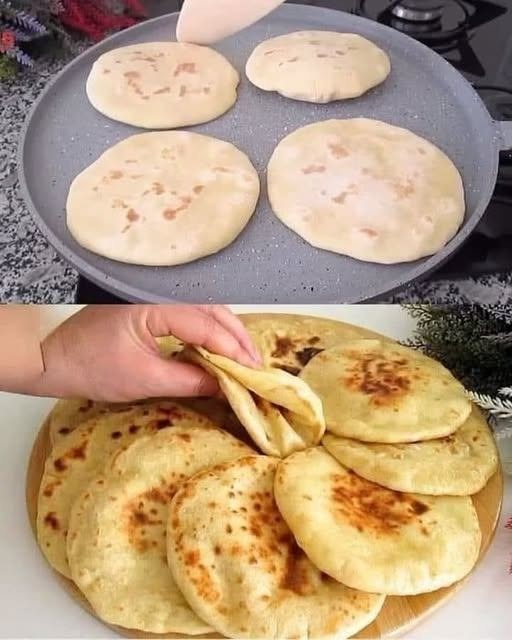
Bread in 10 Minutes – No Oven, Soft & Delicious Yogurt Flatbread
Soft, fluffy, warm, and ready in minutes! 😍🫓 This easy homemade skillet bread requires no oven and no yeast. With a simple dough made from flour, yoghurt, and water, you can create delicious golden flatbreads right on the stovetop.
These quick breads are perfect for breakfast, lunch, dinner, or an afternoon snack. Serve them with butter, cheese, honey, eggs, soups, curries, grilled meat, or your favourite spreads.
The outside becomes lightly golden with beautiful toasted spots, while the inside stays wonderfully soft and tender. Best of all, the recipe is beginner-friendly!
Ingredients
For the Bread
- 4 cups (480 g) all-purpose flour
- 1 cup (220 g) plain yogurt
- 1 cup (200 ml) water
- 1 teaspoon salt (recommended for flavor)
- 1 teaspoon baking powder (optional, for a softer and slightly fluffier bread)
Optional for Serving
- Butter or melted butter
- Olive oil
- Garlic butter
- Honey
- Cheese
- Fresh herbs
Step-by-Step Instructions
Step 1: Prepare the Dough
In a large mixing bowl, add the flour.
Add the salt and baking powder, if using. Mix the dry ingredients together.
Next, add the plain yoghurt.
Slowly pour in the water while mixing everything together with a spoon or your hands.
Continue mixing until a rough dough begins to form.
Important: Depending on the type and brand of flour you use, you may not need every drop of water. Add the water gradually. If the dough feels too dry, add a little more water. If it becomes too sticky, sprinkle in a small amount of flour.
Step 2: Knead the Dough
Transfer the dough onto a lightly floured surface.
Knead it for approximately 3–5 minutes, or until it becomes smooth and soft.
The dough should feel soft and slightly elastic but should not stick excessively to your hands.
Avoid adding too much extra flour while kneading. Too much flour can make the finished bread dense and dry.
Once the dough is smooth, shape it into a ball.
Step 3: Let the Dough Rest
Cover the dough with a clean kitchen towel or plate.
Allow it to rest for approximately 5–10 minutes.
Although this step is short, it helps the flour absorb the moisture and makes the dough easier to roll.
If you are in a hurry, you can begin shaping the bread immediately, but a short rest can improve the texture.
Step 4: Divide the Dough
Place the dough on a lightly floured surface.
Divide it into 8 equal portions.
Shape each portion into a smooth ball.
You can make larger or smaller breads depending on your preference.
For smaller breads, divide the dough into 10–12 pieces.
Step 5: Roll Out the Bread
Take one dough ball and flatten it gently with your hand.
Using a rolling pin, roll it into a round shape approximately ¼ inch thick.
Try not to make the bread extremely thin because a slightly thicker dough creates a softer and fluffier result.
Repeat with the remaining dough balls.
If the dough begins sticking to your rolling pin or work surface, use a very light dusting of flour.
Step 6: Heat the Pan
Place a large nonstick skillet, frying pan, or cast-iron pan over medium to medium-high heat.
Allow the pan to heat well before adding the first piece of dough.
You do not need a large amount of oil. These breads can be cooked in a dry skillet.
For a richer flavour, you can lightly brush the finished breads with butter after cooking.
Step 7: Cook the Bread
Place one rolled piece of dough onto the hot skillet.
Cook for approximately 1–2 minutes on the first side.
You may notice small bubbles beginning to form on the surface.
Once the bottom develops light golden-brown spots, flip the bread.
Cook the second side for another 1–2 minutes.
Flip again if necessary until both sides are cooked and have beautiful golden spots.
The exact cooking time depends on:
- The thickness of your bread
- The temperature of your pan
- The type of skillet you use
Repeat with the remaining dough.
Step 8: Keep the Bread Soft
As each bread finishes cooking, transfer it to a plate.
For extra softness and flavour, brush the warm bread with:
- Melted butter
- Olive oil
- Garlic butter
Stack the cooked breads on top of one another and cover them with a clean kitchen towel.
This helps trap a little steam and keeps the bread beautifully soft.
Serve warm and enjoy!
Optional Garlic Butter Topping
Want to make your flatbread even more delicious?
Ingredients
- 3 tablespoons melted butter
- 1–2 cloves garlic, finely minced
- 1 tablespoon chopped parsley
- Small pinch of salt
Instructions
Mix the melted butter, garlic, parsley, and salt together.
Brush the mixture over the warm, cooked breads.
The result is a soft, golden garlic-yoghurt flatbread that is absolutely irresistible!
Recipe Information
Preparation Time: 10 minutes
Resting Time: 5–10 minutes
Cooking Time: 10–15 minutes
Total Time: Approximately 25–30 minutes
Servings: 8 flatbreads
Difficulty: Easy
Note: The dough itself comes together very quickly, while the total cooking time depends on how many breads you cook at once.
Serving Suggestions
These soft skillet breads are incredibly versatile.
For Breakfast
Serve with:
- Butter and honey
- Fried or scrambled eggs
- Cheese
- Yogurt
- Jam
For Lunch
Use the bread as a wrap with the following:
- Grilled chicken
- Fresh vegetables
- Tuna salad
- Cheese and herbs
For Dinner
Serve alongside:
- Chicken curry
- Lentil soup
- Vegetable stew
- Grilled meat
- Creamy sauces
As a Snack
Warm the bread and enjoy it with:
- Hummus
- Garlic yogurt dip
- Cream cheese
- Avocado
- Olive oil and herbs
Important Recipe Notes
1. Use Plain Yogurt
Plain, unsweetened yoghurt works best for this recipe.
Greek yoghurt can also be used, but because it is thicker, you may need a little extra water to achieve a soft dough.
Avoid flavoured or sweetened yoghurt.
2. Add Water Gradually
Different flour brands absorb different amounts of liquid.
For this reason, it is always best to add most of the water first and then add more only as needed.
The dough should be soft but manageable.
3. Don’t Over-Knead
Unlike some yeast bread recipes, this dough does not need extensive kneading.
A few minutes of kneading is enough to bring the ingredients together and create a smooth texture.
Overworking the dough can make it tougher.
4. Keep the Pan at the Right Temperature
If the pan is too hot, the outside may burn before the inside cooks properly.
If the pan is not hot enough, the bread may become dry before developing those delicious golden spots.
Medium to medium-high heat usually works best.
5. Keep the Finished Bread Covered
Once cooked, stack the breads and cover them with a clean towel.
This simple trick helps keep them soft and warm.
Tips for Perfect Soft Flatbread
Make the Dough Soft
A soft dough generally produces softer bread.
Don’t be afraid if the dough feels slightly tacky before kneading. Add flour only when necessary.
Roll evenly.
Try to roll each piece to a similar thickness so all the breads cook evenly.
Use a Heavy Pan
A cast-iron skillet or heavy-bottomed pan distributes heat well and can create beautiful golden spots.
Don’t Cook for Too Long
Overcooking can dry out the bread.
Remove it from the pan once both sides are cooked and lightly golden.
Brush With Butter
For restaurant-style flavour, brush the warm bread with melted butter immediately after cooking.
Delicious Variations
Cheesy Flatbread
Add approximately 1 cup of shredded mozzarella or cheddar cheese to the centre of the dough before rolling.
Seal the edges and gently roll the bread flat.
Cook as directed until golden and the cheese has melted.
Garlic Herb Bread
Add to the dough:
- 1 teaspoon garlic powder
- 1 tablespoon dried Italian herbs
- 1 tablespoon chopped parsley
This creates a wonderfully fragrant savoury bread.
Spicy Flatbread
Add:
- Chili flakes
- Paprika
- A pinch of cayenne pepper
Perfect for anyone who enjoys a little heat!
Herb Yogurt Bread
Mix chopped fresh herbs into the dough, such as the following:
- Parsley
- Cilantro
- Dill
- Green onions
These herbs add freshness and beautiful color.
Whole-Wheat Option
You can replace part of the all-purpose flour with whole-wheat flour.
For example:
- 2 cups all-purpose flour
- 2 cups whole-wheat flour
Whole-wheat flour absorbs more liquid, so you may need to add a little extra water.
The finished bread will have a heartier texture and nuttier flavour.
Approximate Nutritional Information
Per flatbread, based on 8 servings:
- Calories: 240–270
- Protein: 7–9 g
- Carbohydrates: 45–50 g
- Fat: 2–4 g
- Fiber: 2–3 g
- Sugar: 1–2 g
Nutritional information is approximate and may vary depending on the yoghurt, flour, and additional toppings used.
Benefits of Homemade Yogurt Flatbread
Simple Ingredients
This recipe uses basic pantry and refrigerator ingredients that are easy to find.
No Oven Required
Perfect for days when you don’t want to turn on the oven or when you simply want fresh bread quickly.
No Yeast Needed
Traditional yeast bread often requires proofing and rising time. This simple flatbread skips that process.
Versatile
You can enjoy it with sweet or savoury foods.
Homemade Freshness
Making bread at home allows you to control the ingredients and customise the flavour according to your preferences.
Frequently Asked Questions
Can I make this bread without baking powder?
Yes. The baking powder is optional. Without it, the bread will be more like a traditional soft flatbread and slightly less fluffy.
Can I use Greek yoghurt?
Yes. Greek yoghurt works well, but it is thicker than regular yoghurt. Add a little extra water if the dough feels too dry.
Can I use whole-wheat flour?
Yes, but whole-wheat flour absorbs more liquid and can create a denser bread. Using half whole-wheat and half all-purpose flour is a great option.
Why is my bread hard?
The most common reasons are:
- Adding too much flour
- Rolling the dough too thin
- Cooking for too long
- Using a pan that is too hot
Keep the dough soft and avoid overcooking.
Can I store leftover bread?
Yes. Allow the bread to cool completely and store it in an airtight container or sealed bag.
Keep it at room temperature for 1–2 days or refrigerate for up to 4 days.
Can I freeze these flatbreads?
Absolutely! Allow them to cool completely, place parchment paper between each bread, and store them in a freezer-safe bag.
Freeze for up to 2 months for the best quality.
How do I reheat them?
Warm the bread in:
- A dry skillet for 30–60 seconds per side
- A microwave for a few seconds
- A warm oven if reheating several at once
A skillet is often the best option for restoring the fresh texture.
Can I add oil to the dough?
Yes. Adding 1–2 tablespoons of olive oil can make the dough slightly richer and softer, but it is not necessary.
Final Thoughts
This Bread in 10 Minutes – No Oven Yoghurt Flatbread is one of those wonderfully simple recipes that everyone should know. With just a few basic ingredients, you can make soft, warm, golden homemade bread right on your stovetop.