
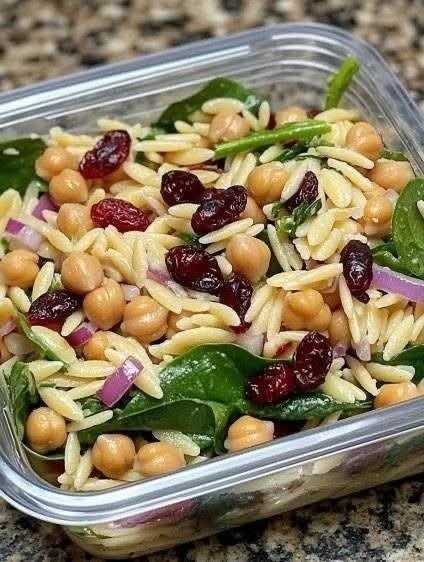
Chickpea, Spinach & Orzo Salad with Cranberries
Description
The colourful dish in the photo is best recreated as a chickpea, spinach & orzo salad with dried cranberries and red onion. It combines tender orzo pasta, creamy chickpeas, fresh baby spinach, sweet-tart dried cranberries, and crisp red onion in a bright lemon-herb dressing.
One important clarification: there is no vegetable or single food that “eats all the sugar in the body” or cures diabetes. The image’s claim is a health myth. However, meals built around vegetables, fibre-rich foods, plant proteins, and appropriately portioned carbohydrates can be part of a healthy eating pattern for blood-glucose management. The American Diabetes Association recommends emphasising non-starchy vegetables, quality carbohydrates, plant-based proteins, and less added sugar.
Chickpeas are particularly useful in this type of meal because they provide both protein and fibre, although they also contain carbohydrates and therefore can affect blood glucose. Ddiabetes.org
This recipe makes a satisfying lunch or light dinner and works especially well for meal prep.
Recipe Details
Recipe Name: Chickpea, Spinach & Orzo Salad with Cranberries
Servings: 4
Prep Time: 15 minutes
Cook Time: 10 minutes
Total Time: 25 minutes
Difficulty: Easy
Cuisine: Mediterranean-inspired
Best For: Lunch, dinner, meal prep, picnics, potlucks
Ingredients
For the Salad
- 1½ cups (250 g) dry orzo
- 1½ cups (250–260 g) cooked chickpeas, drained and rinsed
- 3 cups (90–100 g) fresh baby spinach
- ½ cup (60–75 g) dried cranberries
- ½ small red onion, thinly sliced or finely diced
- ½ cup chopped cucumber
- ¼ cup fresh parsley, chopped
- ¼ cup sliced almonds, optional
- ¼ cup crumbled feta cheese, optional
- Salt, to taste
- Black pepper, to taste
For the Lemon Dressing
- 3 tablespoons extra-virgin olive oil
- 2 tablespoons fresh lemon juice
- 1 tablespoon red wine vinegar
- 1 teaspoon Dijon mustard
- 1 small garlic clove, finely minced
- 1 teaspoon honey or maple syrup, optional
- ½ teaspoon dried oregano
- ¼ teaspoon salt
- ¼ teaspoon freshly ground black pepper
Optional Additions
- ¼ teaspoon smoked paprika
- Fresh dill
- Baby arugula
- Cherry tomatoes
- Avocado
- Pumpkin seeds
- Sunflower seeds
- Grilled chicken
- Cubed tofu
Instructions
1. Cook the orzo
Bring a large pot of lightly salted water to a boil.
Add the orzo and cook according to the package directions, usually around 8–10 minutes, until tender but still slightly firm.
Avoid overcooking the pasta because the salad will have a better texture when the orzo remains firm.
Drain thoroughly.
For a cold salad, rinse the cooked orzo briefly under cool water to stop the cooking process. Drain very well and transfer it to a large mixing bowl.
2. Prepare the chickpeas
If using canned chickpeas, drain them thoroughly and rinse under cool running water.
Pat them dry with a clean towel if you have time. Removing excess moisture helps prevent the salad from becoming watery.
Add the chickpeas to the cooled orzo.
3. Prepare the vegetables
Wash and dry the spinach.
Thinly slice the red onion and chop the cucumber and parsley.
Add the spinach, red onion, cucumber, parsley, and dried cranberries to the bowl containing the orzo and chickpeas.
If using almonds or feta, reserve a small amount for garnishing.
4. Make the dressing
In a small bowl or jar, combine the olive oil, lemon juice, red wine vinegar, Dijon mustard, garlic, honey or maple syrup, oregano, salt, and black pepper.
Whisk vigorously until the dressing becomes well combined.
Taste it.
For more acidity, add another teaspoon of lemon juice. For more sweetness, add a tiny amount of honey or maple syrup. For a stronger savoury flavour, add a little more Dijon mustard.
5. Combine everything
Pour approximately three-quarters of the dressing over the orzo mixture.
Toss gently until the ingredients are evenly coated.
Add more dressing as needed.
Be gentle when mixing so the chickpeas remain intact and the spinach doesn’t become overly bruised.
6. Let the flavors develop
For the best flavour, refrigerate the salad for 20–30 minutes before serving.
This gives the lemon dressing time to soak into the orzo and chickpeas.
If you are preparing it for meal prep, the flavours will become even more developed after several hours in the refrigerator.
7. Garnish and serve
Just before serving, toss the salad once more.
Top with the reserved cranberries, almonds, feta, parsley, and a few fresh spinach leaves.
Serve chilled or slightly cool.
Notes
About the vegetable claim
The phrase “the vegetable that eats all the sugar in the body” is not scientifically accurate. No vegetable can remove all sugar from your bloodstream or act as a cure for diabetes.
Blood glucose is influenced by the amount and type of carbohydrate eaten, insulin and other hormones, physical activity, medications, stress, sleep, illness, and other factors. The American Diabetes Association specifically notes that carbohydrates have a major effect on blood glucose and that meal balance and portion size matter.
This salad can nevertheless fit into a balanced eating pattern because it combines vegetables and leafy greens with chickpeas and a controlled portion of pasta.
Orzo isn’t a vegetable
Orzo looks like rice but is actually a small pasta. Because it is a carbohydrate-rich food, portion size matters, particularly for people monitoring blood glucose.
For a lower-carbohydrate version, reduce the orzo and increase spinach, cucumber, peppers, broccoli, or other non-starchy vegetables.
Chickpeas contain carbohydrates
Chickpeas are nutritious, but they aren’t carbohydrate-free. The ADA identifies chickpeas and other legumes as quality carbohydrate foods that also provide plant-based protein and fibre.
Cranberries
Dried cranberries provide sweetness and chewiness, but many commercial varieties contain added sugar. Choose unsweetened dried cranberries when available, or use a smaller amount.
Make it dairy free.
Simply omit the feta cheese.
Make it vegan
Use maple syrup instead of honey and omit the feta, or replace it with a plant-based feta alternative.
Tips for the Best Salad
1. Don’t overcook the orzo.
Slightly firm pasta holds up much better in a refrigerated salad.
2. Cool the pasta before adding spinach.
Hot pasta can wilt the spinach excessively. Let the orzo cool before combining the ingredients.
3. Rinse canned chickpeas.
Rinsing helps remove some of the sodium from canned chickpeas. The ADA also recommends draining and rinsing canned beans to reduce added salt.
4. Use fresh lemon juice.
Fresh lemon gives the dressing a brighter flavour than bottled lemon juice.
5. Add crunchy ingredients last.
Almonds, seeds, and other crunchy toppings are best added shortly before serving.
6. Adjust the dressing after chilling.
Cold foods can taste less intensely seasoned. Taste the salad after refrigeration and add a little lemon juice, salt, pepper, or dressing if necessary.
7. Don’t drown the salad.
Start with about three-quarters of the dressing and add more only if needed.
8. Increase the vegetables.
For a more vegetable-forward meal, reduce the amount of orzo and add extra spinach, cucumber, bell pepper, tomatoes, broccoli, or other non-starchy vegetables. The ADA recommends making non-starchy vegetables a major part of a balanced meal.
Nutritional Information
The following is an approximate estimate per serving, assuming four servings and including the basic dressing but excluding optional feta and almonds:
- Calories: approximately 400–440 kcal
- Protein: approximately 13–15 g
- Carbohydrates: approximately 62–68 g
- Fiber: approximately 9–11 g
- Total fat: approximately 12–15 g
- Saturated fat: approximately 1.5–2.5 g
- Sugar: approximately 12–16 g
- Sodium: approximately 350–500 mg
Actual nutrition will vary according to the specific orzo, chickpeas, dried cranberries, olive oil, and other ingredients used.
For people with diabetes, prediabetes, or a medically prescribed carbohydrate target, the carbohydrate amount of this recipe should be considered when planning the rest of the meal. The ADA emphasises that quality carbohydrates—including beans, whole grains, fruits, and dairy—can be part of a diabetes eating plan, but carbohydrate portions remain important.
Potential Benefits
1. Provides dietary fiber
Chickpeas, spinach, and other vegetables contribute fibre. Fibre-rich foods can help make meals more filling and are an important part of a balanced eating pattern. The ADA lists beans, chickpeas, vegetables, fruits, nuts, and whole grains among useful sources of dietary fibre. Ddiabetes.org
2. Plant-based protein
Chickpeas provide plant-based protein along with fibre. Legumes can be a useful alternative to some animal protein sources.
3. Includes leafy greens
Spinach is a nutrient-dense non-starchy vegetable. Non-starchy vegetables provide vitamins, minerals, fibre, and phytochemicals while generally contributing relatively few calories and carbohydrates.
4. Healthy fats
Extra-virgin olive oil contributes predominantly unsaturated fat. Nuts and seeds can provide additional unsaturated fats if included.
5. Less added sugar when prepared appropriately
Using unsweetened dried cranberries and limiting or omitting the honey in the dressing can reduce added sugar.
6. Balanced meal potential
When portioned appropriately, this salad combines vegetables, plant protein, carbohydrates, and healthy fats. This aligns with the general principle of balancing non-starchy vegetables, protein, and quality carbohydrate foods.
Important: These benefits do not mean the recipe treats, reverses, or cures diabetes. If you have diabetes, use your personal meal plan and healthcare team’s advice.
Frequently Asked Questions
Is this salad good for diabetes?
It can be incorporated into a diabetes-friendly eating pattern, but it is not a diabetes treatment. Orzo and chickpeas both provide carbohydrates, so portion size matters. Increasing the non-starchy vegetables and reducing the orzo can make the meal more vegetable-forward. The ADA recommends a balanced approach rather than eliminating carbohydrates entirely.
Does spinach lower blood sugar?
Spinach is a nutritious non-starchy vegetable, but it should not be described as a food that “eats” or removes sugar from the body. Including spinach as part of a balanced diet can support overall nutrition, but it does not replace diabetes medication or medical treatment.
Can I eat chickpeas if I have diabetes?
Yes, chickpeas can be included in many diabetes meal plans. They contain both protein and carbohydrates and are also a source of fibre. Your appropriate portion depends on your overall eating plan and carbohydrate needs.
Can I make this salad lower in carbohydrates?
Yes. Reduce the orzo to ¾–1 cup cooked per batch and increase spinach, cucumber, bell pepper, broccoli, or other non-starchy vegetables. You can also add extra protein such as grilled chicken, tofu, or eggs.
Can I replace orzo?
Absolutely. Quinoa, brown rice, farro, barley, or another whole-grain option can be substituted. Whole grains such as oats, quinoa, barley, and brown rice are examples of quality carbohydrate foods highlighted by the ADA.
Can I use fresh cranberries?
Fresh cranberries are much more tart and firm than dried cranberries. They aren’t a direct one-to-one substitute for the sweet dried fruit. You can instead use fresh blueberries, chopped apple, pomegranate arils, or a small amount of raisins.
How long does the salad last?
Store it in an airtight container in the refrigerator and ideally consume it within 3–4 days. Keep nuts or seeds separately if you want them to remain crunchy.
Can I prepare it the day before?
Yes. In fact, preparing it several hours ahead allows the dressing to penetrate the orzo and chickpeas and improves the flavour.
Can I add chicken?
Yes. Grilled chicken is an excellent addition if you want more protein. Salmon, tuna, boiled eggs, tofu, or tempeh can also work well.
Can I leave out the dried cranberries?
Yes. If you’re trying to reduce added sugar, omit them or replace them with fresh berries, chopped apple, or another fruit without added sugar.
Why did my salad become dry in the refrigerator?
Orzo and chickpeas absorb dressing as they sit. Before serving, add a tablespoon of lemon juice, olive oil, or reserved dressing and toss again.
Can I serve this warm?
Yes. You can serve the orzo and chickpeas slightly warm with the spinach added at the end. However, the pictured dish is best treated as a chilled or room-temperature salad.
Final Thoughts
This Chickpea, Spinach & Orzo Salad with Cranberries is a colourful, filling meal-prep recipe inspired by the dish shown in the photo. Its combination of creamy chickpeas, tender orzo, fresh spinach, sweet-tart cranberries, red onion, and lemon dressing makes it suitable for lunches, picnics, packed meals, or easy weeknight dinners.
For a blood-glucose-conscious version, focus on portioning the orzo and cranberries while increasing non-starchy vegetables and keeping added sugars modest. This approach is more accurate and useful than claiming that one vegetable can “eat all the sugar” in the body. The ADA recommends a balanced eating pattern built around non-starchy vegetables, lean or plant-based protein, quality carbohydrates, healthy fats, and less added sugar.