
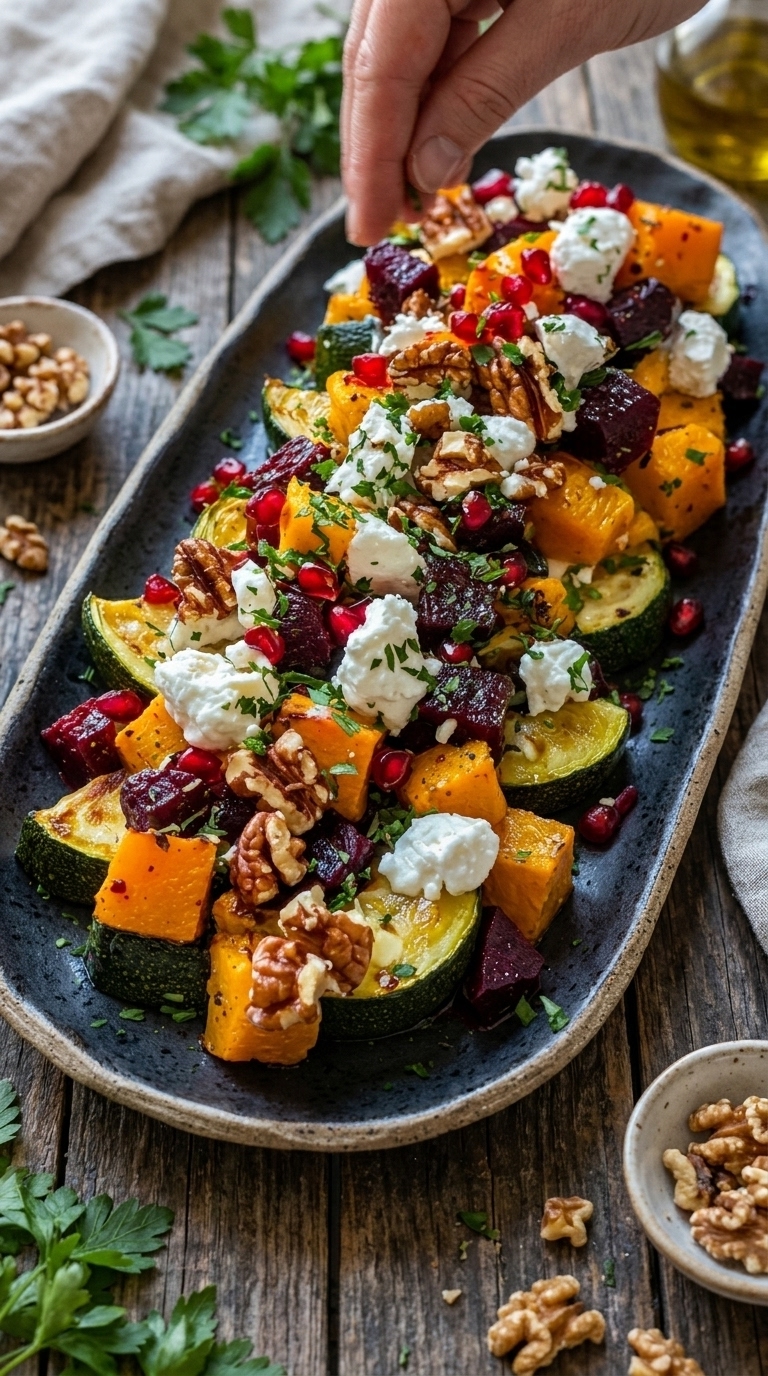
Roasted Butternut Squash & Beet Salad with Goat Cheese and Pomegranate
Description
Bring beautiful colors, fresh flavors, and wholesome ingredients to your table with this delicious Roasted Butternut Squash, Beetroot & Zucchini Salad with Goat Cheese, Walnuts and Pomegranate. This vibrant roasted vegetable salad combines naturally sweet butternut squash, earthy beetroot, tender zucchini, creamy goat cheese, crunchy walnuts, and juicy pomegranate seeds.
Every bite offers a wonderful balance of sweet, savory, creamy, and crunchy textures. The roasted vegetables develop golden, caramelized edges while remaining tender inside. Fresh goat cheese adds a smooth, tangy richness, while toasted walnuts provide a satisfying crunch. Bright red pomegranate seeds bring a refreshing burst of sweetness that makes the dish even more special.
A simple honey balsamic dressing ties everything together, enhancing the natural flavors without overpowering the ingredients.
This colorful salad is perfect for Thanksgiving, Christmas, fall gatherings, Mediterranean-inspired dinners, or a healthy weekday lunch. It looks elegant enough for special occasions but is surprisingly easy to prepare at home.
Whether served warm, at room temperature, or slightly chilled, this roasted vegetable salad makes a beautiful addition to any meal. It can be enjoyed as a satisfying vegetarian dish or served alongside roasted chicken, grilled salmon, or your favorite main course.
With its gorgeous presentation and irresistible combination of flavors, this recipe is sure to become a seasonal favorite.
Recipe Information
- Recipe Name: Roasted Butternut Squash, Beetroot & Zucchini Salad with Goat Cheese, Walnuts and Pomegranate
- Prep Time: 20 minutes
- Cook Time: 35–40 minutes
- Total Time: Approximately 1 hour
- Servings: 4–6
- Cooking Method: Oven Roasting
- Cuisine: Mediterranean-Inspired
- Course: Salad / Side Dish
- Difficulty Level: Easy
- Best Served: Warm or at Room Temperature
Ingredients
For the Roasted Vegetables
- 2 cups butternut squash, peeled and cubed
- 2 medium beets, peeled and cubed
- 2 medium zucchini, sliced into thick half-moons
- 3 tablespoons olive oil
- ½ teaspoon salt
- ½ teaspoon black pepper
- ½ teaspoon dried thyme
- ½ teaspoon paprika
For the Salad Topping
- ½ cup crumbled soft goat cheese
- ½ cup walnuts, roughly chopped
- ½ cup fresh pomegranate seeds
- 2 tablespoons fresh parsley, chopped
For the Honey Balsamic Dressing
- 3 tablespoons extra virgin olive oil
- 1½ tablespoons balsamic vinegar
- 1 tablespoon honey
- 1 teaspoon Dijon mustard
- ¼ teaspoon salt
- ¼ teaspoon black pepper
Step-by-Step Cooking Instructions
Step 1: Prepare the Vegetables
🥕 Begin by washing all the vegetables thoroughly under cold running water.
Peel the butternut squash, remove the seeds, and cut the flesh into approximately 1-inch cubes.
Peel the beets and cut them into similarly sized cubes.
Trim the ends of the zucchini and slice them into thick half-moons, approximately ½–¾ inch thick.
Try to keep the pieces relatively uniform so they roast evenly.
Pat the vegetables dry with paper towels to remove excess moisture.
Helpful Tip: Cut the beets separately and use a different cutting board if you want to prevent their deep red color from staining the other vegetables.
Step 2: Preheat the Oven
🔥 Preheat your oven to 425°F (220°C).
Line two large baking sheets with parchment paper.
Using separate baking sheets allows the vegetables to roast properly without overcrowding.
Place the cubed butternut squash and beets on one baking sheet, keeping them in separate sections.
Reserve the second baking sheet for the zucchini.
Step 3: Season the Butternut Squash and Beets
🫒 Drizzle approximately 2 tablespoons of olive oil over the butternut squash and beets.
Sprinkle with salt, black pepper, dried thyme, and paprika.
Toss gently until the vegetables are evenly coated.
Spread the vegetables into a single layer, leaving a little space between the pieces.
Avoid piling them on top of each other because overcrowding causes steaming instead of roasting.
Step 4: Roast the Butternut Squash and Beets
🍠 Place the baking sheet in the preheated oven.
Roast for approximately 30–40 minutes, depending on the size of the vegetable pieces.
Halfway through cooking, gently turn the vegetables using a spatula.
The butternut squash should become tender with lightly caramelized golden edges.
The beets should be fork-tender while maintaining their shape.
If the squash finishes before the beets, remove it from the baking sheet and continue roasting the beets until tender.
Helpful Tip: Beets are naturally denser than butternut squash and may require a little additional cooking time.
Step 5: Roast the Zucchini
🥒 While the squash and beets are roasting, place the sliced zucchini on the second baking sheet.
Drizzle with the remaining tablespoon of olive oil and season lightly with salt and black pepper.
Toss gently to coat.
Arrange the zucchini in a single layer.
Place it in the oven during the final 15–20 minutes of roasting.
Roast until the zucchini becomes tender with lightly golden edges.
Avoid overcooking because zucchini contains a high amount of moisture and can become too soft.
The goal is to achieve tender centers with a lightly roasted exterior.
Step 6: Toast the Walnuts
🌰 Place the chopped walnuts in a small dry skillet over medium-low heat.
Toast for approximately 3–5 minutes, stirring frequently.
The walnuts are ready when they become fragrant and lightly golden.
Remove them immediately from the skillet to prevent burning.
Allow them to cool before adding them to the salad.
Toasting enhances their natural nutty flavor and creates a delicious crunchy texture.
Step 7: Prepare the Honey Balsamic Dressing
🍯 In a small mixing bowl or glass jar, combine:
- Extra virgin olive oil
- Balsamic vinegar
- Honey
- Dijon mustard
- Salt
- Black pepper
Whisk vigorously until the ingredients form a smooth, slightly thickened dressing.
Taste and adjust the seasoning if necessary.
For a sweeter dressing, add a little more honey.
For extra tanginess, add a small splash of balsamic vinegar.
The finished dressing should have a balanced sweet and tangy flavor that complements the roasted vegetables.
Step 8: Cool the Roasted Vegetables Slightly
⏰ Once the vegetables are fully roasted, remove the baking sheets from the oven.
Allow them to cool for approximately 5–10 minutes.
This short resting period prevents the goat cheese from melting too quickly when added.
The vegetables should remain slightly warm but not extremely hot.
Warm roasted vegetables absorb the dressing beautifully, making the salad especially flavorful.
Step 9: Assemble the Salad
🥗 Arrange the roasted butternut squash, beetroot, and zucchini on a large serving platter.
For an attractive presentation, distribute the vegetables evenly so their vibrant orange, purple, and green colors remain visible.
Gently toss or arrange them without crushing the tender pieces.
Drizzle approximately half of the honey balsamic dressing over the vegetables.
Use a large spoon to gently distribute the dressing.
Step 10: Add the Goat Cheese
🧀 Scatter small spoonfuls or crumbles of soft goat cheese over the roasted vegetables.
Distribute the cheese evenly so every serving includes some of its creamy, tangy flavor.
Avoid mixing too aggressively because the goat cheese may become overly blended with the warm vegetables.
Leaving visible pieces creates a beautiful presentation and provides a creamy contrast to the roasted ingredients.
Step 11: Add Walnuts and Pomegranate
❤️ Sprinkle the toasted walnuts generously over the salad.
Next, scatter the fresh pomegranate seeds across the platter.
The walnuts add a rich, crunchy texture, while the pomegranate seeds provide little bursts of refreshing sweetness.
These toppings also create a beautiful contrast against the orange squash, dark purple beets, and green zucchini.
Step 12: Garnish and Serve
🌿 Finish the salad with freshly chopped parsley.
Drizzle a little additional honey balsamic dressing over the top if desired.
Serve immediately while the vegetables are slightly warm, or allow the salad to reach room temperature.
This colorful dish is perfect for family dinners, holiday gatherings, and special occasions.
Helpful Cooking Tips
1. Roast the Vegetables Separately
Beets, squash, and zucchini have different cooking times.
Roasting them separately or adding them to the oven at different times prevents overcooking.
2. Avoid Overcrowding
Spread the vegetables into a single layer on the baking sheets.
Proper spacing allows the edges to caramelize instead of steam.
3. Use Fresh Goat Cheese
Soft goat cheese provides a delicious creamy texture and slightly tangy flavor.
Choose plain goat cheese for the best balance with the sweet roasted vegetables.
4. Toast the Walnuts
Toasting walnuts brings out their natural flavor and makes them extra crunchy.
Always watch them closely because nuts can burn quickly.
5. Add Pomegranate Last
Fresh pomegranate seeds should be added just before serving.
This preserves their bright color, fresh flavor, and juicy texture.
6. Do Not Overdress the Salad
Start with a small amount of dressing.
You can always add more, but too much dressing may overpower the natural sweetness of the vegetables.
7. Serve Slightly Warm
This salad tastes especially delicious when the roasted vegetables are warm and the cheese remains cool and creamy.
Recipe Notes
Butternut Squash: Fresh butternut squash provides the best texture, but pre-cut squash can save preparation time.
Beetroot: Both red and golden beets work well. Red beets create the beautiful deep purple color shown in this salad.
Zucchini: Choose firm zucchini with smooth skin. Avoid slicing it too thinly because it may become mushy during roasting.
Goat Cheese: Soft goat cheese is ideal, but feta cheese can be used for a saltier Mediterranean-style variation.
Walnuts: Pecans or toasted almonds can replace walnuts if preferred.
Pomegranate: Fresh pomegranate seeds add sweetness and color. Dried cranberries can be used as an alternative.
Dressing: The honey balsamic dressing can be prepared up to 3 days in advance and refrigerated in a sealed container.
Delicious Variations
Mediterranean Feta Version
Replace goat cheese with crumbled feta.
Add a little fresh oregano and lemon juice for a brighter Mediterranean flavor.
Fall Harvest Salad
Add roasted sweet potatoes and a handful of dried cranberries.
This version is especially delicious for Thanksgiving and autumn gatherings.
Extra Crunchy Version
Replace walnuts with toasted pecans or pumpkin seeds.
Both options provide a wonderful crunchy texture.
Vegan Version
Use a plant-based cheese alternative instead of goat cheese.
Replace honey with maple syrup in the dressing.
Protein-Rich Version
Add cooked chickpeas, grilled chicken, or quinoa to create a more filling main dish.
Best Dishes to Serve with This Salad
This roasted vegetable salad pairs beautifully with many main dishes.
Roasted Chicken: Tender roasted chicken complements the sweet vegetables and creamy goat cheese.
Grilled Salmon: The richness of salmon pairs wonderfully with the tangy balsamic dressing.
Garlic Rosemary Lamb: A flavorful main dish that works especially well with Mediterranean-inspired vegetables.
Roasted Turkey: This salad makes an elegant Thanksgiving or Christmas side dish.
Grilled Steak: The sweet roasted squash and tangy cheese provide a delicious contrast to savory steak.
Quinoa or Couscous: Add cooked grains for a satisfying vegetarian lunch or dinner.
Crusty Bread: Serve with warm bread to enjoy the delicious dressing and roasted vegetable juices.
Storage and Reheating Instructions
Refrigeration
For the best results, store the roasted vegetables separately from the goat cheese, walnuts, pomegranate seeds, and dressing.
Place the vegetables in an airtight container and refrigerate for up to 3–4 days.
Store the dressing in a separate sealed jar.
Keep the walnuts in a dry, airtight container to preserve their crunch.
Freezing
Freezing the fully assembled salad is not recommended.
Goat cheese, zucchini, and pomegranate seeds may lose their original texture after thawing.
If necessary, the roasted squash and beets can be frozen separately for up to 2 months for best quality.
Reheating
Preheat the oven to 350°F (175°C).
Spread the refrigerated roasted vegetables on a baking sheet.
Heat for approximately 10–15 minutes, or until thoroughly heated.
If reheating cooked leftovers for food safety, heat them to 165°F (74°C).
Allow the vegetables to cool slightly before adding the fresh cheese, walnuts, pomegranate seeds, and dressing.
Make-Ahead Instructions
Roast the vegetables up to 2 days before serving.
Prepare the dressing separately and refrigerate.
When ready to serve, gently warm the vegetables and assemble the salad with fresh toppings.
This method is especially convenient when preparing a large holiday meal.
Nutritional Information
Estimated nutrition per serving (based on 6 servings):
- Calories: 280–330 kcal
- Protein: 6–9 g
- Carbohydrates: 23–29 g
- Fat: 19–23 g
- Saturated Fat: 4–6 g
- Fiber: 4–6 g
- Sugar: 11–15 g
- Sodium: 300–450 mg
These values are approximate and depend on the portion size, type of cheese, and amount of dressing used.
Nutritional Benefits
Rich in Vitamins
Butternut squash is an excellent source of beta-carotene, which the body converts into vitamin A.
Vitamin A supports normal vision, immune function, and healthy skin.
Provides Dietary Fiber
Beets, squash, zucchini, walnuts, and pomegranate contribute dietary fiber.
Fiber supports digestive health and helps make meals more satisfying.
Contains Healthy Fats
Walnuts and olive oil provide unsaturated fats, which can support heart health when included as part of a balanced diet.
Provides Antioxidants
Pomegranate seeds, beets, and colorful vegetables contain natural plant compounds with antioxidant properties.
Supports Bone Health
Goat cheese provides calcium and phosphorus, which contribute to healthy bones and teeth.
Naturally Colorful and Nutritious
Using several different vegetables provides a variety of vitamins, minerals, and beneficial plant compounds.
Frequently Asked Questions (Q&A)
Q1: Can I make this salad ahead of time?
Yes! Roast the vegetables and prepare the dressing in advance.
Store everything separately and assemble the salad shortly before serving for the best texture.
Q2: Can I replace goat cheese with feta?
Absolutely! Feta cheese is a delicious alternative that provides a slightly saltier flavor.
Both cheeses pair beautifully with roasted squash and beetroot.
Q3: Can I serve this salad cold?
Yes. This salad tastes delicious warm, at room temperature, or chilled.
For the best flavor, allow refrigerated vegetables to sit at room temperature briefly before serving.
Q4: Can I use sweet potatoes instead of butternut squash?
Yes. Sweet potatoes are an excellent substitute.
Cut them into evenly sized cubes and roast until tender and golden.
Q5: How do I keep the vegetables from becoming soggy?
Avoid overcrowding the baking sheets, dry the vegetables before roasting, and add the dressing shortly before serving.
Final Thoughts
This Roasted Butternut Squash, Beetroot & Zucchini Salad with Goat Cheese, Walnuts and Pomegranate is a beautiful combination of colorful vegetables, creamy cheese, crunchy nuts, and refreshing fruit.
The naturally sweet roasted squash, earthy beets, tender zucchini, and tangy goat cheese create a wonderful balance of flavors and textures.
Finished with toasted walnuts, fresh pomegranate seeds, and a simple honey balsamic dressing, this salad is both delicious and visually impressive.
Whether you’re planning a Thanksgiving feast, Christmas dinner, Mediterranean-inspired meal, or healthy family lunch, this easy roasted vegetable salad is a fantastic choice.
Serve it warm or at room temperature, garnish with fresh parsley, and enjoy every colorful, flavorful bite.
Save this delicious roasted vegetable salad recipe for your next family gathering or holiday dinner!
https://chilismenususa.com/crispy-garlic-parmesan-smashed-potatoes-easy-cheesy-potato-recipe/