
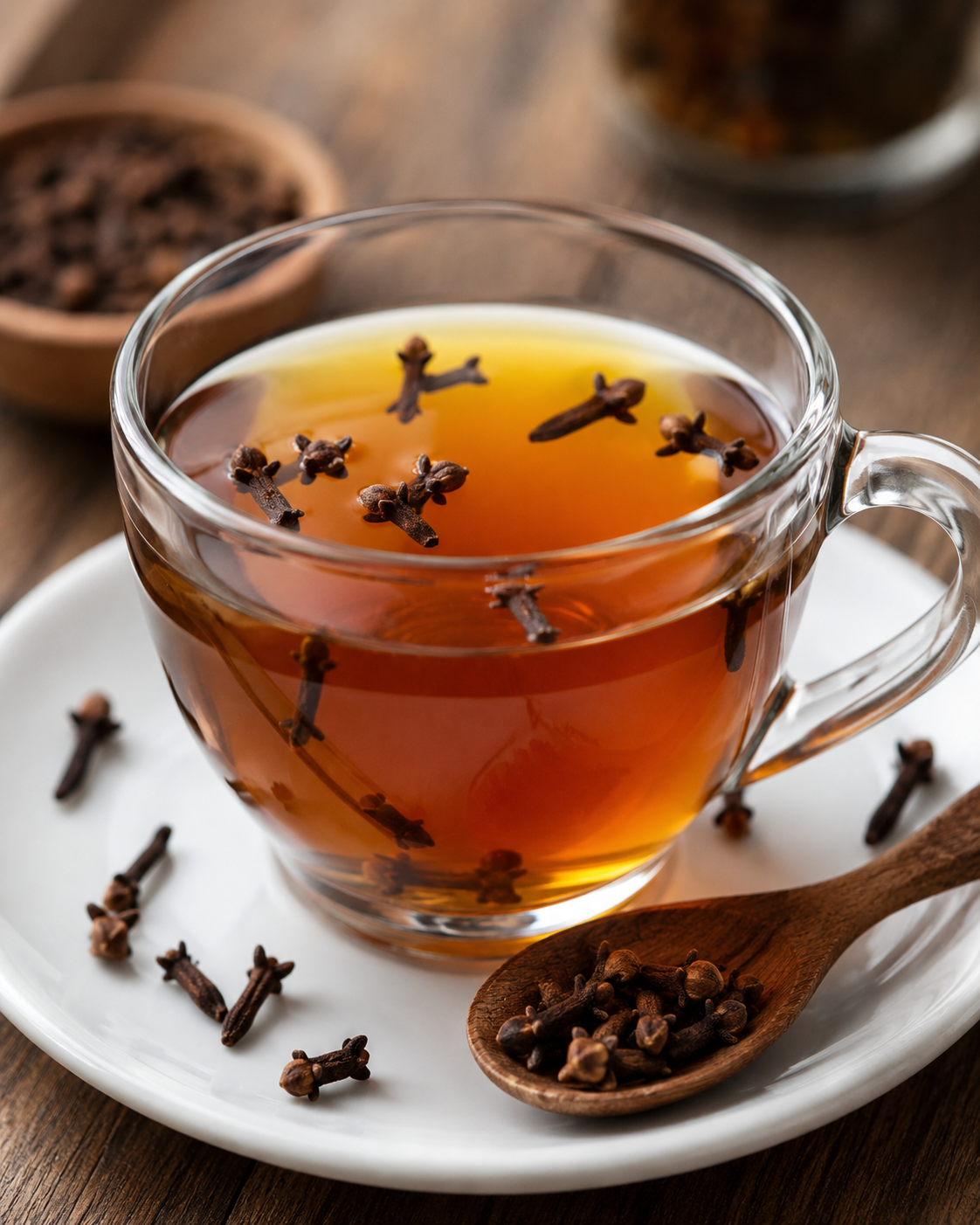
Clove Tea – Warm & Aromatic Spiced Herbal Tea
Description
Clove tea is a warm, aromatic herbal drink made by gently simmering whole cloves in water until their distinctive spicy fragrance and flavour infuse the liquid. Cloves have an intense warming taste, so only a small amount is needed to make a flavourful cup.
This simple drink can be enjoyed plain or balanced with fresh lemon, ginger, cinnamon, or a small amount of honey. It’s naturally caffeine-free when prepared only with cloves and makes a cosy alternative to traditional tea or coffee, particularly in the evening or during colder weather.
Cloves contain aromatic plant compounds, most notably eugenol, which has been extensively studied for its antioxidant properties. However, clove tea shouldn’t be presented as a cure, detox treatment, or rapid weight-loss drink. Think of it primarily as a flavourful herbal beverage that can be part of an overall balanced diet.
Because cloves are extremely potent, stronger isn’t necessarily better. A gently infused tea made with just a few whole cloves provides plenty of flavour without becoming unpleasantly bitter or overpowering.
Ingredients
Basic Clove Tea
- 2 cups water
- 4–6 whole cloves
- 1 small cinnamon stick, optional
- 2–3 thin slices fresh ginger, optional
- 1–2 teaspoons fresh lemon juice, optional
- 1 teaspoon honey, optional
Optional Garnish
- Thin lemon slice
- Cinnamon stick
- Fresh ginger slice
Instructions
1. Measure the Cloves
Start with 4–6 whole cloves for 2 cups of water.
Whole cloves are preferable to ground cloves because they’re easier to strain and produce a cleaner drink.
Avoid assuming that adding large amounts will provide additional benefits. Cloves have a powerful flavour and contain concentrated compounds, so moderate quantities are preferable.
2. Bring the Water to a Boil
Pour 2 cups of fresh water into a small saucepan.
Bring it to a gentle boil over medium-high heat.
Using fresh water rather than repeatedly boiled water generally gives herbal infusions a cleaner taste.
3. Add the Cloves
Once the water reaches a boil, add the whole cloves.
If you’re making the ginger or cinnamon variation, add those ingredients now as well.
4. Reduce the Heat
Reduce the heat to low.
Allow the cloves to gently simmer for approximately 5 minutes.
Avoid aggressively boiling the mixture for an extended period. A gentle simmer extracts plenty of flavour.
You’ll notice the water gradually developing an amber colour and a strong spicy aroma.
5. Steep
Turn off the heat.
Cover the saucepan and allow the tea to steep for another 5–10 minutes.
For a milder tea, use the shorter steeping time.
For a stronger flavour, allow it to steep closer to 10 minutes.
6. Strain
Place a fine-mesh strainer over your cup.
Carefully pour the tea through the strainer, removing the cloves and any ginger or cinnamon pieces.
Whole cloves are generally not intended to be swallowed with the drink.
7. Add Lemon
If desired, add 1–2 teaspoons of fresh lemon juice.
Lemon gives the tea a brighter flavour and balances the naturally strong character of cloves.
8. Sweeten if Desired
Taste the tea before adding anything sweet.
If you prefer a sweeter drink, stir in approximately 1 teaspoon honey.
Remember that honey adds sugar and calories, so it’s completely optional.
9. Serve
Serve the tea warm.
For an attractive presentation, add a thin lemon slice or cinnamon stick rather than leaving numerous loose cloves floating in the cup.
Ginger Clove Tea Variation
For an extra warming version, use:
- 2 cups water
- 4 whole cloves
- 3 thin slices fresh ginger
- 1 cinnamon stick
- Lemon juice to taste
Simmer for approximately 5 minutes and steep for another 5–10 minutes.
Strain and serve warm.
Ginger pairs particularly well with cloves because both have strong, warming flavours.
Cinnamon Clove Tea
Combine:
- 2 cups water
- 4–5 whole cloves
- 1 small cinnamon stick
Simmer gently for 5 minutes.
Turn off the heat, cover, and steep for another 5 minutes.
Strain and serve.
This version has a naturally fragrant, slightly sweet impression even without adding sugar.
Lemon Clove Tea
Prepare the basic clove tea and add approximately 1 tablespoon fresh lemon juice after straining.
Don’t boil the lemon juice with the cloves. Adding it at the end preserves its fresher flavour.
Notes
Cloves are much stronger than many common culinary spices.
Using more cloves doesn’t necessarily create a better drink. Too many can produce an intensely bitter, numbing, or medicinal-tasting tea.
Start with a mild concentration and adjust according to taste.
Whole cloves work better than ground cloves because powdered clove doesn’t dissolve and can leave sediment throughout the drink.
If you only have ground cloves, use a very small amount and strain the tea through a fine filter.
Tips for the Best Clove Tea
Use Whole Cloves
Whole cloves create a cleaner infusion and are much easier to strain.
Don’t Overdo the Quantity
Approximately 2–3 cloves per cup is enough for a pleasantly aromatic tea.
Simmer Gently
There’s no need for aggressive boiling.
A gentle simmer followed by covered steeping produces plenty of flavour.
Add Ginger for Warmth
Fresh ginger complements clove beautifully and gives the tea another layer of spicy flavour.
Add Lemon After Brewing
Fresh lemon balances the deeper spice notes.
Sweeten Only After Tasting
You may find that cinnamon and lemon make the tea flavourful enough without additional sweetener.
Drink It Warm
The fragrance of cloves is especially noticeable when the tea is warm.
Prep Time
2 minutes
Cook Time
5 minutes
Steeping Time
5–10 minutes
Total Time
12–17 minutes
Servings
2 cups
Nutritional Information
Approximate Per Cup – Unsweetened
- Calories: 5
- Protein: 0 g
- Carbohydrates: 1 g
- Fat: 0 g
- Fiber: Less than 1 g
- Sugar: 0 g
- Sodium: Minimal
The actual amount of nutrients extracted into an infusion can vary, so these values should be considered approximate.
If Adding Honey
One teaspoon of honey adds roughly 20 calories and 5–6 grams of sugar.
Lemon juice also contributes a small number of calories and carbohydrates.
Potential Benefits
1. Naturally Caffeine-Free
Pure clove tea doesn’t contain caffeine.
That makes it an option for people who want a warm drink without the caffeine found in coffee, black tea, or green tea.
2. Cloves Contain Eugenol
Cloves are naturally rich in eugenol, an aromatic plant compound responsible for much of their characteristic fragrance.
Eugenol has antioxidant activity, although laboratory findings about isolated compounds shouldn’t be interpreted as proof that drinking clove tea prevents or treats disease.
3. A Low-Calorie Beverage
Unsweetened clove tea contains very few calories.
Replacing a heavily sweetened beverage with unsweetened herbal tea can reduce added-sugar and calorie intake.
4. Can Encourage Hydration
Herbal tea contributes to daily fluid intake.
Some people find warm-flavoured water easier to enjoy than plain water.
5. May Feel Soothing After a Meal
Clove and ginger teas are traditionally enjoyed after meals, and many people find warm herbal drinks comforting.
However, clove tea shouldn’t be relied upon as a treatment for persistent digestive symptoms.
6. Provides Flavor Without Added Sugar
Cloves, cinnamon, ginger, and lemon can create a strongly flavored drink without needing sugar.
Does Clove Tea Burn Belly Fat?
There isn’t good evidence that drinking clove tea specifically burns belly fat.
No beverage can selectively remove fat from the stomach, arms, thighs, neck, or another particular body area.
Body-fat reduction generally occurs through sustained changes in overall energy balance, nutrition, activity, sleep, and other individual factors.
Clove tea can be a useful low-calorie beverage if you drink it unsweetened instead of higher-calorie drinks, but that is different from saying the tea itself burns fat.
Is Clove Tea a Detox Drink?
Your body already has organs—including the liver and kidneys—that continuously process and eliminate many waste products.
Clove tea doesn’t need to be labelled a “detox”.
It’s better thought of as a simple herbal infusion that provides hydration and the aromatic compounds found in cloves.
When to Drink Clove Tea
You can enjoy a cup:
- In the morning
- After a meal
- During a cold afternoon
- In the evening
- As an alternative to caffeinated beverages
There isn’t a scientifically established special time of day when clove tea becomes more effective.
Choose the time that feels most enjoyable and comfortable for you.
Storage
Freshly brewed clove tea is best enjoyed soon after preparation.
If you make extra, allow it to cool and refrigerate it in a covered container.
Use within approximately 1–2 days for best flavour.
Reheat gently on the stovetop or enjoy it chilled.
Iced Clove Tea
Clove tea can also be served cold.
Prepare the tea using the basic recipe.
Strain and cool completely.
Refrigerate until chilled.
Serve over ice with fresh lemon.
For a refreshing variation, add a few mint leaves after the tea has cooled.
Important Safety Notes
Culinary quantities of cloves used to flavour foods and beverages are different from consuming concentrated clove oil or large medicinal quantities.
Don’t drink clove essential oil as a substitute for this tea.
Clove oil is highly concentrated and can be harmful if improperly consumed.
People who take blood-thinning medications, have bleeding disorders, are pregnant or breastfeeding, are preparing for surgery, or have significant medical conditions should check with a qualified healthcare professional before routinely consuming concentrated clove preparations or unusually large amounts.
For ordinary tea, keep the preparation moderate rather than assuming stronger is healthier.
Q&A
What is clove tea?
Clove tea is an herbal infusion made by steeping or gently simmering whole cloves in hot water.
How many cloves should I use?
For a mild everyday tea, approximately 2–3 whole cloves per cup of water is a reasonable starting point.
Can I drink clove tea every day?
Some people enjoy mild clove tea regularly, but there’s no need to consume highly concentrated preparations. Dietary variety and moderation are sensible.
Does clove tea contain caffeine?
Pure clove tea is naturally caffeine-free. If you combine it with black or green tea, the resulting drink will contain caffeine.
Can I add honey?
Yes. Add a small amount after brewing if you prefer sweetness. Honey does contribute added sugar and calories.
Can I add lemon?
Absolutely. Lemon is one of the best additions because its fresh acidity balances the strong flavour of cloves.
Can I add ginger?
Yes. Fresh ginger and cloves pair beautifully. Use a few thin ginger slices and simmer them together.
Can I add cinnamon?
Yes. A small cinnamon stick produces a warmer, slightly sweeter-tasting infusion.
Can clove tea help me lose weight?
Clove tea isn’t a proven weight-loss treatment. Unsweetened tea is very low in calories, so choosing it instead of sugary beverages can support an overall calorie-conscious eating pattern.
Does clove tea melt belly fat overnight?
No. Claims that a tea or spice rapidly melts fat from specific body areas aren’t supported by good evidence.
Can I use ground cloves?
You can, but whole cloves are much easier to work with. Ground cloves create sediment and can make the drink excessively strong. If using ground cloves, use only a small amount and strain carefully.
Why does my tea taste bitter?
You probably used too many cloves or brewed them for too long. Reduce the amount or shorten the steeping time.
Can I make a large batch?
Yes. Simply scale the ingredients proportionally. Keep the concentration moderate and refrigerate leftovers.
What is the best version of clove tea?
For a balanced cup, combine 4–5 whole cloves, 2 cups of water, a few thin slices of fresh ginger, and a small cinnamon stick. Simmer gently, strain, then finish with fresh lemon. It creates a wonderfully fragrant, warming drink without needing lots of sugar or complicated ingredients.