
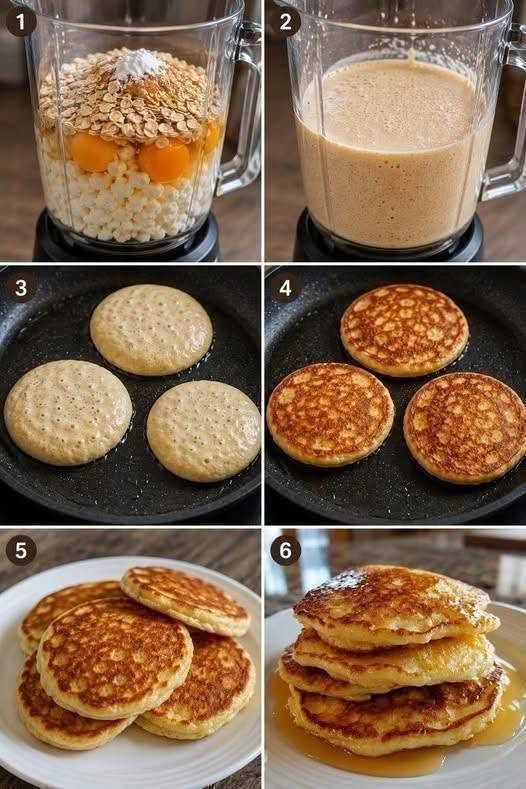
Cottage Cheese Oat Pancakes
Description
Cottage cheese oat pancakes are thick, fluffy, protein-rich pancakes made by blending cottage cheese, rolled oats, eggs, and a few simple pantry ingredients into a smooth batter. They cook up beautifully golden on the outside while remaining soft, moist, and tender in the centre.
Unlike traditional pancakes that rely mainly on all-purpose flour, these pancakes use oats as their primary grain. Cottage cheese adds creaminess and protein without giving the finished pancakes an obvious cottage-cheese texture because everything is blended until smooth.
They’re excellent for breakfast, brunch, meal prep, or an afternoon snack. Serve them with fresh berries, sliced banana, Greek yoghurt, nut butter, chopped nuts, cinnamon, or a small drizzle of maple syrup or honey.
The recipe is easy enough for busy mornings: add everything to a blender, blend, let the batter rest briefly, and cook.
Ingredients
For the Pancakes
- 1 cup cottage cheese
- 1 cup old-fashioned rolled oats
- 3 large eggs
- ¼ cup milk, plus more if needed
- 1 teaspoon baking powder
- ½ teaspoon ground cinnamon
- 1 teaspoon vanilla extract
- ¼ teaspoon salt
- 1 tablespoon melted butter or neutral oil
- ½ ripe banana, optional for natural sweetness
For Cooking
- 1–2 teaspoons butter or neutral oil
Optional Toppings
- Fresh blueberries
- Strawberries
- Raspberries
- Sliced banana
- Greek yogurt
- Natural peanut or almond butter
- Chopped walnuts or pecans
- Cinnamon
- Maple syrup or honey
Instructions
1. Add Ingredients to the Blender
Place the cottage cheese, rolled oats, eggs, milk, baking powder, cinnamon, vanilla, salt, melted butter, and optional banana into a blender.
If you want a more neutral pancake for savoury toppings, omit the cinnamon, vanilla, and banana.
2. Blend Until Smooth
Blend for approximately 30–60 seconds, or until the oats have broken down and the cottage cheese curds are no longer visible.
Scrape down the blender if necessary and blend again.
The finished batter should resemble a thick conventional pancake batter.
3. Rest the Batter
Allow the batter to rest for approximately 5–10 minutes.
This is an important step because the ground oats gradually absorb liquid.
If the batter becomes extremely thick after resting, add milk one tablespoon at a time until it becomes easily spoonable but not runny.
4. Preheat the Skillet
Place a large nonstick skillet or griddle over medium-low to medium heat.
Add a small amount of butter or oil and spread it evenly.
Avoid excessively high heat. Because these pancakes contain eggs and dairy, their exterior can brown before the middle has cooked if the pan is too hot.
5. Portion the Pancakes
Pour approximately ¼ cup batter onto the skillet for each pancake.
For thick pancakes like those pictured, keep them relatively small—about 3–4 inches across.
Don’t overcrowd the skillet.
6. Cook the First Side
Cook for approximately 2–3 minutes.
Look for small bubbles appearing across the surface and slightly dry, set edges.
Unlike traditional pancakes, the bubbles may be more subtle because the batter contains cottage cheese and oats.
7. Flip
Slide a thin spatula completely underneath each pancake.
Flip gently.
Cook for another 1½–2½ minutes until the second side is golden brown and the centre is cooked through.
8. Continue Cooking
Transfer the finished pancakes to a plate.
Repeat with the remaining batter, adding a small amount of butter or oil to the skillet as necessary.
If the pancakes begin browning too quickly, reduce the heat.
9. Serve
Stack the warm pancakes and add your favourite toppings.
For a simple version, try fresh berries, Greek yoghurt, and cinnamon.
For something sweeter, add sliced banana and a small drizzle of maple syrup.
Notes
The exact consistency of the batter can vary because cottage cheese brands have different moisture levels.
If your cottage cheese is particularly dry, you may need additional milk.
If it’s very wet, the batter may already be sufficiently thin without the full ¼ cup of milk.
That’s why it’s useful to start with slightly less liquid and adjust after blending.
These pancakes are generally thicker and more substantial than classic flour pancakes.
Tips for Perfect Cottage Cheese Oat Pancakes
Blend Thoroughly
Blending is what transforms cottage cheese and whole oats into a smooth pancake batter.
If you only stir the ingredients together, you’ll get a very different texture.
Let the Batter Rest
Give the oats 5–10 minutes to absorb moisture. This improves both texture and structure.
Use medium-low heat.
This is one of the biggest secrets to evenly cooked pancakes.
High heat creates dark exteriors while leaving the centres undercooked.
Keep the Pancakes Small
Three-to-four-inch pancakes are much easier to flip than oversized ones.
Wait Before Flipping
Don’t rush.
The first side should be sufficiently set that the spatula can slide underneath without the pancake collapsing.
Don’t Press Them Down
After flipping, resist pressing the pancakes with your spatula. This can make them denser.
Use a good nonstick pan.
Because these pancakes contain relatively little added fat, a good nonstick surface makes cooking easier.
Variations
Banana Cottage Cheese Oat Pancakes
Add one small ripe banana instead of half.
The banana makes the pancakes sweeter and softer.
Blueberry Oat Pancakes
After pouring the batter into the skillet, place several blueberries on top of each pancake.
Then flip carefully once the first side is set.
Apple Cinnamon Pancakes
Add ½ teaspoon additional cinnamon and approximately ½ cup finely diced apple.
Chocolate Pancakes
Blend 1–2 tablespoons unsweetened cocoa powder into the batter.
If the batter becomes too thick, add a splash of milk.
Peanut Butter Pancakes
Blend 1–2 tablespoons natural peanut butter into the batter.
Savory Cottage Cheese Pancakes
Leave out the vanilla, cinnamon, and banana.
Add:
- Garlic powder
- Black pepper
- Chives
- Parsley
- A little grated Parmesan
Serve with eggs, avocado, tomatoes, or smoked salmon.
Serving Suggestions
For a balanced breakfast, serve these pancakes with fresh fruit and Greek yoghurt.
You could also top them with cottage cheese and berries for additional protein.
For something richer, spread a little natural peanut or almond butter over the pancakes.
If you’re serving them for brunch, pair them with scrambled or poached eggs and fresh fruit.
Remember that syrups and sweet toppings can significantly increase the sugar and calorie content of the meal, so adjust according to your preferences.
Meal Prep
These pancakes are particularly convenient for meal prep because they reheat well.
Prepare a double batch and allow the pancakes to cool completely.
Store them in an airtight container with parchment between layers.
In the morning, simply reheat the amount you need.
This is much faster than preparing pancake batter from scratch every day.
Storage
Store cooked pancakes in an airtight container in the refrigerator for approximately 3–4 days.
To reheat, place them in:
Microwave: Heat briefly until warm.
Skillet: Warm over low heat for approximately 1 minute per side.
Toaster: Depending on thickness, a toaster can give leftover pancakes pleasantly crisp edges.
Air fryer: Reheat briefly at a moderate temperature until warmed through.
Freezing
These pancakes also freeze well.
Allow them to cool completely.
Place parchment paper between individual pancakes and transfer them to a freezer-safe container.
Freeze for up to approximately 2 months for best quality.
You can reheat individual pancakes directly from frozen or thaw them overnight in the refrigerator.
Prep Time
10 minutes
Resting Time
5–10 minutes
Cook Time
15 minutes
Total Time
Approximately 30–35 minutes
Servings
4 servings
Yield
Approximately 10–12 small pancakes, depending on size.
Nutritional Information
Approximate Per Serving — Without Toppings
Based on four servings:
- Calories: 245
- Protein: 17 g
- Carbohydrates: 25 g
- Fat: 9 g
- Saturated Fat: 3 g
- Fiber: 3 g
- Sugar: 4 g
- Sodium: 330 mg
- Calcium: 130 mg
Nutrition is approximate and varies according to cottage cheese, milk, optional banana, cooking fat, and portion size.
Benefits
Good Source of Protein
Cottage cheese and eggs provide substantial protein, while oats contribute additional plant protein.
This makes the pancakes more protein-rich than many conventional pancake recipes.
Oats Provide Fiber
Rolled oats provide dietary fibre, including beta-glucan soluble fibre.
Fibre contributes to normal digestive function and can help meals feel more satisfying.
Cottage Cheese Provides Calcium
Cottage cheese provides calcium along with protein, phosphorus, vitamin B12, and other nutrients.
Eggs Provide Important Nutrients
Eggs contribute protein as well as choline, selenium, vitamin B12, and several other nutrients.
No Traditional Flour Required
The oats are blended directly into the batter, so you don’t need conventional all-purpose flour.
This doesn’t make the pancakes carbohydrate-free—oats are a carbohydrate-containing whole grain—but it gives them a hearty oat-based foundation.
Naturally Customizable
Banana or fruit can provide sweetness without requiring large amounts of added sugar.
You can also leave them completely unsweetened and choose your toppings afterwards.
Convenient for Busy Mornings
Because everything goes into a blender, the recipe requires minimal preparation and cleanup.
Q&A
Can I really make pancakes with cottage cheese?
Yes. Cottage cheese blends smoothly with eggs and oats and becomes almost unnoticeable in the finished pancake while contributing moisture and protein.
Will the pancakes taste strongly like cottage cheese?
Usually not. Once blended with oats, eggs, vanilla, and cinnamon, the cottage cheese flavour becomes quite mild.
Can I make them without flour?
Yes. This recipe uses blended rolled oats rather than traditional wheat flour.
Are these low-carb?
Not particularly. Oats contain carbohydrates, so these shouldn’t be described as low-carb pancakes. They are better described as flourless, oat-based, protein-rich pancakes.
Can I make them without banana?
Absolutely. Banana is optional. Leaving it out gives the pancakes a more neutral flavour and reduces their natural sugar content.
Can I use quick oats?
Yes. Quick oats generally work, although the texture may differ slightly.
Can I use steel-cut oats?
They’re not recommended for this recipe because they don’t blend and hydrate in the same way as rolled oats.
Why are my pancakes raw in the middle?
Your skillet is probably too hot or the pancakes are too large or thick. Lower the temperature and make smaller pancakes so the centre has time to cook.
Why is my batter too thick?
Oats absorb liquid as the batter sits. Add milk one tablespoon at a time until the consistency is thick but pourable.
Why is my batter too thin?
Let it rest for another 5–10 minutes. The oats may simply need additional time to absorb the liquid.
Can I make the batter the night before?
You can, but it will become significantly thicker as the oats absorb liquid. Refrigerate it and stir in some milk before cooking.
Can I make these gluten-free?
Oats themselves don’t contain wheat gluten, but cross-contact can occur during processing. If gluten avoidance is medically necessary, use oats specifically labelled or certified gluten-free.
What toppings work best?
Fresh berries, banana, Greek yoghurt, cinnamon, chopped nuts, nut butter, or a small drizzle of maple syrup are all excellent choices.
What’s the secret to fluffy cottage cheese oat pancakes?
The best results come from blending the batter until completely smooth, letting it rest for several minutes, keeping the pancakes relatively small, and cooking slowly over medium-low heat. You’ll get beautifully golden pancakes with tender centres and a satisfying combination of oats, eggs, and creamy cottage cheese.