
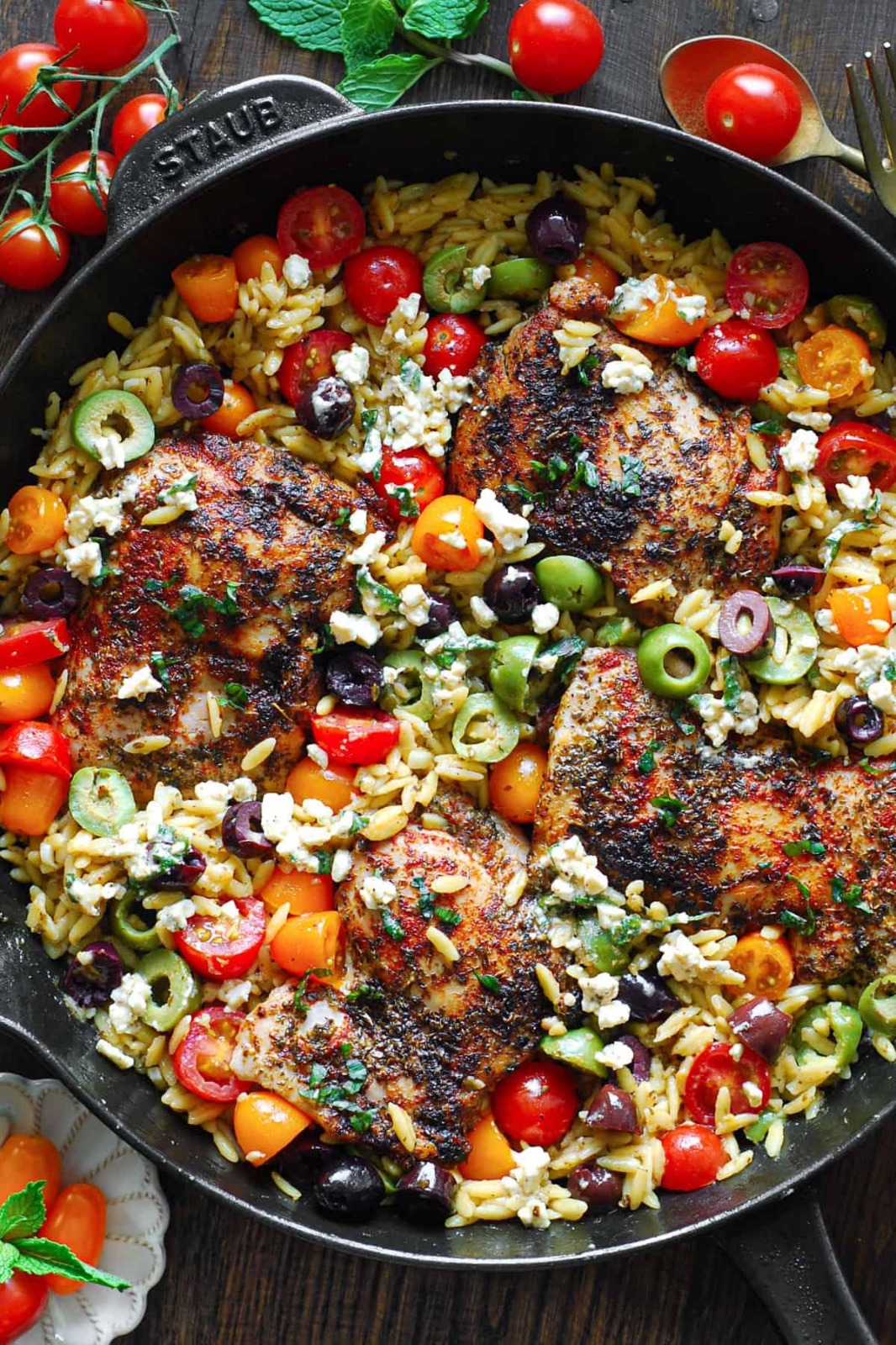
Mediterranean Chicken Orzo Bake
This Mediterranean Chicken Orzo Bake is a cozy one-pan dinner filled with tender chicken, fluffy orzo, juicy tomatoes, briny olives, garlic, herbs, and creamy feta. Everything cooks together so the orzo absorbs the savory chicken broth and all those Mediterranean flavors. It is simple enough for a weeknight but beautiful enough to serve when guests come over.
The combination of crispy chicken, tender pasta, sweet tomatoes, salty olives, and tangy feta makes every bite satisfying. Best of all, there is very little cleanup because the chicken and orzo finish in the same baking dish.
Prep Time: 15 minutes
Cook Time: 40 minutes
Total Time: 55 minutes
Servings: 4–5
Cuisine: Mediterranean
Category: Main Course
Ingredients
For the Chicken & Base
4–5 bone-in, skin-on chicken thighs, or boneless, skinless chicken thighs
1 tablespoon olive oil
½ small onion, finely chopped
2 cloves garlic, minced
For the Orzo & Mix-ins
1 cup dry orzo pasta
2 cups chicken broth or chicken stock
1 cup cherry or grape tomatoes, whole or halved
½ cup Kalamata olives, pitted and sliced
½ cup green olives, such as Castelvetrano, pitted and sliced
Seasonings & Garnishes
½ teaspoon dried oregano
Kosher salt, to taste
Freshly ground black pepper, to taste
½ cup feta cheese, crumbled
2 tablespoons fresh parsley, finely chopped
Fresh mint leaves, optional, for garnish
Instructions
Preheat your oven to 400°F (200°C). Lightly grease a large oven-safe baking dish or use a large oven-safe skillet that can comfortably hold the chicken and orzo.
Pat the chicken thighs thoroughly dry with paper towels. This is especially important if you are using skin-on thighs because removing excess moisture helps the skin become beautifully golden. Season both sides generously with salt, black pepper, and dried oregano.
Heat the olive oil in a large oven-safe skillet over medium-high heat. Place the chicken skin-side down and sear for about 5–7 minutes, without moving it too much, until the skin is deeply golden and crisp. Turn the chicken and cook for another 2 minutes. The chicken does not need to be cooked through at this point because it will finish cooking in the oven.
Transfer the chicken temporarily to a plate. If there is an excessive amount of fat in the skillet, carefully spoon some out, leaving enough to cook the vegetables.
Add the chopped onion to the skillet and cook for about 2–3 minutes, stirring occasionally, until softened. Add the minced garlic and cook for another 30 seconds, just until fragrant.
Add the dry orzo directly to the skillet. Stir it with the onion and garlic for about 1 minute. Lightly toasting the orzo helps develop a deeper flavor.
Pour in the chicken broth and stir well, scraping up any flavorful browned bits from the bottom of the skillet. Add the cherry tomatoes, Kalamata olives, and green olives. Stir gently so everything is evenly distributed.
Nestle the seared chicken thighs into the orzo mixture, keeping the skin above the liquid as much as possible. This helps the skin stay crisp while the orzo cooks underneath.
Transfer the skillet or baking dish to the preheated oven. Bake uncovered for approximately 25–30 minutes, or until the orzo is tender and the chicken is completely cooked through.
Chicken should reach an internal temperature of 165°F (74°C) in the thickest part. Bone-in thighs may take slightly longer depending on their size.
If the chicken is cooked but the skin is not as crisp as you would like, switch the oven to broil for 1–2 minutes. Watch it carefully because the skin can brown very quickly.
Remove the dish from the oven and let it rest for about 5 minutes. The orzo will continue absorbing some of the flavorful liquid as it rests.
Scatter the crumbled feta and fresh parsley over the top. Add fresh mint leaves if desired. Finish with a little freshly cracked black pepper and serve warm.
Tips
Pat the chicken dry first. This simple step makes a big difference when searing skin-on chicken. Moisture on the surface creates steam instead of the browning needed for crisp, flavorful skin.
Do not skip the searing step. You could technically put raw chicken directly into the bake, but searing first gives the chicken better color and adds delicious browned bits to the pan that flavor the orzo.
Keep the chicken skin above the liquid. If the skin becomes submerged in the broth, it will soften rather than crisp. Nestle the chicken into the orzo without completely covering the skin.
Use good-quality chicken broth. Since the broth becomes part of the orzo, its flavor matters. Low-sodium broth gives you better control over the final salt level.
Do not rinse the orzo. The natural starch helps create a pleasantly creamy texture as the pasta cooks in the broth.
Watch the liquid. Different brands of orzo can absorb slightly different amounts of liquid. If the orzo looks dry before it is tender, add a small splash of warm broth and continue cooking.
Let the dish rest. Five minutes is usually enough. Resting allows the orzo to absorb excess liquid and makes the finished dish easier to serve.
Taste before adding extra salt. Feta and olives are naturally salty, so the finished dish may need less additional seasoning than you expect.
Use a wide skillet or baking dish. A wide surface allows the orzo to cook more evenly and gives the chicken plenty of room.
Variations
Add spinach: Stir in 2–3 handfuls of baby spinach during the final few minutes of baking. The residual heat will wilt it into the orzo.
Add zucchini: Dice one small zucchini and add it with the tomatoes. It will soften as the orzo cooks and adds extra vegetables.
Make it lemony: Add the zest of one lemon and 1–2 tablespoons of fresh lemon juice after baking. Lemon pairs beautifully with chicken, feta, olives, and oregano.
Add roasted red peppers: Stir in ½ cup sliced roasted red peppers for extra sweetness, color, and Mediterranean flavor.
Use chicken breasts: Boneless chicken breasts can replace thighs. Because they are leaner, avoid overcooking them and check their internal temperature early.
Make it spicy: Add ¼–½ teaspoon crushed red pepper flakes with the garlic. The gentle heat works particularly well with the salty feta and olives.
Add artichokes: Chopped marinated artichoke hearts make an excellent addition. Drain them well before adding them to the orzo.
Use feta differently: Instead of simply scattering feta over the finished dish, add some during the final few minutes of baking for a softer, creamier texture while reserving some fresh feta for topping.
Try fresh herbs: Replace some of the parsley with fresh dill, basil, or mint. A mixture of herbs gives the finished dish an especially fresh flavor.
Make it dairy-free: Simply leave out the feta. Add extra fresh herbs, lemon zest, and olives to keep the dish flavorful.
Q&A
Can I use boneless chicken thighs?
Yes. Boneless thighs work very well and usually cook a little faster than bone-in thighs. Start checking them earlier so they do not become overcooked.
Can I use chicken breasts?
Absolutely. Use similarly sized chicken breasts and monitor their internal temperature closely. Chicken breasts are leaner than thighs, so they can dry out if baked for too long.
Can I prepare this recipe without searing the chicken?
Yes, but searing adds considerably more flavor and helps create a better texture, especially when using skin-on thighs. If you skip it, place the seasoned chicken directly over the orzo mixture and bake until fully cooked.
Why is my orzo still hard?
Your oven temperature, baking dish, and the specific brand of orzo can all affect cooking time. If the orzo needs more time but the liquid has been absorbed, add a little warm chicken broth, cover loosely with foil, and continue baking until tender.
Can I make this ahead of time?
You can prepare the onion, garlic, tomatoes, olives, and seasonings ahead of time, but the best texture comes from baking the dish shortly before serving. Cooked leftovers can be refrigerated and gently reheated.
How long do leftovers keep?
Store leftovers in an airtight container in the refrigerator for up to 3–4 days. Reheat gently with a splash of broth or water to prevent the orzo from drying out.
Can I freeze Mediterranean chicken orzo?
Yes, although the orzo may become somewhat softer after freezing and reheating. For best results, cool it completely, store it airtight, and thaw it in the refrigerator before reheating gently.
What should I serve with this bake?
A simple Greek salad, cucumber and tomato salad, roasted vegetables, or steamed greens would pair beautifully. Warm pita bread is also excellent for soaking up any remaining juices.
Nutrition
Nutrition will vary depending on the size of the chicken thighs, the amount of feta and olives used, and the exact brands of ingredients.
Approximate nutrition per serving:
Calories: 550–650 kcal
Protein: 38–45 g
Carbohydrates: 45–55 g
Fat: 25–32 g
Saturated Fat: 7–10 g
Fiber: 4–6 g
Sugar: 5–7 g
Sodium: 900–1,200 mg
For a lighter version, use boneless skinless chicken thighs, reduce the olive oil slightly, choose low-sodium broth, and use a smaller amount of feta and olives.
Conclusion
Mediterranean Chicken Orzo Bake is an easy, comforting one-pan meal that delivers big flavor with surprisingly little effort. The chicken becomes beautifully golden while the orzo cooks underneath in savory broth, absorbing the flavors of garlic, onion, tomatoes, oregano, and olives.
The finishing combination of creamy feta, fresh parsley, and optional mint gives the dish a bright Mediterranean touch that balances the hearty chicken and pasta. Serve it straight from the skillet with a squeeze of fresh lemon and a simple salad for a complete dinner everyone can enjoy.