
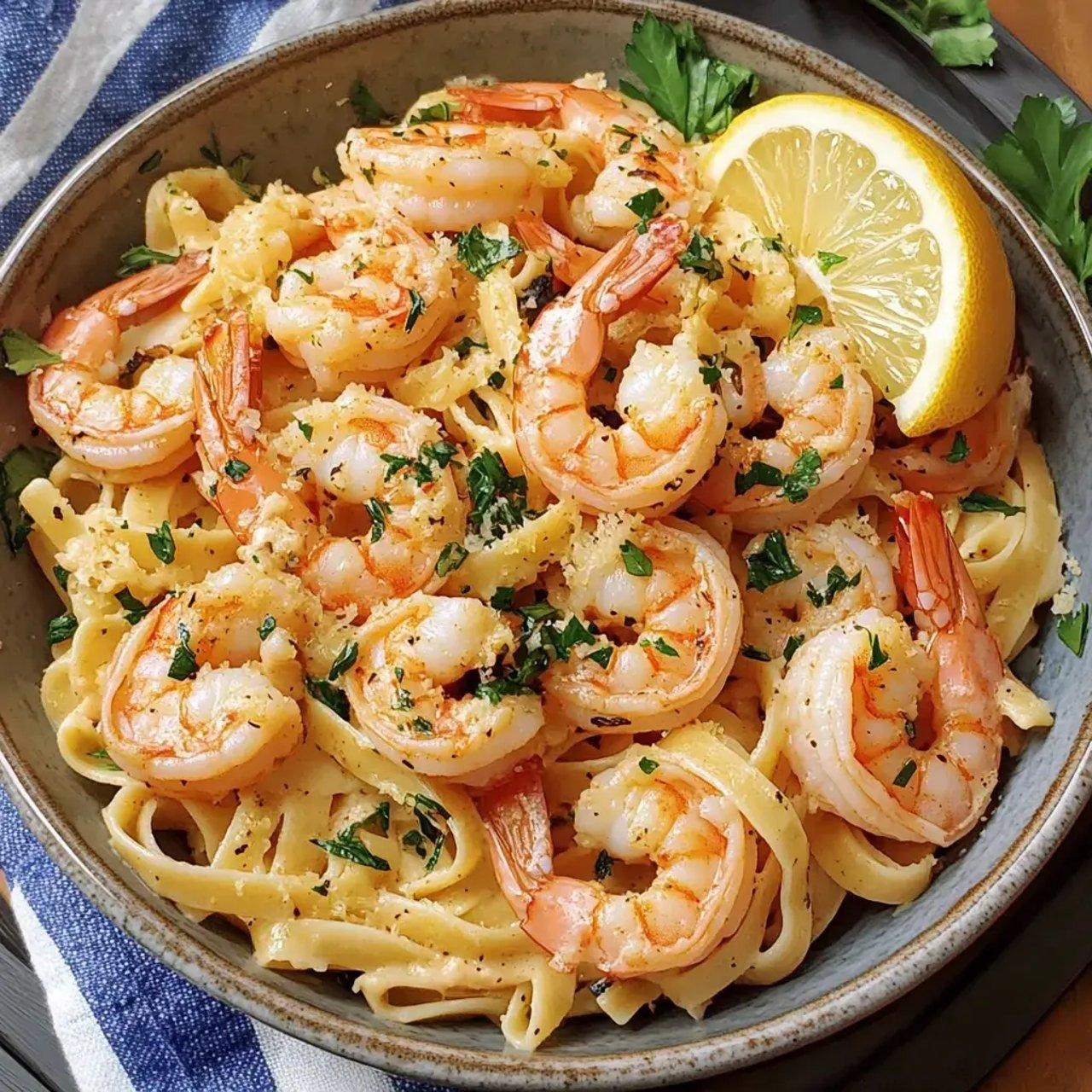
Garlic Butter Shrimp Pasta
Garlic Butter Shrimp Pasta is a simple, flavorful dinner that brings together tender shrimp, silky pasta, plenty of garlic, buttery olive oil, fresh lemon, and Parmesan. The shrimp cook quickly while the pasta boils, making this a great choice when you want something comforting without spending a long time in the kitchen. A little red pepper adds gentle heat, while parsley and lemon keep the dish fresh and balanced.
This pasta is especially delicious served straight from the pan while the sauce is glossy and the Parmesan is still melting into every strand. It works beautifully for a weeknight dinner but is also elegant enough for a casual dinner with guests.
Prep Time: 10 minutes
Cook Time: 20 minutes
Total Time: 30 minutes
Servings: 4–6
Cuisine: Italian-Inspired / Mediterranean
Category: Main Course
Ingredients
Main Ingredients
1 pound large shrimp, raw, peeled and deveined, tail-on or tail-off
12 ounces fettuccine, linguine, spaghetti, or another long-strand pasta
Garlic Butter Sauce & Aromatics
4 tablespoons butter, divided
2 tablespoons extra-virgin olive oil
5–6 large garlic cloves, finely minced or thinly sliced
1 whole fresh lemon, zested, plus 1–2 tablespoons fresh lemon juice
⅓ cup dry white wine or chicken broth, optional
Seasonings & Garnishes
¼ cup fresh flat-leaf parsley, finely chopped
½ cup freshly grated Parmesan cheese, plus extra for serving
¼ teaspoon red pepper flakes, or more to taste
Salt, to taste
Freshly cracked black pepper, to taste
Instructions
Bring a large pot of generously salted water to a boil. Cook the pasta according to the package directions until al dente. Before draining, reserve about 1 cup of the pasta cooking water. Drain the pasta and set it aside.
While the pasta cooks, pat the shrimp dry with paper towels. Removing excess moisture helps the shrimp sear instead of steaming. Season both sides lightly with salt and freshly cracked black pepper.
Heat a large skillet over medium-high heat. Add the olive oil and 1 tablespoon of the butter. Once the butter melts and the pan is hot, add the shrimp in a single layer. Cook for about 1–2 minutes per side, depending on their size, until they turn pink and opaque. Avoid overcooking them because shrimp can become rubbery very quickly.
Transfer the cooked shrimp to a plate and set aside.
Reduce the heat to medium. Add the remaining 3 tablespoons of butter to the same skillet. Once melted, add the minced garlic and red pepper flakes. Cook for about 30–60 seconds, stirring constantly, until the garlic becomes fragrant. Do not let the garlic turn dark brown because it can become bitter.
If using white wine or chicken broth, pour it into the skillet and scrape the bottom with a wooden spoon to loosen all the flavorful browned bits. Let it simmer for 2–3 minutes so the liquid reduces slightly.
Add the lemon zest and 1 tablespoon of fresh lemon juice. Stir well. The lemon brightens the buttery sauce and balances its richness.
Add the drained pasta directly to the skillet. Toss everything together, adding a small splash of reserved pasta water at a time until the sauce becomes glossy and coats the pasta. You may not need the entire cup.
Sprinkle in the Parmesan cheese and toss again until it melts into the sauce. If the pasta seems too thick, add another splash of pasta water.
Return the cooked shrimp to the skillet and gently toss them through the pasta. Cook for another minute, just until the shrimp are heated through.
Turn off the heat and stir in the fresh parsley. Taste and adjust the seasoning with additional salt, black pepper, lemon juice, or red pepper flakes as desired.
Serve immediately with extra Parmesan, fresh parsley, and an optional squeeze of lemon over the top.
Tips
Use large shrimp when possible because they are easier to cook without becoming dry. Medium shrimp work too, but reduce the cooking time slightly.
Dry the shrimp thoroughly before seasoning. Excess water prevents good browning and can cause the shrimp to release too much liquid into the pan.
Do not overcrowd the skillet. If your pan is small, cook the shrimp in two batches. A little space between the shrimp helps them develop better flavor.
Fresh garlic makes a noticeable difference in this recipe. Since garlic is one of the main flavors, freshly minced cloves will give you a much more aromatic sauce than pre-minced garlic.
Cook the garlic gently. Garlic only needs a short time in the butter and oil. If it becomes deeply brown, the flavor can turn bitter.
Save the pasta water. This starchy water is one of the easiest ways to create a smooth, silky sauce without adding large amounts of extra butter or cream.
Add Parmesan after reducing the heat. Very high heat can make cheese clump instead of melting smoothly into the sauce.
Use freshly grated Parmesan whenever possible. It melts more easily and gives the pasta a richer, smoother texture.
Taste the sauce before serving. The combination of Parmesan, salted pasta water, butter, and broth or wine can vary in saltiness, so add additional salt only after tasting.
For especially juicy shrimp, remove them from the pan as soon as they are cooked. Adding them back at the end keeps them tender.
Variations
For a creamy garlic butter shrimp pasta, add ½ cup heavy cream after the wine or broth has reduced. Simmer gently for a few minutes before adding the Parmesan and pasta.
For a Mediterranean version, add halved cherry tomatoes, baby spinach, Kalamata olives, and a little crumbled feta. The lemon, garlic, olives, and feta create a bright Mediterranean flavor profile.
For extra vegetables, add sliced zucchini, mushrooms, asparagus, spinach, or broccoli. Cook firmer vegetables before adding the shrimp so everything finishes at the right time.
For a spicy version, increase the red pepper flakes or add a small amount of crushed chili. You can also finish the pasta with a drizzle of chili-infused olive oil.
For a tomato-garlic version, add 1 cup halved cherry tomatoes after cooking the garlic. Let them soften slightly before adding the wine or broth.
For a lighter pasta, replace part of the regular pasta with whole-wheat pasta or a higher-protein pasta. The sauce still provides plenty of flavor.
For a gluten-free version, use your favorite gluten-free spaghetti or linguine and make sure the Parmesan and other packaged ingredients are certified gluten-free if necessary.
For a dairy-free version, replace the butter with additional olive oil and use a dairy-free Parmesan-style cheese or nutritional yeast.
For extra lemon flavor, add more finely grated lemon zest just before serving. Lemon zest gives a stronger citrus aroma without making the sauce overly acidic.
Q&A
Can I use frozen shrimp?
Yes. Frozen shrimp work very well. Thaw them completely before cooking and pat them very dry with paper towels. This helps them brown properly and prevents excess water from diluting the sauce.
Can I use pre-cooked shrimp?
Yes, but add them only during the final minute or two. Pre-cooked shrimp need just enough time to warm through. Cooking them for too long can make them tough.
What pasta works best?
Linguine, spaghetti, and fettuccine are excellent choices because their long strands hold onto the buttery garlic sauce. Angel hair can also work, but it cooks very quickly and is more delicate.
Can I make this without wine?
Absolutely. Chicken broth works well as a substitute. You can also simply use reserved pasta water with a little extra lemon juice for brightness.
How do I prevent the pasta from becoming dry?
Reserve pasta water and add it gradually while tossing the pasta with the sauce. The starch helps emulsify the butter, oil, cheese, and liquid into a silky coating.
Why did my shrimp become rubbery?
Shrimp cook very quickly. Large shrimp usually need only a couple of minutes per side. Remove them from the skillet as soon as they become opaque and pink.
Can I prepare this ahead of time?
This dish is best served immediately, but leftovers can be refrigerated in an airtight container for up to 3 days. Reheat gently in a skillet with a splash of water or broth to loosen the sauce.
Can I freeze garlic butter shrimp pasta?
It is possible, but the texture of the shrimp and Parmesan sauce may change after freezing. For the best quality, enjoy it fresh or refrigerate leftovers instead.
Nutrition
The approximate nutrition per serving will vary depending on the exact pasta, shrimp size, butter, Parmesan, and portion size used.
Estimated per serving:
Calories: 560–620 kcal
Protein: 32–38 g
Carbohydrates: 55–65 g
Fat: 23–28 g
Saturated Fat: 9–12 g
Fiber: 2–4 g
Sugar: 2–4 g
Sodium: 600–850 mg
For a lighter version, reduce the butter and Parmesan slightly, use extra vegetables, and choose whole-grain or higher-protein pasta.
Conclusion
Garlic Butter Shrimp Pasta is the kind of recipe that proves a delicious dinner does not need a complicated ingredient list. Tender shrimp, golden butter, fragrant garlic, fresh lemon, Parmesan, and pasta come together in one skillet for a rich yet bright meal that can be on the table in about 30 minutes.
The key is simple: avoid overcooking the shrimp, save some pasta water for the sauce, and finish everything together in the skillet. Serve it hot with plenty of parsley, Parmesan, and a little extra lemon for a restaurant-style finish at home.