
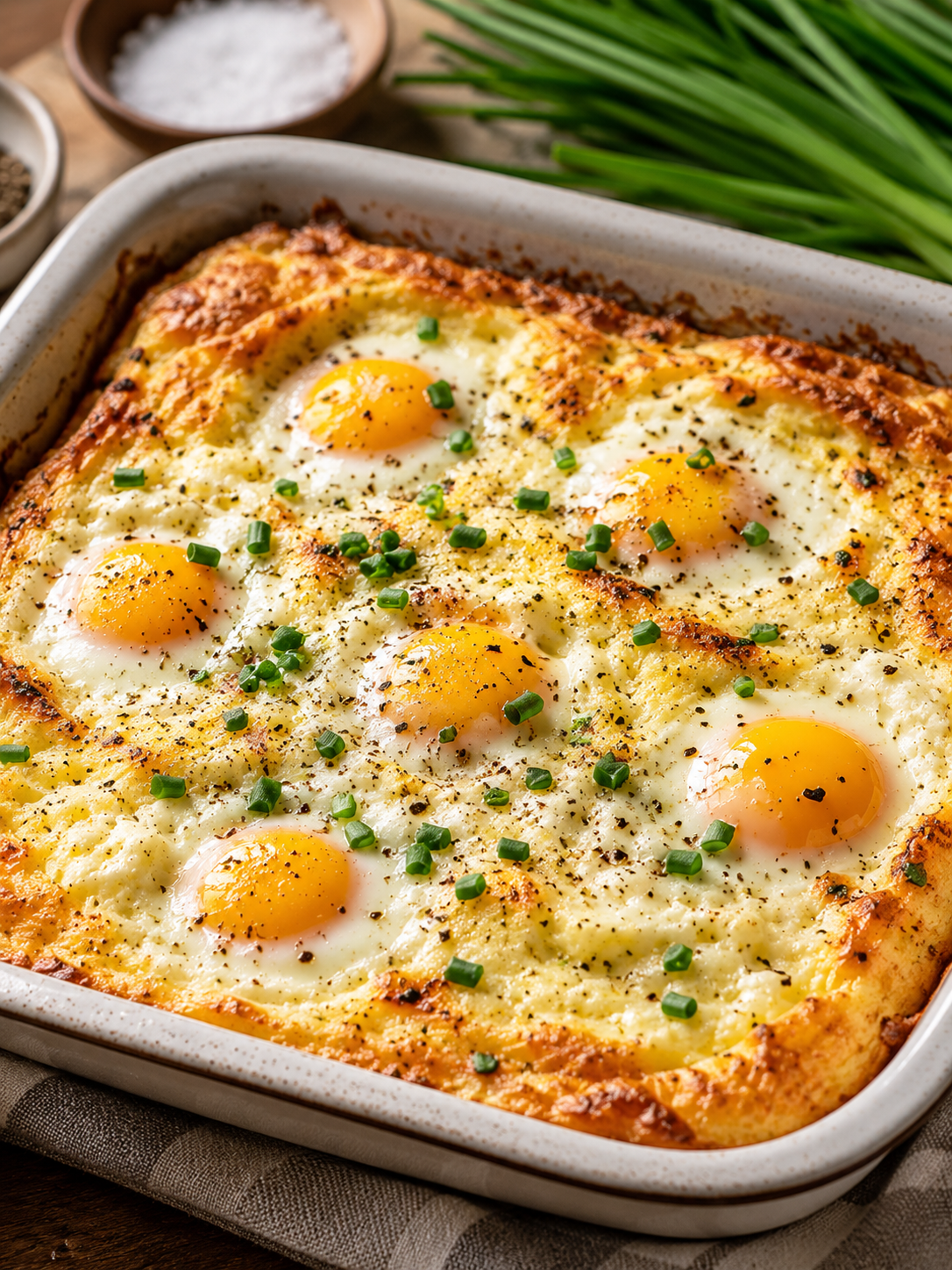
Baked Cottage Cheese Eggs
Description
These Baked Cottage Cheese Eggs are a creamy, protein-packed breakfast made with simple ingredients and very little preparation. Cottage cheese creates a soft, rich base while baked eggs add satisfying protein and beautiful golden yolks. A little Parmesan or mozzarella gives the dish extra savoury flavour, while garlic, herbs, black pepper, and fresh chives keep everything bright and delicious.
This recipe is especially useful when you want something more exciting than ordinary scrambled or fried eggs but don’t want to spend a long time cooking. Everything comes together in one baking dish and goes straight into the oven.
The contrast is what makes this dish so good: creamy cottage cheese underneath, tender egg whites, rich yolks, lightly browned cheese around the edges, and fresh herbs scattered over the top. You can bake the yolks until completely firm or remove the dish slightly earlier if you prefer them soft and runny.
Serve these eggs for breakfast or brunch with avocado, tomatoes, fresh vegetables, whole-grain toast, or a simple green salad.
Ingredients
For the Baked Cottage Cheese Eggs
- 1½ cups cottage cheese
- 6 large eggs
- ½ cup shredded mozzarella cheese
- ¼ cup freshly grated Parmesan cheese
- 2 tablespoons milk, optional
- 1 tablespoon extra-virgin olive oil
- 2 green onions, finely sliced
- 2 tablespoons fresh chives, chopped
- 1 tablespoon fresh parsley, chopped
- ½ teaspoon garlic powder
- ½ teaspoon dried oregano
- ¼ teaspoon onion powder
- ¼ teaspoon smoked paprika
- ¼ teaspoon freshly ground black pepper
- ¼ teaspoon salt, or to taste
- Pinch of red pepper flakes, optional
For garnishing:
- Fresh chopped chives
- Fresh parsley
- Freshly cracked black pepper
- Pinch of paprika
- Extra Parmesan, optional
Instructions
1. Preheat the Oven
Preheat your oven to 375°F (190°C).
Lightly grease an approximately 8-inch square baking dish with olive oil or cooking spray.
A ceramic baking dish works particularly well because it distributes the heat evenly and can go directly from the oven to the table.
2. Prepare the Cottage Cheese Base
Place the cottage cheese in a medium mixing bowl.
Add mozzarella, Parmesan, garlic powder, oregano, onion powder, smoked paprika, black pepper, and a small amount of salt.
Stir in half of the chopped green onions, chives, and parsley.
If your cottage cheese is particularly thick, add approximately 2 tablespoons of milk. This is optional but creates a slightly creamier base.
Mix everything until evenly combined.
3. Add the Cottage Cheese to the Dish
Spread the cottage cheese mixture evenly across the bottom of your prepared baking dish.
Use the back of a spoon to smooth the surface.
Create six small wells in the cottage cheese mixture. These spaces will help keep the eggs separated and prevent all the yolks from moving toward the centre.
4. Add the Eggs
Crack one egg into a small bowl first, then carefully transfer it into one of the wells.
Repeat with the remaining eggs.
Cracking the eggs individually into a small bowl makes it easier to remove any shell fragments and prevents accidentally breaking several eggs directly into your cottage cheese mixture.
Try to keep each yolk intact for the most attractive presentation.
5. Season the Eggs
Sprinkle a little freshly cracked black pepper over the eggs.
Add a small pinch of paprika and optional red pepper flakes.
You can also sprinkle a little extra mozzarella or Parmesan around the egg whites, but avoid completely covering the yolks if you want the finished dish to have clearly visible golden centres.
6. Bake
Transfer the baking dish carefully to the preheated oven.
Bake for approximately 15–22 minutes, depending on how you prefer your eggs.
For softer yolks, start checking around 15 minutes.
For firmer yolks, continue baking until the whites are fully set and the yolks have reached your preferred consistency.
Remember that the eggs continue cooking slightly from residual heat after the dish leaves the oven.
7. Optional Golden Finish
For extra golden cheese around the edges, place the dish under the broiler for approximately 1–2 minutes after baking.
Watch it continuously. Cheese can brown very quickly under a broiler.
If you prefer runny yolks, skip this step or broil very briefly because the additional heat will continue cooking the eggs.
8. Garnish and Serve
Remove the dish from the oven and allow it to rest for approximately 3–5 minutes.
Scatter fresh chives, parsley, green onions, and freshly cracked black pepper over the top.
Serve warm directly from the baking dish.
Tips for Perfect Baked Cottage Cheese Eggs
Use full-fat or 2% cottage cheese: Both create a creamy base. Fat-free cottage cheese can work, but the final texture may be less rich.
Watch the eggs carefully: A few minutes can make the difference between runny and completely set yolks.
Create wells for the eggs: Small indentations in the cottage cheese help keep the eggs evenly distributed.
Don’t over-season with salt: cottage cheese and Parmesan can already contain considerable sodium. Taste your cheese mixture before adding much salt.
Use freshly grated Parmesan: It generally melts better and provides stronger flavour than some pre-grated varieties.
Let the dish rest: Three to five minutes after baking allows the cottage cheese mixture to settle slightly and makes serving easier.
Add fresh herbs after baking: fresh chives and parsley provide better colour and a brighter flavour when added at the end.
Use room-temperature eggs when possible: they can cook a little more evenly than eggs taken directly from a very cold refrigerator.
Recipe Notes
Cottage cheese naturally contains some liquid. Different brands can vary significantly in moisture content.
If yours appears extremely watery, drain off some excess liquid before making the recipe. Don’t completely dry the cottage cheese, though, because its moisture contributes to the creamy texture.
Small-curd cottage cheese works particularly well, although large-curd cottage cheese can also be used.
If you prefer a completely smooth base, blend the cottage cheese for 20–30 seconds before mixing it with the other ingredients. This produces a texture closer to whipped ricotta.
For the rustic version shown here, leave the cottage cheese unblended.
The eggs can be seasoned in many ways. Italian seasoning, za’atar, chilli flakes, fresh dill, basil, or a little hot sauce can all work.
Servings
Serves: 3
Each serving contains approximately 2 baked eggs plus cottage cheese mixture.
For a lighter breakfast, one egg with a smaller portion of the cottage cheese base can serve additional people.
For brunch, place the entire baking dish in the centre of the table and serve it alongside vegetables, toast, fruit, and avocado.
Approximate Nutritional Information
Per serving – approximately 2 eggs
- Calories: 390 kcal
- Protein: 35 g
- Carbohydrates: 9 g
- Fat: 24 g
- Saturated Fat: 10 g
- Fiber: 1 g
- Sugar: 5 g
- Sodium: Approximately 750 mg
Nutrition is an estimate. Exact values depend on your cottage cheese, mozzarella, Parmesan, egg size, oil, and serving size.
Choosing reduced-fat cheese or using less mozzarella can lower the calorie and fat content.
Benefits of Baked Cottage Cheese Eggs
1. High in Protein
One of the biggest advantages of this breakfast is its protein content.
Eggs are naturally protein-rich, while cottage cheese provides additional protein. Mozzarella and Parmesan contribute even more.
A protein-rich breakfast can be particularly satisfying and makes this dish a substantial alternative to breakfasts based mainly on refined carbohydrates.
2. Naturally Low in Carbohydrates
Eggs and cottage cheese contain relatively few carbohydrates, making this recipe suitable for many people following lower-carbohydrate eating patterns.
There is no flour, pastry, potato, or bread required in the actual recipe.
3. Rich in Calcium
Cottage cheese, mozzarella, and Parmesan are dairy products that provide calcium.
4. Simple Ingredients
You don’t need speciality ingredients to make this breakfast. Eggs, cottage cheese, seasonings, and a little cheese create the entire base.
5. Easy One-Dish Breakfast
Everything cooks in one baking dish, which means minimal active cooking and less cleanup than preparing multiple individual fried eggs.
6. Easy to Customize
Vegetables, herbs, seasonings, and different cheeses can easily be incorporated.
7. Great for Brunch
The visible golden yolks and browned cheese make the finished dish attractive enough for a weekend brunch while requiring relatively little preparation.
Healthy Add-In Ideas
You can increase the vegetables in the recipe without dramatically changing the method.
Try adding:
- Chopped baby spinach
- Diced bell peppers
- Cherry tomatoes
- Mushrooms
- Chopped broccoli
- Fresh basil
- Fresh dill
- Jalapeños
Vegetables containing a lot of water, particularly mushrooms and spinach, are best sautéed first. Otherwise, they can release liquid into the cottage cheese while baking.
Serving Ideas
For a balanced breakfast, serve your baked eggs with sliced avocado, cherry tomatoes, cucumber, or leafy greens.
If carbohydrates aren’t a concern, add toasted sourdough or whole-grain bread. The toast is especially good for scooping up the creamy cottage cheese and soft egg yolks.
For brunch, pair the dish with fresh berries, fruit salad, roasted tomatoes, and coffee.
You can also spoon individual portions into bowls and add avocado and fresh greens to create a high-protein breakfast bowl.
Storage and Reheating
Baked eggs are best enjoyed freshly cooked, particularly if you like soft yolks.
Leftovers can be transferred to an airtight container and refrigerated for up to 3 days, provided they are cooled and stored promptly.
For reheating, use the microwave in short intervals until heated through, or place the portion in a covered oven-safe dish and warm gently in the oven.
Keep in mind that reheating will further cook the egg yolks.
If you’re intentionally preparing this recipe for meal prep, bake the eggs until the yolks are fully cooked from the beginning.
Frequently Asked Questions
What are baked cottage cheese eggs?
They’re eggs baked over a seasoned cottage cheese mixture, often with additional cheese and herbs. Baking transforms the cottage cheese into a warm, creamy base while the eggs cook directly on top.
Do baked cottage cheese and eggs taste strongly like cottage cheese?
Not necessarily. Baking softens its flavour, while Parmesan, mozzarella, garlic, herbs, and eggs make the overall dish taste savoury and cheesy.
Can I blend the cottage cheese first?
Yes. Blending it creates an exceptionally smooth, creamy base. This is a good option for people who like cottage cheese nutritionally but don’t enjoy its curds.
Can I make this without mozzarella?
Yes. You can leave it out or replace it with cheddar, Monterey Jack, feta, or another cheese that melts well.
Can I use only egg whites?
Yes. Egg whites can replace some or all of the whole eggs. The appearance and texture will be different, but the recipe will still work.
Can I add spinach?
Absolutely. Sauté spinach briefly and squeeze out excess moisture before adding it to the cottage cheese mixture.
Can I add meat?
Yes. Cooked turkey sausage, shredded chicken, or cooked bacon can be added. Always fully cook meat before incorporating it into the dish.
How do I know when the eggs are done?
The whites should be fully set rather than transparent. The yolks can remain soft or be cooked completely depending on your preference.
For food safety, the USDA recommends cooking egg dishes to an internal temperature of 160°F (71°C).
Why did my baked eggs become watery?
The cottage cheese may have contained a lot of whey, or watery vegetables may have been added without precooking them. Drain excess liquid from cottage cheese and sauté moisture-rich vegetables before adding them.
Can I make individual portions?
Yes. Divide the cottage cheese mixture among oven-safe ramekins and crack an egg into each one. Smaller portions may cook faster, so check them early.
Is this recipe keto-friendly?
The basic ingredients are relatively low in carbohydrates and can fit many ketogenic meal plans. Always check the nutrition labels of your specific cottage cheese and other dairy products if you’re tracking carbohydrates closely.
Can I prepare it the night before?
You can prepare and season the cottage cheese mixture the night before and refrigerate it. For the best egg texture, add the fresh eggs immediately before baking rather than leaving raw cracked eggs sitting on top overnight.
What herbs taste best with cottage cheese and eggs?
Chives, parsley, dill, basil, oregano, and green onions all pair beautifully with eggs and cottage cheese.
Final Note
These baked cottage cheese eggs turn everyday breakfast ingredients into a warm, creamy and satisfying meal. The cottage cheese creates a rich protein-packed base, mozzarella and Parmesan develop delicious golden edges, and the baked eggs provide beautiful yolks on top.
With minimal preparation and one baking dish, it’s an easy recipe for busy mornings yet attractive enough for weekend brunch. Serve it straight from the oven with fresh chives, cracked black pepper, avocado, tomatoes, or toast for a simple breakfast you’ll want to make again.