
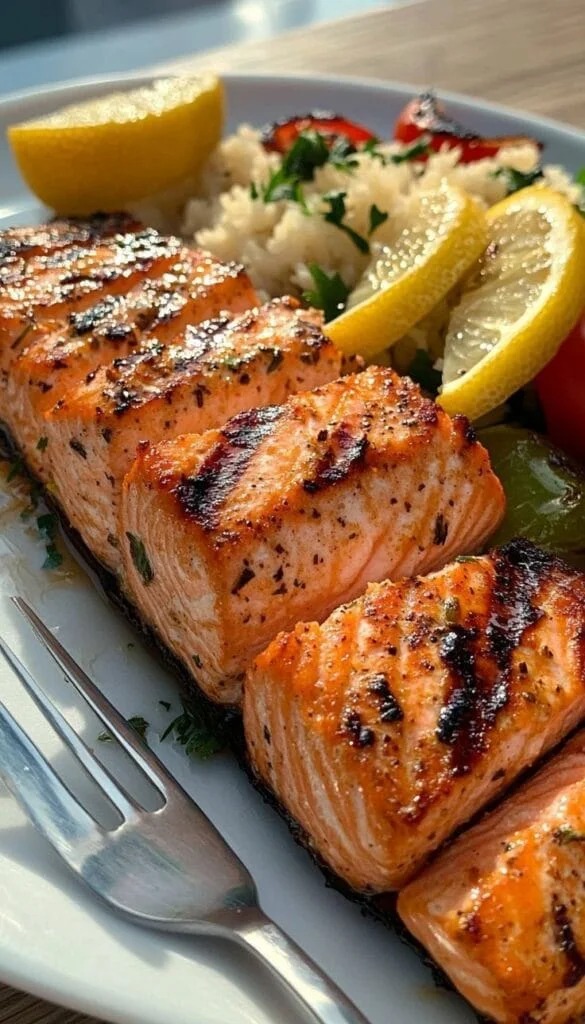
Best Lemon Grilled Salmon
Fresh lemon, fragrant garlic, tender salmon, and a hot grill come together beautifully in this easy Lemon Grilled Salmon recipe. The homemade marinade combines extra virgin olive oil, lemon zest, Dijon mustard, fresh herbs, and a touch of honey for a bright flavor with just the right balance of acidity and sweetness.
The salmon develops a beautifully browned exterior and smoky grill marks while remaining tender and flaky inside. Serve it with a crisp salad, grilled vegetables, rice, or potatoes for a simple meal that feels fresh and restaurant-worthy.
Prep Time: 15 minutes
Marinating Time: 20–30 minutes
Cook Time: 10–14 minutes
Total Time: 45–60 minutes
Servings: 4
Ingredients
For the Salmon
Salmon fillets: 4 center-cut fillets, about 6–7 oz each, preferably skin-on
Lemons: 2 fresh lemons, for juice, zest, rounds, and wedges
Extra virgin olive oil: ¼ cup
For the Aromatic Marinade
Fresh garlic: 3–4 cloves, finely minced or grated
Fresh parsley: 2 tablespoons, finely chopped
Fresh dill, rosemary, or thyme: Optional
Honey or brown sugar: 1 teaspoon
Dijon mustard: 1 teaspoon
Salt: To taste
Freshly ground black pepper: To taste
Instructions
Prepare the Lemon Marinade
Begin by zesting one or both lemons before juicing them. Fresh lemon zest adds concentrated citrus flavor without adding extra acidity.
In a bowl, whisk together the extra virgin olive oil, fresh lemon juice, lemon zest, minced garlic, chopped parsley, honey or brown sugar, and Dijon mustard.
Season with salt and freshly ground black pepper. If using optional dill, rosemary, or thyme, finely chop the herbs and add them to the marinade.
Whisk everything until well combined and slightly emulsified.
Prepare the Salmon
Pat the salmon fillets dry with paper towels. Removing excess moisture helps the fish develop better browning on the grill.
Place the salmon in a shallow dish or resealable bag. Pour the lemon-garlic marinade over the fillets and gently turn them so they are evenly coated.
Cover and refrigerate for approximately 20–30 minutes.
Avoid marinating the salmon for several hours because the fresh lemon juice is acidic and can begin changing the texture of the fish.
Prepare the Grill
Preheat the grill to medium-high heat, approximately 400–450°F (200–230°C).
Clean the grill grates thoroughly and lightly oil them to help prevent sticking.
Before grilling, remove the salmon from the marinade and allow excess marinade to drip off. Discard any marinade that has been in contact with the raw fish.
Arrange a few lemon rounds on the grill or reserve fresh lemon wedges for serving.
Grill the Salmon
Place the salmon fillets on the hot grill, preferably skin-side down if the fillets have skin.
Close the grill lid and cook for approximately 4–6 minutes on the first side, depending on the thickness of the fillets.
Carefully flip the salmon using a wide fish spatula. Grill for another 3–6 minutes, or until the salmon is cooked through and flakes easily with a fork.
For the most reliable result, check the thickest part with an instant-read thermometer. Salmon is commonly cooked to 145°F (63°C), though some people prefer a slightly lower temperature for a softer, more medium texture.
Avoid repeatedly flipping the salmon because the fillets can break apart as they cook.
Finish and Serve
Transfer the grilled salmon to a serving platter and let it rest for a few minutes.
Garnish with fresh parsley and optional chopped herbs. Serve with fresh lemon wedges and grilled lemon rounds for extra citrus flavor.
Spoon a little of the reserved fresh marinade over the salmon only if it was kept separate from the raw fish. Never reuse marinade that has touched uncooked salmon unless it has been thoroughly boiled first.
Serve immediately while the salmon is warm, juicy, and flaky.
Tips
Choose Center-Cut Fillets
Center-cut salmon fillets tend to have a more even thickness, which makes them easier to grill without overcooking the thinner edges.
Keep the Skin On
If available, skin-on salmon is easier to handle on the grill. The skin helps hold the fillet together and can become deliciously crisp.
Do Not Over-Marinate
Because lemon juice is acidic, a short marinade is enough. About 20–30 minutes provides plenty of flavor without significantly changing the texture of the fish.
Oil the Grill Grates
A clean, lightly oiled grill helps prevent salmon from sticking. Allow the grill to become properly hot before adding the fish.
Do Not Move the Salmon Too Much
Let the salmon cook undisturbed long enough to develop grill marks and a browned exterior. Moving it too early can cause it to stick or break apart.
Use a Fish Spatula
A wide, thin fish spatula makes flipping delicate salmon much easier than using standard tongs.
Variations
Make It Extra Garlicky
Increase the garlic to 5 cloves for a stronger garlic-forward marinade.
Add Fresh Dill
Fresh dill and lemon are a classic combination with salmon. Add extra chopped dill to the marinade and garnish the finished fillets with more before serving.
Try Mediterranean Herbs
Rosemary, thyme, oregano, or a combination of fresh herbs can give the salmon a more pronounced Mediterranean flavor.
Make It Spicy
Add a pinch of crushed red pepper flakes or cayenne pepper to the marinade for a gentle kick.
Add More Honey
For a slightly sweeter caramelized crust, increase the honey or brown sugar to 2 teaspoons.
Serve with a Yogurt Sauce
Pair the grilled salmon with a simple Greek yogurt sauce flavored with lemon, garlic, parsley, and dill for a cool and creamy contrast.
Q&A
Can I grill salmon without the skin?
Yes. Skinless salmon can be grilled successfully, but it is more delicate. Use a well-oiled grill and a wide spatula to turn the fillets carefully.
How long should salmon marinate?
About 20–30 minutes is enough for this lemon marinade. Avoid very long marinating times because the lemon juice can affect the texture of the fish.
What temperature should grilled salmon reach?
For a fully cooked salmon fillet, the FDA-recommended internal temperature is 145°F (63°C), measured at the thickest part.
Why does my salmon stick to the grill?
Sticking can happen when the grill is not hot enough, the grates are dirty, or they are not lightly oiled. Preheating and cleaning the grill thoroughly can help.
Can I use frozen salmon?
Yes, but thaw the salmon completely in the refrigerator before marinating and grilling. Pat it very dry before adding the marinade.
Can I cook this salmon in the oven?
Yes. Place the marinated salmon on a lined baking sheet and bake at approximately 400°F (200°C) until the fish reaches your preferred doneness.
What should I serve with lemon grilled salmon?
This salmon pairs beautifully with roasted vegetables, Greek salad, rice, couscous, potatoes, grilled zucchini, asparagus, or a fresh cucumber salad.
Nutrition Information
Estimated per serving, based on 4 servings:
Calories: 515 kcal
Protein: 43g
Carbohydrates: 6g
Fat: 35g
Fiber: 1g
Sugar: 3g
Sodium: 430mg
Calcium: 30mg
Nutrition values are approximate and can vary depending on the salmon variety, exact amount of oil used, marinade absorption, and portion size.
Conclusion
Bright, juicy, and full of fresh flavor, this Lemon Grilled Salmon makes an effortless centerpiece for almost any meal. The lemon-garlic marinade adds freshness while Dijon, herbs, olive oil, and honey create a balanced coating that caramelizes beautifully over the grill.
Whether you are preparing dinner for the family or serving guests outdoors, this salmon delivers a flavorful combination of smoky, citrusy, and herbaceous notes in every bite.