
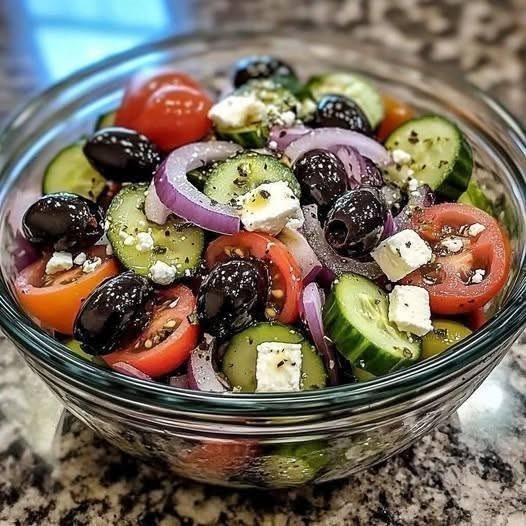
CLASSIC GREEK SALAD
A Refreshing Taste of Greece
Fresh, colourful, crisp, and full of Mediterranean flavour, this Classic Greek Salad is a simple yet delicious dish that celebrates beautiful, wholesome ingredients. Juicy tomatoes, crunchy cucumber, sharp red onion, briny olives, creamy feta cheese, and aromatic oregano come together with a bright olive oil dressing for a refreshing salad that works with almost any meal.
Whether you serve it as a light lunch, a side dish for grilled chicken or fish, or part of a Mediterranean-inspired dinner, this Greek salad is easy to prepare and always satisfying. Best of all, there is no complicated cooking required—just fresh ingredients, simple preparation, and bold natural flavours.
Ingredients You Will Need
For the Salad
- 2 cups cucumber, sliced
- 1 cup cherry tomatoes, halved
- ½ red onion, thinly sliced
- ¼ cup Kalamata olives
- ¼ cup green olives
- ½ cup feta cheese, cubed
- 1 tablespoon fresh parsley, chopped
- ¼ teaspoon dried oregano
For the Greek Dressing
- 3 tablespoons extra-virgin olive oil
- 1 tablespoon red wine vinegar
- 1 tablespoon fresh lemon juice
- ½ teaspoon dried oregano
- ¼ teaspoon garlic powder or 1 small garlic clove, finely minced
- Salt, to taste
- Freshly ground black pepper, to taste
Optional Additions
Although a traditional Greek-style salad can be kept beautifully simple, you may also enjoy adding:
- Green bell pepper, sliced
- Fresh mint
- Extra feta cheese
- Capers
- A pinch of red pepper flakes
Instructions
Step 1: Prepare the Vegetables
Wash the cucumber and cherry tomatoes thoroughly.
Slice the cucumber into rounds or half-moons, depending on your preference. If using a cucumber with thick skin or many seeds, you may peel it or remove some of the seeds.
Cut the cherry tomatoes in half.
Peel the red onion and slice it thinly. Thin slices work best because they distribute their sharp flavour throughout the salad without overwhelming each bite.
If you prefer a milder onion flavour, place the sliced onion in a bowl of cold water for approximately 10 minutes, then drain and pat dry before adding it to the salad.
Step 2: Prepare the Olives and Feta
Measure the Kalamata olives and green olives.
You can leave them whole or slice them in half for easier eating. If the olives contain pits, remove the pits before serving or clearly inform guests.
Cut the feta cheese into small cubes. Cubed feta gives the salad a beautiful presentation and allows the cheese to hold its shape.
For a creamier texture, you may crumble the feta instead.
Step 3: Assemble the Salad
In a large serving bowl, combine:
- Sliced cucumber
- Halved cherry tomatoes
- Sliced red onion
- Kalamata olives
- Green olives
Gently toss the ingredients together.
Place the cubed feta on top rather than mixing it aggressively into the salad. This helps keep the cubes intact.
Sprinkle with fresh chopped parsley and dried oregano.
Step 4: Make the Dressing
In a small bowl or jar, combine the extra-virgin olive oil, red wine vinegar, fresh lemon juice, dried oregano, garlic, salt, and black pepper.
Whisk until well combined.
Taste the dressing and adjust the seasoning if needed.
Because feta and olives are naturally salty, it is best to add only a small amount of salt at first.
Step 5: Dress the Salad
Drizzle the dressing evenly over the salad.
Toss the vegetables gently, taking care not to break up the feta too much.
For the freshest texture, add the feta after tossing the vegetables with the dressing, then sprinkle a little extra oregano over the top.
Step 6: Serve and Enjoy
Serve the Classic Greek Salad immediately for the freshest flavour and crunch.
It can also sit at room temperature for a short time, making it convenient for family meals and gatherings.
Enjoy it on its own or serve it alongside your favourite Mediterranean-inspired dishes.
Recipe Notes
Fresh Ingredients Make the Difference
Because this recipe uses simple ingredients, freshness is especially important.
Choose crisp cucumbers, ripe tomatoes, fragrant parsley, and good-quality feta and olives.
A flavourful extra-virgin olive oil also makes a noticeable difference.
Traditional Style Versus Modern Variations
Greek salads are prepared in different ways depending on the region and personal preference.
Some versions include green bell peppers, larger tomato pieces, and a substantial piece of feta placed on top.
This recipe uses cherry tomatoes and cubed feta for a convenient, colourful, and easy-to-eat version while maintaining the familiar flavours of a Greek-style salad.
Don’t Dress Too Early
Cucumbers and tomatoes naturally release liquid after being salted and dressed.
For the crispest salad, prepare the ingredients in advance but add the dressing shortly before serving.
Watch the Salt
Olives and feta are already salty.
Taste the finished salad before adding additional salt.
Helpful Tips
1. Use English or Persian cucumbers.
These cucumbers are usually crisp and contain fewer seeds, making them ideal for salads.
If using a large regular cucumber, you may want to remove some of the watery seeds.
2. Soak the Onion for a Milder Flavor
Raw red onion adds a delicious sharpness, but some people find it too strong.
Soaking the slices in cold water for 10 minutes can help mellow the flavour.
3. Keep the Salad Crisp
Dry your vegetables thoroughly after washing.
Excess water can dilute the dressing and make the salad watery.
4. Use Block Feta When Possible
Block feta generally has a firmer texture and can be cut into attractive cubes.
It also works well when serving the salad for guests or special occasions.
5. Make It a Complete Meal
Turn this side salad into a more filling meal by adding the following:
- Grilled chicken
- Chickpeas
- Tuna
- Salmon
- Grilled shrimp
- Quinoa
These additions can increase the protein and make the salad more satisfying.
6. Add Pita on the Side
Warm whole-grain pita bread pairs beautifully with the fresh vegetables, feta, olives, and olive oil dressing.
For a lower-carbohydrate option, enjoy the salad with grilled protein instead.
Serving Suggestions
This classic Greek salad is extremely versatile.
Serve it as a refreshing side dish with:
- Grilled chicken
- Baked salmon
- Grilled fish
- Shrimp skewers
- Mediterranean-style chicken
- Roasted vegetables
- Whole-grain pita
It is also wonderful as part of a larger Mediterranean-inspired spread with hummus, olives, fresh vegetables, and other salads.
For lunch, add chickpeas or grilled chicken to turn it into a more filling main dish.
Servings
This recipe makes approximately the following:
4 side-dish servings
or
2 large main-dish servings
You can easily double or triple the ingredients for parties, picnics, or family gatherings.
Preparation Time
Prep Time: 15 minutes
Cook Time: None
Total Time: 15 minutes
For the best texture and flavour, serve soon after preparing.
Nutritional Information
Approximate nutrition per serving
Based on 4 servings and including the olive oil dressing:
- Calories: 180–220 kcal
- Protein: 5–7 g
- Carbohydrates: 8–11 g
- Fat: 16–19 g
- Fiber: 2–4 g
- Sugar: 4–6 g
- Sodium: Varies depending on the feta and olives used
Nutritional values are estimates only. Actual values may vary depending on ingredient brands, serving sizes, and the amount of dressing used.
Potential Benefits
1. Includes a Variety of Fresh Vegetables
Cucumber, tomatoes, onion, and parsley add a variety of plant foods to the meal.
Including a range of vegetables can contribute different flavours, textures, vitamins, and minerals to an overall balanced eating pattern.
2. Contains Unsaturated Fats
Extra-virgin olive oil and olives contain predominantly unsaturated fats.
Olive oil is also a well-known staple in Mediterranean-style eating patterns.
3. Provides Some Protein
Feta cheese contributes protein to the salad.
For those looking for a higher-protein meal, the salad can be paired with chicken, fish, legumes, or another protein source.
4. A Simple Way to Eat More Vegetables
Because the salad is fresh, flavourful, and easy to prepare, it can be a convenient way to include more vegetables in meals.
5. Naturally Colorful and Flavorful
Using colourful ingredients such as red tomatoes, green cucumber, purple-red onion, and dark olives creates an appealing dish without relying on heavy sauces.
6. Fits Many Meal Styles
This salad can be adapted for vegetarian, low-carbohydrate, and Mediterranean-inspired eating patterns.
Individual needs and dietary preferences may vary.
Frequently Asked Questions
Q1: Can I make a classic Greek salad ahead of time?
Yes, you can prepare the vegetables ahead of time.
For the best texture, store the chopped vegetables and dressing separately. Combine them shortly before serving.
Q2: Can I use regular tomatoes instead of cherry tomatoes?
Absolutely.
Use approximately 2 medium tomatoes, chopped into bite-sized pieces.
Choose ripe but firm tomatoes so they hold their shape in the salad.
Q3: What can I use instead of feta cheese?
You can try:
- Goat cheese
- Fresh mozzarella
- Plant-based feta
However, each alternative will create a different flavour from traditional feta.
Q4: Is this salad vegetarian?
Yes, the basic recipe is vegetarian.
Always check individual packaged ingredients if you follow a specific vegetarian diet.
Q5: Can I make this salad vegan?
Yes.
Simply omit the feta cheese or replace it with a plant-based feta alternative.
Q6: Why did my Greek salad become watery?
Tomatoes and cucumbers naturally release liquid when cut and mixed with salt or dressing.
To reduce excess liquid:
- Dry vegetables thoroughly
- Remove watery cucumber seeds if necessary
- Add dressing shortly before serving
- Avoid adding too much salt early
Q7: How long do leftovers last?
For the best quality, enjoy leftovers within 1–2 days.
The vegetables may soften and release water over time.
Store leftovers in an airtight container in the refrigerator.
Q8: Can I add lettuce?
Yes, you can add lettuce if you enjoy it.
However, many traditional Greek-style salad variations do not use lettuce.
Adding crisp romaine can make the salad larger and more filling.
Q9: Can I add chickpeas?
Definitely!
Chickpeas add plant-based protein and make the salad more substantial.
Add approximately 1 cup of drained and rinsed chickpeas.
Q10: What should I serve with Greek salad?
Greek salad pairs wonderfully with grilled chicken, fish, shrimp, roasted vegetables, pita bread, hummus, or other Mediterranean-inspired dishes.
Final Thoughts
This classic Greek salad proves that simple ingredients can create something truly delicious.
Crisp cucumber, juicy tomatoes, sharp red onion, salty olives, creamy feta, fragrant parsley, and oregano come together in a refreshing olive oil dressing that is easy enough for everyday meals but beautiful enough for entertaining.