
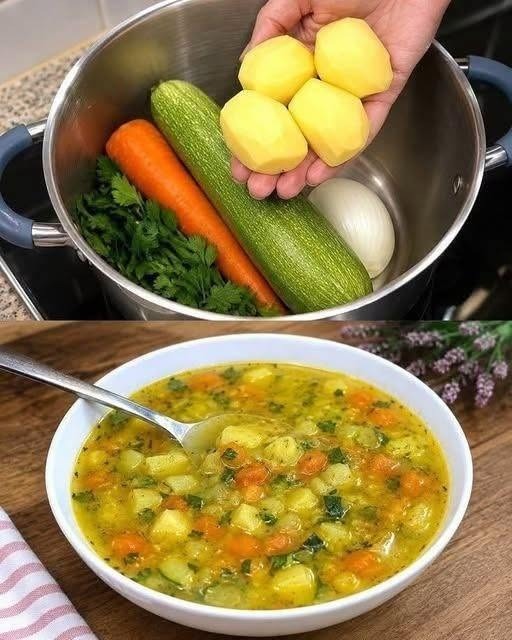
Comforting Vegetable Soup with Potato, Zucchini & Carrot
This colorful vegetable soup is simple, nourishing, comforting, and wonderfully easy to make. It combines potatoes, zucchini, carrots, onion, and fresh herbs in a light, flavorful broth. The vegetables become tender while the potatoes give the soup a naturally satisfying texture.
It can be enjoyed as a light lunch, dinner, or a warm bowl whenever you want something wholesome and comforting. While this soup may feel soothing to the stomach, it is not a medicine or a treatment for digestive problems. If you have persistent stomach pain, reflux, diarrhea, or another digestive condition, speak with a healthcare professional.
Recipe Name
Healing-Style Comfort Vegetable Soup with Potato, Zucchini, Carrot & Fresh Herbs
The word “healing-style” refers to its comforting, nutrient-rich character—not a medical claim.
Preparation Time
15 minutes
Cooking Time
30–35 minutes
Total Time
45–50 minutes
Servings
6 generous servings
Difficulty
Easy
Ingredients
Vegetables
- 4 medium potatoes, peeled and diced
- 2 medium carrots, peeled and diced
- 1 medium zucchini, diced
- 1 medium yellow onion, finely chopped
- 3 cloves garlic, minced
- ½ cup fresh parsley, chopped
- 1–2 tablespoons fresh dill or other soft herbs, optional
For the Soup
- 2 tablespoons olive oil
- 6 cups vegetable broth or low-sodium chicken broth
- 1 teaspoon salt, or to taste
- ½ teaspoon black pepper
- ½ teaspoon dried thyme
- ½ teaspoon paprika, optional
- 1 bay leaf
- 1 tablespoon fresh lemon juice, optional
- ½ teaspoon turmeric, optional
Optional for a Creamier Texture
- ½ cup milk, unsweetened plant milk, or light cream
Full Recipe Instructions
1. Prepare the vegetables
Wash all the vegetables thoroughly.
Peel the potatoes and carrots. Cut the potatoes into small, even cubes so they cook at approximately the same rate. Dice the carrots and zucchini into similar-sized pieces.
Finely chop the onion and mince the garlic. Chop the parsley and set it aside for later.
Tip: Don’t cut the zucchini too small. It cooks faster than potatoes and carrots, so slightly larger pieces will help it retain some texture.
2. Sauté the onion
Place a large soup pot over medium heat.
Add the olive oil, followed by the chopped onion. Cook for approximately 3–4 minutes, stirring occasionally, until the onion becomes soft and translucent.
Add the minced garlic and cook for another 30–60 seconds.
Don’t brown the garlic heavily because it can become bitter.
3. Add the carrots and potatoes
Add the diced carrots and potatoes to the pot.
Stir everything together so the vegetables become coated with the olive oil and aromatics.
Cook for about 2 minutes.
Add the thyme, paprika, turmeric if using, black pepper, and bay leaf.
4. Add the broth
Pour in approximately 6 cups of vegetable broth.
Bring the soup to a gentle boil.
Once boiling, reduce the heat to medium-low and cover the pot partially with a lid.
Allow the soup to simmer for approximately 15 minutes.
The potatoes and carrots should begin becoming tender.
5. Add the zucchini
Add the diced zucchini.
Continue simmering for another 8–12 minutes, or until the potatoes and carrots are completely tender and the zucchini is cooked but not mushy.
Taste the broth and adjust the salt and pepper.
If the soup becomes thicker than you prefer, add a little additional broth or hot water.
6. Add the fresh herbs
Turn off the heat.
Remove the bay leaf.
Stir in the chopped fresh parsley and optional dill.
For a brighter flavor, add 1 tablespoon of fresh lemon juice.
The lemon is optional, but just a small amount can make the vegetables taste fresher without making the soup taste strongly lemony.
Optional: Make It Slightly Creamy
If you prefer a smoother, richer soup, remove approximately 1–2 cups of the cooked vegetables and broth.
Blend them until smooth and return the mixture to the pot.
Alternatively, use an immersion blender briefly in one section of the pot.
For a creamier soup, stir in ½ cup milk, plant milk, or light cream after turning the heat to low.
Avoid boiling vigorously after adding dairy.
This method gives you a naturally creamy texture without needing a large amount of cream.
Description
This vegetable soup has a lovely combination of soft potatoes, sweet carrots, tender zucchini, aromatic onion, garlic, and fresh parsley.
The potatoes provide body and make the broth more satisfying, while the zucchini adds a delicate, almost silky texture. Carrots contribute natural sweetness and beautiful color.
The fresh herbs brighten the entire bowl.
It is particularly enjoyable served hot with a slice of whole-grain bread, toasted bread, or a simple salad.
Recipe Notes
1. Use homemade or low-sodium broth
The vegetables already provide plenty of flavor. A low-sodium broth allows you to control the final salt level.
2. Don’t overcook the zucchini
Zucchini cooks quickly. Adding it later prevents it from completely disappearing into the soup.
3. Cut vegetables evenly
Uniform pieces cook more consistently and make the finished soup look more attractive.
4. Adjust the consistency
For a chunky soup, leave everything intact.
For a thicker soup, mash some potatoes directly against the side of the pot.
For a creamy soup, partially blend it.
5. Make it vegetarian
Use vegetable broth.
6. Make it vegan
Use vegetable broth and olive oil, and skip dairy or use an unsweetened plant-based alternative.
7. Add protein
For a more complete meal, add one of these:
- 1 cup cooked white beans
- 1 cup chickpeas
- ½–1 cup cooked lentils
- Shredded cooked chicken
- Cubed tofu
Helpful Cooking Tips
For extra flavor: Sauté the onion patiently rather than immediately adding the broth.
For a beautiful golden color: A small amount of turmeric or paprika can be used.
For sensitive palates: Reduce the garlic, black pepper, and spices.
For children: Dice the vegetables very small and keep the seasoning mild.
For meal prep: Allow the soup to cool before transferring it to airtight containers.
For freezing: Freeze the soup without dairy for best texture. Potatoes can sometimes become slightly grainy after freezing, but blending part of the soup helps minimize this.
Approximate Nutritional Information
The following estimates are based on 6 servings, using vegetable broth, olive oil, and no cream. Actual nutrition will vary depending on vegetable size, broth, and quantities used.
| Nutrient | Approx. per serving |
|---|---|
| Calories | 170–210 kcal |
| Carbohydrates | 28–32 g |
| Protein | 4–5 g |
| Fat | 5–7 g |
| Fiber | 5–6 g |
| Sodium | 350–600 mg* |
| Potassium | 650–800 mg |
| Vitamin C | Moderate |
| Vitamin A | High |
| Vitamin K | Moderate–high |
*Sodium depends heavily on the broth and added salt.
If you add cream, meat, beans, or additional oil, the nutritional values will change.
Potential Benefits
This soup contains a variety of vegetables, providing fiber, vitamins, minerals, water, and plant compounds.
Potatoes
Potatoes provide carbohydrates for energy and contribute potassium and vitamin C. Keeping the skin on can provide additional fiber, although this recipe peels them for a softer soup.
Carrots
Carrots are particularly rich in beta-carotene, which the body can convert into vitamin A. Vitamin A supports normal vision and immune function.
Zucchini
Zucchini contributes water, fiber, vitamin C, and other micronutrients while keeping the soup relatively light.
Onion & Garlic
Onions and garlic provide flavorful sulfur-containing plant compounds and allow you to build a flavorful soup without relying on large amounts of salt.
Parsley
Fresh parsley adds flavor as well as vitamin K and other micronutrients.
Fiber
The combination of vegetables and potatoes provides dietary fiber, which supports normal digestive function and contributes to fullness.
Important: Eating this soup can be part of a healthy diet, but it should not be described as a cure or medicine for stomach disease.
Frequently Asked Questions
Can I eat this soup every day?
For most people, this can certainly be part of a balanced diet. However, eating only one food repeatedly isn’t ideal. Your overall diet should include a variety of vegetables, fruits, whole grains, protein sources, and healthy fats.
Is this soup good for the stomach?
Many people find a mild, warm vegetable soup comforting and easy to eat. However, individual digestive tolerance varies. If you have a sensitive stomach, start with less garlic, onion, pepper, and spice.
Can I make it without oil?
Yes. Sauté the onion in a small amount of broth or water instead. The soup will still be delicious, although olive oil adds flavor and healthy unsaturated fat.
Can I use frozen vegetables?
Absolutely. Frozen carrots, zucchini, peas, or mixed vegetables can make this recipe even easier. Add faster-cooking frozen vegetables toward the end.
Can I add tomatoes?
Yes. Add 1–2 chopped tomatoes or about 1 cup canned diced tomatoes. This will give the soup a slightly tangier flavor.
Can I add chicken?
Yes. Add approximately 1–2 cups cooked shredded chicken toward the end of cooking. This turns the soup into a higher-protein meal.
Can I make it gluten-free?
Yes. The basic recipe contains no wheat or gluten-containing ingredients. Just check the label of your packaged broth and other processed ingredients.
How long does it last in the refrigerator?
Store cooled soup in a covered container in the refrigerator and generally use it within 3–4 days. Reheat thoroughly before serving.
Can I freeze it?
Yes. Portion it into freezer-safe containers, leaving some room for expansion. For best quality, consume within a few months.
Why does my soup taste bland?
Usually it needs more seasoning or acidity. Add salt gradually, then try a small squeeze of lemon juice. Fresh parsley can also dramatically brighten the flavor.
Can I make it thicker?
Yes. Mash some of the potatoes directly in the pot or blend a portion of the soup. This creates thickness without requiring flour.
Final Serving Suggestion
Ladle the hot soup into bowls and finish with fresh parsley, a drizzle of olive oil, and a tiny squeeze of lemon. Serve with warm whole-grain bread for a simple and satisfying meal.
This is one of those wonderfully flexible recipes where you don’t have to follow every ingredient perfectly. Potatoes + carrots + zucchini + onion + herbs + good broth create an excellent foundation. Add beans, lentils, chicken, peas, tomatoes, or leafy greens depending on what you have available.
And although calling it “medicine for the stomach” is a lovely way to describe how comforting it feels, remember that food can support overall nutrition and well-being but cannot replace medical treatment. If a stomach problem is frequent, severe, or persistent, it’s best to have it evaluated professionally.