
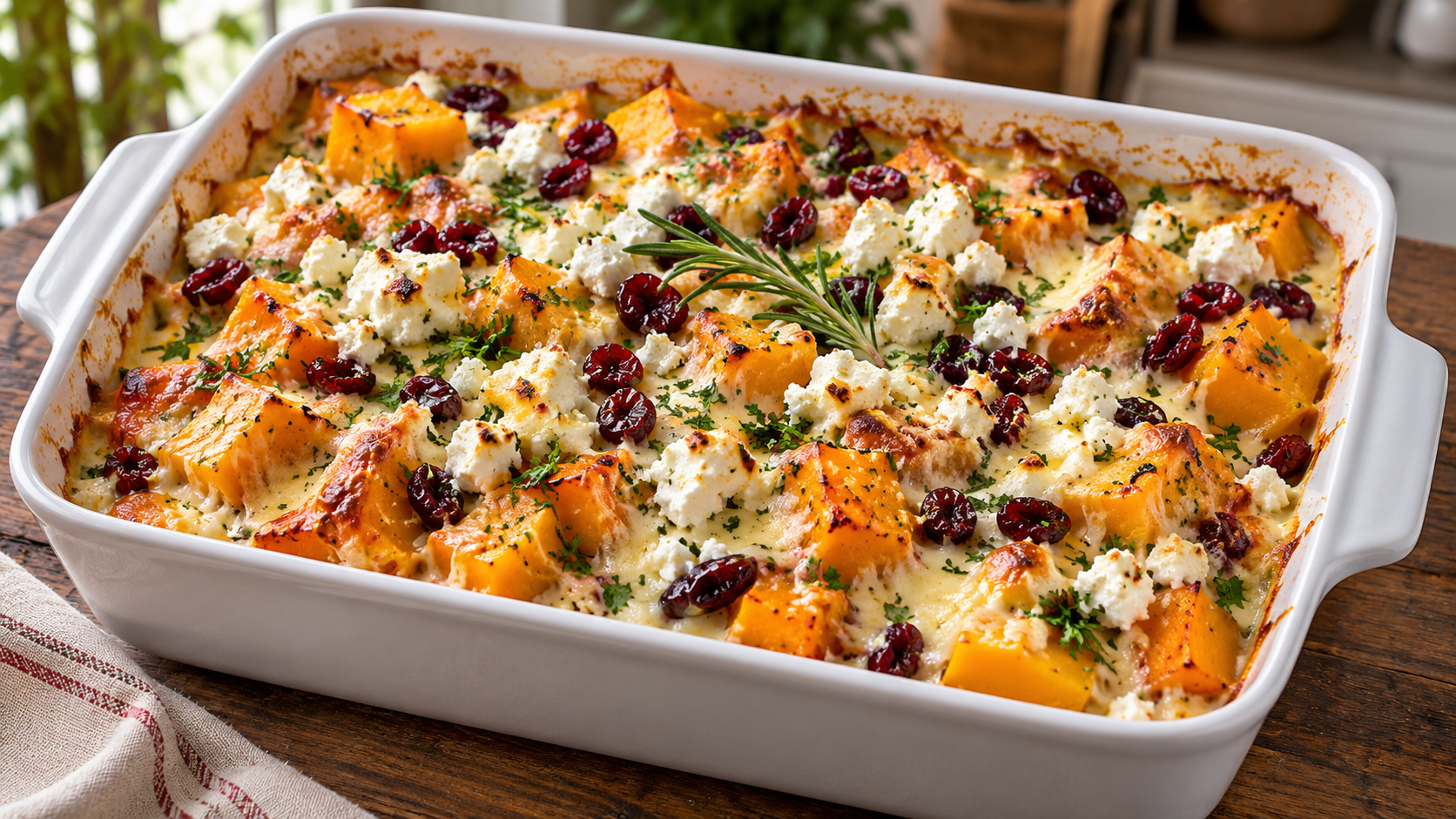
Creamy Butternut Squash, Feta & Cranberry Bake
Sweet roasted butternut squash, salty feta, and chewy cranberries come together in a creamy, golden bake that feels perfect for a cozy dinner or holiday table. Fresh herbs add a savory finish, while the browned edges of the squash bring extra flavor to every serving.
This homemade version is inspired by the dish in your photo. The squash is roasted first to develop its sweetness, then baked with a lightly seasoned cream sauce, crumbled feta, and dried cranberries. A little mozzarella helps create the bubbling golden top shown in the image.
Serve it as a vegetarian main with a crisp green salad, or offer smaller portions alongside roast chicken, turkey, or beef. You can also prepare the roasted squash ahead of time, making the final assembly easy when you are ready to cook.
Prep Time: 20 minutes
Cook Time: 55–65 minutes
Total Time: 1 hour 15 minutes–1 hour 25 minutes
Servings: 8 side servings or 4 generous main servings
Cooking Method: Roasting and baking
Oven Temperature: 400°F / 200°C, or 180°C fan
Baking Dish: Approximately 9 × 13 inches
Ingredients
For the roasted squash:
- 1 large butternut squash, about 3 pounds whole, peeled, seeded, and cut into 1-inch cubes; approximately 2 pounds prepared squash
- 2 tablespoons olive oil
- ½ teaspoon salt, plus more only if needed
- ¼ teaspoon freshly ground black pepper
- 1 teaspoon dried thyme
- 1 teaspoon finely chopped fresh rosemary
For the creamy bake:
- ¾ cup heavy cream
- ½ cup whole milk
- 3 garlic cloves, finely minced
- 1 teaspoon Dijon mustard
- 7 ounces feta cheese, crumbled
- ½ cup shredded low-moisture mozzarella
- ⅓ cup dried cranberries
- 2 tablespoons chopped fresh parsley
Step-by-Step Instructions
1. Prepare the squash
Preheat your oven to 400°F / 200°C. Lightly grease a 9 × 13-inch baking dish and set it aside.
Trim the ends from the butternut squash. Carefully peel away the tough outer skin, cut the squash in half, and scoop out the seeds. Chop the flesh into roughly 1-inch cubes.
Keep the pieces similar in size so they soften evenly. Very small pieces may become mushy before larger pieces are tender. If using prepared squash from the store, check the size and cut any unusually large chunks in half.
2. Season and arrange
Place the squash on a large rimmed baking sheet. Add the olive oil, salt, pepper, thyme, and rosemary.
Toss thoroughly until the pieces have a light coating of oil and seasoning. Spread them into a single layer, leaving a little space between the cubes.
Use two baking sheets if necessary. Crowded squash releases moisture and steams, which makes it harder to achieve the browned edges that give this dish its rich roasted flavor.
3. Roast until almost tender
Roast the squash for 25–30 minutes, turning it gently halfway through cooking.
It should develop golden patches and feel almost tender when pierced with a fork. The pieces should still hold their shape because they will cook again in the cream sauce.
If the squash is particularly firm, give it another 5 minutes. Check texture rather than relying only on the timer, since squash varieties and cube sizes can affect cooking time.
4. Mix the cream sauce
While the squash roasts, combine the heavy cream, whole milk, minced garlic, and Dijon mustard in a bowl or measuring jug.
Whisk until smooth. Stir in half of the chopped parsley.
The mustard adds a mild savory flavor without making the finished dish taste strongly of mustard. Avoid adding extra salt at this stage: feta contributes plenty, and you can adjust the seasoning when serving.
5. Assemble the bake
Transfer the roasted squash to the prepared baking dish.
Scatter approximately two-thirds of the feta and half of the dried cranberries over the squash. Gently fold them through, taking care not to crush the tender cubes.
Pour the cream mixture evenly into the dish. The liquid should settle around the squash without completely covering it. Leaving some pieces exposed helps preserve the roasted texture and creates an attractive golden surface.
6. Add the topping
Sprinkle the mozzarella evenly over the squash, followed by the remaining feta.
Keep some squash visible between the cheese crumbles. This gives the finished bake a mixture of orange squash, creamy white feta, and browned cheese.
Reserve the remaining cranberries for the final few minutes of cooking. Adding them later helps prevent the fruit on top from becoming hard or burning.
7. Bake until bubbling
Return the dish to the oven and bake uncovered for 25–30 minutes.
The sauce should bubble around the edges, the cheese should melt, and the squash should be fully tender. Scatter over the reserved cranberries during the final 5 minutes.
If the top browns before the center is hot, cover loosely with foil. For a deeper golden finish, place the dish briefly under the broiler, watching constantly so the cheese and cranberries do not scorch.
8. Rest and serve
Remove the baking dish from the oven and let it rest for 10 minutes.
This short resting time allows the sauce to settle and thicken slightly, making the bake easier to spoon onto plates. It will remain creamy rather than setting into firm slices.
Finish with the remaining parsley. Serve warm, making sure each portion includes squash, feta, cranberries, and a spoonful of the creamy sauce.
Helpful Cooking Tips
Roast the squash before adding cream. This develops flavor and removes some moisture. Baking raw squash directly in the sauce can produce unevenly cooked pieces and a thinner finish.
Choose feta with good flavor. A block of feta in brine usually crumbles beautifully and has a pleasant creamy texture. Drain it well before adding it to the dish.
Use a wide baking dish. A shallow layer heats evenly and gives you more golden topping. A smaller, deeper dish may require extra baking time.
Taste before adding more salt. Feta varies considerably in saltiness. The measured salt seasons the squash, but the finished dish may need no additional seasoning.
Keep the cranberries balanced. One-third cup provides little pockets of sweetness without overpowering the squash and herbs. Use reduced-sugar dried cranberries if you prefer a less sweet result.
Let the bake rest. Serving immediately can make the sauce appear looser. Give it the full resting time before deciding whether it needs thickening.
Recipe Notes and Variations
Using frozen squash: Roast it directly from frozen on a lightly oiled baking sheet. Avoid overcrowding and allow extra time for moisture to evaporate. The finished pieces may be softer than fresh squash.
Changing the cheese: Soft goat cheese can replace feta for a tangier, creamier variation. Its salt level differs, so adjust seasoning accordingly. Keep the mozzarella if you want a melted topping.
Adding greens: Fold in about 1 cup of cooked spinach before baking. Squeeze it thoroughly first, since excess water can thin the cream sauce.
Adding crunch: Scatter ¼ cup of chopped walnuts or pecans over the bake during the final 5–10 minutes. This adds texture but also changes the nutrition estimate and introduces nuts.
Keeping it vegetarian: Check that both cheeses are made with vegetarian or microbial rennet if this is important for your guests.
Serving Suggestions
For a simple vegetarian meal, serve a generous portion with a green salad dressed with lemon juice and olive oil. The fresh, sharp dressing balances the creamy sauce.
As a side dish, this bake pairs well with roast turkey, garlic chicken, or grilled beef. Steamed green beans or broccoli add another vegetable without making the meal feel too rich.
For a holiday table, serve it directly from the baking dish with parsley scattered over the top. Place a large serving spoon alongside it so guests can scoop up the sauce as well as the squash.
Make-Ahead, Storage, and Reheating
To prepare ahead: Roast the squash, cool it promptly, and refrigerate it separately from the cream mixture for up to 24 hours. Assemble before baking. A cold assembled dish may need an additional 10–15 minutes in the oven.
To refrigerate leftovers: Transfer to a covered container and refrigerate within 2 hours. Use within 3–4 days.
To reheat: Cover an oven-safe portion and warm at 350°F / 175°C until hot throughout. Add a small splash of milk if the sauce has thickened considerably. When checking with a food thermometer, reheated leftovers should reach 165°F / 74°C.
Freezing is possible, but the squash may soften and the cream sauce may separate after thawing. Refrigeration generally preserves the texture better.
Estimated Nutritional Information
Per serving, based on 8 side servings:
- Calories: Approximately 290
- Protein: 7 g
- Carbohydrates: 23 g
- Fat: 20 g
- Saturated fat: 11 g
- Fiber: 2.5 g
- Total sugars: 11 g
- Sodium: Approximately 470 mg
These are estimates and will vary with the squash yield, cheese brands, and cranberries used. A main-dish portion equal to two side servings provides approximately twice these amounts.
Nutritional Benefits
Butternut squash provides beta-carotene, which the body can convert into vitamin A. It also contributes fiber and potassium.
Feta, mozzarella, and milk provide protein and calcium. They add richness and make the dish more substantial, although the cream and cheeses also contribute saturated fat.
Olive oil contributes mostly unsaturated fats. It helps the squash roast evenly and carries the flavor of the herbs.
Cranberries add fruit and sweetness, but many dried varieties contain added sugar. Using a modest amount keeps their flavor balanced within the savory bake.
Questions & Answers
Can I use sweet potatoes instead?
Yes. Peel and cut them into similar-sized cubes, then roast until almost tender before assembling. Their cooking time may differ slightly.
Why is my bake watery?
The squash may have released excess moisture, or the baking dish may have been too crowded. Roast first, drain any watery liquid, and allow the finished bake to rest.
Can I replace heavy cream with milk?
Milk alone creates a thinner sauce. For the creamy texture described here, keep the cream and milk combination.
Can I leave out the cranberries?
Yes. The bake will become more savory, while the squash still provides natural sweetness.