
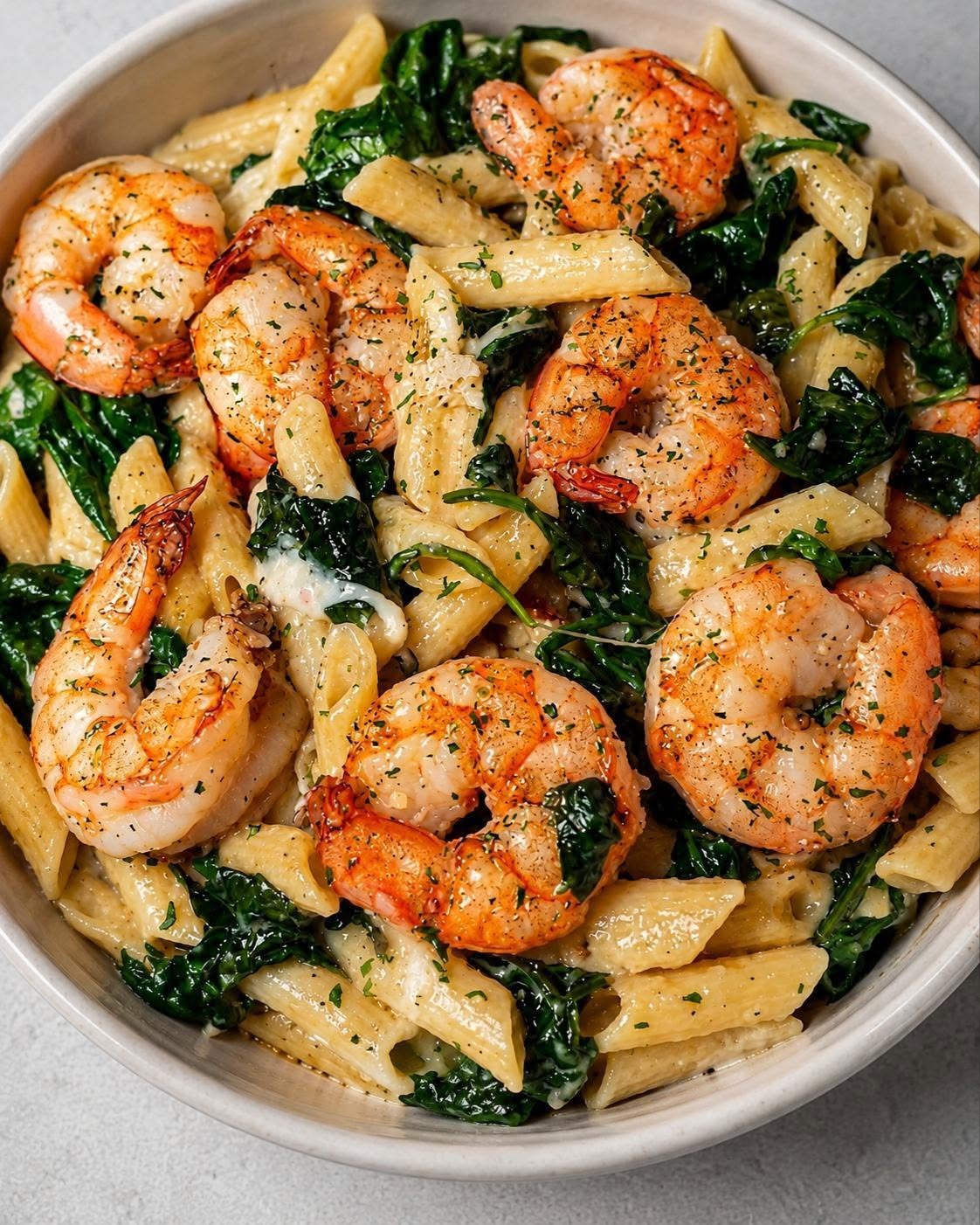
Creamy Garlic Shrimp & Spinach Penne Pasta
Description
Creamy Garlic Shrimp & Spinach Penne Pasta is a quick, comforting dinner loaded with juicy garlic-seasoned shrimp, tender penne, fresh spinach, and a rich Parmesan cream sauce. The shrimp cook in just a few minutes and bring a naturally sweet, savory flavor, while garlic and Parmesan turn the simple sauce into something that tastes restaurant-worthy.
This recipe is especially useful for busy weeknights because most of the ingredients are inexpensive pantry or refrigerator staples, and the entire meal can be ready in about 30 minutes. Fresh spinach adds color and freshness without overpowering the creamy sauce. A little reserved pasta water helps the sauce cling beautifully to every piece of penne without making it excessively heavy.
The key is not to overcook the shrimp. Sear them quickly, remove them from the skillet, prepare the sauce, and return them at the very end. This keeps them plump and tender.
Ingredients
For the Shrimp
- 1 lb large shrimp, peeled and deveined
- 1 tablespoon olive oil
- 1 tablespoon butter
- ½ teaspoon paprika
- ½ teaspoon Italian seasoning
- ½ teaspoon garlic powder
- ¼ teaspoon salt
- ¼ teaspoon freshly ground black pepper
- ¼ teaspoon red pepper flakes, optional
For the Pasta
- 12 oz penne pasta
- Water for boiling
- 1 tablespoon salt for pasta water
For the Creamy Garlic Spinach Sauce
- 2 tablespoons butter
- 5 garlic cloves, finely minced
- 1 cup heavy cream
- ¾ cup freshly grated Parmesan cheese
- ½ cup reserved pasta water, as needed
- 5 cups fresh baby spinach
- ½ teaspoon Italian seasoning
- ¼ teaspoon black pepper
- Salt, to taste
- 1 tablespoon fresh lemon juice
- 2 tablespoons chopped fresh parsley
- Extra Parmesan for serving
Instructions
1. Prepare the Shrimp
Pat the shrimp thoroughly dry with paper towels. Removing excess moisture is important because wet shrimp will steam instead of developing the lightly golden exterior seen in a good pasta dish.
Place the shrimp in a bowl and season with paprika, Italian seasoning, garlic powder, salt, black pepper, and optional red pepper flakes.
Toss gently until every shrimp is evenly coated.
2. Cook the Penne
Bring a large pot of water to a rolling boil. Season generously with salt and add the penne.
Cook according to the package instructions until al dente. The pasta should be tender but still have a slight bite in the center.
Before draining, reserve about 1 cup of pasta water.
Drain the pasta but don’t rinse it. The starch remaining on the pasta helps the creamy sauce stick to it.
3. Sear the Shrimp
While the pasta cooks, heat a large skillet over medium-high heat.
Add the olive oil and 1 tablespoon butter.
Once the butter has melted and the skillet is hot, arrange the shrimp in a single layer. Avoid overcrowding the pan.
Cook for approximately 1–2 minutes on the first side until the shrimp begin turning pink and lightly golden.
Flip and cook for another 1–2 minutes, or until opaque and just cooked through.
Transfer the shrimp to a clean plate immediately. Don’t leave them in the skillet while making the sauce because they can become rubbery.
4. Sauté the Garlic
Reduce the heat to medium.
Add 2 tablespoons butter to the same skillet. Once melted, add the minced garlic.
Cook for approximately 30–45 seconds, stirring continuously.
The garlic should become fragrant but shouldn’t turn dark brown, which can make the sauce bitter.
5. Make the Cream Sauce
Pour the heavy cream into the skillet and stir, scraping up any flavorful browned bits left behind by the shrimp.
Add the Italian seasoning and black pepper.
Bring the mixture to a very gentle simmer. Avoid aggressively boiling cream-based sauces.
Gradually add the freshly grated Parmesan while stirring continuously.
Continue stirring until the cheese melts and the sauce becomes creamy and smooth.
6. Add the Spinach
Add the fresh baby spinach a handful at a time.
Stir gently until each batch begins to wilt before adding more.
It may initially look like a lot of spinach, but it will reduce dramatically after a few minutes.
Cook for approximately 2 minutes, just until the spinach is tender and bright green.
7. Add the Pasta
Add the drained penne directly to the skillet.
Toss until every piece is coated in the creamy garlic Parmesan sauce.
If the sauce seems too thick, add reserved pasta water about 2 tablespoons at a time until you reach your preferred consistency.
The starch in the pasta water helps create a silky sauce instead of watering it down.
8. Return the Shrimp
Return the cooked shrimp and any juices collected on the plate to the skillet.
Gently toss everything together and cook for approximately 1 minute, just long enough to warm the shrimp.
Turn off the heat.
9. Finish the Pasta
Add fresh lemon juice and chopped parsley.
Taste before adding additional salt because Parmesan cheese is already salty.
Finish with extra black pepper, Parmesan, parsley, or a pinch of red pepper flakes.
Serve immediately while the sauce is warm and creamy.
Tips for Perfect Shrimp Pasta
Don’t overcook the shrimp. Large shrimp generally need only a few minutes. Remove them as soon as they’re opaque and curled into a loose C shape.
Use freshly grated Parmesan. Pre-shredded Parmesan often contains anti-caking ingredients that can prevent it from melting as smoothly.
Save your pasta water. This is one of the easiest ways to adjust the consistency of the sauce without adding more cream.
Don’t rinse the pasta. The surface starch helps the Parmesan sauce cling to the penne.
Pat shrimp dry before seasoning. This encourages browning and prevents excess water from entering the skillet.
Keep the cream at a gentle simmer. High heat can cause cream-based sauces to separate.
Add spinach gradually. It will wilt quickly, making room for the next handful.
Serve immediately. Cream sauces naturally thicken as they cool.
Recipe Notes
Frozen shrimp work perfectly for this recipe. Thaw them completely and pat them very dry before cooking.
You can use either tail-on or tail-off shrimp. Tail-on shrimp make a beautiful presentation, while tail-off shrimp are easier to eat with pasta.
Penne works especially well because the sauce enters the hollow centers, but rigatoni, fettuccine, linguine, rotini, or spaghetti can also be used.
For a lighter sauce, replace part of the heavy cream with half-and-half. The finished sauce will be less rich and may also be slightly thinner.
If reheating leftovers, add a splash of milk or cream before gently heating them to loosen the sauce.
Serving Suggestions
Serve this creamy shrimp pasta with:
- Garlic bread or toasted baguette
- Simple green salad
- Roasted asparagus
- Steamed broccoli
- Roasted zucchini
- Tomato and cucumber salad
A squeeze of fresh lemon over each serving also helps balance the richness of the Parmesan sauce.
Benefits
Good Source of Protein
Shrimp contributes high-quality protein, making this pasta more satisfying than pasta served with sauce alone.
Includes Leafy Greens
Fresh spinach adds folate, vitamin K, vitamin A precursors, and other micronutrients while also giving the dish its vibrant green color.
Balanced Main Dish
The combination of shrimp, pasta, spinach, and sauce provides protein, carbohydrates, fats, and vegetables in one meal.
Easy to Customize
You can increase the spinach, add mushrooms, broccoli, asparagus, cherry tomatoes, or zucchini, depending on what’s available.
Quick Weeknight Option
Despite its restaurant-style appearance, the recipe requires approximately 30 minutes from start to finish.
Servings & Time
Prep Time: 10 minutes
Cook Time: 20 minutes
Total Time: 30 minutes
Servings: 4 generous servings
Nutritional Information
Approximate nutrition per serving:
- Calories: 650
- Protein: 38g
- Carbohydrates: 65g
- Fat: 28g
- Saturated Fat: 15g
- Fiber: 4g
- Sugar: 4g
- Sodium: 720mg
- Cholesterol: 220mg
Nutrition is an estimate and will vary according to the pasta, cream, Parmesan, shrimp, and serving sizes used.
Q&A
Can I use frozen shrimp?
Yes. Frozen shrimp are excellent for this recipe. Thaw them completely, drain away any liquid, and pat them thoroughly dry before seasoning.
Can I use another pasta shape?
Absolutely. Rigatoni, bow tie pasta, rotini, spaghetti, linguine, and fettuccine all work. Short pasta shapes are particularly convenient because they hold the creamy sauce well.
Why did my shrimp become rubbery?
They were most likely overcooked. Shrimp cook extremely quickly. Sear them first, remove them from the skillet, and only return them to the pasta at the very end.
Why is my Parmesan sauce grainy?
Very high heat or packaged pre-shredded cheese can sometimes produce a grainy texture. Reduce the heat before adding Parmesan and use freshly grated cheese whenever possible.
Can I use milk instead of heavy cream?
You can, but the sauce won’t be nearly as thick or creamy. Half-and-half is a better lighter substitute. If using milk, you may need a small amount of flour to help thicken the sauce.
Can I add more vegetables?
Yes. Mushrooms, broccoli, asparagus, peas, zucchini, bell peppers, and cherry tomatoes all complement shrimp and garlic Parmesan sauce.
How can I make it spicy?
Increase the red pepper flakes or add a small amount of cayenne pepper when seasoning the shrimp.
Can I prepare it ahead of time?
It’s best freshly prepared because cream sauce thickens as it sits. You can clean and season the shrimp, grate the Parmesan, and prepare the vegetables beforehand to make cooking faster.
How should I store leftovers?
Place completely cooled leftovers in an airtight container and refrigerate for up to 3 days.
What’s the best way to reheat it?
Warm it slowly in a skillet over low to medium-low heat. Add a splash of milk, cream, or reserved-style pasta water to loosen the sauce. Avoid high heat because it can overcook the shrimp and cause the sauce to separate.
Can I leave out the spinach?
Yes, although spinach adds color, texture, and nutrients. You can replace it with kale, broccoli, asparagus, or another vegetable.
Can I make this gluten-free?
Yes. Use your favorite gluten-free penne and check that all packaged seasonings and Parmesan are suitable for your dietary requirements.
What makes this pasta taste restaurant-style?
Searing the shrimp separately, cooking fresh garlic in butter, using freshly grated Parmesan, reserving starchy pasta water, and finishing with lemon and fresh parsley create layers of flavor without requiring complicated ingredients.