
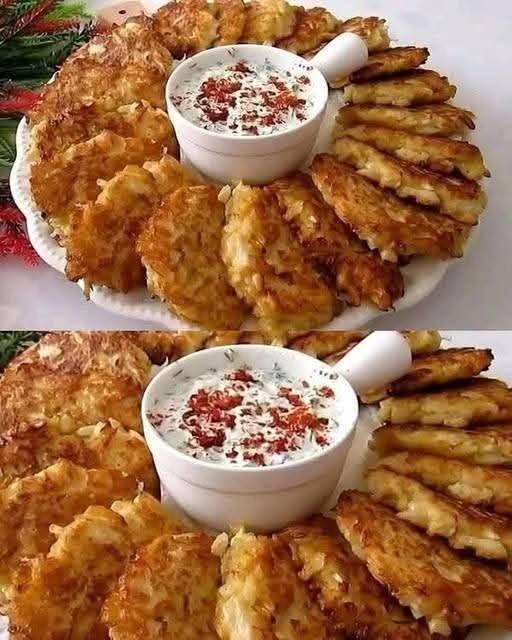
Crispy Cabbage Fritters — Golden, Crunchy & Better Than Meat!
If you have never tried turning simple cabbage into crispy golden fritters, this recipe may completely change the way you look at cabbage! These crispy cabbage fritters are tender and flavourful inside, beautifully browned and crunchy around the edges, and incredibly satisfying. They are inexpensive, easy to make, and perfect for breakfast, lunch, dinner, or as a snack.
The combination of shredded cabbage, sweet onion, garlic, eggs, and flour creates delicious little patties that become wonderfully crisp when pan-fried. Serve them hot with sour cream, garlic yoghurt sauce, ranch dressing, or your favourite dipping sauce.
And the best part? You don’t need meat to make something this delicious!
Recipe Name: Crispy Golden Cabbage Fritters
Description
These cabbage fritters are a simple comfort-food recipe made with shredded cabbage, onions, garlic, eggs, and flour. The cabbage becomes tender while the outside develops a delicious golden crust.
They are especially good when served immediately from the pan, when the edges are at their crispiest. A creamy, tangy sauce alongside them makes the perfect finishing touch.
This recipe is also an excellent way to use up leftover cabbage. You can prepare the mixture ahead of time and fry the fritters just before serving.
Ingredients
For the Cabbage Fritters
500 g (about 1.1 lb) cabbage, finely shredded
2 medium onions, finely chopped
3 cloves garlic, minced
3 large eggs
4 tablespoons flour (60 g)
1 teaspoon salt (8 g)
½ teaspoon black pepper
½ teaspoon paprika, optional
2 tablespoons chopped fresh parsley or dill, optional
3–4 tablespoons vegetable oil, for frying
Optional Creamy Garlic Dip
½ cup sour cream or Greek yogurt
1 small garlic clove, finely minced
1 tablespoon chopped dill or parsley
1 teaspoon lemon juice
Pinch of salt
Pinch of black pepper
How to Make Cabbage Fritters
1. Prepare the cabbage
Remove any damaged outer leaves from the cabbage. Cut it into quarters and remove the hard central core.
Shred the cabbage very finely. Thin pieces are important because they cook quickly and make the fritters easier to shape.
Place the shredded cabbage in a large bowl and sprinkle it with the salt. Gently massage the cabbage with clean hands for about 1–2 minutes.
Allow it to sit for approximately 10 minutes.
The salt will draw some moisture from the cabbage. This step helps prevent watery fritters and allows the cabbage to become more tender.
After 10 minutes, squeeze the cabbage gently with your hands to remove excess liquid. You can also place it in a clean kitchen towel and press it dry.
Don’t skip this step: excess cabbage moisture can make the mixture too loose and prevent the fritters from becoming crispy.
2. Prepare the onions and garlic
Finely chop the onions and mince the garlic.
For an even richer flavour, you can sauté the onions in a small amount of oil for 4–5 minutes until softened and lightly golden. Add the garlic during the final 30 seconds.
Allow the onion mixture to cool slightly before adding it to the eggs.
Alternatively, you can add the raw onion and garlic directly to the cabbage mixture for a quicker version.
3. Make the batter
Add the prepared cabbage and onions to a large mixing bowl.
Crack in the 3 eggs and mix well.
Add the flour, black pepper, and optional paprika. If using fresh herbs, add the parsley or dill now.
Mix everything thoroughly until the ingredients are evenly distributed.
The mixture should be moist but should hold together when you press a small amount between your fingers.
If it looks extremely wet, add 1 additional tablespoon of flour. Don’t add too much flour, however, because excessive flour can make the fritters heavy rather than tender.
Let the mixture rest for about 5 minutes.
4. Heat the pan
Place a large nonstick or well-seasoned skillet over medium heat.
Add approximately 1–2 tablespoons of vegetable oil.
The oil should be hot enough that a small piece of the mixture begins sizzling immediately when placed in the pan, but it should not be smoking.
Maintaining the correct temperature is important. If the pan is too cool, the fritters absorb oil and become greasy. If it is too hot, the outside browns before the cabbage inside has cooked properly.
5. Shape the fritters
Take approximately 2–3 tablespoons of the cabbage mixture and place it into the hot pan.
Flatten it gently with the back of a spoon to create a patty about 1 cm thick.
Continue adding fritters, leaving a little space between each one.
Avoid overcrowding the pan because this lowers the temperature and makes the fritters less crispy.
Depending on the size of your pan, cook approximately 3–5 fritters at a time.
6. Fry until golden
Cook the fritters for approximately 3–4 minutes on the first side.
When the underside is deep golden brown and the fritter holds together, carefully turn it over.
Cook for another 3–4 minutes on the other side.
The cabbage should be tender, and the exterior should be golden, crisp, and slightly crunchy.
Transfer the finished fritters to a plate lined with paper towels to absorb any excess oil.
Repeat with the remaining mixture, adding a little more oil to the pan whenever necessary.
Easy Creamy Garlic Dip
While the fritters are cooking, prepare the sauce.
Combine:
Sour cream or Greek yogurt
Minced garlic
Fresh dill or parsley
Lemon juice
Salt
Black pepper
Stir everything together and refrigerate until serving.
The cool, creamy sauce is fantastic with the hot, crispy cabbage fritters.
For an extra-spicy sauce, add a pinch of chilli flakes or a little hot sauce.
How to Serve
Serve these fritters hot and freshly cooked for the best texture.
They make a wonderful meal with:
Creamy garlic sauce
Sour cream
Greek yogurt
Tomato or chili sauce
Fresh herbs
A simple green salad
Pickled vegetables
Roasted potatoes
Steamed vegetables
Fried or poached eggs
For breakfast, serve two or three fritters with an egg and fresh vegetables.
For lunch or dinner, pair them with a large salad and a creamy dipping sauce.
They are also wonderful as a party appetiser. Simply make smaller fritters and serve them with several dipping sauces.
Recipe Notes
Cabbage: Green cabbage works particularly well, but you can experiment with savoy cabbage or a mixture of cabbage varieties.
Moisture matters: The biggest secret to crispy cabbage fritters is removing excess water from the cabbage.
Flour: The flour provides structure and helps bind everything together. If your cabbage is particularly wet, you may need an extra tablespoon.
Eggs: Eggs act as an important binder and help create a tender interior.
Oil: Use enough oil to lightly coat the bottom of the pan. You don’t need to deep-fry the fritters.
Size: Smaller, thinner fritters are easier to flip and tend to become crispier.
Heat: Medium heat is ideal. Adjust the temperature as necessary because every stovetop and pan is different.
Helpful Tips for Perfect Fritters
Tip 1: Don’t make them too thick
Thick fritters can brown on the outside before the cabbage has cooked through. Keep them relatively thin for an evenly cooked centre and crispy edges.
Tip 2: Squeeze the cabbage well
This is probably the most important tip. Wet cabbage produces a loose batter and softer fritters.
Tip 3: Don’t overcrowd the pan
Give every fritter enough room to brown properly.
Tip 4: Let the pan heat first
Adding the mixture to a cold pan can cause the fritters to absorb oil instead of developing a crisp crust.
Tip 5: Flip only once if possible
Allow the first side to become properly browned before turning. Frequent flipping can cause the patties to break apart.
Tip 6: Taste before frying everything
Fry one small test fritter first. Taste it and adjust the salt, pepper, garlic, or herbs before cooking the rest.
Tip 7: Keep cooked fritters crisp
Place finished fritters on a wire rack rather than stacking them directly on top of each other. Stacking traps steam and softens the crust.
❄️ Storage & Reheating
Store leftover fritters in an airtight container in the refrigerator for up to 3–4 days.
For the best texture, reheat them in a skillet over medium heat for several minutes on each side.
You can also reheat them in an oven or air fryer until hot and crisp.
Avoid microwaving if possible because it tends to make the exterior soft.
The uncooked mixture is best cooked relatively soon after preparation because cabbage continues releasing moisture. If necessary, prepare the ingredients separately and combine them shortly before frying.
Servings
Yield: Approximately 12–16 medium fritters
Servings: 4
Preparation time: 20 minutes
Cooking time: 25–30 minutes
Total time: Approximately 50 minutes
The exact number of fritters depends on how large you make them.
Approximate Nutritional Information
Nutrition will vary according to the amount of oil absorbed during frying and the exact ingredients used.
Estimated per serving (¼ of recipe):
Calories: approximately 280–330 kcal
Protein: 10–12 g
Carbohydrates: 30–35 g
Fat: 13–17 g
Fiber: 5–7 g
Sugar: 7–9 g
Sodium: approximately 600–800 mg, depending on salt used
The optional creamy dip will add additional calories and nutrients.
Benefits of Cabbage Fritters
Cabbage is a nutritious vegetable that provides fibre, vitamin C, vitamin K, folate, and other plant compounds. Combining it with eggs adds protein, while onions and garlic contribute additional flavour and plant nutrients.
The fibre from cabbage can help make the meal more satisfying. Eggs also provide high-quality protein and several essential nutrients.
Of course, the nutritional profile changes depending on how much oil and flour you use. For a lighter version, use less oil and cook the fritters in a good nonstick pan or air fryer.
Remember that this recipe is a delicious way to include more vegetables in your meals, rather than a replacement for a balanced diet.
Frequently Asked Questions
Can I make cabbage fritters without eggs?
Yes. Eggs are the easiest binder, but you can experiment with alternatives such as a flaxseed-and-water mixture. The texture may be slightly different, and the fritters may be more delicate.
Why are my cabbage fritters falling apart?
Usually, the cabbage contains too much water or there isn’t enough binder. Squeeze the cabbage thoroughly and, if necessary, add a small amount of flour.
Why aren’t my fritters crispy?
The most common reasons are excess moisture, too little heat, overcrowding the pan, or making the fritters too thick.
Can I add cheese?
Absolutely! Add approximately 50–75 g of grated cheese such as cheddar, mozzarella, Parmesan, or a salty white cheese for an extra-rich version.
Can I make them spicy?
Yes. Add chilli flakes, cayenne pepper, chopped jalapeño, or your favourite hot sauce to the mixture.
Can I add carrots?
Definitely. Finely grated carrot pairs beautifully with cabbage. If you add a large amount, squeeze out excess moisture before mixing.
Can I bake them instead of frying?
Yes. Place flattened portions on a lightly greased baking sheet and bake at approximately 200°C/400°F, turning once, until cooked through and golden. They may not become quite as crisp as pan-fried fritters, but they are still delicious.
Can I use red cabbage?
Yes, although the colour and texture will be different. Green cabbage gives the most traditional appearance and a tender texture.
What sauce goes best with cabbage fritters?
A garlic sour cream sauce is my favourite, but yoghurt-dill sauce, spicy mayonnaise, ranch-style dressing, or tomato sauce all work beautifully.
The Final Secret to Delicious Cabbage Fritters
The secret isn’t expensive ingredients. It’s properly draining the cabbage, keeping the fritters thin, and cooking them patiently over medium heat.
Once you hear that gentle sizzle and see those beautiful golden edges forming, you’ll know you’re on the right track.
These cabbage fritters are proof that humble vegetables can become something incredibly satisfying. Crispy on the outside, tender inside, packed with onion and garlic flavour, and perfect with a creamy dipping sauce—this is one of those recipes you’ll want to make again and again.