
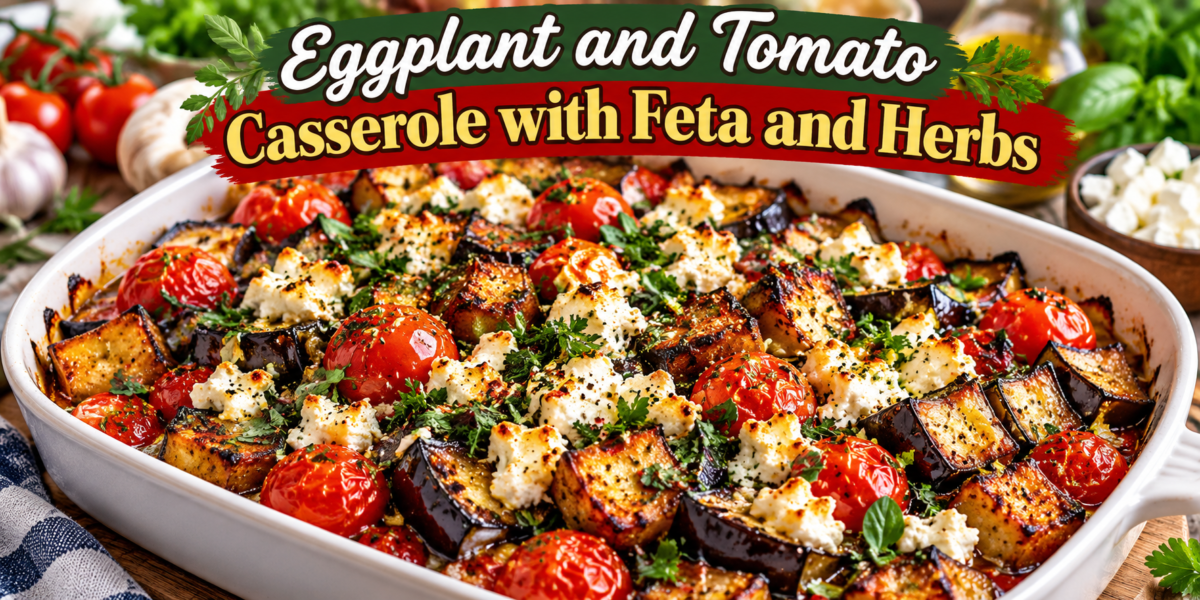
Eggplant and Tomato Casserole with Feta and Herbs
This Eggplant and Tomato Casserole with Feta and Herbs is a warm, colorful Mediterranean-inspired dish made with tender roasted eggplant, juicy tomatoes, garlic, red onion, creamy feta, olive oil, and fresh herbs. The vegetables roast until their edges become beautifully caramelized while the feta adds a salty, creamy finish.
The short focus keyword for this recipe is Eggplant Tomato Casserole. This dish brings together a handful of everyday ingredients in one baking dish. Eggplant provides a soft, hearty texture, tomatoes add natural sweetness and acidity, and feta creates a salty contrast. Garlic, oregano, parsley, basil, lemon, and extra virgin olive oil give the dish its fresh Mediterranean character.
You can serve this Eggplant Tomato Casserole as a vegetarian main course with warm pita or crusty bread. It also works beautifully as a side dish with grilled chicken, baked fish, shrimp, or lamb. Because the vegetables can be prepared ahead, it is also useful for meal prep and relaxed family dinners.
Prep Time: 20 minutes
Cook Time: 45 minutes
Total Time: 1 hour 5 minutes
Servings: 6
Ingredients
For the Roasted Vegetables
- 2 medium eggplants, cut into 1-inch cubes
- 3 cups cherry tomatoes
- 1 medium red onion, cut into wedges
- 4 garlic cloves, finely minced
- 4 tablespoons extra virgin olive oil
- 1 teaspoon dried oregano
- 1 teaspoon smoked paprika
- 1 teaspoon sea salt
- ½ teaspoon black pepper
- ¼ teaspoon red pepper flakes, optional
For the Feta and Herb Topping
- 1 cup crumbled feta cheese
- 2 tablespoons fresh parsley, finely chopped
- 2 tablespoons fresh basil, finely chopped
- 1 teaspoon dried oregano
- 1 teaspoon lemon zest
- 1 tablespoon fresh lemon juice
- 1 tablespoon extra virgin olive oil
Optional Additions
- ½ cup Kalamata olives, sliced
- ½ cup chickpeas, drained and rinsed
- ¼ cup roasted red peppers, chopped
- 2 tablespoons sun-dried tomatoes, chopped
Step-by-Step Instructions
1. Prepare the Eggplant
Start by washing the eggplants and drying them thoroughly. Cut off the tops and bottoms, then cut the eggplants into approximately 1-inch cubes. Try to keep the pieces close in size so they roast at the same rate.
Place the eggplant cubes in a large mixing bowl. Add three tablespoons of extra virgin olive oil, dried oregano, smoked paprika, sea salt, black pepper, and red pepper flakes if you are using them. Toss well until every piece is lightly coated with oil and seasoning.
For the best Eggplant Tomato Casserole, choose firm, fresh eggplants with smooth skin. Medium eggplants are usually tender and easy to roast. If the eggplant seems particularly large or has many visible seeds, you can scoop out some of the seed-heavy center before cutting it.
Let the seasoned eggplant sit for about 10 minutes while you prepare the remaining vegetables. This gives the seasonings a little time to settle onto the surface.
2. Prepare the Tomatoes, Onion, and Garlic
Preheat the oven to 425°F (220°C). Add the cherry tomatoes and red onion wedges to the bowl with the seasoned eggplant.
Add the minced garlic and the remaining tablespoon of olive oil. Toss gently so the tomatoes remain mostly intact while the onion and garlic become coated.
Cherry tomatoes are especially useful because they become soft and juicy in the oven without completely disappearing. If you prefer larger tomatoes, use ripe Roma tomatoes or another firm variety and cut them into large chunks.
The combination of tomato, onion, garlic, and eggplant creates the savory base of this Eggplant Tomato Casserole. Keep the garlic distributed throughout the vegetables so it roasts gently instead of sitting in one concentrated area.
3. Arrange the Vegetables
Transfer the vegetables to a large baking dish or rimmed sheet pan. Spread them into one even layer.
Try not to overcrowd the pan. When vegetables are packed too closely together, their moisture creates steam and prevents proper browning. If your baking dish is small, use two pans instead.
Place the pan in the preheated oven and roast for 20 minutes.
4. Roast Until Tender and Golden
After 20 minutes, carefully remove the pan from the oven. Use a spatula to turn the eggplant and gently move the tomatoes and onion around.
Return the pan to the oven and roast for another 15 to 20 minutes. The eggplant should be soft in the center with browned edges, while the tomatoes should look blistered and juicy. The onion should be tender with some caramelized edges.
Roasting is the most important flavor-building stage of this Eggplant Tomato Casserole. The high oven temperature concentrates the natural sweetness of the tomatoes and helps the eggplant develop deeper flavor.
If you want darker edges, roast for another five minutes, but watch carefully so the garlic does not burn. The finished vegetables should be tender without becoming completely mushy.
5. Prepare the Feta and Herb Topping
While the vegetables are roasting, prepare the feta mixture.
Place the crumbled feta in a small bowl. Add the chopped parsley, chopped basil, dried oregano, lemon zest, lemon juice, and one tablespoon of extra virgin olive oil.
Stir gently until the ingredients are combined. Do not mash the feta into a smooth paste. Small crumbles create a much better texture and allow the cheese to remain visible on top of the vegetables.
Taste the mixture before adding more salt. Feta can vary in saltiness, so additional salt may not be necessary.
For an extra bright finish, add a little more lemon zest instead of adding more salt. This keeps the topping fresh and aromatic.
6. Add the Feta
Remove the roasted vegetables from the oven. Scatter the feta and herb mixture evenly across the surface.
Return the dish to the oven for approximately five minutes. This warms the feta and allows it to soften slightly while keeping its crumbly character.
If you want a lightly browned top, place the dish under the broiler for one to two minutes. Watch it closely because feta can brown quickly under direct heat.
At this stage, the Eggplant Tomato Casserole should have tender eggplant, blistered tomatoes, soft red onion, fragrant garlic, and warm feta.
7. Finish and Rest
Remove the baking dish from the oven and let it rest for about five minutes.
Add a little extra parsley and basil if desired. A small drizzle of olive oil and a squeeze of fresh lemon juice can also be added just before serving.
Resting allows the tomato juices and olive oil to settle around the vegetables. It also gives the flavors a chance to come together.
Tips for the Best Results
Choose Fresh Eggplant
Select eggplants that feel firm and heavy for their size. The skin should be smooth and shiny without large soft spots.
Smaller and medium eggplants usually have a pleasant tender texture. Cut the pieces into similar sizes so they cook evenly. Even cubes help every serving of Eggplant Tomato Casserole contain a good balance of tender centers and browned edges.
Do Not Overcrowd the Pan
Good airflow is essential when roasting vegetables. If the pan is too crowded, the vegetables will steam instead of caramelizing.
Use the largest baking dish you have available, or divide the ingredients between two pans. This simple adjustment can make a noticeable difference in the final texture.
Use Olive Oil Wisely
Eggplant absorbs oil quickly, but adding too much can make the dish greasy. Start with the listed amount and toss the vegetables thoroughly.
If the vegetables look dry after roasting for several minutes, add a small drizzle. Avoid pouring a large amount of oil over the pan because the tomatoes will release their own juices.
Season in Layers
Seasoning the vegetables before roasting and finishing the casserole with fresh lemon and herbs creates more depth.
Oregano and garlic give the vegetables a savory foundation, while lemon, basil, and parsley brighten the final dish. The same approach works whenever you make Eggplant Tomato Casserole with different vegetables or optional toppings.
Use Good Feta
Choose a feta with a creamy, crumbly texture and a flavor you enjoy. Good feta provides much of the salty character of the dish.
If the feta is very salty, reduce the amount of added salt used on the vegetables.
Serving Suggestions
Serve With Warm Bread
Warm pita, flatbread, sourdough, or crusty Mediterranean bread is one of the easiest ways to serve this dish.
Bread is especially useful because it can soak up the tomato juices, olive oil, and softened feta. A spoonful of the vegetables over warm pita makes a simple and satisfying lunch.
Serve With Rice or Grains
Spoon the casserole over couscous, bulgur, quinoa, brown rice, or white rice.
The grains absorb the flavorful tomato juices and make the meal more filling. This combination is especially useful when serving Eggplant Tomato Casserole as a vegetarian main course.
Serve With Grilled Protein
The fresh vegetables pair well with grilled chicken, baked fish, shrimp, or lamb.
For a family-style meal, place the casserole in the center of the table and serve it alongside a simple protein, cucumber salad, olives, and warm pita.
Serve as a Mezze Dish
For a Mediterranean-inspired spread, serve smaller portions with hummus, tzatziki, olives, cucumber, tomatoes, roasted peppers, and toasted pita.
Eggplant Tomato Casserole also looks colorful on a shared table, with feta adding a savory finish.
Recipe Variations
Add Chickpeas
Add ½ cup of drained and rinsed chickpeas during the final 20 minutes of roasting. The chickpeas become lightly crisp on the outside and absorb the flavors of the vegetables.
This addition makes Eggplant Tomato Casserole more filling and provides extra plant-based protein and fiber.
Add Kalamata Olives
Add sliced Kalamata olives during the final 10 minutes of roasting. Their briny flavor works especially well with feta and sweet roasted tomatoes.
Use a moderate amount because both olives and feta can be salty.
Add Zucchini
Replace one cup of eggplant with chopped zucchini. Zucchini cooks quickly, so add it during the final 20 to 25 minutes if you want it to retain some texture.
Add Roasted Red Peppers
Chopped roasted red peppers bring sweetness, color, and a mild smoky flavor. Add them during the final five to ten minutes so they warm through without becoming too soft.
Make It Spicy
Increase the red pepper flakes or add a small pinch of cayenne pepper before roasting. You can also drizzle a little chili oil over the finished dish.
Storage and Reheating
Refrigerator Storage
Allow leftovers to cool before transferring them to an airtight container. Store the casserole in the refrigerator for up to three days.
The flavors often become more developed after resting overnight. Leftover Eggplant Tomato Casserole can be served warm for lunch or added to a grain bowl.
Oven Reheating
Place leftovers in a baking dish and cover loosely with foil. Heat at 350°F (175°C) for 10 to 15 minutes, or until warmed through.
Remove the foil during the final few minutes if you want the edges to become slightly crisp again.
Skillet Reheating
For a smaller portion, warm the casserole gently in a skillet over medium-low heat. Add a small splash of water if the vegetables seem dry.
Avoid high heat because it can make the feta firm and cause the vegetables to lose too much moisture.
Frequently Asked Questions
Do I Need to Salt Eggplant Before Roasting?
Modern eggplants usually do not require traditional salting. If you have an eggplant that tastes bitter, sprinkle the cubes lightly with salt and let them sit for about 20 minutes.
Rinse briefly and dry thoroughly before seasoning. This optional step can be useful when preparing Eggplant Tomato Casserole with a particularly large or mature eggplant.
Can I Use Regular Tomatoes?
Yes. Roma tomatoes or other firm ripe tomatoes work well. Cut them into large pieces so they maintain some texture during roasting.
Very watery tomatoes may release more liquid, so you may need to roast the vegetables slightly longer.
Can I Use Another Cheese?
Yes. Goat cheese, ricotta salata, or another mild crumbly cheese can replace feta. However, feta provides the salty Mediterranean flavor that makes this Eggplant Tomato Casserole distinctive.
Can I Make It Dairy-Free?
Yes. Use a dairy-free feta alternative or replace the feta with seasoned chickpeas or white beans.
The roasted vegetables are flavorful enough to stand on their own, especially when finished with fresh herbs and lemon.
Nutrition Information
Approximate nutrition per serving:
- Calories: 310 kcal
- Protein: 9g
- Carbohydrates: 28g
- Fat: 20g
- Saturated Fat: 6g
- Fiber: 8g
- Sugar: 10g
- Sodium: 650mg
Nutrition values are estimates and can vary according to ingredient brands, serving sizes, and optional additions.
Final Thoughts
This Eggplant Tomato Casserole is a simple way to turn everyday vegetables into a satisfying Mediterranean-inspired meal. The eggplant becomes tender and caramelized, the tomatoes develop concentrated sweetness, and the red onion becomes soft and lightly browned.
Feta provides a creamy, salty contrast, while parsley, basil, oregano, garlic, and lemon keep the dish bright. That combination makes Eggplant Tomato Casserole suitable for both casual weeknight meals and relaxed gatherings.
For the best result, give the vegetables plenty of space in the roasting pan and avoid using too much oil. This helps the Eggplant Tomato Casserole develop browned edges.
Serve Eggplant Tomato Casserole with warm pita, couscous, rice, quinoa, or a fresh salad. It also works beautifully as a side dish alongside grilled chicken or fish.
This Eggplant Tomato Casserole is flexible enough for different dietary preferences while keeping the original ingredients and method simple.
Whether you enjoy it fresh from the oven or as leftovers the next day, Eggplant Tomato Casserole is an easy recipe worth keeping in your regular meal rotation.
For a final finishing touch, add fresh parsley, lemon zest, and a small drizzle of extra virgin olive oil immediately before serving. The combination makes the dish colorful, fresh, and flavorful.
Enjoy this Eggplant Tomato Casserole while the feta is still warm and the roasted vegetables are tender. It is a practical Mediterranean-inspired recipe that brings plenty of flavor to the table without complicated preparation.