
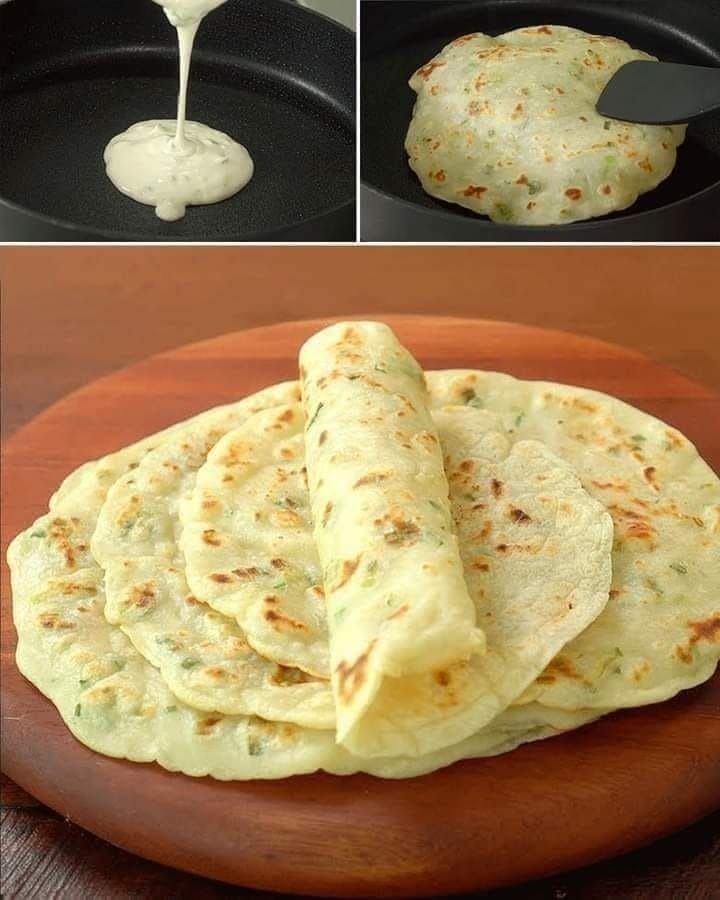
Garlic and Butter Flatbread
Description
Garlic and Butter Flatbread is a soft, warm, flavourful homemade bread with a lightly crisp exterior, a tender and chewy centre, and an irresistible garlic-butter topping. Made with simple pantry ingredients, this flatbread is easy enough for a weeknight meal but delicious enough to serve alongside a special dinner.
The dough comes together with all-purpose flour, salt, sugar, baking powder, warm water, and olive oil. After a short resting period, it is divided, rolled into thin rounds, and cooked in a hot skillet until golden spots appear. Finally, each flatbread is brushed generously with melted garlic butter and finished with fresh herbs if desired.
This homemade flatbread is incredibly versatile. Serve it alongside soups, salads, grilled chicken, curries, roasted vegetables, pasta, or dips. It can also be used as a wrap for chicken, vegetables, cheese, or other fillings.
Ingredients
For the Flatbread Dough
- 2 cups all-purpose flour
- 1 teaspoon salt
- 1 teaspoon sugar
- 1 teaspoon baking powder
- 3/4 cup warm water
- 2 tablespoons olive oil
For the Garlic Butter Topping
- 4 tablespoons unsalted butter, melted
- 3–4 cloves garlic, finely minced
- 1 tablespoon fresh parsley, finely chopped
- 1/4 teaspoon salt, or to taste
- 1/4 teaspoon black pepper, optional
Optional Garnishes
- Fresh parsley
- Fresh cilantro
- Dried oregano
- Red pepper flakes
- Grated Parmesan cheese
- Sesame seeds
- A small drizzle of olive oil
Servings
Makes: 6 medium flatbreads
Serving size: 1 flatbread
Preparation Time
Prep Time: 15 minutes
Resting Time: 20–30 minutes
Cooking Time: 15 minutes
Total Time: Approximately 50–60 minutes
Instructions
Step 1: Combine the dry ingredients.
In a large mixing bowl, add the all-purpose flour, salt, sugar, and baking powder.
Whisk or stir everything together until evenly combined.
The baking powder helps create a softer, slightly puffed flatbread, while the small amount of sugar contributes to browning and balances the flavour.
Step 2: Add the Wet Ingredients
Make a well in the centre of the flour mixture.
Pour in the warm water and olive oil.
Using a wooden spoon or your hands, gradually mix the ingredients together until a rough dough begins to form.
The dough should be soft and slightly tacky but should not be extremely sticky.
Step 3: Knead the Dough
Transfer the dough to a lightly floured work surface.
Knead for approximately 5–7 minutes until the dough becomes smooth and elastic.
If the dough feels extremely sticky, sprinkle in a small amount of flour.
Avoid adding too much flour because this can make the finished flatbread tough.
If the dough feels dry or difficult to bring together, add water 1 teaspoon at a time.
Step 4: Rest the Dough
Place the dough in a lightly oiled bowl.
Cover it with a clean kitchen towel or plastic wrap.
Allow it to rest at room temperature for about 20–30 minutes.
Although this dough does not require yeast, resting makes it easier to roll and helps produce a more tender flatbread.
Step 5: Prepare the Garlic Butter
While the dough rests, prepare the topping.
Melt the butter in a small bowl.
Add the minced garlic, chopped parsley, salt, and optional black pepper.
Stir well and set aside.
For a milder garlic flavour, use fewer garlic cloves. For a stronger garlic flavour, use 4 cloves or more.
Step 6: Divide the Dough
After resting, place the dough on your work surface.
Divide it into 6 equal portions.
Roll each portion into a smooth ball.
Keep the dough balls covered with a clean towel while working with them so they do not dry out.
Step 7: Roll the flatbreads.
Lightly flour your work surface.
Take one dough ball and roll it into a thin round approximately 6–8 inches in diameter.
The exact thickness is up to you.
For softer flatbread, keep it slightly thicker.
For a crispier flatbread, roll it thinner.
Try to keep the thickness relatively even so the bread cooks uniformly.
Step 8: Heat the Skillet
Place a large heavy-bottomed skillet, cast-iron pan, or nonstick skillet over medium-high heat.
Allow the pan to become properly hot before cooking.
You do not need to add oil to the skillet because the dough already contains olive oil.
A hot pan is important for creating those beautiful golden-brown spots without drying out the flatbread.
Step 9: Cook the Flatbread
Place one rolled flatbread into the hot skillet.
Cook for approximately 1–2 minutes, or until bubbles begin to appear on the surface and golden-brown spots develop underneath.
Flip the flatbread.
Cook the second side for another 1–2 minutes.
Press gently with a spatula if necessary to encourage even cooking.
The flatbread should develop golden spots while remaining soft in the centre.
Step 10: Brush With Garlic Butter
Immediately transfer the cooked flatbread to a plate.
Brush generously with the prepared garlic butter while the bread is still hot.
The warmth allows the butter to soak into the surface and carry the garlic flavour throughout the bread.
Repeat with the remaining dough.
Step 11: Garnish and Serve
Once all the flatbreads are cooked, brush them with any remaining garlic butter.
Sprinkle with fresh parsley, cilantro, oregano, red pepper flakes, or Parmesan if desired.
Serve warm.
Notes
Use Warm, Not Hot, water.
The water should feel comfortably warm rather than boiling hot.
Very hot water can affect the texture of the dough.
Don’t Over-Flour
Adding too much flour while kneading or rolling can make your flatbread dense and dry.
Use just enough flour to prevent sticking.
Let the Dough Rest
Even though there is no yeast, resting is important. It allows the flour to hydrate and makes the dough easier to stretch and roll.
Cook Over Medium-High Heat
A properly heated skillet helps the flatbread cook quickly and develop attractive golden-brown spots.
If the pan is too cool, the flatbread may become dry before it browns.
Keep Cooked Flatbreads Covered
As each flatbread comes out of the skillet, stack it on a plate and cover it with a clean kitchen towel.
This traps some steam and helps keep the flatbreads soft.
Helpful Tips for Perfect Garlic and Butter Flatbread
1. Use Fresh Garlic
Freshly minced garlic provides a much stronger and more aromatic flavour than garlic powder.
2. Don’t Burn the Garlic
If you are warming the garlic butter on the stove, keep the heat very low. Burnt garlic can become bitter.
For the easiest method, simply stir minced garlic into melted butter.
3. Make Them Ahead
You can prepare the dough several hours ahead and keep it covered in the refrigerator.
Allow it to come closer to room temperature before rolling.
4. Make Them Extra Soft
Once cooked, stack the flatbreads and cover them immediately with a clean towel.
This keeps the steam inside and helps maintain a soft texture.
5. Add Cheese
For cheesy garlic flatbread, sprinkle mozzarella, cheddar, or Parmesan over the cooked bread while it is hot.
6. Add Heat
Mix red pepper flakes or a pinch of cayenne pepper into the garlic butter for a spicy version.
7. Use Fresh Herbs
Fresh parsley is classic, but cilantro, basil, rosemary, or oregano can also work beautifully.
Variations
Cheesy Garlic Flatbread
After brushing the flatbread with garlic butter, sprinkle generously with shredded mozzarella and Parmesan.
Place under a broiler briefly until the cheese melts and bubbles.
Spicy Garlic Flatbread
Add 1/4–1/2 teaspoon red pepper flakes to the garlic butter.
For extra heat, add a small pinch of cayenne pepper.
Herb Garlic Flatbread
Add a mixture of parsley, oregano, and basil to the melted butter.
Parmesan Garlic Flatbread
Add freshly grated Parmesan directly to the hot flatbread after brushing it with garlic butter.
Mediterranean-Style Flatbread
Finish with parsley, oregano, sesame seeds, and a small drizzle of extra-virgin olive oil.
Serve alongside hummus, cucumber salad, grilled vegetables, or chicken.
What to Serve With Garlic and Butter Flatbread
This flatbread is extremely versatile.
Serve it with:
- Tomato soup
- Creamy vegetable soup
- Chicken soup
- Lentil soup
- Grilled chicken
- Roasted vegetables
- Chicken skewers
- Beef or lamb kebabs
- Hummus
- Baba ganoush
- Tzatziki
- Greek salad
- Pasta
- Curries
- Stews
- Scrambled eggs
You can also slice the flatbread into triangles and serve it as an appetiser with dips.
Storage
Allow leftover flatbreads to cool completely before storing.
Place them in an airtight container or resealable bag.
They can be refrigerated for approximately 3–4 days.
To reheat, place them in a dry skillet over medium heat for 30–60 seconds per side.
You can also reheat them briefly in the oven or microwave.
For longer storage, freeze the cooked flatbreads with parchment paper between each piece. Store them in a freezer-safe bag for up to approximately 2–3 months.
Reheat directly from frozen in a skillet or oven.
Nutritional Information
Approximate nutrition per flatbread, based on 6 servings and including the garlic-butter topping:
- Calories: Approximately 250–280
- Protein: Approximately 5–6 g
- Carbohydrates: Approximately 32–35 g
- Fat: Approximately 11–13 g
- Fiber: Approximately 1–2 g
- Sugar: Approximately 1–2 g
- Sodium: Approximately 400–500 mg
Actual nutritional values will vary depending on the specific flour, butter, amount of garlic butter used, and portion size.
Benefits
Provides Energy
The flour provides carbohydrates, which are an important source of energy for the body.
Olive Oil Adds Unsaturated Fat
The dough contains olive oil, which contributes monounsaturated fat and adds flavour and tenderness.
Garlic Adds Flavor
Fresh garlic allows you to create an intensely flavourful topping without needing a large amount of additional seasoning.
Homemade Ingredient Control
Making flatbread at home gives you control over the ingredients, salt, butter, and toppings.
You can adjust the recipe according to your preferences.
Versatile Meal Component
Because flatbread pairs well with vegetables, lean proteins, soups, salads, and dips, it can easily become part of a balanced meal.
Note: While homemade flatbread can fit into a balanced diet, it is still primarily a flour-based bread and is relatively calorie-dense when topped generously with butter. Portion size and toppings can be adjusted according to individual dietary goals.
Frequently Asked Questions
1. Can I make this flatbread without yeast?
Yes. This recipe uses baking powder instead of yeast, making it quicker and easier to prepare.
2. Why does my flatbread turn out hard?
The most common causes are adding too much flour, rolling the dough too thin, or overcooking it.
Keep the dough soft and cook the flatbread quickly on a properly heated skillet.
3. Can I use whole-wheat flour?
Yes. You can replace some or all of the all-purpose flour with whole-wheat flour.
However, whole-wheat flour absorbs more liquid and can produce a denser flatbread. You may need a little additional water.
4. Can I use garlic powder instead of fresh garlic?
Yes. Use approximately 1 teaspoon garlic powder in the butter mixture.
Fresh garlic will provide a stronger, fresher flavour.
5. Can I make the dough ahead of time?
Yes. Prepare the dough, cover it tightly, and refrigerate it for several hours.
Let it sit at room temperature for a short time before rolling.
6. Can I freeze the flatbread?
Yes. Cooked flatbreads freeze well.
Place parchment between individual flatbreads before freezing to prevent them from sticking together.
7. Why isn’t my flatbread bubbling?
Your skillet may not be hot enough, or the dough may have been rolled too thick or too thin.
Make sure the pan is properly preheated.
8. Can I cook these on a grill?
Yes. A hot grill can create beautiful charred spots and smoky flavour.
Cook carefully because the flatbreads can brown quickly.
9. Can I make smaller flatbreads?
Absolutely. Divide the dough into 8 smaller portions instead of 6.
Smaller flatbreads are excellent for appetisers, wraps, or lunch boxes.
10. Can I add cheese to the dough?
Yes, although cheese is usually better added after cooking so it can melt over the hot garlic-butter surface.
11. How do I keep flatbread soft?
Stack the cooked flatbreads and cover them with a clean kitchen towel immediately after cooking.
Avoid leaving them exposed to air for long periods.
12. Can I use salted butter?
Yes. If using salted butter, reduce or omit the additional salt in the garlic butter.
Recipe Summary
Recipe: Garlic and Butter Flatbread
Makes: 6 flatbreads
Prep Time: 15 minutes
Rest Time: 20–30 minutes
Cook Time: 15 minutes
Total Time: About 50–60 minutes
The Perfect Formula
Soft dough + hot skillet + fresh garlic butter = irresistible homemade flatbread.
This simple recipe is an excellent alternative to store-bought bread and can be customised with herbs, cheese, spices, or other toppings. Serve it warm straight from the skillet for the best flavour and texture.
Whether you’re dipping it into hummus, serving it alongside soup, wrapping grilled chicken inside, or simply enjoying it with a generous coating of garlic butter, this homemade flatbread is guaranteed to become a favourite.