
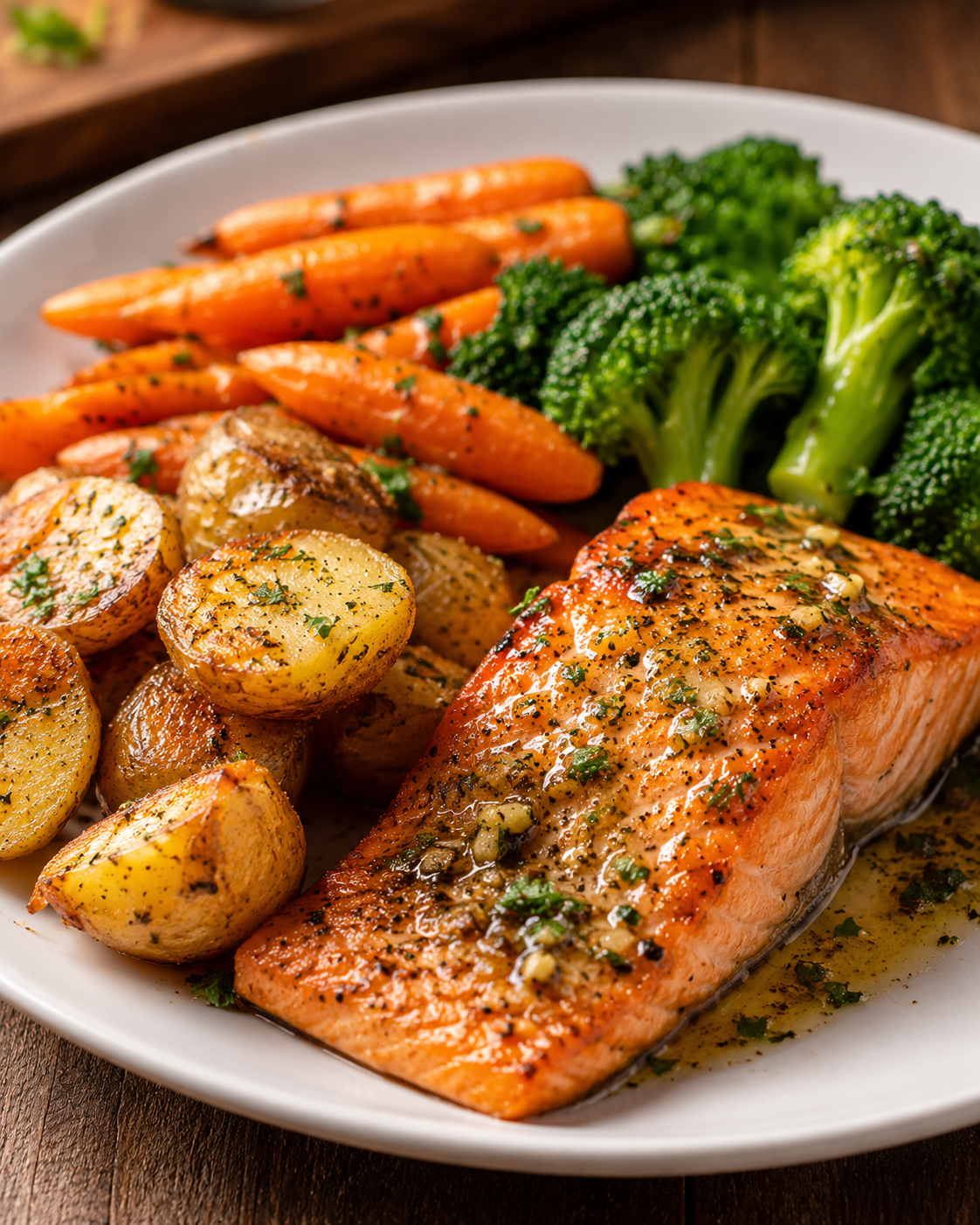
Garlic Butter Salmon with Roasted Potatoes, Glazed Carrots & Steamed Broccoli
Description
Garlic Butter Salmon with Roasted Potatoes, Glazed Carrots & Steamed Broccoli is a colourful, satisfying dinner featuring tender salmon coated in a rich garlic-herb butter, crispy golden potatoes, sweet glazed carrots, and fresh steamed broccoli.
The salmon is the star of the plate. It’s seasoned simply and cooked until tender and flaky, then finished with melted butter, fresh garlic, lemon, and parsley. Roasted baby potatoes provide crispy edges and fluffy centres, while lightly glazed carrots add natural sweetness. Steamed broccoli brings freshness and balances the richer garlic-butter flavours.
This meal looks restaurant-worthy but uses straightforward ingredients and cooking techniques. It’s ideal for a family dinner, weekend meal, date-night dinner at home, or meal prep. Most importantly, the individual components can be prepared at roughly the same time, so everything reaches the table warm.
Ingredients
For the Garlic Butter Salmon
- 4 salmon fillets, about 5–6 oz each
- 2 tablespoons olive oil
- 3 tablespoons unsalted butter, melted
- 4 garlic cloves, finely minced
- 1 tablespoon fresh lemon juice
- 1 teaspoon lemon zest
- 1 teaspoon dried Italian seasoning
- ½ teaspoon paprika
- ½ teaspoon salt
- ¼ teaspoon freshly ground black pepper
- 2 tablespoons fresh parsley, finely chopped
- Lemon wedges, for serving
For the Roasted Potatoes
- 1½ pounds baby potatoes
- 2 tablespoons olive oil
- 1 teaspoon garlic powder
- ½ teaspoon dried oregano
- ½ teaspoon paprika
- ¾ teaspoon salt
- ¼ teaspoon black pepper
- 1 tablespoon fresh parsley, chopped
For the Glazed Carrots
- 1 pound baby carrots or sliced carrots
- 1 tablespoon butter
- 1 tablespoon honey or maple syrup
- 1 tablespoon water
- ¼ teaspoon salt
- ⅛ teaspoon black pepper
- ½ teaspoon fresh lemon juice, optional
- 1 teaspoon chopped parsley
For the Steamed Broccoli
- 4 cups fresh broccoli florets
- 1 tablespoon butter or olive oil
- ¼ teaspoon garlic powder
- Salt and black pepper, to taste
- 1 teaspoon fresh lemon juice
Instructions
1. Preheat the Oven
Preheat your oven to 425°F (220°C).
Line a large baking sheet with parchment paper or lightly grease it.
The potatoes need the longest cooking time, so you’ll start with them before preparing the salmon.
2. Prepare the Potatoes
Wash and thoroughly dry the baby potatoes.
Cut larger potatoes in half. Very small potatoes can remain whole, although halved potatoes develop more crispy surfaces.
Place them in a large bowl and add:
- Olive oil
- Garlic powder
- Oregano
- Paprika
- Salt
- Black pepper
Toss until every potato is evenly coated.
Arrange the potatoes on the prepared baking sheet with the cut sides facing downward whenever possible.
3. Roast the Potatoes
Roast for approximately 25–35 minutes, turning once if necessary.
They should be deeply golden on the outside and tender when pierced with a fork.
For extra-crispy potatoes, don’t crowd them together. Leaving a little space allows hot air to circulate rather than trapping steam.
Once cooked, sprinkle with fresh parsley.
4. Prepare the Garlic Butter
While the potatoes roast, combine the melted butter with:
- Minced garlic
- Lemon juice
- Lemon zest
- Italian seasoning
- Paprika
- Parsley
Mix thoroughly and set aside.
This simple mixture gives the salmon its glossy, savoury finish.
5. Prepare the Salmon
Pat the salmon fillets dry with paper towels.
Removing surface moisture helps the exterior brown rather than steam.
Rub the fillets lightly with olive oil.
Season with salt and black pepper.
Arrange them skin-side down on a parchment-lined baking sheet or in a lightly greased baking dish.
Spoon approximately half of the garlic butter mixture over the salmon, reserving the remainder for finishing.
6. Bake the Salmon
Place the salmon in the oven at 425°F (220°C).
Bake for approximately 8–12 minutes, depending on the thickness of your fillets and your preferred doneness.
The USDA recommends cooking fish to an internal temperature of 145°F (63°C) for food safety.
Avoid unnecessarily overcooking salmon because it can quickly become dry.
7. Optional Broiled Finish
For an appetising golden surface, switch the oven to broil for approximately 1–2 minutes at the end.
Watch closely.
The garlic and butter can brown quickly under intense heat.
Remove the salmon from the oven and immediately spoon some of the reserved garlic butter over each fillet.
8. Prepare the Glazed Carrots
While the salmon and potatoes cook, place the carrots in a medium skillet or saucepan.
Add approximately ¼ cup water.
Cover and cook over medium heat for 5–7 minutes, or until the carrots begin to become tender.
Drain any remaining water.
Add:
- Butter
- Honey or maple syrup
- Salt
- Black pepper
Cook uncovered for another 3–5 minutes, stirring frequently.
The carrots should become glossy and lightly caramelised while still maintaining some texture.
Finish with optional lemon juice and fresh parsley.
9. Steam the Broccoli
Place the broccoli florets in a steamer basket over simmering water.
Cover and steam for approximately 4–5 minutes.
The broccoli should become bright green and tender-crisp.
Avoid steaming it for too long, or it can become overly soft.
Transfer to a bowl.
Add butter or olive oil, garlic powder, salt, pepper, and fresh lemon juice.
Toss gently.
10. Assemble the Plates
Divide the roasted potatoes among four plates.
Add the glazed carrots and steamed broccoli.
Place one garlic butter salmon fillet on each plate.
Spoon a little additional garlic-herb butter over the salmon.
Finish with chopped parsley, freshly cracked black pepper, and a lemon wedge.
Serve immediately.
Notes
Salmon Thickness Matters
Cooking time depends more on thickness than weight. A thick centre-cut salmon fillet takes longer than a thin tail piece.
Fresh Garlic Is Best
Garlic powder works beautifully on potatoes, but freshly minced garlic gives the salmon butter sauce a much more aromatic flavour.
Don’t Burn the Garlic
If broiling the salmon, watch it continuously. Minced garlic can go from golden to burnt very quickly.
Use Similar-Sized Potatoes
Cutting potatoes into similar sizes ensures they finish cooking at approximately the same time.
Don’t Overcook the Broccoli
Bright green, tender-crisp broccoli provides a better contrast to the soft salmon and potatoes than very soft broccoli.
Tips for the Best Garlic Butter Salmon
Pat the Salmon Dry
This simple step improves browning and helps seasonings adhere.
Use Fresh Lemon
Fresh lemon juice cuts through the richness of the butter and salmon.
Add Some Butter After Cooking
Instead of putting all the garlic butter onto the raw fish, reserve part of it for finishing. This gives the finished salmon a glossy, fresh garlic-butter flavour.
For food safety, keep the reserved finishing butter separate from any utensil that touches raw fish.
Roast Potatoes First
Potatoes require much longer than salmon. Starting them about 20 minutes earlier allows the entire meal to finish together.
Don’t Overcrowd the Pan
Crowded potatoes steam instead of roasting.
Use a thermometer.
A thermometer takes the guesswork out of cooking salmon safely.
Recipe Variations
Garlic Parmesan Salmon
Sprinkle ¼ cup freshly grated Parmesan over the salmon during the final few minutes of cooking.
Broil briefly until golden.
Spicy Garlic Butter Salmon
Add:
- ¼ teaspoon cayenne pepper
- ½ teaspoon red pepper flakes
to the garlic butter.
Honey Garlic Salmon
Add 1 tablespoon honey to the garlic butter mixture for a sweeter glaze.
Cajun Salmon Dinner
Replace Italian seasoning and paprika with approximately 1–2 teaspoons Cajun seasoning.
Check the sodium level of your seasoning before adding additional salt.
Herb Butter Salmon
Add fresh dill, thyme, or chives to the butter.
Dill is particularly good with salmon and lemon.
Serving Suggestions
This recipe already includes protein, vegetables, and potatoes, so it can be served as a complete meal.
If you’re preparing it for a larger dinner, you could add the following:
- Fresh green salad
- Cucumber tomato salad
- Garlic bread
- Dinner rolls
- Quinoa
- Wild rice
- Lemon rice
For a lighter plate, increase the broccoli and carrots and serve a smaller portion of potatoes.
Meal Prep
This recipe can work well for meal preparation.
Divide the salmon, potatoes, carrots, and broccoli among four airtight meal-prep containers.
Allow everything to cool before refrigerating.
When reheating salmon, use moderate heat and avoid cooking it for too long. Excessive reheating can dry out the fish.
A fresh squeeze of lemon after reheating helps revive the flavours.
Storage
Refrigerate cooked salmon and vegetables promptly in airtight containers.
For best quality, consume the salmon within approximately 3 days.
The potatoes, carrots, and broccoli can generally be refrigerated for 3–4 days.
Reheat until thoroughly hot.
Nutritional Information
Approximate Nutrition Per Serving
Based on four servings:
- Calories: 620
- Protein: 38 g
- Carbohydrates: 47 g
- Fat: 32 g
- Saturated Fat: 10 g
- Fiber: 8 g
- Sugar: 12 g
- Sodium: 650 mg
- Potassium: 1,500 mg
Nutritional values are estimates. Actual values vary according to salmon portion size, butter, potatoes, glaze, and individual ingredients.
Recipe Information
Prep Time: 20 minutes
Cook Time: 35 minutes
Total Time: Approximately 55 minutes
Servings: 4
Difficulty: Easy to Moderate
Benefits
1. Salmon Provides High-Quality Protein
Salmon is an excellent source of complete protein, which provides essential amino acids needed for maintaining and repairing body tissues.
2. Salmon Provides Omega-3 Fatty Acids
Fatty fish such as salmon provide the long-chain omega-3 fatty acids EPA and DHA.
These fats are part of a balanced dietary pattern and are associated with cardiovascular and other nutritional benefits.
3. Broccoli Adds Fiber and Micronutrients
Broccoli provides dietary fibre along with vitamin C, vitamin K, folate, and various plant compounds.
4. Carrots Provide Beta-Carotene
Carrots are rich in carotenoids, particularly beta-carotene, which the body can convert into vitamin A.
5. Potatoes Provide Potassium
Potatoes provide carbohydrates, potassium, vitamin C, and other nutrients.
Leaving the skins on baby potatoes can also preserve additional fibre.
6. Balanced Combination
This meal combines:
Protein: Salmon
Carbohydrates: Potatoes and carrots
Fat: Salmon, olive oil, and butter
Fiber and vegetables: Broccoli, carrots, and potatoes
That makes it a substantial all-in-one dinner.
Q&A
Can I use frozen salmon?
Yes. Thaw frozen salmon completely in the refrigerator and pat it thoroughly dry before seasoning and cooking.
Can I use skin-on salmon?
Absolutely. Skin-on fillets work very well. Place them skin-side down when baking.
Can I cook the salmon in a skillet?
Yes. Heat a little olive oil in a skillet over medium-high heat. Cook the salmon until browned and safely cooked through, then add garlic butter toward the end.
Can I air-fry the salmon?
Yes. Salmon cooks beautifully in an air fryer. Cooking time varies by thickness and appliance, so monitor the internal temperature rather than relying solely on a fixed time.
Can I use regular potatoes instead of baby potatoes?
Yes. Yukon Gold or red potatoes work especially well. Cut them into approximately 1-inch pieces so they roast evenly.
Can I replace broccoli?
Absolutely. Try asparagus, green beans, Brussels sprouts, spinach, or zucchini.
Can I make the carrots without honey?
Yes. Simply cook them with butter, salt, pepper, and a little lemon. Carrots already have natural sweetness.
Can I replace butter with olive oil?
Yes. Olive oil can replace some or all of the butter, although you’ll lose some of the classic buttery flavour.
How can I tell when the salmon is done?
The flesh should become opaque and separate into flakes when gently pressed. For a food-safety benchmark, cook fish to 145°F (63°C) internally.
Why did my salmon turn out dry?
The most common reason is overcooking. Salmon cooks quickly, particularly thinner fillets. Begin checking early.
How do I get really crispy potatoes?
Dry them thoroughly, coat them lightly in oil, place their cut surfaces against the hot pan, avoid overcrowding, and roast at high heat until deeply golden.
Can I make this recipe ahead?
You can prepare the vegetables and garlic-herb butter in advance. For the best texture, cook the salmon closer to serving time.
What makes this dinner especially flavourful?
The contrast is what makes it work: rich garlic-butter salmon, crispy herb-roasted potatoes, subtly sweet glazed carrots, and fresh lemony broccoli. A final squeeze of lemon and sprinkle of parsley ties all four components together and gives you a colourful, satisfying dinner that looks far more complicated than it actually is.