
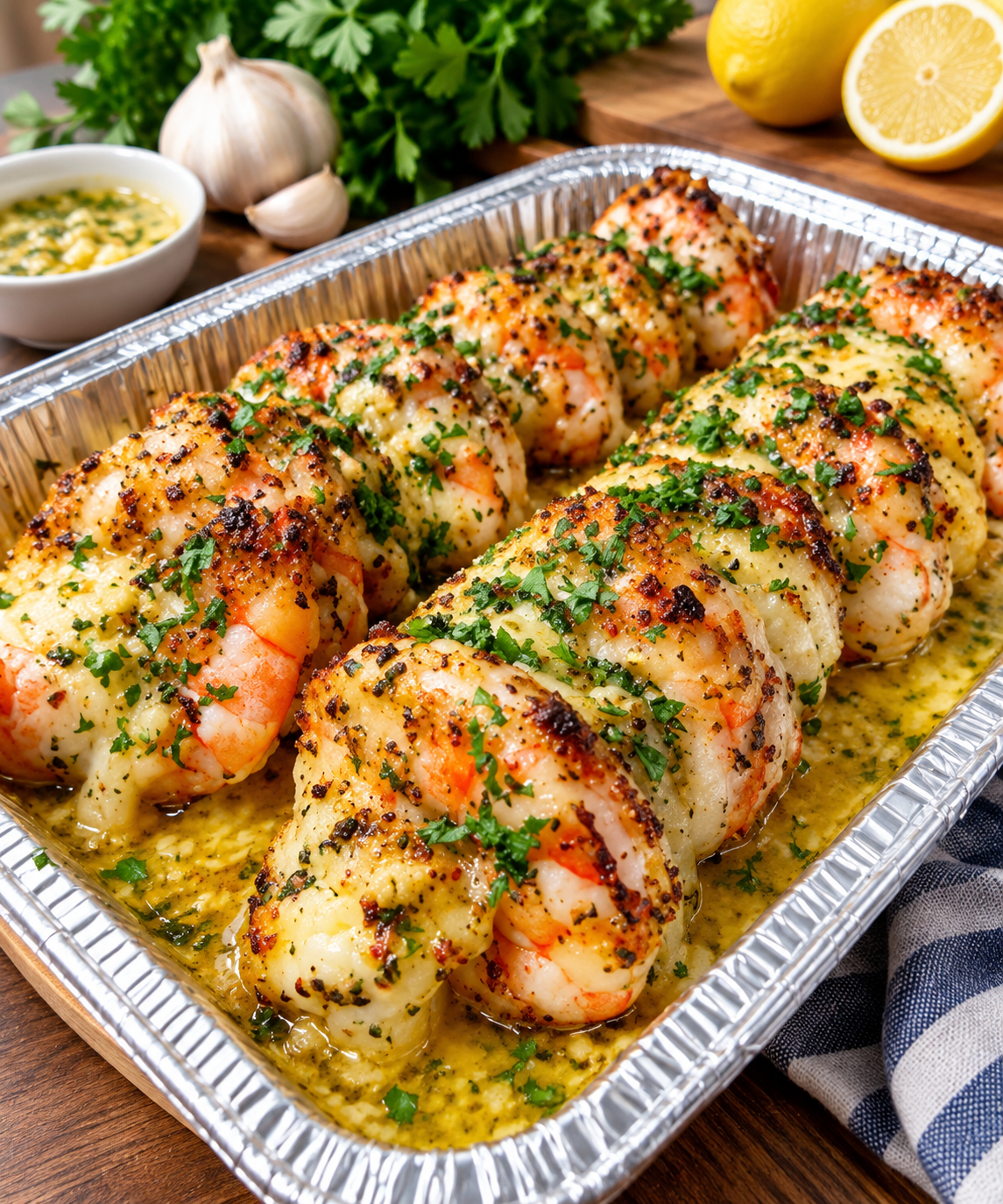
Garlic Butter Shrimp Rolls
Recipe Description
Garlic Butter Shrimp Rolls are a flavorful seafood dish featuring large, juicy shrimp coated in a rich garlic-herb butter sauce and roasted until lightly golden and beautifully caramelized. Fresh garlic, parsley, lemon, and a touch of paprika bring brightness and savory depth to the shrimp, while melted butter creates a glossy sauce that coats every piece.
This recipe is simple enough for a weeknight dinner but looks impressive enough for entertaining. The shrimp cook quickly, making this a great option when you want a restaurant-style seafood dish without spending hours in the kitchen.
Serve these garlic butter shrimp rolls with crusty bread, rice, pasta, roasted vegetables, salad, or cauliflower rice. The buttery garlic sauce is especially delicious spooned over the side dish, so nothing goes to waste.
Servings
Serves: 4
Prep Time: 15 minutes
Cook Time: 10–12 minutes
Total Time: About 25–30 minutes
Difficulty: Easy
Course: Main Course or Appetizer
Ingredients
For the Shrimp
1 1/2-pound large shrimp, peeled and deveined
4 tablespoons unsalted butter, melted
2 tablespoons olive oil
6 cloves of garlic, finely minced
1 teaspoon paprika
1/2 teaspoon smoked paprika, optional
1 teaspoon Italian seasoning
1/2 teaspoon black pepper
1/2 teaspoon salt, or to taste
1/4 teaspoon red pepper flakes, optional
2 tablespoons fresh parsley, finely chopped
1 tablespoon fresh lemon juice
1 teaspoon lemon zest
For Finishing
1 tablespoon melted butter
1 tablespoon fresh parsley
1 tablespoon fresh lemon juice
Lemon wedges
Freshly cracked black pepper
Optional Additions
1/2 teaspoon dried oregano
1 tablespoon grated Parmesan
1 teaspoon Dijon mustard
1 tablespoon chopped cilantro
1/2 teaspoon Cajun seasoning
1 tablespoon honey for a slightly sweet variation
Instructions
1. Prepare the Shrimp
If using frozen shrimp, thaw them completely in the refrigerator.
Drain thoroughly and pat them very dry with paper towels.
Removing excess moisture is important because wet shrimp can release water during cooking and prevent proper browning.
If your shrimp still have tails attached, you can leave them on for presentation or remove them for easier eating.
Place the shrimp in a large mixing bowl.
2. Make the Garlic Butter Mixture
In a separate bowl, combine melted butter, olive oil, minced garlic, paprika, smoked paprika, Italian seasoning, black pepper, salt, and optional red pepper flakes.
Add fresh parsley, lemon juice, and lemon zest.
Whisk everything together until evenly combined.
The mixture should smell intensely garlicky, herby, and fresh.
3. Coat the Shrimp
Pour the garlic butter mixture over the shrimp.
Toss gently until every shrimp is evenly coated.
Allow the shrimp to marinate for approximately 5–10 minutes while you prepare the oven.
Don’t marinate raw shrimp in lemon juice for a long time because the acidity can begin changing the texture of the seafood.
4. Preheat the Oven
Preheat your oven to 425°F (220°C).
Line a large baking sheet or shallow baking dish with parchment paper or lightly grease it.
Arrange the shrimp in a single layer.
Make sure they are not stacked on top of one another.
5. Arrange the Shrimp
For a neat presentation, arrange the shrimp in slightly overlapping rows or individual clusters.
Pour any remaining garlic butter mixture from the bowl over the shrimp.
Make sure the garlic is distributed rather than sitting in one concentrated pile because it can brown quickly.
6. Bake
Place the shrimp in the preheated oven.
Bake for approximately 7–10 minutes, depending on their size.
Large shrimp generally require a little longer than smaller shrimp.
The shrimp are ready when they turn opaque and pink with lightly browned edges.
Avoid overcooking them because shrimp can become firm and rubbery.
7. Broil for Extra Color
For a more caramelized finish, switch the oven to broil for 1–2 minutes.
Keep the tray close enough to the broiler to brown the shrimp, but watch them carefully.
The garlic butter should become golden and sizzling.
Remove the shrimp as soon as the edges become lightly browned.
8. Add the Finishing Butter
While the shrimp are hot, drizzle them with the additional tablespoon of melted butter.
Sprinkle with fresh parsley.
Add fresh lemon juice and a little cracked black pepper.
9. Serve
Transfer the shrimp to a large serving platter or individual plates.
Spoon the garlic butter from the bottom of the baking dish over the shrimp.
Garnish with lemon wedges and additional herbs.
Serve immediately.
Stovetop Method
These shrimp can also be cooked entirely in a skillet.
Heat a large skillet over medium-high heat.
Add 1 tablespoon olive oil.
Once hot, place the shrimp in a single layer.
Cook for approximately 2–3 minutes on the first side.
Flip and cook for another 1–2 minutes.
Add the garlic butter mixture during the final minute.
Toss gently until the shrimp are cooked through and coated in the warm garlic butter.
Finish with lemon juice and parsley.
This method creates a stronger seared flavor and is especially useful when you don’t want to turn on the oven.
Recipe Notes
The most important factor in this recipe is avoiding overcooked shrimp.
Shrimp cook surprisingly quickly, and their exact cooking time depends on size.
Large shrimp are ideal because they remain juicy and meaty and are easier to roast without drying out.
Fresh garlic provides the strongest flavor, but garlic powder can supplement it if necessary.
Unsalted butter is recommended so you can control the final salt level, especially if using Cajun seasoning or another salty spice blend.
Fresh lemon juice should be added mostly toward the end to keep the flavor bright.
Helpful Tips
Pat shrimp completely dry before seasoning.
Don’t overcrowd the baking dish.
Use large shrimp for the best texture.
Keep an eye on the garlic while broiling.
Don’t bake shrimp much longer than necessary.
Use freshly squeezed lemon juice.
Fresh parsley gives the dish a much brighter finish.
Serve immediately for the best texture.
Save the buttery juices from the pan and spoon them over the shrimp before serving.
If using very large shrimp, add 1–2 minutes to the cooking time.
How to Tell When Shrimp Are Done
Raw shrimp are generally gray and translucent.
As they cook, they become pink or pearly white and opaque.
The flesh should feel firm but still springy.
A useful visual cue is that the shrimp should curl into a loose C shape. Shrimp that curl tightly into an O shape may have been cooked too long.
For the most reliable result, use an instant-read thermometer and follow safe seafood cooking guidance.
Flavor Variations
Spicy Garlic Butter Shrimp
Add extra red pepper flakes, cayenne pepper, and a little hot sauce.
Cajun Garlic Shrimp
Replace some of the paprika with Cajun seasoning and add a pinch of cayenne.
Lemon Herb Shrimp
Use extra lemon zest, parsley, oregano, thyme, and dill.
Parmesan Garlic Shrimp
Add finely grated Parmesan during the final few minutes of cooking.
Honey Garlic Shrimp
Add 1 tablespoon honey to the garlic butter mixture for a sweet-savory glaze.
Cilantro Lime Shrimp
Replace some of the parsley and lemon with fresh cilantro and lime juice.
Mediterranean Garlic Shrimp
Add oregano, parsley, lemon, cherry tomatoes, and a few crumbled feta pieces after cooking.
Make-Ahead Instructions
You can prepare the garlic butter mixture several hours ahead.
The shrimp can be cleaned, peeled, and deveined in advance.
Keep the shrimp refrigerated until ready to cook.
For the best texture, don’t coat the shrimp with lemon juice too far in advance.
Prepare the shrimp shortly before cooking.
The finished shrimp are best served immediately, although leftovers can be refrigerated.
Storage
Store leftover shrimp in an airtight container in the refrigerator.
Consume within 1–2 days for best quality.
Reheat very gently in a skillet over low to medium heat.
Avoid prolonged reheating because shrimp can become tough.
You can add a small amount of fresh butter or lemon juice during reheating to refresh the flavor.
Freezing cooked shrimp is possible, although texture is usually best when they are eaten fresh.
Estimated Nutritional Information
Approximate per serving, based on 4 servings:
Calories: 330–390 kcal
Protein: 36–40 g
Carbohydrates: 4–6 g
Fat: 19–23 g
Fiber: Less than 1 g
Sugar: 1–2 g
Sodium: 650–850 mg
These values are estimates and vary depending on the size of the shrimp, amount of butter and oil, seasoning, and optional ingredients used.
Serving the shrimp with rice, bread, pasta, or potatoes will increase the overall calorie and carbohydrate content.
Potential Benefits
Shrimp provide a substantial amount of protein along with nutrients such as selenium and vitamin B12.
Parsley, garlic, and lemon add flavor while contributing a range of micronutrients and plant compounds.
Using olive oil along with butter allows you to create a rich sauce while incorporating predominantly unsaturated fat from the olive oil.
For a balanced meal, pair the shrimp with vegetables and a whole grain or another nutrient-rich side.
Frequently Asked Questions
Can I use frozen shrimp?
Yes. Thaw them completely and pat them dry before cooking.
Should I leave the tails on?
Either option works. Tails are attractive for presentation, but removing them makes the shrimp easier to eat.
Can I use smaller shrimp?
Yes, but reduce the cooking time because smaller shrimp cook faster.
Why are my shrimp rubbery?
They were likely overcooked. Shrimp need only a few minutes and should be removed from heat once they become opaque.
Can I cook these on the stovetop?
Absolutely. A skillet works very well and can create a beautiful seared exterior.
Can I grill the shrimp?
Yes. Thread them onto skewers and grill over medium-high heat for approximately 2–3 minutes per side.
Can I use salted butter?
Yes, but reduce the added salt and taste the finished dish before seasoning further.
Can I make these spicy?
Yes. Add chili flakes, cayenne, Cajun seasoning, or hot sauce.
Can I add cheese?
Yes. Parmesan is particularly good with garlic butter shrimp.
Can I use lime instead of lemon?
Absolutely. Lime works beautifully and gives the dish a slightly different citrus flavor.
Can I prepare the shrimp ahead?
You can prepare the ingredients ahead, but cook the shrimp shortly before serving for the best texture.
What can I serve with garlic butter shrimp?
Rice, pasta, crusty bread, roasted vegetables, potatoes, salad, quinoa, and cauliflower rice all pair well.
Can I make this dairy-free?
Yes. Replace butter with additional olive oil or a suitable dairy-free butter alternative.
Serving Suggestions
Serve the shrimp over steamed jasmine rice so the buttery sauce can soak into the rice.
For a pasta dinner, toss the cooked shrimp with linguine or spaghetti and add a splash of pasta water and extra lemon.
For a low-carbohydrate meal, serve with cauliflower rice, roasted broccoli, zucchini, or a large green salad.
Crusty bread is excellent for dipping into the garlic butter left in the pan.
For a Mediterranean-style plate, serve with cucumber-tomato salad, hummus, olives, and warm pita.
For an appetizer, serve the shrimp on a platter with lemon wedges and a small bowl of garlic aioli.
Presentation Tips
Arrange the shrimp in a single layer on a wide white serving plate.
Spoon the garlic butter around and over the shrimp.
Add fresh parsley in small scattered amounts rather than covering the entire dish.
Place lemon wedges around the edges.
For a restaurant-style presentation, finish with a little lemon zest and freshly cracked black pepper.
The contrast of golden garlic, pink shrimp, green herbs, and bright yellow lemon creates a beautiful presentation without requiring complicated garnishes.
Final Note
Garlic Butter Shrimp Rolls are quick, flavorful, and incredibly versatile. Large shrimp are coated in fragrant garlic butter, herbs, paprika, and lemon, then cooked until tender with beautifully browned edges.
The most important secret is to avoid overcooking. Shrimp need only a few minutes to become perfectly juicy and opaque. Drying them well before cooking also helps them brown beautifully.
Finish the dish with fresh lemon juice, parsley, and the buttery juices from the pan. Serve with rice, pasta, vegetables, or crusty bread for a simple dinner that feels special without requiring complicated preparation.