
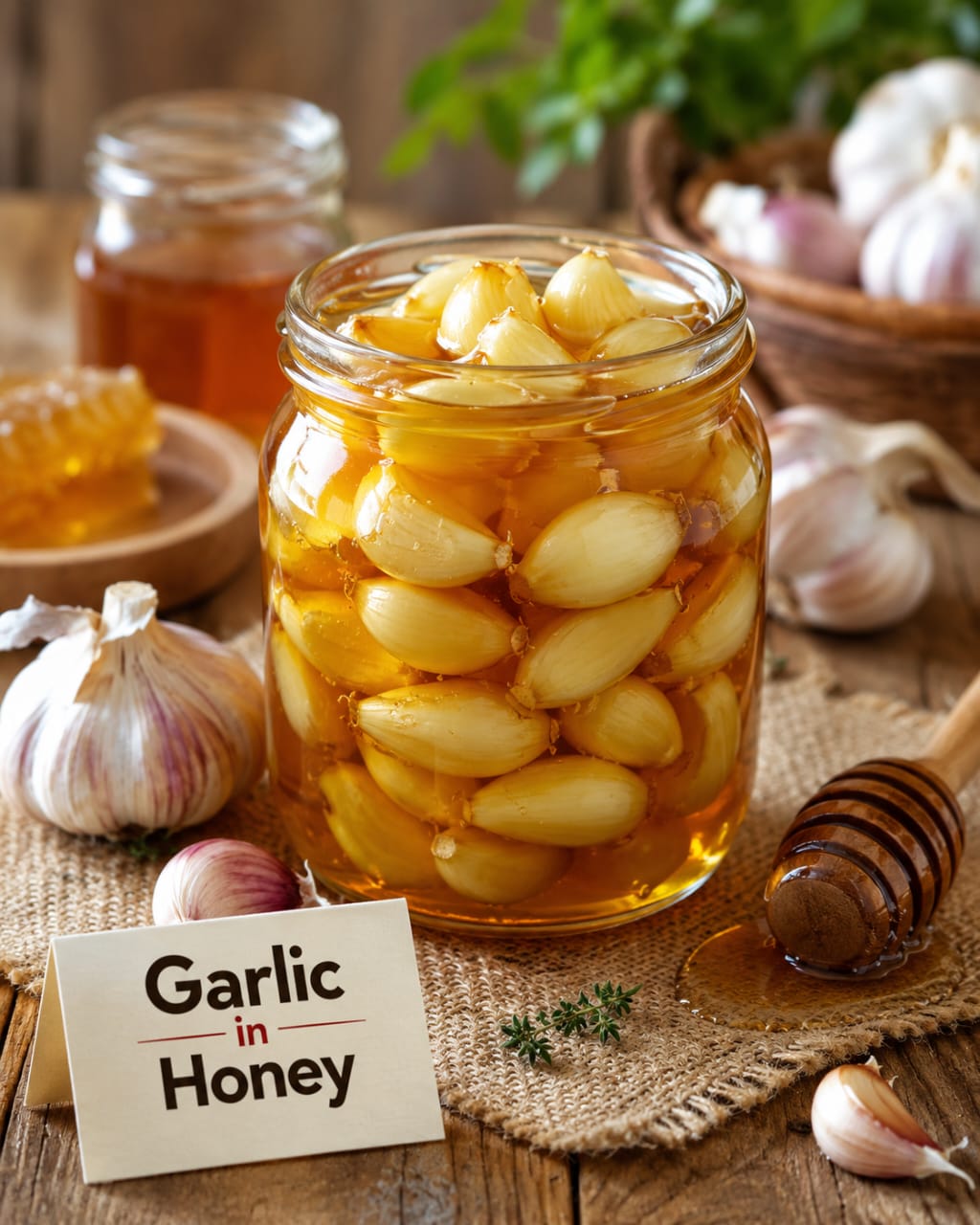
Garlic in Honey
Garlic in honey is a simple two-ingredient recipe that combines the bold, savory flavor of fresh garlic with the natural sweetness of honey. Traditionally, peeled garlic cloves are covered with honey and allowed to develop a deeper, mellower flavor over time. The finished mixture can be used in salad dressings, marinades, sauces, glazes, and other savory dishes.
This recipe is especially popular because it requires very little preparation and only a few ingredients. For the traditional version, raw, unpasteurized honey is commonly preferred. However, it is important to note that home fermentation of garlic in honey has not been scientifically validated as a consistently safe preservation method, so the traditional fermentation process should be approached with caution.
Prep Time: 15–20 minutes
Fermentation Time: 1–4 weeks traditionally
Total Time: About 1 month
Yield: Approximately 1½–2 cups
Ingredients
Core Ingredients
Fresh Garlic Cloves: 2–3 whole heads of garlic, completely peeled
Raw Honey: Approximately 1–1½ cups, or enough to completely cover the garlic cloves
Optional Flavor Additions
Crushed Red Pepper Flakes: ½ teaspoon
Fresh Ginger: A few thin slices
Fresh Thyme: 1–2 sprigs
Instructions
Prepare the Garlic
Separate the garlic bulbs into individual cloves and remove all of the papery skin. Trim away any damaged, bruised, or soft sections. For a stronger garlic flavor, lightly crush each clove with the flat side of a knife. If you prefer a milder preparation, leave the cloves whole.
Make sure your jar and utensils are thoroughly clean and dry before beginning.
Fill the Jar
Place the prepared garlic cloves into a clean glass jar. Do not pack the cloves too tightly, and leave some space at the top of the jar.
If you are using optional ingredients such as red pepper flakes, ginger, or fresh thyme, add them now.
Add the Honey
Pour the raw honey slowly over the garlic cloves. Continue adding honey until the garlic is well coated and, ideally, completely submerged.
Use a clean spoon or spatula to gently move the garlic around so the honey reaches the spaces between the cloves.
Begin the Traditional Fermentation
Seal the jar loosely rather than creating a completely airtight container if following a traditional fermentation method. During active fermentation, gas can develop.
Traditionally, the jar is kept at room temperature and gently turned or stirred periodically so the honey continues to coat the garlic.
Monitor the Garlic
Over time, the garlic may become softer and the honey may become thinner. You may also notice bubbles or other signs of microbial activity.
However, bubbling, smell, appearance, or taste cannot confirm that a homemade garlic-and-honey ferment is safe. There is no validated fermentation period that guarantees safety for this preparation.
For that reason, if you notice mold, unusual discoloration, a rotten smell, or other obvious spoilage, discard the entire batch rather than trying to save it.
Tips
Use Fresh Garlic
Choose firm, fresh garlic bulbs without mold, soft spots, or visible damage. Fresh cloves provide better flavor and moisture for the traditional preparation.
Use Good-Quality Honey
A mild-flavored honey works especially well because it allows the garlic to remain the dominant flavor. Strongly flavored honey can also be used if you want a more distinctive result.
Do Not Add Water
Avoid thinning the honey with water. Water changes the composition of the mixture and can create additional food-safety concerns.
Leave Headspace
Do not fill the jar completely to the top. If fermentation occurs, gas can build up inside the container.
Keep Garlic Covered
Traditional recipes aim to keep the garlic coated or submerged in honey. Garlic exposed above the honey can dry out or develop spoilage.
Do Not Depend on Smell or Appearance
A batch that looks and smells normal is not necessarily safe. Foodborne pathogens cannot always be detected through appearance, smell, or taste.
Variations
Spicy Garlic Honey
Add ½ teaspoon of crushed red pepper flakes to the jar. The combination of sweet honey, garlic, and chili creates a delicious sweet-and-spicy flavor that works particularly well in marinades and glazes.
Ginger Garlic Honey
Add a few thin slices of fresh ginger along with the garlic. Ginger gives the mixture a warm, aromatic flavor that pairs beautifully with both sweet and savory dishes.
Thyme Garlic Honey
Add one or two fresh thyme sprigs for a subtle herbal note. Thyme works especially well when the garlic honey is used in salad dressings, roasted vegetables, or marinades.
Garlic, Ginger, and Chili Honey
For a stronger savory variation, combine garlic with fresh ginger and a small amount of crushed red pepper flakes. This version is excellent as a flavoring for Asian-inspired sauces and stir-fries.
Q&A
Does Garlic in Honey Really Ferment?
Garlic combined with honey can undergo microbial changes, and traditional recipes often describe bubbling, thinning honey, and changes in flavor. However, the exact process can vary between batches, and there is not enough research to establish a standardized home method that guarantees safety.
Does It Have to Be Raw Honey?
Raw honey is traditionally preferred because it has not undergone pasteurization and may contain naturally occurring microorganisms. However, using raw honey does not automatically make garlic honey safe. The food-safety concern comes from the combination of garlic and honey itself.
How Long Does Garlic Honey Take?
Traditional recipes commonly recommend anywhere from one week to several weeks, with about one month often used as a general target. The garlic becomes softer and the flavor becomes more developed over time.
There is no scientifically validated fermentation time that can be presented as a guarantee of safety.
Can I Use Whole Garlic Cloves?
Yes. Whole cloves are commonly used and provide a milder, slower flavor release. Lightly crushing the cloves releases more garlic juice and creates a stronger garlic flavor.
Can Children Eat Garlic Honey?
Never give honey to children under 12 months of age. Honey can contain Clostridium botulinum spores, which can cause infant botulism. This precaution applies even when honey is combined with other ingredients.
Can I Store Garlic Honey at Room Temperature?
Traditional recipes often keep the mixture at room temperature during fermentation. However, this is also where the food-safety concern is greatest. Because there is no validated home-preservation procedure for garlic fermented in honey, it should not be treated as a proven shelf-stable food.
What Can I Use Garlic Honey For?
Garlic honey can be used as a culinary ingredient in salad dressings, marinades, sauces, roasted vegetables, sandwiches, stir-fries, and glazes. It provides a combination of sweetness and savory garlic flavor.
Nutrition
The nutritional value of garlic honey depends on the amount consumed and the proportions of garlic and honey used. Honey is primarily a source of carbohydrates and naturally occurring sugars, while garlic contributes small amounts of fiber, vitamins, minerals, and sulfur-containing compounds.
Because honey contains concentrated natural sugars, garlic honey should be enjoyed in moderation. It should also be viewed as a flavorful food ingredient rather than a replacement for a balanced diet or medical treatment.
Conclusion
Garlic in honey is a remarkably simple preparation made with just fresh garlic and honey. The sweet-and-savory combination develops a rich flavor that can be used in marinades, dressings, sauces, glazes, and many other dishes. Optional ingredients such as chili, ginger, and thyme make it easy to customize the flavor.
While traditional recipes commonly describe leaving garlic submerged in raw honey for several weeks, it is important to remember that homemade garlic-honey fermentation has not been scientifically validated as a consistently safe preservation method. If you want to enjoy the flavor combination without relying on long-term fermentation, a safer culinary approach is to combine fresh garlic and honey shortly before using it.
For the best results, always use fresh, undamaged garlic, good-quality honey, clean equipment, and careful food-safety practices.