
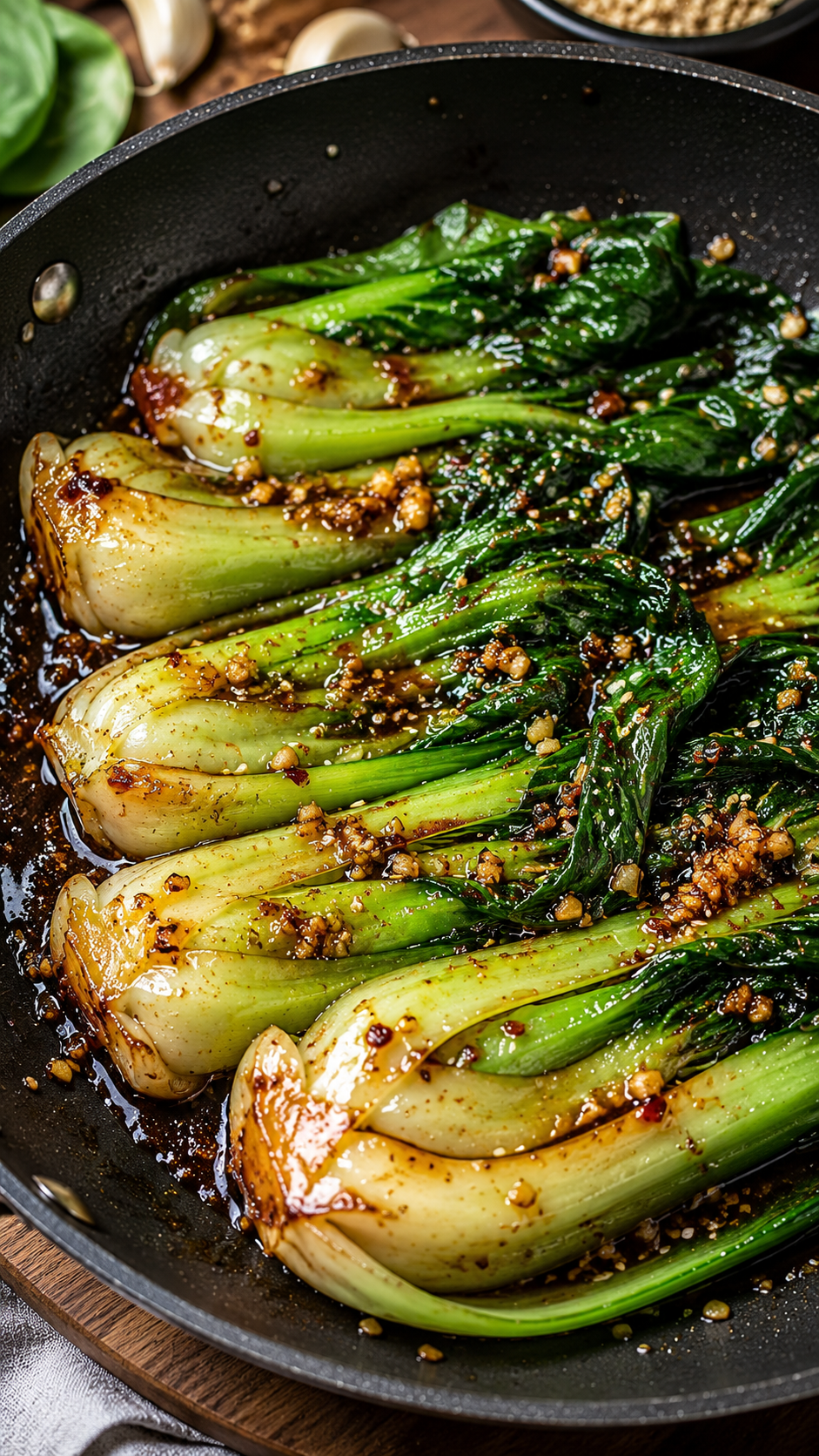
Garlic & Soy Glazed Pan-Seared Bok Choy
Description
This Garlic & Soy Glazed Pan-Seared Bok Choy is a quick, flavorful vegetable side dish with beautifully caramelized edges, tender-crisp stems, and vibrant green leaves coated in a glossy savory sauce. Fresh baby bok choy is seared in a hot skillet, then finished with plenty of garlic and a simple soy-based glaze featuring sesame oil, ginger, rice vinegar, and a touch of honey. The result is a delicious balance of salty, slightly sweet, tangy, and garlicky flavors. Ready in about 20 minutes, this easy bok choy recipe pairs beautifully with rice, noodles, chicken, salmon, shrimp, tofu, or other Asian-inspired meals.
Ingredients For the Bok Choy
- 6–8 baby bok choy
- 1½ tbsp avocado oil or vegetable oil
- ¼ tsp salt
- ¼ tsp freshly ground black pepper
For the Garlic Soy Glaze
- 3 tbsp low-sodium soy sauce
- 1 tbsp honey or brown sugar
- 1 tbsp rice vinegar
- 1 tsp toasted sesame oil
- 4 garlic cloves, finely minced
- 1 tsp fresh ginger, finely grated
- 2 tbsp water
- ½ tsp cornstarch
- ¼ tsp crushed red pepper flakes, optional
For Garnish
- 1 tsp toasted sesame seeds
- 2 green onions, thinly sliced
- Crushed red pepper flakes, optional
Step-by-Step Instructions
- Begin by thoroughly washing the baby bok choy because dirt can become trapped between the stems.
- Slice each bok choy lengthwise into halves. Larger pieces can be quartered.
- Rinse between the leaves under cold running water and drain thoroughly.
- Pat the bok choy completely dry with clean kitchen towels or paper towels. Removing excess water is important for achieving a proper sear.
- In a small bowl, combine soy sauce, honey, rice vinegar, sesame oil, minced garlic, grated ginger, and water.
- Add the cornstarch and whisk until completely smooth.
- Stir in crushed red pepper flakes if you want a little heat.
- Set the prepared sauce aside.
- Heat a large skillet over medium-high heat.
- Once the skillet is hot, add the avocado or vegetable oil.
- Arrange the bok choy cut-side down in a single layer. Work in batches if necessary rather than overcrowding the pan.
- Season lightly with salt and black pepper. Remember that soy sauce already contains sodium, so don’t add too much salt.
- Allow the bok choy to cook undisturbed for approximately 2–3 minutes.
- The cut surfaces should develop beautiful golden-brown caramelized spots.
- Flip each piece using tongs.
- Cook for another 1–2 minutes.
- Reduce the heat to medium.
- Give the prepared garlic-soy mixture another quick stir because the cornstarch may settle at the bottom.
- Pour the sauce around and over the bok choy.
- The sauce should begin bubbling almost immediately.
- Gently move the bok choy around the skillet so every piece becomes coated with the glaze.
- Cover the skillet and cook for approximately 1–2 minutes, allowing the thicker stems to become tender.
- Remove the lid and continue cooking for another 1–2 minutes.
- Spoon the bubbling garlic-soy glaze repeatedly over the bok choy.
- As the sauce reduces, it will become darker, thicker, and beautifully glossy.
- Check the stems with the tip of a knife. They should be tender enough to eat easily while retaining a slight crispness.
- Avoid overcooking because the leaves can become overly soft and lose their vibrant green color.
- Remove the skillet from the heat.
- Sprinkle toasted sesame seeds over the glazed bok choy.
- Add sliced green onions and optional red pepper flakes.
- Spoon any remaining garlic-soy sauce from the skillet over the vegetables.
- Serve immediately while warm and glossy.
Tips
- Dry the bok choy well. Wet vegetables steam instead of developing those delicious caramelized edges.
- Use baby bok choy when possible because its smaller stems cook quickly and remain tender.
- Don’t overcrowd the skillet. Give each piece direct contact with the hot surface.
- Keep the cut side down without moving it initially to develop better browning.
- Low-sodium soy sauce gives you better control over the saltiness.
- Add garlic with the sauce instead of directly to extremely hot oil to reduce the chance of burning it.
- For a spicier version, add chili crisp or extra red pepper flakes.
- If the glaze becomes too thick, loosen it with 1–2 tablespoons of water.
Notes
This bok choy is best served immediately after cooking. Pair it with steamed jasmine rice, fried rice, noodles, grilled chicken, salmon, shrimp, beef, or crispy tofu. For a complete plant-based meal, serve it with tofu and rice and substitute maple syrup for honey if desired. Refrigerate leftovers promptly in an airtight container for up to 3 days, although the bok choy will soften after refrigeration.
Q&A
Can I use regular bok choy instead of baby bok choy?
Yes. Cut larger bok choy into quarters or smaller sections so the thick stems cook evenly.
Can I make this without honey?
Yes. Brown sugar or maple syrup can be used instead.
Why isn’t my bok choy browning?
The skillet may not be hot enough, the bok choy may still be wet, or too many pieces may be crowded into the pan.
Can I add chili crunch?
Absolutely. A spoonful of chili crunch added at the end gives the dish extra heat and crispy texture.
Can I make it gluten-free?
Yes. Replace regular soy sauce with a certified gluten-free tamari.
What protein goes best with it?
Garlic shrimp, teriyaki chicken, glazed salmon, steak, tofu, or sesame chicken all pair beautifully with the savory soy glaze.
Servings
Makes approximately 4 servings
Nutrition (Approx. Per Serving)
- Calories: 120
- Protein: 4g
- Carbohydrates: 14g
- Fat: 6g
- Fiber: 3g
- Sugar: 7g
- Sodium: 540mg
- Potassium: 520mg
Nutritional values are estimates and may vary depending on the soy sauce, oil, honey, and exact portion size.