
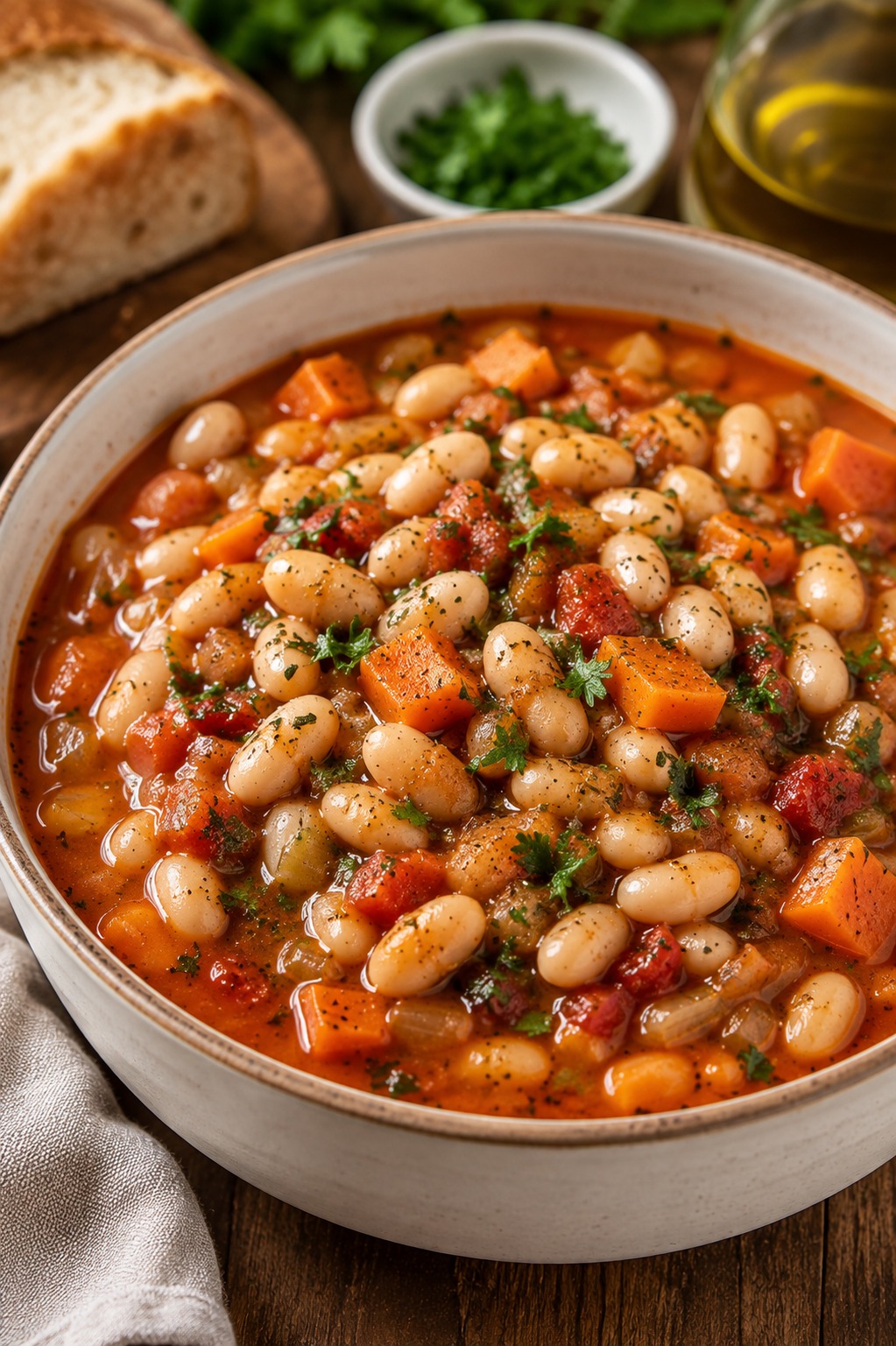
Greek Bean Stew
Description
Greek Bean Stew, traditionally known as Fasolada, is a comforting Mediterranean dish made with tender white beans simmered in a rich tomato broth with carrots, celery, onion, garlic, herbs, and extra-virgin olive oil. It is simple, hearty, naturally meat-free, and full of classic Greek flavors.
What makes this stew especially satisfying is its combination of creamy beans and vegetables with a savory tomato broth. As the beans simmer, they release some of their starch and naturally thicken the stew without requiring cream or flour. Extra-virgin olive oil gives the broth richness, while oregano, parsley, bay leaf, and a touch of paprika create a warm Mediterranean aroma.
Fasolada is an excellent choice for a cozy family dinner, meal prep, or a nutritious lunch. Serve it with crusty bread, olives, feta, or a simple Greek salad for a complete Mediterranean-style meal.
Ingredients
For the Greek Bean Stew
2 cans (15 oz each) cannellini or Great Northern beans, drained and rinsed
3 tablespoons extra-virgin olive oil
1 large yellow onion, finely chopped
3 garlic cloves, minced
2 medium carrots, peeled and diced
2 celery stalks, diced
1 red bell pepper, diced
1 can (14.5 oz) diced tomatoes
2 tablespoons tomato paste
4 cups low-sodium vegetable broth
1 teaspoon dried oregano
½ teaspoon dried thyme
½ teaspoon smoked or sweet paprika
1 bay leaf
½ teaspoon freshly ground black pepper
½ teaspoon salt, or to taste
¼ teaspoon red pepper flakes, optional
2 tablespoons fresh parsley, chopped
1 tablespoon fresh lemon juice
1 tablespoon extra-virgin olive oil for finishing
For Serving – Optional
Crumbled feta cheese
Fresh parsley
Kalamata olives
Lemon wedges
Crusty whole-grain bread
Extra black pepper
Extra-virgin olive oil
Instructions
1. Prepare the Vegetables
Wash and prepare all your vegetables before starting. Dice the onion, carrots, celery, and red bell pepper into relatively even pieces so they cook at approximately the same rate.
Drain and rinse the canned beans thoroughly under cold water and set them aside.
2. Sauté the Aromatics
Heat 3 tablespoons of extra-virgin olive oil in a large Dutch oven or heavy-bottomed pot over medium heat.
Add the chopped onion, carrots, and celery. Cook for approximately 6–8 minutes, stirring occasionally, until the onion becomes translucent and the vegetables begin to soften.
Add the red bell pepper and cook for another 2–3 minutes.
Stir in the minced garlic and cook for about 30 seconds, just until fragrant. Avoid browning the garlic because burnt garlic can make the stew bitter.
3. Build the Tomato Base
Add the tomato paste to the vegetables and stir continuously for about 1 minute. Briefly cooking the tomato paste helps deepen its flavor.
Pour in the diced tomatoes along with their juices.
Add oregano, thyme, paprika, black pepper, optional red pepper flakes, and the bay leaf. Stir everything together until the vegetables are evenly coated with the seasonings.
4. Add Beans and Broth
Add the drained beans and vegetable broth.
Stir gently, increase the heat, and bring the stew to a light boil.
Once boiling, reduce the heat to low or medium-low. Partially cover the pot and allow the stew to simmer for approximately 25–35 minutes.
Stir occasionally to prevent anything from sticking to the bottom.
5. Thicken the Stew
For a naturally thicker Fasolada, use the back of a wooden spoon to mash approximately ½ cup of beans against the side of the pot.
Stir the mashed beans back into the broth. Their natural starch will make the stew richer and creamier without adding dairy or flour.
Continue simmering uncovered for another 5–10 minutes, or until the stew reaches your desired consistency.
If it becomes too thick, simply add a splash of vegetable broth or hot water.
6. Finish the Stew
Remove the bay leaf.
Stir in the fresh parsley and lemon juice. Taste and adjust the salt, pepper, oregano, or lemon as needed.
Finish with approximately 1 tablespoon of good-quality extra-virgin olive oil. Adding olive oil at the end gives the stew a silky texture and fresh Mediterranean flavor.
7. Serve
Ladle the hot Greek Bean Stew into deep bowls.
Garnish with fresh parsley, freshly cracked black pepper, and a light drizzle of extra-virgin olive oil.
For an even more traditional Mediterranean-style meal, serve with crusty bread, feta cheese, Kalamata olives, and lemon wedges.
Tips for the Best Greek Bean Stew
Use good-quality olive oil: Olive oil is one of the key flavors in this recipe rather than simply a cooking fat. A flavorful extra-virgin olive oil makes a noticeable difference.
Don’t rush the vegetables: Allowing the onion, carrot, and celery to soften before adding liquid builds a flavorful foundation for the stew.
Cook the tomato paste: Giving tomato paste about a minute in the hot pan helps develop a deeper tomato flavor.
Mash some beans: This is one of the easiest ways to create a thick, luxurious broth without cream.
Add lemon at the end: Fresh lemon juice brightens the rich tomato and bean flavors. Adding it toward the end keeps its flavor fresh.
Adjust the consistency: Traditional bean stew can range from relatively brothy to thick and rustic. Simmer longer for a thicker stew or add additional broth for a soupier consistency.
Let it rest: Like many bean dishes, Fasolada can taste even better after sitting for 15–20 minutes because the flavors have time to blend.
Recipe Notes
Traditional Greek Fasolada is often prepared with dried white beans. Canned beans are used here to make the recipe faster and easier for a weeknight dinner.
If you’d prefer dried beans, soak approximately 1 pound of dried white beans overnight. Drain them, cover with fresh water, and simmer until almost tender before proceeding with the stew. Cooking time will be considerably longer.
Cannellini beans create a particularly creamy result, while Great Northern beans hold their shape well. Navy beans can also be used.
The red bell pepper is optional. It isn’t necessary for a basic Fasolada, but it adds sweetness, color, and another layer of vegetable flavor.
For an even richer tomato flavor, increase the tomato paste by one tablespoon.
Servings
Serves: 6
This recipe makes approximately six satisfying bowls.
For a lighter lunch, serve a smaller portion with salad. For dinner, pair a generous bowl with whole-grain bread, feta, olives, or roasted vegetables.
Nutritional Information
Approximate nutrition per serving:
Calories: 295 kcal
Protein: 12 g
Carbohydrates: 42 g
Fat: 10 g
Fiber: 11 g
Sugar: 8 g
Sodium: 480 mg
Saturated Fat: 1.5 g
Nutrition is an estimate and varies depending on the beans, broth, olive oil, toppings, and serving size used.
Benefits of Greek Bean Stew
1. Excellent Source of Fiber
White beans are naturally rich in dietary fiber. The vegetables add even more fiber, making this a filling and satisfying meal.
2. Provides Plant-Based Protein
Beans provide a useful source of plant-based protein. This makes Fasolada a hearty meatless option without relying on highly processed meat substitutes.
3. Packed with Vegetables
Carrots, celery, onion, bell pepper, tomatoes, garlic, and fresh herbs provide a diverse mix of plant foods in a single bowl.
4. Mediterranean-Inspired Ingredients
Beans, vegetables, herbs, tomatoes, and extra-virgin olive oil are staples of Mediterranean-style eating.
5. Satisfying Without Heavy Cream
The stew develops a creamy, substantial texture naturally from the beans. No heavy cream is necessary.
6. Great for Meal Prep
Fasolada reheats beautifully, making it convenient for preparing several lunches or dinners at once.
7. Budget-Friendly
Beans, canned tomatoes, carrots, celery, and onions are relatively inexpensive staple ingredients. A large pot can provide several servings without requiring expensive ingredients.
Storage & Reheating
Allow leftover stew to cool before transferring it to an airtight container.
Store in the refrigerator for approximately 4 days.
The stew will thicken considerably when chilled because the beans continue absorbing liquid. When reheating, add a splash of vegetable broth or water until it returns to your preferred consistency.
Warm gently on the stovetop over medium-low heat, stirring occasionally. Individual portions can also be reheated in the microwave.
Fasolada can also be frozen. Place cooled portions in freezer-safe containers, leaving some room for expansion, and freeze for up to 3 months. Thaw overnight in the refrigerator before reheating.
Frequently Asked Questions
What is Fasolada?
Fasolada is a traditional Greek bean soup or stew usually made with white beans, tomatoes, olive oil, and vegetables such as carrots, celery, and onion. Recipes vary between families and regions.
Which beans are best for Greek Bean Stew?
Cannellini, Great Northern, or navy beans all work well. Cannellini beans are larger and creamy, while navy beans are smaller and create a slightly different texture.
Can I make it with dried beans?
Absolutely. Dried beans are excellent for Fasolada, but they need soaking and a longer cooking time. Make sure they’re fully tender before serving.
Is Greek Bean Stew vegetarian?
Yes. This version uses vegetable broth and contains no meat.
Is it vegan?
The stew itself is vegan as written. If serving it with feta, omit the feta or choose a plant-based alternative to keep the complete meal vegan.
How can I make my stew thicker?
Mash some of the cooked beans directly in the pot and simmer uncovered for another 5–10 minutes. This naturally thickens the broth.
How can I make it thinner?
Add vegetable broth or warm water in small amounts until you reach your preferred consistency.
Can I add potatoes?
Yes. Diced potatoes make the stew even heartier. Add them with the broth and simmer until completely tender.
Can I add spinach?
Yes. Stir baby spinach or chopped kale into the stew during the final few minutes of cooking.
Can I make Fasolada spicy?
Traditional versions aren’t necessarily very spicy, but you can add red pepper flakes, cayenne, or additional black pepper if you enjoy some heat.
What should I serve with Greek Bean Stew?
Crusty bread is an excellent choice because it absorbs the tomato-rich broth. Greek salad, feta, olives, roasted vegetables, and warm pita are also delicious accompaniments.
Does Greek Bean Stew taste better the next day?
It often does. After refrigeration, the herbs, tomato, vegetables, and beans have more time to mingle. Simply add a splash of broth when reheating because the stew naturally thickens overnight.
Final Note
This Greek Bean Stew (Fasolada) proves that simple ingredients can create an incredibly comforting meal. Creamy white beans, tender vegetables, tomatoes, fragrant herbs, lemon, and extra-virgin olive oil come together in a hearty bowl that’s perfect for everything from cold-weather dinners to easy weekly meal prep.
Serve it steaming hot with rustic bread and a drizzle of olive oil, and you’ve got a simple Mediterranean classic that’s filling, colorful, and packed with flavor.