
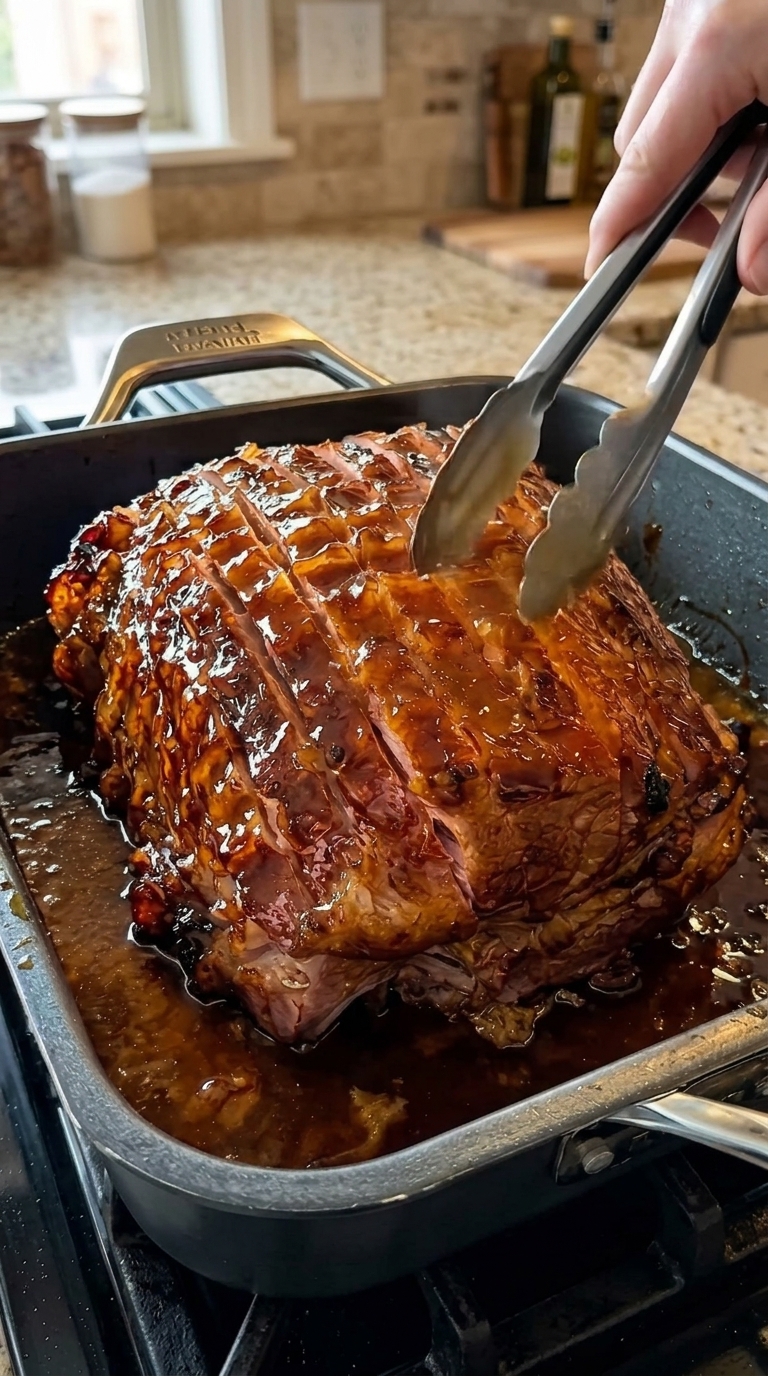
Honey Mustard & Brown Sugar Glazed Ham – Easy Holiday Recipe
Description
Honey Mustard & Brown Sugar Glazed Ham is a delicious, sweet, savory, and beautifully caramelized holiday centerpiece that brings irresistible flavor to every bite. Made with just three simple glaze ingredients, this oven-baked ham develops a rich, glossy golden-brown coating while remaining tender and juicy inside.
The combination of honey, brown sugar, and Dijon mustard creates the perfect balance of sweetness and tanginess. As the ham slowly warms in the oven, the glaze melts into the scored surface, forming a sticky, caramelized crust that looks impressive and tastes wonderful.
This easy glazed ham recipe is perfect for Christmas dinner, Easter celebrations, Thanksgiving gatherings, Sunday family meals, and special occasions. It requires very little preparation, making it an excellent choice for both beginner and experienced home cooks.
One of the best things about this recipe is its simplicity. You don’t need complicated seasonings or expensive ingredients to prepare a flavorful holiday ham. With a fully cooked ham and a homemade three-ingredient glaze, you can create a beautiful main dish that serves a crowd.
Whether paired with creamy mashed potatoes, roasted vegetables, green beans, or homemade dinner rolls, this Honey Mustard & Brown Sugar Glazed Ham will become a favorite addition to your holiday menu.
Recipe Information
-
Recipe Name: Honey Mustard & Brown Sugar Glazed Ham
-
Prep Time: 15 minutes
-
Cook Time: 1 hour 45 minutes to 2 hours 30 minutes
-
Resting Time: 15 minutes
-
Total Time: Approximately 2–3 hours
-
Servings: 10–12
-
Cooking Method: Oven-Baked
-
Cuisine: American
-
Course: Main Course
-
Difficulty Level: Easy
Ingredients
For the Ham
– 1 fully cooked bone-in ham (6–8 lbs)
For the 3-Ingredient Glaze
-
¾ cup packed brown sugar
-
½ cup honey
-
¼ cup Dijon mustard
Optional for the Roasting Pan
– ½ cup water to prevent the pan juices from burning
The glaze uses only three ingredients. Choose a fully cooked, unsliced or spiral-sliced ham, and check its package instructions for reheating.
Step-by-Step Cooking Instructions
Step 1: Prepare the Oven
Preheat your oven to 325°F (165°C).
Position the oven rack in the lower-middle section so the ham has enough room to roast without touching the upper heating element.
Select a large roasting pan or deep oven-safe baking dish that comfortably fits the ham.
If desired, line the bottom of the pan with aluminum foil for easier cleanup.
Pour approximately ½ cup of water into the bottom of the roasting pan. This helps prevent the sugary drippings from burning during cooking.
Step 2: Prepare the Ham
Remove the fully cooked ham from its packaging.
Discard any plastic wrapping, netting, or packaging materials.
If the ham has a thick outer rind, carefully remove it while leaving a thin layer of fat.
Pat the surface dry with paper towels.
For an unsliced ham, use a sharp knife to lightly score the fatty surface in a diamond pattern.
Make shallow diagonal cuts approximately ½ inch apart, then repeat in the opposite direction.
Avoid cutting deeply into the meat.
Scoring creates attractive diamond-shaped sections and allows the honey mustard glaze to cling to the surface.
If using a spiral-sliced ham, scoring is unnecessary because the ham is already sliced.
Step 3: Make the Honey Mustard Brown Sugar Glaze
In a medium saucepan, combine the brown sugar, honey, and Dijon mustard.
Place the saucepan over low to medium-low heat.
Stir continuously until the brown sugar dissolves and the mixture becomes smooth.
Allow the glaze to warm gently for approximately 3–5 minutes.
Do not boil aggressively because the sugar can burn.
The finished glaze should have a thick, glossy consistency with a beautiful amber color.
The brown sugar provides caramel-like sweetness, the honey creates a shiny coating, and the Dijon mustard adds a slightly tangy flavor that balances the sweetness.
Remove the saucepan from the heat and set the glaze aside.
Step 4: Arrange the Ham in the Roasting Pan
Place the prepared ham in the roasting pan, cut side down if applicable.
This position helps protect the exposed meat from drying out during reheating.
Brush a thin layer of the prepared glaze over the top and sides of the ham.
Reserve most of the glaze for the final stage of roasting.
Cover the roasting pan tightly with aluminum foil.
The foil helps retain moisture and prevents the surface from browning too quickly.
Step 5: Warm the Ham Slowly
Transfer the covered ham to the preheated oven.
For a fully cooked ham packaged in a USDA-inspected facility, a common reheating guideline is approximately 10–15 minutes per pound at 325°F (165°C), until the center reaches 140°F (60°C). Follow the package instructions when provided.
A 6–8 lb ham may take approximately 1 hour 30 minutes to 2 hours or longer, depending on its shape and starting temperature.
For other fully cooked hams requiring reheating to 165°F (74°C), allow additional time.
Keep the ham covered during most of the reheating process.
This gentle cooking method helps preserve moisture and keeps the meat tender.
Step 6: Apply the First Generous Glaze
Approximately 30–40 minutes before the ham is expected to finish reheating, carefully remove the roasting pan from the oven.
Remove the aluminum foil.
Using a pastry brush or large spoon, generously coat the entire surface with the prepared honey mustard brown sugar glaze.
Pay special attention to the scored sections so the glaze settles into the diamond-shaped cuts.
Return the ham to the oven uncovered.
As the glaze heats, it will begin bubbling and developing a glossy caramelized appearance.
Step 7: Baste for a Beautiful Golden Finish
After approximately 10–15 minutes, remove the ham briefly and brush another layer of glaze over the surface.
Repeat once more if enough glaze remains.
Multiple thin layers create a richer coating than applying all the glaze at once.
The honey and brown sugar gradually caramelize, forming a shiny, sticky exterior.
Watch the ham carefully during this stage because sugar can darken quickly.
If the surface becomes too dark, loosely cover it with foil.
Step 8: Check the Internal Temperature
Insert a meat thermometer into the thickest part of the ham without touching the bone.
For a fully cooked ham reheated under standard USDA guidance, verify the required internal temperature according to the ham’s packaging and processing type.
A fully cooked USDA-inspected ham generally requires reheating to 140°F (60°C), while other fully cooked hams may require 165°F (74°C).
Avoid relying only on the appearance of the glaze to determine whether the ham is properly heated.
The exterior should be beautifully caramelized while the inside is thoroughly warmed.
Step 9: Rest Before Serving
Remove the finished ham from the oven.
Transfer it to a large serving platter or carving board.
Loosely cover it with aluminum foil and allow it to rest for approximately 15 minutes.
Resting makes the ham easier to carve and allows the juices to settle.
Meanwhile, collect some of the flavorful glaze and pan juices.
If you want to serve the pan juices as a sauce, bring them to a boil in a small saucepan before serving.
Step 10: Slice and Serve
Using a sharp carving knife, slice the ham into even portions.
If using a bone-in ham, carefully carve around the bone.
Arrange the slices on a large serving platter.
Spoon a little warm honey mustard glaze over the slices for additional flavor.
Serve immediately with your favorite holiday side dishes.
The finished ham should have a glossy golden-brown crust, a sweet and tangy glaze, and tender, juicy meat.
Helpful Cooking Tips
1. Choose a Fully Cooked Ham
A fully cooked bone-in ham is ideal for this recipe because it offers excellent flavor and requires reheating rather than cooking from raw.
Always check the package label before preparing.
2. Use Dijon Mustard
Dijon mustard adds a smooth, slightly sharp flavor that balances the sweetness of honey and brown sugar.
Yellow mustard can be substituted, but it produces a different flavor.
3. Avoid High Oven Temperatures
Reheating ham at a moderate temperature helps prevent the exterior from drying out before the center is warm.
Keep the oven at approximately 325°F (165°C) for the best results.
4. Apply the Glaze in Layers
Brushing the glaze over the ham several times during the final stage creates a thick, glossy coating.
This technique also helps the glaze reach the scored sections.
5. Do Not Overheat the Ham
Fully cooked ham can become dry when reheated excessively.
Use a meat thermometer and remove it from the oven once the required temperature is reached.
6. Watch the Sugar Carefully
Brown sugar and honey can burn if exposed to excessive heat.
If the glaze darkens too quickly, loosely cover the ham with foil.
7. Save the Leftovers
Leftover glazed ham is excellent in sandwiches, breakfast casseroles, omelets, soups, and pasta dishes.
Store leftovers properly and use them within the recommended storage period.
Recipe Notes
Ham size: A 6–8 lb bone-in ham generally serves approximately 10–12 people, depending on portion sizes and side dishes.
Brown sugar: Light brown sugar creates a mild caramel flavor, while dark brown sugar produces a deeper molasses taste.
Honey: Use regular liquid honey for a smooth glaze that is easy to brush over the ham.
Mustard: Dijon mustard provides the best balance of sweetness and tanginess, but whole-grain mustard can also be used for a slightly textured glaze.
Glaze thickness: If the glaze becomes too thick, gently warm it over low heat until it becomes easy to brush.
Spiral-sliced ham: Reduce unnecessary handling and carefully brush glaze between some of the slices to distribute the flavor.
Presentation: For a beautiful holiday centerpiece, arrange the finished ham on a platter with fresh rosemary sprigs or roasted vegetables.
Best Side Dishes for Honey Mustard Brown Sugar Glazed Ham
This delicious glazed ham pairs beautifully with traditional American holiday favorites.
Creamy Mashed Potatoes: Rich, buttery mashed potatoes provide a comforting contrast to the sweet glaze.
Green Bean Casserole: A classic holiday side dish featuring tender green beans and a creamy sauce.
Honey-Glazed Carrots: Roasted carrots complement the ham’s caramelized sweetness.
Scalloped Potatoes: Layers of tender potatoes baked in a creamy sauce make an excellent accompaniment.
Roasted Brussels Sprouts: Their slightly earthy flavor balances the sweetness of the glaze.
Macaroni and Cheese: Creamy, cheesy pasta is especially popular at family holiday dinners.
Soft Dinner Rolls: Warm, buttery rolls are perfect for enjoying alongside tender slices of ham.
For a complete holiday meal, serve the glazed ham with mashed potatoes, green beans, roasted carrots, and homemade dinner rolls.
Storage and Reheating Instructions
Refrigeration
Allow leftover ham to cool slightly before storing.
Transfer sliced or whole portions to airtight containers.
Refrigerate within two hours of cooking.
Most leftover cooked ham can be stored in the refrigerator for 3–4 days, although storage recommendations vary by ham type and packaging.
Freezing
Place leftover ham in freezer-safe containers or heavy-duty freezer bags.
Remove as much air as possible before sealing.
Freeze for approximately 1–2 months for the best flavor and texture.
Reheating
Place leftover ham slices in a covered baking dish.
Add a few tablespoons of water or broth to prevent drying.
Reheat in a 300°F (150°C) oven until the leftovers reach 165°F (74°C).
Avoid overheating because the ham may become dry.
Nutritional Information
Approximate values per serving, assuming 12 servings. Nutrition varies considerably by ham brand, fat content, serving size, and glaze consumed.
| Nutrient | Estimated Amount |
|---|---|
| Calories | 420 kcal |
| Protein | 36 g |
| Total Fat | 20 g |
| Saturated Fat | 7 g |
| Carbohydrates | 24 g |
| Sugar | 22 g |
| Sodium | 1,350 mg |
| Fiber | 0 g |
Nutritional Benefits
High-quality protein: Ham provides protein that supports muscle maintenance, tissue repair, and normal body functions.
Vitamin B12: Pork contains vitamin B12, which supports normal nerve function and red blood cell production.
Source of selenium: Selenium contributes to normal immune function and helps protect cells from oxidative damage.
Contains zinc: Zinc supports immune health and several important metabolic processes.
Provides iron: Pork contains iron, an essential mineral involved in oxygen transport throughout the body.
Although ham provides useful nutrients, it is often high in sodium, and the honey brown sugar glaze adds sugar. Enjoy it as part of a balanced meal with vegetables and other nutritious side dishes.
Frequently Asked Questions (Q&A)
Q1: Can I make honey mustard brown sugar glazed ham ahead of time?
Yes. You can prepare the glaze one or two days in advance and refrigerate it in an airtight container. Gently reheat the glaze before using.
Q2: Can I use spiral-sliced ham?
Absolutely. Spiral-sliced ham works beautifully because the glaze can settle between the slices. Keep it covered during most of reheating to prevent dryness.
Q3: Can I replace Dijon mustard with yellow mustard?
Yes. Yellow mustard can be used, although Dijon provides a smoother and slightly more sophisticated flavor.
Q4: How do I prevent the glaze from burning?
Apply most of the glaze during the final 30–40 minutes of reheating and monitor the surface closely. Cover loosely with foil if it becomes too dark.
Q5: What makes the glaze shiny and sticky?
Honey and brown sugar melt together during heating and form a glossy caramelized coating on the ham.
Q6: Can I use boneless ham?
Yes. A fully cooked boneless ham can be used, but reheating time may differ. Follow the package instructions and check the internal temperature.
Why This Recipe Is Perfect for Holidays
Honey Mustard & Brown Sugar Glazed Ham is one of those classic dishes that makes any gathering feel special.
Its beautiful caramelized crust creates an impressive centerpiece, while the familiar combination of sweet honey, rich brown sugar, and tangy mustard appeals to a wide range of tastes.
The recipe is especially convenient for holiday cooking because the glaze requires only three ingredients and can be prepared ahead of time.
It also serves a large group, making it practical for Christmas, Easter, Thanksgiving, and family celebrations.
Another advantage is its versatility. Leftover ham can be transformed into sandwiches, breakfast dishes, casseroles, soups, and other easy meals throughout the week.
With minimal preparation and a straightforward roasting method, this recipe delivers delicious results without requiring complicated cooking techniques.
Final Thoughts
Honey Mustard & Brown Sugar Glazed Ham is a simple yet impressive recipe that combines sweet, tangy, and savory flavors in every bite.
The rich three-ingredient glaze creates a glossy caramelized exterior while the fully cooked ham stays tender and flavorful when gently reheated.
Whether you’re planning a festive Christmas dinner, an Easter celebration, or a comforting Sunday family meal, this glazed ham makes a beautiful centerpiece.
Serve it with your favorite classic side dishes, drizzle with warm glaze, and enjoy a delicious homemade meal with family and friends.
https://chilismenususa.com/slow-roasted-honey-garlic-beef-chuck-roast-tender-juicy-recipe/