
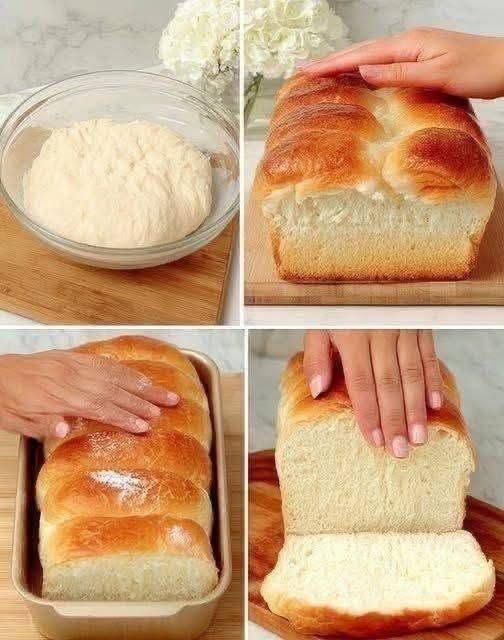
Japanese Milk Bread (Shokupan)
Description
Japanese Milk Bread, also known as Shokupan, is a soft, fluffy, and slightly sweet bread famous for its cotton-like texture. Its signature softness comes from the Tangzhong (water roux) method, where a small portion of flour and liquid is cooked before being added to the dough. This technique allows the bread to retain more moisture, resulting in a loaf that stays fresh and tender for several days.
Perfect for breakfast, sandwiches, French toast, or simply enjoyed warm with butter, Japanese Milk Bread is loved for its pillowy texture and rich, buttery flavor.
Preparation Time
- Prep Time: 30 minutes
- Tangzhong Cooling: 20 minutes
- First Rise: 60–90 minutes
- Second Rise: 45–60 minutes
- Baking Time: 30–35 minutes
- Total Time: About 3½–4 hours
Servings
- Makes 1 loaf
- 10–12 slices
- Serves: 10
Ingredients
For the Tangzhong
- 3 tbsp bread flour (25 g)
- ½ cup milk (120 ml)
- 2 tbsp water (30 ml)
For the Dough
- 2½ cups bread flour (320 g)
- ¼ cup sugar (50 g)
- 1 tsp salt
- 2 tsp instant yeast
- ½ cup warm milk (120 ml)
- 1 large egg
- Tangzhong (prepared above)
- 3 tbsp unsalted butter, softened (45 g)
Egg Wash
- 1 egg
- 1 tbsp milk
Instructions
Step 1: Make the Tangzhong
- Combine flour, milk, and water in a saucepan.
- Cook over medium-low heat while whisking.
- Continue until the mixture thickens into a smooth paste.
- Remove from heat.
- Cool completely.
Step 2: Mix the Dough
- Combine bread flour, sugar, salt, and yeast.
- Add warm milk, egg, and cooled Tangzhong.
- Mix until a rough dough forms.
- Knead for 8–10 minutes.
- Add softened butter.
- Continue kneading for another 10 minutes until smooth and elastic.
Step 3: First Rise
- Place dough in a lightly greased bowl.
- Cover.
- Let rise until doubled in size (60–90 minutes).
Step 4: Shape
- Divide dough into 3 equal pieces.
- Roll each into an oval.
- Fold the sides inward.
- Roll into cylinders.
- Arrange in a greased loaf pan.
Step 5: Second Rise
Allow dough to rise until it reaches about 1 inch above the loaf pan.
Step 6: Bake
- Brush with egg wash.
- Bake at 350°F (175°C) for 30–35 minutes.
- The top should become deep golden brown.
- Internal temperature should reach approximately 190°F (88°C).
Step 7: Cool
Cool for 15–20 minutes before removing from the pan.
Allow to cool completely before slicing.
Recipe Notes
- Bread flour creates the best chewy structure.
- Tangzhong must cool before mixing.
- Do not overheat the milk.
- Proper kneading is essential for soft texture.
- Slightly sticky dough is normal.
- Weighing ingredients provides the most consistent results.
Tips
- Knead until the dough passes the windowpane test.
- Use room-temperature butter.
- Let dough rise in a warm environment.
- Cover bread after cooling to retain moisture.
- Brush with melted butter after baking for an even softer crust.
- Use a pullman loaf pan for a square-shaped loaf.
- Freeze sliced bread for up to 2 months.
Storage
- Room Temperature: 3–4 days
- Refrigerator: Not recommended (can dry out the bread)
- Freezer: Up to 2 months
Nutritional Information (Per Slice, based on 12 slices)
| Nutrient | Amount |
|---|---|
| Calories | 185 kcal |
| Protein | 5 g |
| Carbohydrates | 30 g |
| Fat | 5 g |
| Saturated Fat | 3 g |
| Cholesterol | 28 mg |
| Sodium | 170 mg |
| Sugar | 5 g |
| Fiber | 1 g |
| Calcium | 45 mg |
| Iron | 1.3 mg |
Values are approximate and vary with ingredient brands and slice size.
Health Benefits
- Provides carbohydrates for energy.
- Contains protein from milk and eggs.
- Calcium supports healthy bones and teeth.
- Butter contributes fat-soluble vitamins.
- Homemade bread contains fewer preservatives than many store-bought loaves.
- Tangzhong helps the bread stay moist, reducing staling without additives.
- Can be made with whole wheat flour (partially substituted) to increase fiber.
Frequently Asked Questions (Q&A)
1. Why is Japanese milk bread so soft?
The Tangzhong method traps extra moisture in the dough, creating a soft, fluffy texture that stays fresh longer.
2. Can I use all-purpose flour?
Yes, but bread flour produces a lighter, chewier loaf with better structure.
3. What is the Tangzhong method?
It is a cooked mixture of flour and liquid that improves moisture retention and softness in bread.
4. Can I make it without eggs?
Yes. Replace the egg with about ¼ cup (60 ml) milk or a suitable egg substitute, though the texture may be slightly less rich.
5. Why didn’t my bread rise?
Possible causes include expired yeast, liquid that was too hot, or proofing in a cool environment.
6. Can I make this recipe by hand?
Yes. Hand-knead for about 15–20 minutes until the dough is smooth and elastic.
7. Can I use a stand mixer?
Absolutely. Knead with a dough hook on medium speed for about 10–12 minutes.
8. Can I make rolls instead of a loaf?
Yes. Divide the dough into 10–12 equal portions and bake at 350°F (175°C) for 18–22 minutes.
9. Can I prepare the dough overnight?
Yes. After the first rise, refrigerate the dough overnight, then shape, proof, and bake the next day.
10. Why is my bread dense?
Common reasons include under-kneading, insufficient proofing, adding too much flour, or using inactive yeast.
Serving Suggestions
- Toasted with butter and honey
- With fruit jam or marmalade
- Filled with egg or chicken salad for sandwiches
- As French toast
- With peanut butter and banana
- Alongside soups or creamy pasta dishes
- Served with fresh fruit and yogurt for breakfast.