
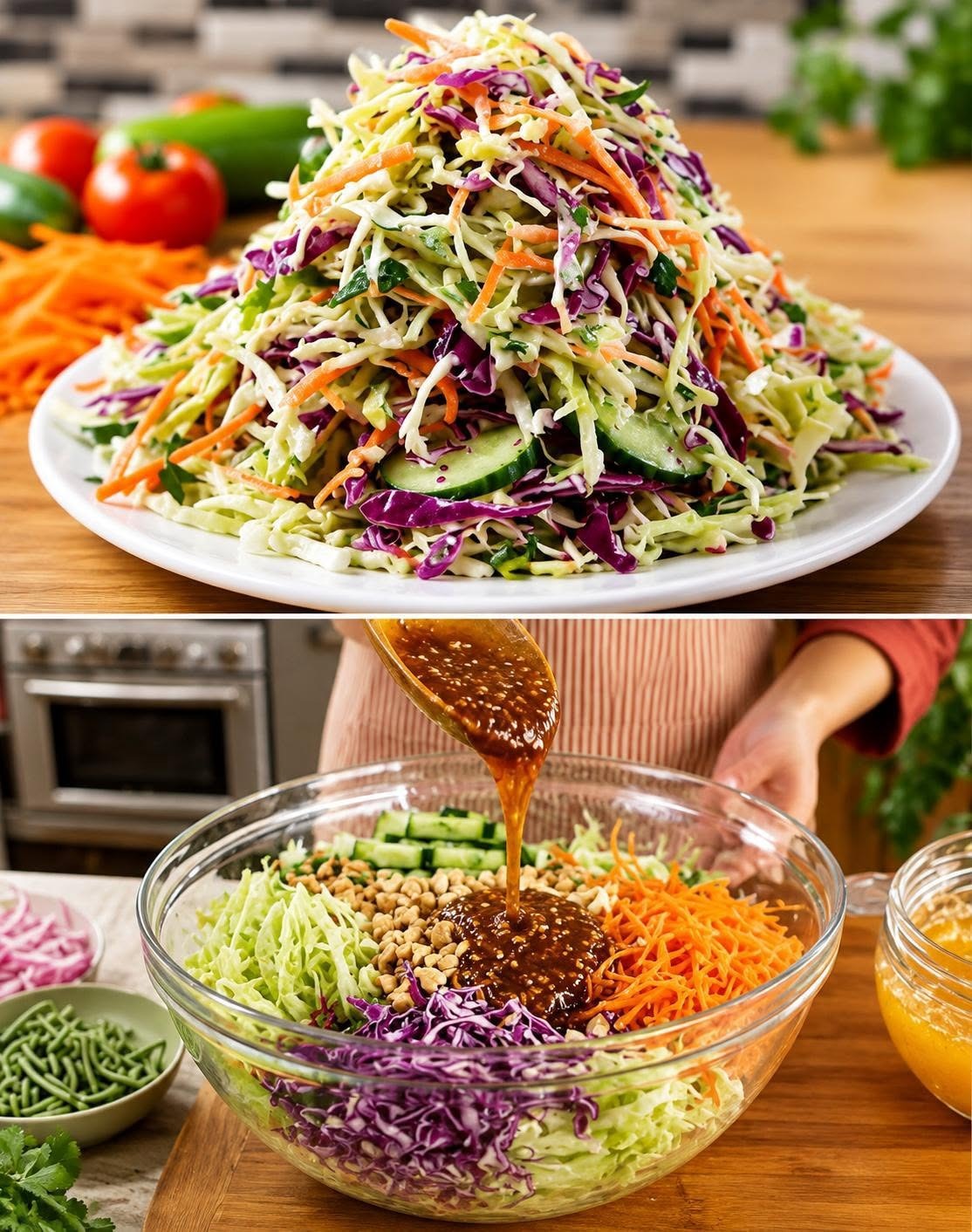
Mediterranean Daily Cabbage and Cucumber Salad
Fresh, crunchy, refreshing, and packed with Mediterranean flavor! This Daily Cabbage and Cucumber Salad combines crisp cabbage, juicy cucumber, fresh herbs, lemon, and extra-virgin olive oil for a simple salad that’s easy to enjoy every day.
If you’re looking for a salad to support a healthy weight-management routine, this is a great option because it provides plenty of vegetables and fiber while keeping the dressing simple. However, no single food or salad can specifically burn belly fat or cause fast fat loss. Belly fat decreases as overall body fat decreases through a sustainable combination of nutrition, physical activity, sleep, and an appropriate calorie intake.
This salad can still be a delicious part of that routine because it’s filling, refreshing, and easy to pair with protein-rich foods.
Recipe Overview
Recipe Name: Mediterranean Daily Cabbage and Cucumber Salad
Prep Time: 15 minutes
Cook Time: 0 minutes
Total Time: 15 minutes
Servings: 4
Course: Salad / Side Dish
Cuisine: Mediterranean-inspired
Difficulty: Easy
Ingredients
For the Salad
- 4 cups finely shredded green cabbage
- 2 large cucumbers, thinly sliced
- 1 medium tomato, diced
- ¼ small red onion, very thinly sliced
- ¼ cup fresh parsley, chopped
- 2 tablespoons fresh dill, chopped
- 2 tablespoons fresh mint, chopped
- ¼ cup Kalamata olives, sliced, optional
- ¼ cup crumbled feta cheese, optional
For the Lemon Dressing
- 3 tablespoons extra-virgin olive oil
- 2 tablespoons fresh lemon juice
- 1 tablespoon red wine vinegar
- 1 garlic clove, finely minced
- ½ teaspoon dried oregano
- ½ teaspoon salt
- ¼ teaspoon freshly ground black pepper
Optional Additions
- ½ cup chickpeas
- ½ avocado, diced
- 1 tablespoon sunflower seeds
- 1 tablespoon pumpkin seeds
- A pinch of red pepper flakes
- 1 teaspoon Dijon mustard
- Fresh lemon zest
Instructions
1. Prepare the Cabbage
Remove any damaged outer leaves from the cabbage.
Cut it into quarters, remove the tough core, and finely shred the cabbage using a sharp knife or mandoline.
Place the shredded cabbage into a large mixing bowl.
For a softer texture, sprinkle it with a very small pinch of salt and gently massage it with clean hands for 30–60 seconds.
This helps soften the cabbage slightly while making it easier to eat.
If you prefer maximum crunch, skip the massage and use the cabbage raw.
2. Prepare the Cucumber
Wash the cucumbers and slice them thinly.
You can leave the skin on for additional texture and color.
If your cucumbers contain a lot of water, you can remove some of the seeds before slicing. This helps prevent the salad from becoming watery.
Add the cucumber to the cabbage.
3. Add the Fresh Vegetables
Add the diced tomato and thinly sliced red onion.
Then add the chopped parsley, dill, and mint.
The combination of fresh herbs gives the salad a bright Mediterranean flavor without needing a heavy dressing.
If using Kalamata olives, add them now.
For a more traditional Mediterranean-style salad, crumble feta over the vegetables.
4. Make the Dressing
Add the olive oil, fresh lemon juice, red wine vinegar, minced garlic, oregano, salt, and black pepper to a small bowl or jar.
Whisk vigorously until the dressing is well combined.
If using Dijon mustard, add it to the dressing and whisk again.
Taste the dressing.
If you prefer more acidity, add another teaspoon of lemon juice. If you prefer a slightly milder dressing, add another teaspoon of olive oil.
5. Combine Everything
Pour the dressing over the cabbage and cucumber mixture.
Use salad tongs or two large spoons to gently toss everything together.
Make sure the dressing coats the cabbage and cucumber evenly.
Don’t add too much dressing at once. You can always add more, but you can’t easily remove it.
6. Let It Rest
For the best flavor, let the salad rest for approximately 10 minutes before serving.
This gives the cabbage time to absorb the lemon-herb dressing while allowing the flavors to blend.
If you prefer an extra-crunchy salad, serve it immediately.
Serving Suggestions
This salad makes an excellent side dish for grilled chicken, baked fish, salmon, turkey, eggs, or lean meat.
For a more complete vegetarian meal, add chickpeas, lentils, or white beans.
You can also serve it with hummus and whole-grain pita for an easy Mediterranean-inspired lunch.
For a higher-protein meal, add:
- Grilled chicken
- Tuna
- Salmon
- Boiled eggs
- Chickpeas
- Lentils
- Greek yogurt-based dressing
Description
This Mediterranean Daily Cabbage and Cucumber Salad is designed to be simple enough to make regularly.
Crisp cabbage provides a sturdy base that holds up well to dressing, while cucumber adds refreshing crunch. Tomatoes contribute natural sweetness, red onion brings a little sharpness, and fresh herbs provide an aromatic Mediterranean character.
The dressing is intentionally simple: extra-virgin olive oil, fresh lemon juice, red wine vinegar, garlic, and oregano.
Unlike creamy salads that can become heavy, this version relies on fresh vegetables and a bright vinaigrette.
It’s particularly useful for meal planning because cabbage remains crisp longer than many delicate salad greens.
Important Note About “Belly Fat Loss”
You may see cabbage and cucumber salads advertised online as “belly fat-burning” or “rapid belly fat loss” recipes.
It’s important to clarify that foods cannot selectively burn fat from one part of the body.
Cabbage and cucumber can absolutely be part of a healthy weight-management diet because they’re relatively low in calories and contribute water, fiber, and micronutrients. But eating this salad alone won’t specifically target abdominal fat.
A more sustainable approach is to use this salad as part of balanced meals that include vegetables, adequate protein, healthy fats, and appropriate portions of carbohydrates.
Tips for the Best Salad
1. Slice the cabbage thinly
Thin cabbage creates a more pleasant texture and allows the dressing to coat each strand.
2. Use fresh lemon juice
Fresh lemon juice provides a much brighter flavor than bottled lemon juice.
3. Don’t drown the vegetables
Start with about two-thirds of the dressing and add more according to taste.
4. Keep the herbs fresh
Fresh parsley, mint, and dill make a major difference in the flavor.
5. Salt just before serving
Cucumber releases water when salted. If you’re preparing the salad ahead of time, add the final seasoning shortly before serving.
6. Add protein
If you’re eating this as a main meal, include a protein source. This will make it considerably more satisfying.
7. Choose quality olive oil
A flavorful extra-virgin olive oil can turn a simple vegetable salad into something special.
Healthy Variations
High-Protein Cabbage Salad
Add grilled chicken breast, tuna, salmon, chickpeas, or two boiled eggs.
Chickpea Mediterranean Salad
Add ½–1 cup cooked chickpeas, feta, cucumber, tomatoes, parsley, and lemon dressing.
Creamy Greek Yogurt Version
Replace part of the olive oil with plain Greek yogurt for a creamy, protein-rich dressing.
Spicy Cabbage Salad
Add red pepper flakes or finely chopped fresh chili.
Extra Crunchy Version
Add pumpkin seeds, sunflower seeds, or chopped almonds immediately before serving.
Avocado Version
Add diced avocado just before serving for extra creaminess and healthy fats.
Meal Prep Instructions
This salad is particularly useful for meal preparation, but a few adjustments will keep it crisp.
Best method:
Prepare the cabbage, herbs, and onion and store them in an airtight container.
Keep cucumber and tomatoes separate if you’re preparing several days’ worth.
Store the dressing separately in a small jar.
Combine the ingredients immediately before eating.
The undressed cabbage mixture can generally remain crisp in the refrigerator for several days, while dressed cucumber becomes softer more quickly.
Storage
Store leftover dressed salad in an airtight container in the refrigerator.
For the best texture, enjoy it within 1–2 days after dressing.
If you keep the dressing separate, the vegetables can remain fresh for several days, depending on their freshness when prepared.
Always use clean utensils when serving and refrigerate promptly.
Nutritional Information
Approximate nutrition per serving, based on 4 servings and including feta and olives:
- Calories: 190–220
- Protein: 4–5 g
- Carbohydrates: 13–16 g
- Fat: 14–16 g
- Fiber: 4–5 g
- Sugar: 6–8 g
- Sodium: 400–500 mg
Without feta and olives, the calories and sodium will be lower.
Adding chickpeas or another protein source will increase calories and protein.
Nutrition is an estimate and varies depending on ingredient sizes, brands, and dressing quantities.
Benefits
Cabbage
Cabbage is a low-calorie vegetable that provides fiber, vitamin C, vitamin K, and other plant compounds.
Cucumber
Cucumber has a high water content, making it naturally refreshing and hydrating as part of an overall balanced diet.
Fresh herbs
Parsley, dill, and mint add flavor while contributing small amounts of vitamins and beneficial plant compounds.
Extra-virgin olive oil
Olive oil provides predominantly monounsaturated fat and is a cornerstone of Mediterranean-style eating.
Lemon
Fresh lemon juice provides vitamin C and adds acidity that helps bring the entire salad together.
Feta
Feta contributes protein and calcium, although it also adds sodium, so the amount can be adjusted according to your dietary needs.
Frequently Asked Questions
Can I eat this salad every day?
You can include a vegetable salad regularly if it fits your overall diet. However, variety is important, so rotate different vegetables, herbs, proteins, and healthy fats throughout the week.
Will this salad burn belly fat?
No specific food can selectively burn belly fat. This salad can support a healthy eating pattern because it’s vegetable-rich and relatively light, but overall fat loss depends on your overall energy balance and lifestyle.
Can I eat this salad for dinner?
Absolutely. For a more complete dinner, pair it with a protein such as grilled chicken, fish, eggs, lentils, or chickpeas.
Is this salad low-carb?
It’s relatively low in carbohydrates compared with grain-based salads, although cabbage, cucumber, and tomatoes naturally contain some carbohydrates.
Can I make it without feta?
Yes. The salad is delicious without cheese. You can add chickpeas, seeds, or another protein source instead.
Can I use red cabbage?
Definitely. Red cabbage adds beautiful color and additional plant compounds. You can use half green and half red cabbage.
Can I use apple cider vinegar?
Yes. Replace the red wine vinegar with apple cider vinegar if you prefer its flavor.
How can I make it more filling?
Add protein and healthy fats. Grilled chicken, chickpeas, tuna, boiled eggs, avocado, seeds, or feta are excellent options.
Why does my salad become watery?
Cucumber and tomatoes naturally release water. Remove some cucumber seeds, drain excess tomato liquid, and add the dressing shortly before serving.
Can I make the dressing ahead?
Yes. The dressing can be prepared several days in advance and stored covered in the refrigerator. Let it come closer to room temperature and shake or whisk before using.
Is this a complete meal?
By itself, it’s primarily a vegetable-based salad. To make it a balanced main meal, add a protein source and, depending on your needs, a suitable portion of whole grains or another carbohydrate source.
Final Thoughts
This Mediterranean Daily Cabbage and Cucumber Salad is a simple, refreshing way to add more vegetables to your meals. Its combination of crunchy cabbage, juicy cucumber, tomatoes, fresh herbs, lemon, garlic, and extra-virgin olive oil makes it flavorful enough to enjoy again and again.
If your goal is healthy weight management, think of this salad as one useful part of the bigger picture—not a magic belly-fat remedy. Pair it with protein, stay consistent with your overall eating pattern, stay active, and focus on sustainable habits rather than rapid promises.