
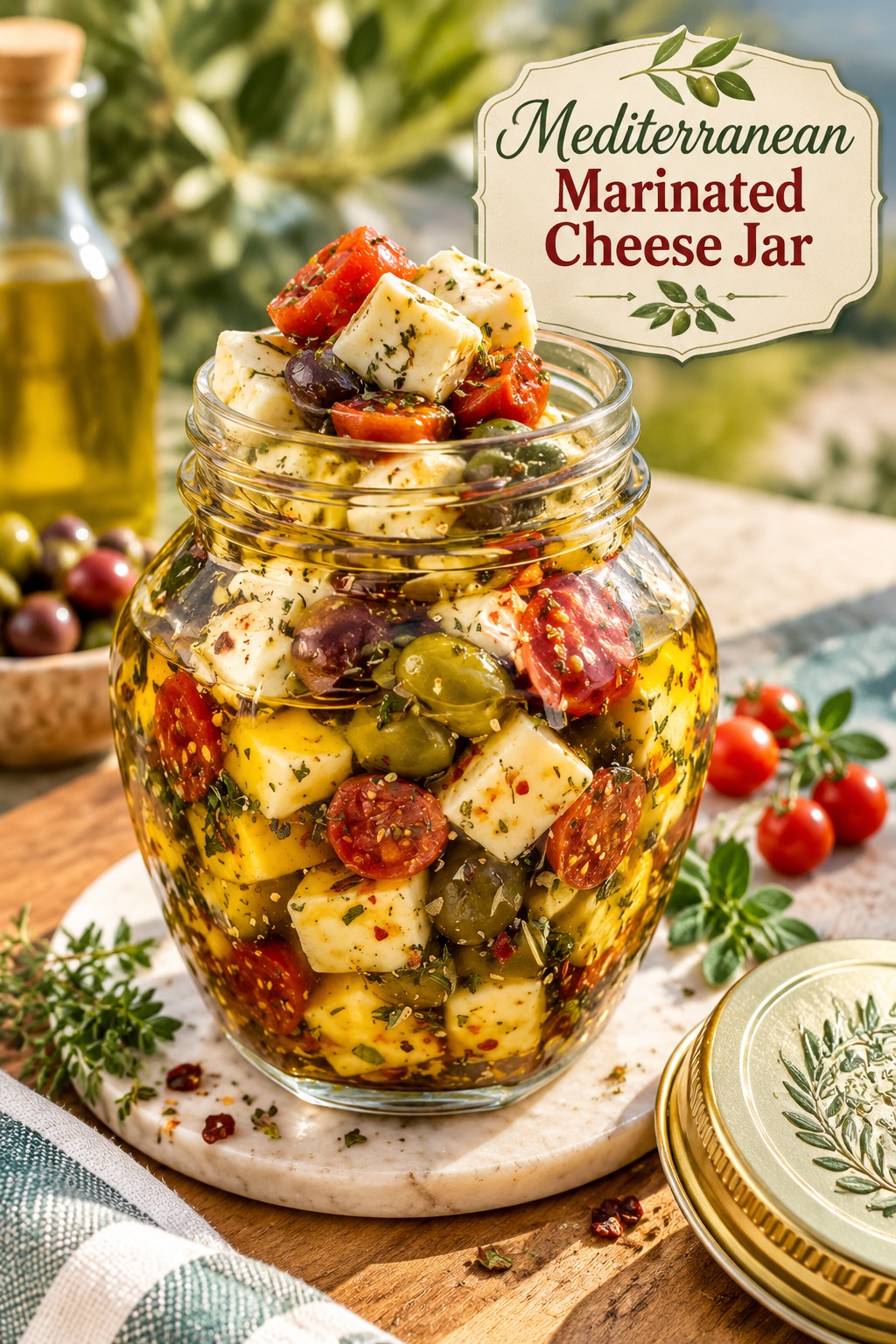
Mediterranean Marinated Cheese Jar
Mediterranean Marinated Cheese Jar is an easy make-ahead appetizer packed with creamy cheese, briny olives, juicy tomatoes, garlic, herbs, and a bright olive oil marinade. Everything is layered into a jar, allowing the flavors to mingle beautifully in the refrigerator. Serve it with warm crusty bread, toasted pita, crackers, or alongside a Mediterranean mezze platter.
It is a simple recipe that looks impressive and works wonderfully for entertaining, picnics, brunch, or an easy snack.
Prep Time: 15 minutes
Marinating Time: 4 hours
Total Time: 4 hours 15 minutes
Servings: 6–8
Cuisine: Mediterranean
Category: Appetizer / Snack
Ingredients
Core Jar Ingredients
8 oz feta or Havarti cheese, cut into bite-sized cubes
½ cup green olives, pitted, such as Castelvetrano
½ cup cherry tomatoes, halved, or oil-packed sun-dried tomatoes, chopped
4 oz salami or pepperoni, optional, sliced or cut into small pieces
Herb Marinade Ingredients
½ cup extra virgin olive oil, or enough to generously coat the ingredients
2 tablespoons red wine vinegar or fresh lemon juice
2 cloves garlic, minced or thinly sliced
1 teaspoon dried oregano
½ teaspoon red pepper flakes
½ teaspoon salt
¼ teaspoon freshly ground black pepper
Fresh thyme or rosemary sprigs, for garnish
Instructions
Begin by preparing the cheese. If using feta, cut it into medium-sized cubes rather than very small pieces. Feta can crumble easily, so handle it gently. If using Havarti, cut it into similar-sized cubes.
Prepare the olives and tomatoes. Drain the olives well and pat them dry. If using fresh cherry tomatoes, cut them in half. If using oil-packed sun-dried tomatoes, drain them and chop them into bite-sized pieces.
If you are adding salami or pepperoni, slice it into small pieces or strips. This ingredient is completely optional, so you can leave it out for a vegetarian version.
In a small bowl, whisk together the extra virgin olive oil, red wine vinegar or lemon juice, minced garlic, dried oregano, red pepper flakes, salt, and black pepper. Whisk until the marinade is well combined.
Taste the marinade and adjust the seasoning if needed. Remember that feta and olives are already salty, so avoid adding too much additional salt.
Choose a clean, dry glass jar with a tight-fitting lid. A wide-mouth jar makes layering the ingredients much easier.
Place a small amount of the marinade into the bottom of the jar.
Add a layer of cheese, followed by some olives, tomatoes, and optional salami. Continue layering until all the ingredients have been added.
Pour the remaining marinade slowly into the jar. The oil should coat the ingredients thoroughly. If necessary, add a little more olive oil so the cheese and other ingredients are well coated.
Add a few small sprigs of fresh thyme or rosemary. Do not pack the jar too tightly because you want the marinade to move between the ingredients.
Seal the jar tightly and gently turn it upside down once or twice to distribute the marinade. Avoid vigorous shaking because the feta can break apart.
Refrigerate for at least 4 hours. For the best flavor, allow it to marinate overnight.
Remove the jar from the refrigerator approximately 15–20 minutes before serving. Olive oil naturally becomes cloudy and thicker when chilled, so allowing it to come closer to room temperature helps restore its smooth texture.
Transfer the marinated cheese and accompaniments to a serving bowl or platter. Spoon some of the flavorful marinade over the top and garnish with fresh herbs.
Serve with crusty bread, toasted pita, crackers, or fresh vegetables.
Tips
Choose firm cheese. Feta is excellent because it holds its shape while absorbing the flavors of the marinade. Havarti gives the recipe a softer, buttery texture.
Use good-quality olive oil. Since the marinade is not cooked, the flavor of the olive oil is an important part of the finished dish. Extra virgin olive oil is ideal.
Drain everything thoroughly. Excess water from olives and tomatoes can dilute the marinade and make the jar less flavorful.
Do not overdo the garlic. Two cloves provide plenty of flavor. Garlic becomes stronger as it sits in the marinade.
Use fresh herbs carefully. Small sprigs of thyme or rosemary provide wonderful aroma without overpowering the cheese.
Let it marinate. Although you can technically serve the jar after a short rest, several hours allow the garlic, herbs, vinegar, and spices to penetrate the cheese much more effectively.
Bring it toward room temperature before serving. This makes the olive oil more fluid and improves the texture of the cheese.
Use a wide-mouth jar. It makes filling, serving, and removing the ingredients much easier.
Keep the jar refrigerated. Because this recipe contains cheese, fresh vegetables, and optionally meat, it should remain refrigerated until serving.
Be careful with salt. Feta, olives, salami, and pepperoni can all contribute significant saltiness. Taste the marinade before adding more.
Cut everything into similar sizes. Consistent pieces make the jar attractive and ensure you get a little of everything in each serving.
Variations
Greek feta version: Use feta, Kalamata olives, cherry tomatoes, oregano, lemon juice, and fresh dill for a classic Greek-inspired combination.
Creamy Havarti version: Havarti creates a milder, buttery appetizer. Pair it with green olives, sun-dried tomatoes, rosemary, and red pepper flakes.
Spicy cheese jar: Increase the red pepper flakes and add sliced fresh chili peppers for extra heat.
Lemon herb version: Replace the red wine vinegar with fresh lemon juice and add lemon zest, parsley, dill, and thyme.
Sun-dried tomato version: Replace fresh cherry tomatoes with oil-packed sun-dried tomatoes. Their concentrated flavor works beautifully with feta and herbs.
Antipasto version: Keep the salami or pepperoni and add roasted red peppers, artichoke hearts, and olives for a more substantial antipasto-style jar.
Vegetarian version: Simply leave out the salami or pepperoni. Add extra olives, roasted peppers, or artichokes instead.
Herb-forward version: Add fresh parsley, basil, dill, thyme, or rosemary. Use a combination rather than adding large amounts of a single strong herb.
Mediterranean chili version: Add a small amount of crushed chili, smoked paprika, and lemon zest to create a more complex spicy marinade.
Cucumber addition: For a serving variation, add fresh cucumber when transferring the marinated cheese to a serving bowl rather than marinating it in the jar. This keeps the cucumber crisp.
Roasted vegetable version: Add cooled roasted red peppers, zucchini, or eggplant to the serving platter alongside the marinated cheese.
Q&A
How long should the cheese marinate?
At least 4 hours is recommended, but overnight marinating gives the best flavor. The cheese has more time to absorb the garlic, herbs, acidity, and spices.
Can I use only feta?
Absolutely. Feta is one of the best cheeses for this recipe because it is firm enough to hold its shape while absorbing the marinade.
Can I use another cheese?
Yes. Havarti, cheddar cubes, provolone, mozzarella, or another firm cheese can work. Softer cheeses may break apart more easily.
Can I make this without meat?
Yes. Simply omit the salami or pepperoni. The cheese, olives, tomatoes, garlic, and herbs already make a flavorful vegetarian appetizer.
Can I use lemon juice instead of vinegar?
Yes. Fresh lemon juice provides a bright, fresh flavor and works particularly well with feta.
Why does my olive oil become cloudy in the refrigerator?
This is completely normal. Olive oil can become cloudy or partially solidify when chilled. Allow the jar to sit at room temperature briefly before serving, and the oil will become more fluid.
Can I use dried herbs instead of fresh herbs?
Yes. Dried oregano is already included in the marinade. For rosemary or thyme, fresh herbs provide a more fragrant finish, but small amounts of dried herbs can also be used.
What should I serve with marinated cheese?
Crusty bread, pita, crackers, cucumber slices, bell peppers, cherry tomatoes, or toasted baguette are all excellent choices.
Can I prepare this for a party?
Definitely. It is an excellent make-ahead appetizer. Prepare it the day before, refrigerate it, and bring it out shortly before serving.
How should I store leftovers?
Keep the jar tightly sealed and refrigerated. Use clean utensils whenever serving from the jar to help maintain freshness.
Can I reuse the leftover marinade?
It is best not to reuse marinade that has been in contact with cheese, vegetables, or meat. If you want extra dressing for serving, make a fresh batch instead.
Nutrition
Nutrition will vary depending on the cheese, olive oil, olives, and whether salami or pepperoni is included.
Approximate nutrition per serving:
Calories: 280–350 kcal
Protein: 8–12 g
Carbohydrates: 4–7 g
Fat: 25–31 g
Saturated Fat: 7–10 g
Fiber: 1–2 g
Sugar: 2–3 g
Sodium: 500–800 mg
For a lighter version, reduce the amount of olive oil and use a lower-fat cheese. Omitting the salami or pepperoni will also reduce the overall fat and sodium.
Conclusion
Mediterranean Marinated Cheese Jar is one of those simple recipes that feels much more special than the effort required to make it. Creamy feta or buttery Havarti absorbs the flavors of garlic, oregano, lemon or red wine vinegar, and olive oil, while olives and tomatoes add brightness, saltiness, and texture.
The beauty of this recipe is its flexibility. Keep it vegetarian, add salami for an antipasto-style appetizer, switch between feta and Havarti, or customize the herbs and vegetables according to what you have available.
Prepare it several hours ahead, let the flavors develop in the refrigerator, then serve it with warm bread or pita for an easy Mediterranean appetizer that is perfect for sharing.