
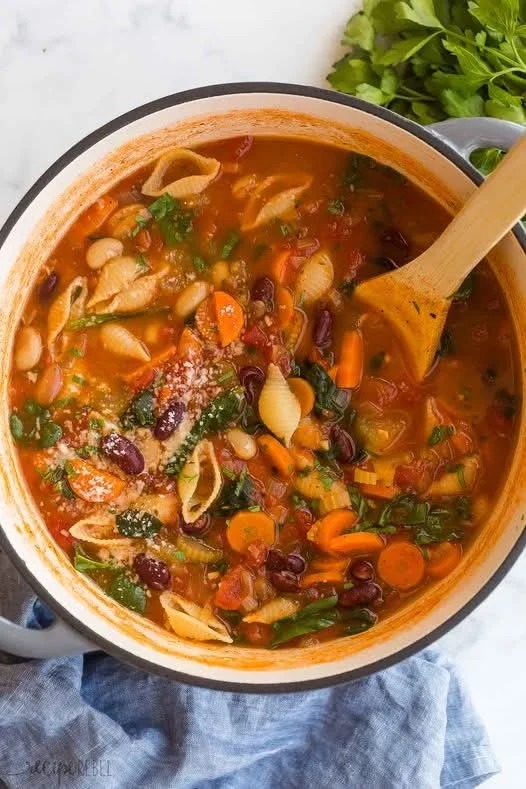
Mediterranean Minestrone Soup
Intro Option 1
Mediterranean Minestrone Soup is a cozy, colorful, and nourishing one-pot meal packed with tender vegetables, hearty beans, pasta, tomatoes, herbs, and Parmesan. The combination of onion, carrot, celery, garlic, oregano, thyme, and rosemary creates a deeply flavorful broth, while spinach adds freshness and extra nutrition. It is simple enough for a weeknight dinner yet satisfying enough for a family meal.
Intro Option 2
This Mediterranean Minestrone Soup brings together everything you want in a comforting homemade soup: a rich tomato broth, tender vegetables, creamy beans, small pasta, leafy greens, and a savory Parmesan finish. It is hearty without feeling heavy and makes a wonderful lunch or easy dinner. A squeeze of fresh lemon at the end adds a bright Mediterranean touch.
Prep Time: 15 minutes
Cook Time: 35 minutes
Total Time: 50 minutes
Servings: 6 to 8
Cuisine: Mediterranean-inspired
Ingredients
For the Flavor Base
2 tablespoons extra virgin olive oil
1 medium yellow onion, finely diced
2 medium carrots, diced
2 celery stalks, diced
4 cloves garlic, freshly minced
For the Soup
1 tablespoon tomato paste
1 can (14.5 oz / 410 g) diced tomatoes
6 cups vegetable or chicken broth
1 teaspoon dried oregano
½ teaspoon dried thyme
½ teaspoon dried rosemary
2 bay leaves
1 teaspoon salt, or to taste
½ teaspoon freshly ground black pepper
1 can (15 oz / 425 g) dark red kidney beans, drained and rinsed
1 can (15 oz / 425 g) cannellini or borlotti beans, drained and rinsed
1 cup small pasta shells, ditalini, or elbow macaroni
2 cups chopped fresh spinach or kale
For the Finish
1 Parmesan rind, optional
½ cup freshly grated Parmesan cheese
1 tablespoon fresh parsley, chopped
1 tablespoon extra virgin olive oil
Freshly ground black pepper, to taste
Lemon wedges, optional
Instructions
Sauté the Aromatics
Heat the extra virgin olive oil in a large heavy-bottomed pot or Dutch oven over medium heat. Add the diced onion, carrots, and celery. Cook for about 6 to 8 minutes, stirring occasionally, until the vegetables begin to soften and the onion becomes translucent.
Add the minced garlic and cook for another 30 to 60 seconds. Be careful not to brown the garlic too much because burnt garlic can make the entire soup taste bitter.
Build the Tomato Base
Add the tomato paste to the softened vegetables and stir well. Cook for about 1 to 2 minutes. This short cooking step helps caramelize the tomato paste and gives the soup a richer, deeper flavor.
Pour in the diced tomatoes along with their juices. Stir everything together, scraping the bottom of the pot to release any flavorful bits.
Add the Broth and Herbs
Pour in the vegetable or chicken broth. Add the dried oregano, thyme, rosemary, bay leaves, salt, black pepper, and Parmesan rind if using.
Stir well and bring the soup to a gentle boil. Once it starts bubbling, reduce the heat to medium-low and allow it to simmer for about 15 minutes. This gives the vegetables time to become tender while allowing the herbs and tomatoes to infuse the broth.
Add the Beans
Stir in the drained kidney beans and cannellini or borlotti beans. Continue simmering for about 5 minutes.
Using two different types of beans gives the soup a more interesting texture. Kidney beans provide a firm, hearty bite, while cannellini or borlotti beans become softer and creamier as they cook.
Cook the Pasta
Add the small pasta directly to the simmering soup. Cook according to the package directions, usually around 8 to 10 minutes, or until the pasta is tender but still slightly firm.
Stir occasionally so the pasta does not stick together or settle at the bottom of the pot.
Keep in mind that pasta continues absorbing liquid as it sits. If the soup becomes thicker than you prefer, simply add a little extra broth or hot water.
Add the Greens
When the pasta is almost completely cooked, stir in the chopped spinach or kale. Spinach will wilt within a couple of minutes, while kale may need a few extra minutes to become tender.
Taste the soup and adjust the salt and black pepper as needed. Remove the bay leaves and Parmesan rind before serving.
Finish and Serve
Ladle the hot soup into bowls and top each serving with freshly grated Parmesan, chopped parsley, a small drizzle of extra virgin olive oil, and freshly ground black pepper.
Serve with lemon wedges on the side if desired. A small squeeze of lemon just before eating brightens the tomato-based broth and balances the richness of the beans and Parmesan.
Tips
Use a Large Heavy Pot
A large Dutch oven or heavy soup pot works especially well because it distributes heat evenly and gives the vegetables enough room to sauté properly. Avoid overcrowding the pot during the first step because the vegetables should soften rather than steam.
Take Time With the Vegetable Base
The onion, carrot, celery, and garlic form the foundation of the soup. Giving them several minutes to soften before adding the liquids creates much more flavor than simply boiling everything together.
Cook the Tomato Paste
Do not skip the brief step of cooking the tomato paste. Heating it directly with the vegetables helps develop a richer tomato flavor and adds depth to the broth.
Watch the Pasta
If you plan to store leftovers, consider cooking the pasta separately and adding it to individual bowls. Pasta absorbs broth as it sits, so this method keeps the soup more brothy when refrigerated.
Adjust the Consistency
Minestrone can range from brothy to thick and stew-like. Add extra broth if you prefer a lighter soup. If you enjoy a heartier consistency, let the soup simmer for a few extra minutes.
Finish With Lemon
Fresh lemon is optional, but it can make a noticeable difference. The acidity cuts through the richness of the beans and Parmesan and gives the soup a fresh Mediterranean-style finish.
Use Fresh Parmesan
Freshly grated Parmesan melts more naturally into the hot soup and provides better flavor than pre-shredded cheese. If you have a Parmesan rind, adding it while the soup simmers is an excellent way to add savory depth.
Variations
Make It Vegetarian
For a vegetarian version, use vegetable broth instead of chicken broth and make sure the Parmesan you use fits your dietary preference. The beans and pasta provide plenty of substance, so the soup remains filling without meat.
Add More Mediterranean Vegetables
You can add zucchini, bell peppers, green beans, chopped tomatoes, or diced potatoes. Add firmer vegetables earlier in the cooking process and delicate vegetables later so everything finishes with the right texture.
Add Protein
For a higher-protein meal, add cooked shredded chicken, turkey, or Italian-style chicken sausage. White beans also work particularly well because they add creaminess while increasing the overall protein and fiber content.
Try Different Beans
The combination of kidney beans and cannellini or borlotti beans is delicious, but you can also use chickpeas, navy beans, or great northern beans. Mixing varieties gives the soup a more interesting appearance and texture.
Make It Spicy
For a little heat, add crushed red pepper flakes with the dried herbs. You can also finish each bowl with a pinch of chili flakes or a drizzle of chili-infused olive oil.
Use Different Greens
Spinach is quick and delicate, while kale creates a heartier texture. Swiss chard, collard greens, or another sturdy leafy green can also be used depending on what you have available.
Make It Gluten-Free
Use your favorite gluten-free small pasta in place of regular pasta. Check the broth and Parmesan ingredients as well if you need the entire recipe to be gluten-free.
Q&A
Can I Make Mediterranean Minestrone Soup Ahead of Time?
Yes. The soup can be prepared ahead and stored in the refrigerator. For the best pasta texture, cook the pasta separately if you know you will be making the soup several hours or a day in advance.
Can I Freeze This Soup?
Yes, but pasta can become softer after freezing and reheating. For the best results, freeze the soup without the pasta and cook fresh pasta when you reheat it.
Can I Use Fresh Tomatoes?
Yes. Fresh ripe tomatoes can replace canned tomatoes, although canned tomatoes provide a more consistent flavor and texture throughout the year. If using fresh tomatoes, chop them finely and allow them to cook down well.
What Can I Serve With Minestrone Soup?
Crusty whole-grain bread, garlic toast, a simple green salad, or a Mediterranean cucumber salad all pair beautifully with this soup. A little extra Parmesan on top also makes a delicious finishing touch.
How Long Does It Last in the Refrigerator?
Store cooled soup in an airtight container in the refrigerator for about 3 to 4 days. Reheat gently on the stovetop or in the microwave, adding a splash of broth or water if the soup has thickened.
Can I Make It Without Parmesan?
Absolutely. The soup is flavorful even without cheese. You can finish it with fresh parsley, extra virgin olive oil, lemon juice, and freshly ground black pepper instead.
Nutrition
Approximate nutrition per serving, based on 8 servings and without optional bread:
Calories: 300–330
Protein: 13–16 g
Carbohydrates: 43–48 g
Fat: 9–11 g
Fiber: 10–12 g
Sugar: 7–9 g
Sodium: 700–900 mg
Nutrition values are estimates and can vary depending on the type of broth, pasta, beans, Parmesan, and exact serving size used.
Conclusion
Warm, hearty, and packed with vegetables and beans, this Mediterranean Minestrone Soup is an easy recipe you can return to throughout the year. The tomato-herb broth, tender pasta, creamy beans, and fresh greens come together beautifully, while Parmesan and lemon add the perfect finishing touch. It is simple comfort food with plenty of Mediterranean flavor.
#MediterraneanMinestrone #MinestroneSoup #MediterraneanRecipes #HealthySoup #EasyDinner