
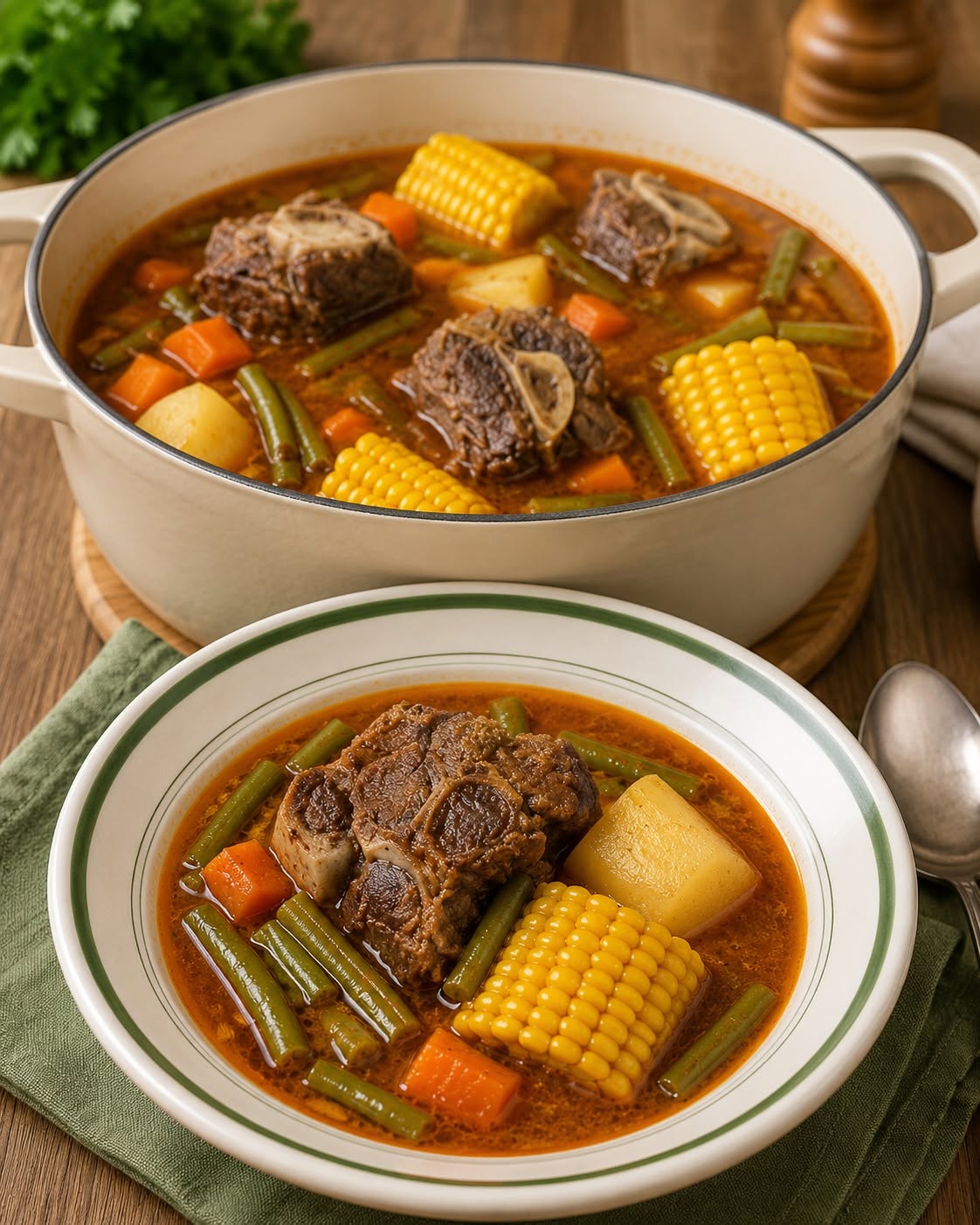
Old-Fashioned Caldo de Res (Mexican Beef & Vegetable Soup)
Description
Old-Fashioned Caldo de Res is a comforting Mexican beef and vegetable soup made with tender beef simmered slowly in a rich broth alongside hearty vegetables like corn, potatoes, carrots, cabbage, zucchini, and chayote. This traditional family recipe is known for its nourishing qualities, deep beef flavor, and colorful presentation. It’s commonly served with warm corn tortillas, fresh lime wedges, chopped cilantro, and sliced jalapeños for a satisfying and wholesome meal.
Recipe Information
- Prep Time: 20 minutes
- Cook Time: 2 hours 15 minutes
- Total Time: 2 hours 35 minutes
- Cuisine: Mexican
- Course: Main Course, Soup
- Difficulty: Easy
- Servings: 8 servings
Ingredients
For the Broth
- 3 lbs (1.4 kg) beef shank with bone
- 1 lb beef short ribs or chuck roast, cut into chunks
- 12 cups water
- 1 large onion, halved
- 6 garlic cloves
- 2 bay leaves
- 1 tablespoon salt (adjust to taste)
- 1 teaspoon black pepper
- 1 teaspoon cumin (optional)
Vegetables
- 3 ears corn, cut into thirds
- 3 carrots, cut into large pieces
- 3 potatoes, quartered
- 2 chayote squash, peeled and chunked
- 2 zucchini, sliced thick
- ½ small green cabbage, cut into wedges
- 2 celery stalks, chopped
- 2 tomatoes, diced
Garnishes
- Fresh cilantro, chopped
- Lime wedges
- Sliced jalapeños
- Diced white onion
- Warm corn tortillas
- Avocado slices (optional)
Instructions
Step 1: Prepare the Beef
Place beef shanks and beef chunks into a large stockpot.
Add water, onion, garlic, bay leaves, salt, pepper, and cumin.
Bring to a boil over medium-high heat.
Step 2: Skim the Broth
As the soup boils, skim off any foam that rises to the surface.
Reduce heat to low.
Cover and simmer for about 1½ hours, until beef begins becoming tender.
Step 3: Add Hard Vegetables
Add:
- Corn
- Carrots
- Potatoes
- Celery
Cook for 20 minutes.
Step 4: Add Remaining Vegetables
Add:
- Chayote
- Tomatoes
- Zucchini
Cook another 15 minutes.
Step 5: Add Cabbage
Place cabbage wedges on top.
Cover and simmer 10–15 minutes until cabbage softens but still holds together.
Step 6: Taste
Adjust:
- Salt
- Pepper
- Lime juice (optional)
Remove onion and bay leaves before serving.
How to Serve
Ladle broth into large bowls.
Place one beef shank and assorted vegetables into each serving.
Top with:
- Fresh cilantro
- Chopped onion
- Jalapeños
- Fresh lime juice
Serve with:
- Warm corn tortillas
- Mexican rice
- Salsa
- Avocado
Chef’s Notes
- Beef shank bones create the richest broth.
- Cooking slowly develops maximum flavor.
- Leave vegetables in large pieces to prevent overcooking.
- Fresh lime brightens the broth.
- Homemade broth always tastes better the next day.
Tips for Success
- Brown the beef first for a deeper flavor (optional).
- Remove excess fat from the surface before serving.
- Don’t overcook zucchini.
- Add cabbage last to preserve texture.
- Simmer gently rather than boiling vigorously.
- Use fresh cilantro just before serving.
- Refrigerate overnight for even richer flavor.
Variations
Spicy Version
Add serrano peppers or chipotle peppers.
Extra Vegetable Version
Add:
- Green beans
- Mexican squash
- Turnips
- Cabbage hearts
Low-Carb Version
Replace potatoes with cauliflower.
Slow Cooker Version
Cook beef on Low for 8 hours.
Add vegetables during the final 2 hours.
Storage
Refrigerator
Store for up to 4 days.
Freezer
Freeze for up to 3 months.
Reheating
Reheat gently over medium-low heat until hot.
Avoid boiling to keep vegetables intact.
Nutritional Information (Per Serving, Approximate)
- Calories: 470
- Protein: 38 g
- Carbohydrates: 24 g
- Fat: 24 g
- Saturated Fat: 8 g
- Fiber: 5 g
- Sugar: 7 g
- Sodium: 720 mg
- Cholesterol: 105 mg
- Potassium: 1,180 mg
- Vitamin A: 130% DV
- Vitamin C: 45% DV
- Calcium: 8% DV
- Iron: 22% DV
Nutritional values are estimates and will vary depending on the specific ingredients used.
Health Benefits
- Rich in high-quality protein to support muscle maintenance and repair.
- Bone-in beef contributes collagen and gelatin, which can support joint health and give the broth a rich body.
- Packed with vegetables that provide dietary fiber for digestive health.
- Excellent source of vitamins A and C from carrots, cabbage, zucchini, and tomatoes.
- Potatoes and corn provide complex carbohydrates for sustained energy.
- Garlic and onions contain antioxidants and beneficial plant compounds.
- Hydrating and comforting, making it a great choice during cooler weather or when recovering from illness.
Frequently Asked Questions (Q&A)
1. What cut of beef is best for Caldo de Res?
Beef shank is the traditional choice because the bone and connective tissue create a flavorful, rich broth. Short ribs or chuck roast are excellent additions for extra meat.
2. Can I make it ahead of time?
Yes. The flavor often improves after resting overnight in the refrigerator.
3. Can I use a pressure cooker?
Yes. Cook the beef under high pressure for about 45–50 minutes with a natural pressure release, then add the vegetables and cook until tender.
4. Why is my broth cloudy?
A vigorous boil can make the broth cloudy. Simmer gently and skim off the foam during the first 15–20 minutes for a clearer broth.
5. Can I freeze Caldo de Res?
Yes. For the best texture, freeze the broth and beef separately from the vegetables if possible.
6. What do you serve with Caldo de Res?
Warm corn tortillas, Mexican rice, avocado slices, salsa, chopped onions, cilantro, jalapeños, and lime wedges are classic accompaniments.
7. Can I make it spicy?
Absolutely. Add sliced serrano peppers, jalapeños, or a spoonful of chipotle peppers in adobo for extra heat.
8. Is Caldo de Res gluten-free?
Yes, when prepared with naturally gluten-free ingredients and served with gluten-free tortillas if needed.
9. Can I substitute vegetables?
Yes. Green beans, squash, turnips, cauliflower, or seasonal vegetables work well while maintaining the soup’s hearty character.
10. How do I know when the beef is done?
The beef is ready when it is fork-tender and easily separates from the bone, while the vegetables are tender but still hold their shape.