
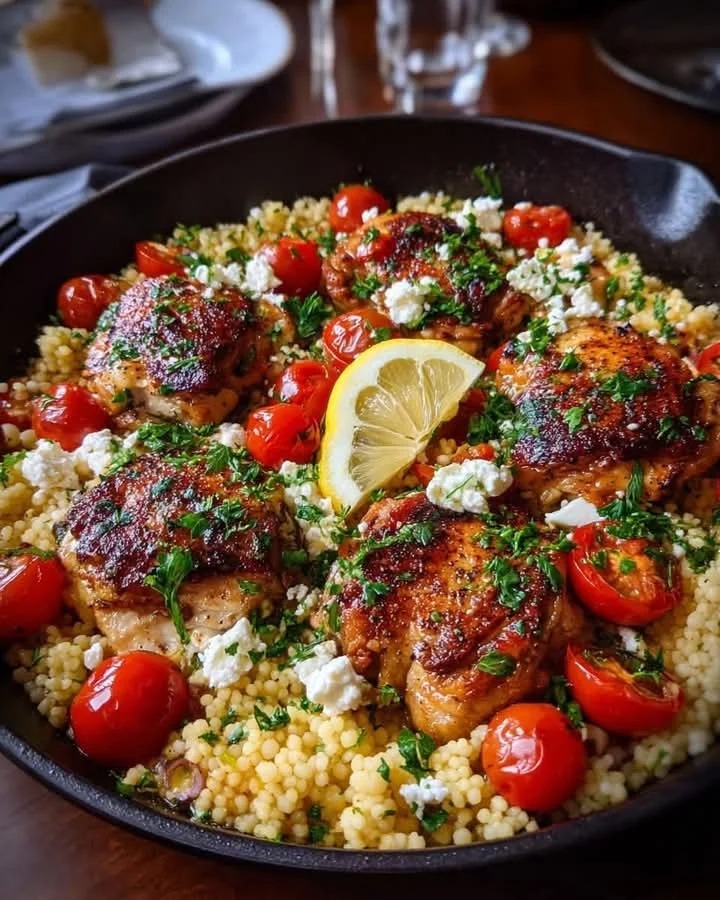
One-Skillet Mediterranean Chicken with Lemon Couscous
This One-Skillet Mediterranean Chicken with Lemon Couscous is a flavorful, comforting dinner that brings juicy oregano-seasoned chicken, bright lemon couscous, sweet cherry tomatoes, creamy feta, and briny Kalamata olives together in one pan. It is colorful, satisfying, and easy enough for a busy weeknight.
The pearl couscous absorbs the savory chicken broth and fresh lemon flavor while the chicken develops a beautifully browned exterior from the skillet. With minimal cleanup and simple Mediterranean ingredients, this is a complete meal that feels special without requiring complicated preparation.
Prep Time: 15 minutes
Cook Time: 30 minutes
Total Time: 45 minutes
Servings: 4
Ingredients
For the Chicken & Marinade
1 to 1½ pounds boneless, skinless chicken thighs or breasts
1 tablespoon olive oil, for searing
1 teaspoon dried oregano
1 teaspoon smoked or sweet paprika
½ teaspoon garlic powder
Salt and freshly ground black pepper, to taste
For the Lemon Couscous Base
1 cup dried pearl couscous
1¾ cups chicken broth or low-sodium chicken stock
1 whole lemon, zested and juiced
Toppings & Mix-Ins
½ cup cherry tomatoes, halved
¼ cup crumbled feta cheese
2 tablespoons fresh parsley, finely chopped
¼ cup Kalamata olives, sliced, optional
Instructions
Season the Chicken
Pat the chicken thighs or breasts dry with paper towels. This helps the chicken develop a better sear.
In a small bowl, combine the oregano, paprika, garlic powder, salt, and black pepper. Rub the seasoning mixture evenly over both sides of the chicken.
If using chicken breasts, cut particularly thick pieces in half horizontally or gently pound them to an even thickness. This helps them cook evenly alongside the couscous.
Sear the Chicken
Heat a large, deep skillet over medium-high heat. Add the olive oil and allow it to become hot but not smoking.
Place the seasoned chicken into the skillet in a single layer. Sear for about 4–5 minutes on the first side, then turn and cook for another 3–4 minutes.
The chicken does not need to be completely cooked at this stage. The goal is to develop a golden-brown exterior and build flavorful browned bits in the bottom of the skillet.
Transfer the chicken to a plate and set aside.
Toast the Pearl Couscous
Reduce the heat to medium. Add the pearl couscous directly to the same skillet.
Toast it for about 1–2 minutes, stirring occasionally. This quick step adds a subtle nutty flavor and allows the couscous to pick up some of the savory flavors left behind by the chicken.
Build the Lemon Couscous
Pour the chicken broth into the skillet and stir well, scraping the bottom to loosen any browned bits.
Add the lemon zest and freshly squeezed lemon juice. Stir to combine.
Bring the mixture to a gentle simmer.
Add the Tomatoes and Chicken
Arrange the halved cherry tomatoes throughout the couscous.
Return the seared chicken to the skillet, nestling the pieces gently into the couscous. Any juices that accumulated on the plate can also be added to the skillet for extra flavor.
Cover the skillet and reduce the heat to low.
Cook for approximately 15–18 minutes, or until the couscous is tender and most of the broth has been absorbed.
The chicken should reach an internal temperature of 165°F (74°C) in the thickest part.
Finish the Skillet
Once the couscous is cooked, turn off the heat and let the skillet rest, covered, for about 3–5 minutes.
Remove the lid and gently fluff the couscous with a fork.
Scatter the feta cheese, fresh parsley, and sliced Kalamata olives over the top.
For an extra fresh finish, add a little more lemon juice just before serving.
Serve
Serve the chicken directly from the skillet while warm.
Spoon plenty of lemon couscous, tomatoes, feta, and olives onto each plate, making sure every serving gets a good combination of the ingredients.
Tips
Use Chicken Thighs for Extra Juiciness
Boneless chicken thighs are especially forgiving and remain juicy during cooking. Chicken breasts work well too, but avoid overcooking them because they can become dry.
Do Not Skip the Sear
Searing the chicken first creates a golden crust and leaves flavorful browned bits in the skillet. Those bits become part of the couscous as the broth is added.
Toast the Couscous Briefly
A quick toast before adding the broth gives pearl couscous a deeper, slightly nutty flavor. Stir constantly and avoid letting it become too dark.
Use Fresh Lemon
Fresh lemon zest and juice provide much brighter flavor than bottled lemon juice. Zest the lemon before cutting it open so you can easily collect the aromatic outer peel.
Watch the Liquid Level
Different brands of pearl couscous can absorb liquid slightly differently. If the couscous is nearly tender but still looks dry, add a small splash of broth and continue cooking.
Let the Dish Rest
A short resting period allows the couscous to absorb remaining moisture and makes it easier to fluff without becoming sticky.
Add Feta at the End
Adding feta after cooking preserves its creamy, crumbly texture and keeps it from completely melting into the couscous.
Taste Before Serving
Feta and Kalamata olives are naturally salty, so taste the finished couscous before adding additional salt.
Variations
Mediterranean Vegetable Version
Add diced bell peppers, zucchini, or spinach to the skillet. Sauté firmer vegetables briefly before adding the couscous and broth.
Creamy Feta Version
For a creamier finish, stir a few tablespoons of crumbled feta into the hot couscous before adding the remaining feta on top.
Greek-Inspired Version
Add a pinch of dried dill, extra oregano, cucumber on the side, and a spoonful of Greek yogurt when serving.
Spicy Chicken Couscous
Use smoked paprika and add ¼–½ teaspoon red pepper flakes to the seasoning. You can also drizzle the finished dish with a little chili-infused olive oil.
Herb Lemon Version
Add fresh dill, basil, or mint along with the parsley. A combination of fresh herbs gives the couscous a lighter, garden-fresh flavor.
Chicken and Spinach Couscous
Stir two large handfuls of baby spinach into the hot couscous during the final 2–3 minutes of cooking. Cover briefly until the spinach wilts.
Extra Tomato Version
Increase the cherry tomatoes to 1 cup for a juicier, more tomato-forward skillet meal.
Q&A
Can I use regular couscous instead of pearl couscous?
Pearl couscous is recommended because it has a chewy texture and holds up well in a one-skillet meal. Regular couscous cooks much faster and would require a different liquid ratio and cooking method.
Can I use chicken breasts?
Yes. Boneless, skinless chicken breasts work well. For thicker breasts, slice them into thinner cutlets or pound them evenly so they cook properly.
Can I make this recipe without olives?
Absolutely. Kalamata olives are optional and can simply be omitted if you prefer a milder flavor.
What other cheese can I use instead of feta?
Crumbled goat cheese can be used for a creamy alternative. Parmesan can also add a savory flavor, although feta provides the most traditional Mediterranean-style finish.
Can I prepare this meal ahead of time?
Yes. Store leftovers in an airtight container in the refrigerator for up to 3 days. Reheat gently with a splash of chicken broth or water to loosen the couscous.
Why did my couscous become mushy?
Too much liquid or overcooking can make pearl couscous soft. Keep the skillet covered during cooking and check it toward the end of the recommended cooking time.
What can I serve with Mediterranean chicken couscous?
This is already a complete meal, but it pairs nicely with a simple Greek salad, roasted vegetables, cucumber salad, hummus, or warm pita bread.
Nutrition
Approximate nutrition per serving:
Calories: 570 kcal
Protein: 43 g
Carbohydrates: 52 g
Fat: 22 g
Saturated Fat: 6 g
Fiber: 4 g
Sugar: 5 g
Sodium: 850 mg
Nutrition values are estimates and may vary depending on the chicken cut, broth, feta, olives, and exact ingredient quantities used.
Conclusion
This One-Skillet Mediterranean Chicken with Lemon Couscous brings together everything you want in an easy dinner: tender seasoned chicken, fluffy lemon-infused couscous, juicy tomatoes, creamy feta, and savory olives. Cooking everything in one skillet allows the flavors to blend beautifully while keeping cleanup simple.
It is a practical recipe for busy evenings but flavorful enough to serve when you want something a little more impressive. Add a fresh salad or warm pita on the side, and you have a complete Mediterranean-inspired meal.