
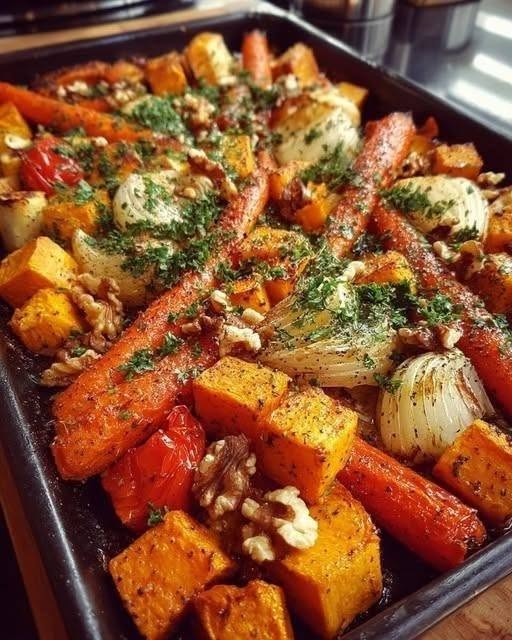
Oven-Roasted Butternut Squash, Sweet Potato & Carrot Bake with Feta, Walnut Crunch & Honey Balsamic Finish
Description
This oven-roasted butternut squash, sweet potato & carrot bake is a colourful, wholesome side dish packed with naturally sweet roasted vegetables, creamy salty feta, crunchy toasted walnuts, fresh herbs, and a glossy honey-balsamic finish.
The magic happens in the oven. Butternut squash, sweet potatoes, and carrots become tender on the inside and beautifully caramelised around the edges. Smoked paprika and thyme add warmth and savoury depth, while the feta brings a creamy, tangy contrast. Toasted walnuts provide the perfect crunch, and the honey-balsamic dressing ties everything together with a sweet-and-tangy finish.
It is an excellent side dish for Thanksgiving, Christmas, Sunday dinner, family gatherings, or a Mediterranean-inspired meal. It is also satisfying enough to enjoy as a light vegetarian lunch with a simple green salad.
Recipe Information
- Prep Time: 20 minutes
- Cook Time: 40–50 minutes
- Total Time: 1 hour–1 hour 10 minutes
- Servings: 6
- Course: Side Dish
- Cuisine: Mediterranean-inspired
- Difficulty: Easy
- Best Served: Warm or slightly warm
Ingredients
For the Roast
- 400 g butternut squash, peeled and cubed
- 2 large sweet potatoes, peeled and cubed
- 4 large carrots, sliced
- 3 tablespoons olive oil
- 1 teaspoon salt
- ½ teaspoon black pepper
- 1 teaspoon smoked paprika
- 1 teaspoon dried thyme
For the Toppings
- 100 g feta cheese, crumbled
- ½ cup walnuts, toasted and roughly chopped
- 2 tablespoons fresh parsley or fresh thyme, chopped
For the Honey Balsamic Finish
- 2 tablespoons honey
- 2 tablespoons balsamic vinegar
- 1 tablespoon olive oil
- Pinch of salt
Instructions
1. Preheat the Oven
Preheat your oven to 425°F (220°C).
Line a large rimmed baking sheet with parchment paper for easier cleanup.
A large baking sheet is important because the vegetables need enough space to roast properly. If they are packed too closely together, they will steam instead of developing those delicious browned, caramelised edges.
2. Prepare the Vegetables
Peel the butternut squash and sweet potatoes and cut them into approximately 1-inch cubes.
Slice the carrots into pieces of similar thickness.
Try to keep the vegetables relatively uniform in size. This helps them cook at approximately the same rate.
If your carrots are particularly thick, cut them into smaller pieces. Likewise, very large sweet potato or squash cubes may need additional roasting time.
3. Season the Vegetables
Place the butternut squash, sweet potatoes, and carrots into a large mixing bowl.
Drizzle with 3 tablespoons olive oil.
Add:
- 1 teaspoon salt
- ½ teaspoon black pepper
- 1 teaspoon smoked paprika
- 1 teaspoon dried thyme
Toss thoroughly until every piece is lightly coated with oil and seasoning.
The smoked paprika adds a warm, slightly smoky flavour that works beautifully with the natural sweetness of the vegetables.
4. Arrange on the Baking Sheet
Spread the vegetables onto the prepared baking sheet in a single layer.
Avoid piling them on top of one another.
If necessary, use two baking sheets. Giving the vegetables plenty of room allows hot air to circulate around them and encourages caramelisation.
5. Roast the Vegetables
Place the baking sheet in the preheated oven.
Roast for approximately 20–25 minutes.
Remove the pan from the oven and carefully toss or flip the vegetables with a spatula.
Return the pan to the oven and continue roasting for another 20–25 minutes, or until the vegetables are fork-tender and golden brown around the edges.
The exact roasting time will depend on how large your vegetables are cut.
The ideal result is tender centres with beautifully caramelised edges.
6. Toast the Walnuts
While the vegetables roast, toast the walnuts.
Place the roughly chopped walnuts in a dry skillet over medium-low heat.
Toast for approximately 3–5 minutes, stirring frequently.
Watch them carefully because nuts can burn quickly.
Once fragrant and lightly browned, remove them from the heat and set aside.
Toasting the walnuts is worth the extra few minutes because it brings out their natural oils and gives them a deeper, richer flavour.
7. Make the Honey Balsamic Finish
In a small bowl, whisk together:
- 2 tablespoons honey
- 2 tablespoons balsamic vinegar
- 1 tablespoon olive oil
- Pinch of salt
Whisk until the mixture is smooth and well combined.
Taste and adjust if desired.
For a tangier finish, add a little more balsamic vinegar. For additional sweetness, add a small drizzle of honey.
8. Assemble the Bake
Once the vegetables are fully roasted, transfer them to a large serving dish or keep them on the baking sheet.
Scatter the 100 g crumbled feta evenly over the warm vegetables.
Sprinkle the toasted walnuts over the top.
Add the chopped fresh parsley or thyme.
The warmth of the roasted vegetables will slightly soften the feta without completely melting it, creating a wonderful combination of textures.
9. Add the Honey Balsamic Finish
Drizzle the honey-balsamic mixture over the roasted vegetables, feta, and walnuts.
Don’t feel that you have to use every drop at once. You can reserve a little dressing and add more just before serving.
Finish with a final sprinkle of fresh herbs.
Serve immediately while the vegetables are warm.
What Makes This Recipe Special?
The beauty of this dish comes from the contrast between its ingredients.
The butternut squash brings creamy sweetness.
The sweet potatoes provide hearty texture and natural richness.
The carrots add another layer of sweetness and beautiful colour.
The feta brings saltiness and tang.
The walnuts provide crunch and nuttiness.
The honey-balsamic finish adds both sweetness and acidity, preventing the dish from tasting overly heavy or sweet.
Together, these ingredients create a balanced side dish with multiple textures and layers of flavour.
Recipe Notes
Cut the Vegetables Evenly
Try to cut the vegetables into similar-sized pieces. Uneven pieces can result in some vegetables becoming soft while others remain undercooked.
Don’t Overcrowd the Pan
This is one of the most important tips for successful roasted vegetables.
If the vegetables are too close together, moisture becomes trapped, and they steam rather than roast.
Use two baking sheets if needed.
Use High-Quality Olive Oil
A good extra virgin olive oil adds flavour as well as helping the vegetables brown beautifully.
Don’t Skip the Toasted Walnuts
Raw walnuts work in a pinch, but toasted walnuts provide much more flavour and a satisfying crunch.
Add Feta After Roasting
Adding the feta after the vegetables have roasted preserves its creamy texture and fresh tang.
Helpful Tips
1. Dry the vegetables well.
Excess moisture can interfere with browning.
2. Preheat the oven completely.
A hot oven helps create caramelised edges.
3. Flip halfway through.
Turning the vegetables exposes more surfaces to the hot baking sheet.
4. Don’t use too much oil.
Three tablespoons is enough to coat the vegetables without making them greasy.
5. Taste before serving.
Feta and balsamic vinegar both contribute strong flavours, so adjust the salt carefully.
6. Add the dressing at the end.
Drizzling the honey-balsamic mixture over the roasted vegetables just before serving keeps the flavours bright.
7. Use fresh herbs.
Fresh parsley or thyme provides a refreshing contrast to the sweet roasted vegetables.
Variations
Add red onion.
Add one sliced red onion to the roasting pan. It becomes sweet and caramelised and pairs beautifully with the balsamic dressing.
Add Brussels sprouts.
Halved Brussels sprouts make a wonderful addition. Add them alongside the other vegetables, making sure everything has enough room on the pan.
Add chickpeas.
For a more substantial vegetarian meal, add drained and dried chickpeas during the final 15–20 minutes of roasting.
They become slightly crisp on the outside and absorb the seasonings beautifully.
Use goat cheese.
Replace feta with crumbled goat cheese for an even creamier, tangier topping.
Add pomegranate seeds.
For a festive presentation, sprinkle fresh pomegranate seeds over the finished dish. Their bright acidity and juicy texture complement the roasted vegetables beautifully.
Make It Spicier
Add ¼–½ teaspoon red pepper flakes or a pinch of cayenne to the vegetables before roasting.
Serving Suggestions
This roasted vegetable bake pairs beautifully with many main dishes.
Serve it alongside:
- Roast chicken
- Grilled chicken
- Baked salmon
- Roasted turkey
- Grilled steak
- Baked white fish
- Lentil dishes
- Quinoa
- Mediterranean grain bowls
For a vegetarian meal, serve a generous portion alongside a fresh green salad and warm whole-grain bread.
You can also serve leftovers over cooked quinoa or brown rice for an easy lunch.
Make-Ahead Instructions
This recipe is convenient for entertaining because several components can be prepared in advance.
The vegetables can be peeled and chopped several hours before cooking. Store them covered in the refrigerator.
The walnuts can also be toasted in advance.
The honey-balsamic dressing can be prepared several hours ahead and refrigerated.
For the best texture, roast the vegetables shortly before serving and add the feta, walnuts, herbs, and dressing at the end.
Storage and Reheating
Store leftovers in an airtight container in the refrigerator for up to 3–4 days.
For the best texture, reheat the vegetables in a 400°F (200°C) oven for approximately 10–15 minutes.
You can also reheat them in an air fryer.
Microwaving works for convenience, but the vegetables and walnuts may become softer.
If possible, add a fresh sprinkle of walnuts, feta, and herbs after reheating.
Nutritional Information
Approximate nutrition per serving, assuming 6 servings:
- Calories: 380–430
- Protein: 7–9 g
- Carbohydrates: 50–58 g
- Fat: 19–22 g
- Fiber: 8–10 g
- Sugar: 18–23 g
- Sodium: 500–650 mg
These values are estimates and will vary depending on the exact size of the vegetables and amount of feta, walnuts, honey, and olive oil used.
Benefits of This Roasted Vegetable Bake
Rich in Fiber
Butternut squash, sweet potatoes, and carrots all contribute dietary fibre. Fibre helps support normal digestion and can contribute to a satisfying meal.
Provides Plant-Based Nutrients
The colourful vegetables provide a variety of vitamins, minerals, and beneficial plant compounds.
Healthy Fats
Olive oil and walnuts provide unsaturated fats, while walnuts also contribute plant-based omega-3 fatty acids.
Satisfying Combination
The combination of fibre-rich vegetables, fats from walnuts and olive oil, and protein from feta makes this more satisfying than a simple vegetable side.
Naturally Flavorful
The recipe gets much of its flavour from roasting, herbs, spices, balsamic vinegar, and naturally sweet vegetables rather than relying on complicated sauces.
Frequently Asked Questions
Can I use frozen butternut squash?
Yes. Frozen butternut squash can work, although it may release more moisture during roasting. Roast it directly from frozen and give the vegetables plenty of space on the baking sheet.
Can I prepare this without feta?
Absolutely. You can omit the feta or replace it with goat cheese, Parmesan, or another cheese you enjoy.
Can I use pecans instead of walnuts?
Yes. Pecans are an excellent substitute and pair especially well with sweet potatoes and maple or honey flavours.
Can I use maple syrup instead of honey?
Yes. Maple syrup works beautifully in the balsamic dressing and gives the dish a slightly deeper, woodsy sweetness.
Can I make this vegan?
Yes. Use maple syrup instead of honey and omit the feta or replace it with a plant-based feta alternative.
Why aren’t my vegetables browning?
The most common causes are an overcrowded baking sheet, too much moisture, or an oven that isn’t hot enough. Spread the vegetables into a single layer and avoid overcrowding.
Can I add garlic?
Absolutely. Add 3–4 minced garlic cloves during the final 15–20 minutes of roasting, or toss the finished vegetables with roasted garlic.
Can I make this less sweet?
Yes. Reduce the honey to 1 tablespoon or omit it entirely. The vegetables themselves provide plenty of natural sweetness.
Is this a main dish or a side dish?
It is designed as a side dish, but it can easily become a light vegetarian main course by adding chickpeas, lentils, quinoa, or another protein source.
Can I serve it cold?
Yes. While it is especially delicious warm, leftovers can be enjoyed at room temperature or chilled and added to salads and grain bowls.
Final Thoughts
This Oven-Roasted Butternut Squash, Sweet Potato & Carrot Bake with Feta, Walnut Crunch & Honey Balsamic Finish is a beautiful way to turn everyday vegetables into an impressive dish.
The vegetables roast until tender and caramelised, the feta adds creamy saltiness, toasted walnuts bring irresistible crunch, and the honey-balsamic finish ties every flavour together.
It’s colourful enough for a holiday table, easy enough for a weeknight dinner, and versatile enough to serve alongside chicken, fish, turkey, or a vegetarian grain bowl.