
Garlic Herb Crusted Pork Roast – Easy Juicy Oven-Roasted Pork Loin
Recipe Description
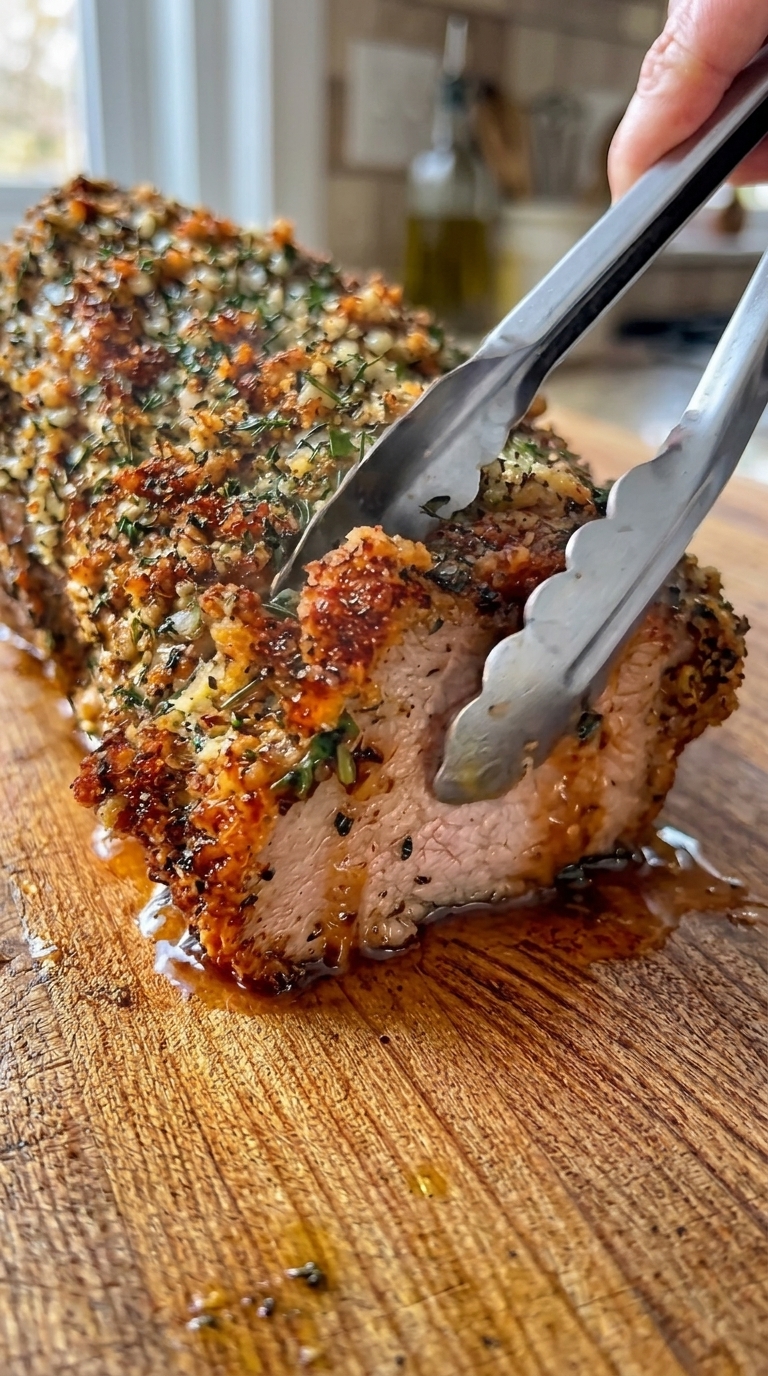
Garlic Herb Crusted Pork Roast is a delicious, juicy, and flavorful main dish featuring tender pork coated with a golden, crispy crust of fresh garlic, aromatic herbs, butter, and savory seasonings. This classic oven-roasted pork recipe is perfect for Sunday family dinners, holiday celebrations, Christmas gatherings, or any occasion when you want to serve something special.
The beauty of this recipe lies in its simplicity. A beautiful pork loin roast is generously seasoned with garlic, rosemary, thyme, parsley, and olive oil before being roasted to perfection. As the pork cooks, the garlic and herbs form a flavorful golden-brown crust while the meat inside stays tender and juicy.
Each slice offers a wonderful combination of crispy, savory edges and succulent meat. The natural juices from the pork combine with butter, herbs, and seasonings to create a mouthwatering finish.
One of the best things about this Garlic Herb Crusted Pork Roast is that it looks impressive but requires only a few everyday ingredients. You don’t need complicated cooking techniques or expensive equipment to achieve restaurant-quality results.
Whether you’re preparing a cozy family dinner or entertaining guests, this recipe delivers incredible flavor with minimal effort.
Serve it with creamy mashed potatoes, roasted vegetables, buttery green beans, or a fresh garden salad for a complete and satisfying meal.
Recipe Information
-
⏱️ Prep Time: 15 minutes
-
🔥 Cook Time: 60–80 minutes
-
🍽️ Servings: 6–8
-
🥘 Cooking Method: Oven Roasted
-
🌡️ Oven Temperature: 375°F (190°C)
-
⭐ Difficulty Level: Easy
-
🕒 Resting Time: 10–15 minutes
Ingredients
For the Pork Roast
-
3–4 lb boneless pork loin roast
-
3 tablespoons olive oil
-
3 tablespoons unsalted butter, melted
-
6 garlic cloves, finely minced
-
2 tablespoons fresh rosemary, chopped
-
2 tablespoons fresh thyme leaves
-
2 tablespoons fresh parsley, chopped
-
1 teaspoon dried oregano
-
1½ teaspoons kosher salt
-
1 teaspoon freshly ground black pepper
-
1 teaspoon smoked paprika
-
1 teaspoon onion powder
-
1 tablespoon Dijon mustard
-
1 tablespoon fresh lemon juice
For the Roasting Pan
-
½ cup chicken broth
-
1 large onion, thickly sliced
-
3 garlic cloves, lightly crushed
-
2 fresh rosemary sprigs
-
2 fresh thyme sprigs
Optional Garnish
-
Fresh chopped parsley
-
Fresh rosemary sprigs
-
Lemon wedges
-
Pan juices for serving
Step-by-Step Cooking Instructions
Step 1: Prepare the Pork Roast 🥩
Remove the pork loin roast from its packaging and pat it completely dry using paper towels.
Drying the surface is important because it helps the garlic and herb coating stick to the meat and promotes a beautiful golden-brown crust during roasting.
If the pork has a thick layer of excess fat, carefully trim some of it away. However, leave a thin layer of fat because it adds flavor and helps keep the roast moist.
Allow the pork to sit at room temperature for approximately 15–20 minutes while preparing the herb mixture. Do not leave raw pork unrefrigerated for longer than two hours.
Step 2: Preheat the Oven 🔥
Preheat your oven to 375°F (190°C).
Choose a roasting pan or oven-safe baking dish large enough to hold the pork comfortably.
Lightly grease the bottom of the pan with olive oil.
Arrange the thickly sliced onions, crushed garlic cloves, rosemary sprigs, and thyme sprigs in the bottom of the roasting pan.
These aromatic ingredients will release their flavors as the pork cooks, creating delicious pan juices.
Step 3: Prepare the Garlic Herb Mixture 🌿
In a medium mixing bowl, combine:
-
Minced garlic
-
Fresh rosemary
-
Fresh thyme
-
Chopped parsley
-
Dried oregano
-
Kosher salt
-
Black pepper
-
Smoked paprika
-
Onion powder
Add the olive oil, melted butter, Dijon mustard, and fresh lemon juice.
Mix everything thoroughly until a thick, fragrant herb paste forms.
The mixture should be spreadable but not overly runny.
Fresh herbs are recommended because they provide a brighter flavor and a beautiful appearance. However, dried herbs can be substituted if necessary.
Step 4: Coat the Pork Roast 🧄
Place the pork loin roast on a clean cutting board.
Using your hands or a silicone brush, spread the garlic herb mixture evenly over the entire surface of the pork.
Make sure the top, sides, and ends are completely coated.
Gently press the herb mixture onto the meat so that it adheres properly.
For extra flavor, massage the mixture into the surface of the pork.
This coating will develop into a delicious, golden crust during roasting.
Step 5: Arrange the Roast in the Pan 🍲
Carefully place the seasoned pork roast on top of the onions and herbs in the prepared roasting pan.
Position the fat side upward if your roast has a visible fat layer.
Pour the chicken broth into the bottom of the roasting pan, avoiding pouring it directly over the herb crust.
The broth will help prevent the flavorful pan drippings from burning.
Make sure the pork is not completely submerged in liquid because the goal is to roast the meat rather than boil it.
Step 6: Roast the Pork 🍖
Transfer the roasting pan to the preheated oven.
Roast uncovered for approximately 60–80 minutes, depending on the size and thickness of the pork loin.
A smaller 3 lb roast may cook faster, while a thicker 4 lb roast may require additional time.
After approximately 40 minutes, check the roast.
If the garlic herb crust is becoming too dark, loosely cover the top with aluminum foil.
Avoid tightly wrapping the pork because this can soften the crust.
Continue roasting until a meat thermometer inserted into the thickest part of the pork reaches an internal temperature of 145°F (63°C).
Always rely on internal temperature rather than cooking time alone.
Step 7: Allow the Pork to Rest ⏲️
Once the pork reaches the correct internal temperature, carefully remove the roasting pan from the oven.
Transfer the pork roast to a clean cutting board.
Loosely cover it with aluminum foil and allow it to rest for 10–15 minutes.
Resting is an important step because it allows the juices to redistribute throughout the meat.
If you slice the pork immediately, much of the flavorful juice may escape onto the cutting board.
A properly rested pork roast will be noticeably juicier and easier to slice.
Step 8: Prepare the Pan Juices 🥄
While the pork rests, carefully pour the liquid from the roasting pan into a small saucepan.
Remove the large herb stems and any unwanted solids.
Bring the pan juices to a gentle simmer over medium heat.
If desired, add 1 tablespoon of butter for extra richness.
For a slightly thicker sauce, mix 1 teaspoon cornstarch with 1 tablespoon cold water.
Stir the mixture into the simmering pan juices and cook until lightly thickened.
Taste and adjust the seasoning if necessary.
This simple sauce adds extra moisture and flavor to every serving.
Step 9: Slice and Serve 🍽️
Using a sharp carving knife, slice the pork roast into approximately ½-inch-thick slices.
Arrange the slices neatly on a large serving platter.
Spoon a small amount of the warm pan juices over the pork.
Garnish with freshly chopped parsley, rosemary sprigs, or lemon wedges.
Serve immediately with your favorite side dishes.
The finished pork should have a beautifully browned garlic herb crust and a tender, juicy interior.
Helpful Cooking Tips
1. Choose Pork Loin Instead of Pork Tenderloin
Pork loin and pork tenderloin are different cuts of meat.
Pork loin is larger and ideal for roasting and slicing, while pork tenderloin is smaller and cooks much faster.
For this recipe, choose a boneless pork loin roast weighing approximately 3–4 pounds.
2. Use Fresh Garlic
Freshly minced garlic provides a stronger and more aromatic flavor than garlic powder alone.
For the best results, mince the garlic finely so it distributes evenly throughout the herb crust.
3. Don’t Overcook the Pork
Overcooking is one of the most common reasons pork roast becomes dry.
Use a reliable meat thermometer and remove the roast once it reaches 145°F (63°C).
4. Keep the Herb Crust Intact
When applying the garlic herb mixture, press it gently onto the pork.
Avoid repeatedly brushing or moving the roast while it cooks because this can disturb the coating.
5. Let the Meat Rest
Always allow the roast to rest before slicing.
Even 10 minutes of resting can make a noticeable difference in juiciness.
6. Slice Against the Grain
Cutting against the direction of the muscle fibers creates more tender slices.
Use a sharp knife for clean, even cuts.
7. Save the Pan Juices
The liquid left in the roasting pan contains concentrated flavors from the pork, garlic, herbs, and onions.
Use it to make a quick sauce or drizzle it directly over the sliced roast.
Recipe Notes
Herb Substitutions: If fresh rosemary and thyme are unavailable, use approximately one-third as much dried herb.
Garlic Flavor: For a stronger garlic flavor, increase the minced garlic to 8 cloves.
Butter Alternative: Replace the butter with additional olive oil if preferred.
Mustard Flavor: Dijon mustard helps the seasoning adhere to the pork and adds a subtle tangy flavor without overpowering the herbs.
Extra Crispy Crust: For additional browning, briefly broil the roast for 1–2 minutes at the end, watching constantly to prevent the garlic from burning. Do this only if the pork has not already exceeded its target internal temperature.
Make-Ahead Preparation: The pork can be coated with the herb mixture, covered, and refrigerated for up to 24 hours before roasting.
Best Side Dishes to Serve
Garlic Herb Crusted Pork Roast pairs beautifully with a variety of classic American side dishes.
1. Creamy Mashed Potatoes
Buttery mashed potatoes are perfect for soaking up the flavorful pork juices.
2. Garlic Roasted Potatoes
Crispy roasted potatoes complement the garlic herb crust and add a satisfying texture.
3. Honey Glazed Carrots
The natural sweetness of honey-glazed carrots balances the savory flavor of the pork.
4. Buttered Green Beans
Fresh green beans sautéed with butter and garlic make a simple, colorful side dish.
5. Roasted Brussels Sprouts
Caramelized Brussels sprouts add a slightly nutty flavor that pairs well with roasted pork.
6. Homemade Dinner Rolls
Soft dinner rolls are excellent for enjoying every last drop of the delicious pan juices.
For holiday dinners, serve this pork roast alongside cranberry sauce, roasted sweet potatoes, and a fresh green salad.
Storage and Reheating Instructions
Refrigerator Storage
Allow the leftover pork to cool slightly before storing.
Place the sliced or whole roast in an airtight container with a small amount of its cooking juices.
Refrigerate within two hours of cooking.
Properly stored cooked pork will remain fresh for approximately 3–4 days.
Freezer Storage
Wrap the cooled pork tightly in freezer-safe packaging.
For best results, store the pork with a small amount of pan juices to help preserve moisture.
Freeze for up to 2–3 months for optimal quality.
Thaw overnight in the refrigerator before reheating.
Reheating in the Oven
Preheat the oven to 300°F (150°C).
Place the pork slices in an oven-safe baking dish.
Add a few tablespoons of broth or pan juices.
Cover with aluminum foil and warm gently until the pork reaches 165°F (74°C).
Reheating in the Microwave
Place individual portions on a microwave-safe plate.
Add a small spoonful of broth or pan juices.
Cover loosely and microwave in short intervals until thoroughly heated.
Avoid overheating because pork loin can become dry.
Nutritional Information
Estimated nutritional values per serving, based on 8 servings. Actual values vary depending on the pork cut, fat trimming, and portion size.
| Nutrient | Approximate Amount |
|---|---|
| Calories | 390 kcal |
| Protein | 45 g |
| Total Fat | 22 g |
| Saturated Fat | 7 g |
| Carbohydrates | 3 g |
| Fiber | 0.5 g |
| Sugar | 1 g |
| Sodium | 540 mg |
| Iron | 1.5 mg |
| Potassium | 650 mg |
Nutrition Benefits
Excellent Source of Protein
Pork loin provides high-quality protein that supports muscle maintenance, tissue repair, and overall body function.
Rich in Vitamin B1
Pork is a particularly good source of thiamine, also known as vitamin B1.
Thiamine helps the body convert food into energy and supports normal nerve function.
Provides Vitamin B12
Vitamin B12 is important for red blood cell formation and healthy nervous system function.
Contains Zinc
Zinc plays an important role in immune system function, wound healing, and cellular growth.
Contains Selenium
Pork provides selenium, an essential mineral that contributes to antioxidant defense and normal thyroid function.
Flavor from Herbs
Fresh rosemary, thyme, parsley, and garlic add delicious flavor without requiring large amounts of sugar or heavy sauces.
For a balanced meal, serve the pork with vegetables and a moderate portion of whole grains or potatoes.
Frequently Asked Questions (Q&A)
Q1. What is the best cut of pork for this recipe?
Boneless pork loin roast is ideal because it is large enough for even slicing and develops a delicious herb crust during roasting.
Q2. Can I use pork tenderloin instead?
Yes, but pork tenderloin is much smaller and cooks significantly faster. Adjust the cooking time and use a meat thermometer.
Q3. How do I keep pork roast juicy?
Avoid overcooking, use a meat thermometer, and allow the pork to rest for 10–15 minutes before slicing.
Q4. Can I prepare this pork roast ahead of time?
Yes. Season the pork and refrigerate it for up to 24 hours before cooking.
Q5. Can I use dried herbs instead of fresh herbs?
Absolutely. Use approximately one-third the amount of dried herbs because their flavor is more concentrated.
Q6. What temperature should pork roast reach?
Pork loin should reach a minimum internal temperature of 145°F (63°C), followed by at least a 3-minute rest.
Q7. Why is my pork roast dry?
Dry pork roast is usually caused by overcooking. Pork loin is relatively lean, so monitoring the internal temperature is essential.
Q8. Can I cook this recipe in a slow cooker?
Yes, but the texture will be different and the herb crust will not become crispy. For the best golden-brown crust, oven roasting is recommended.
Q9. Can I freeze leftover pork roast?
Yes. Store the cooked pork in airtight freezer-safe packaging for up to 2–3 months for the best quality.
Q10. What sauce goes well with garlic herb pork roast?
Pan gravy, garlic butter sauce, honey mustard sauce, and creamy mushroom sauce all pair beautifully with this recipe.
Final Thoughts
Garlic Herb Crusted Pork Roast is a wonderful combination of simplicity, elegance, and delicious homemade flavor.
The golden garlic herb crust, tender pork, and aromatic seasonings create a beautiful main dish that is perfect for everyday family meals and special celebrations.
With just a few simple ingredients and straightforward cooking instructions, you can prepare a juicy, flavorful pork roast that looks impressive on any dinner table.
Serve it with creamy mashed potatoes, roasted vegetables, and warm pan juices for a comforting meal everyone can enjoy.
Whether you’re planning a holiday feast, Sunday dinner, or cozy family gathering, this Garlic Herb Crusted Pork Roast is a recipe worth making again and again.
https://chilismenususa.com/slow-cooker-beef-pot-roast-with-rich-onion-gravy-easy-tender-beef-recipe/
1 thought on “Garlic Herb Crusted Pork Roast – Easy Juicy Oven-Roasted Pork Loin”