
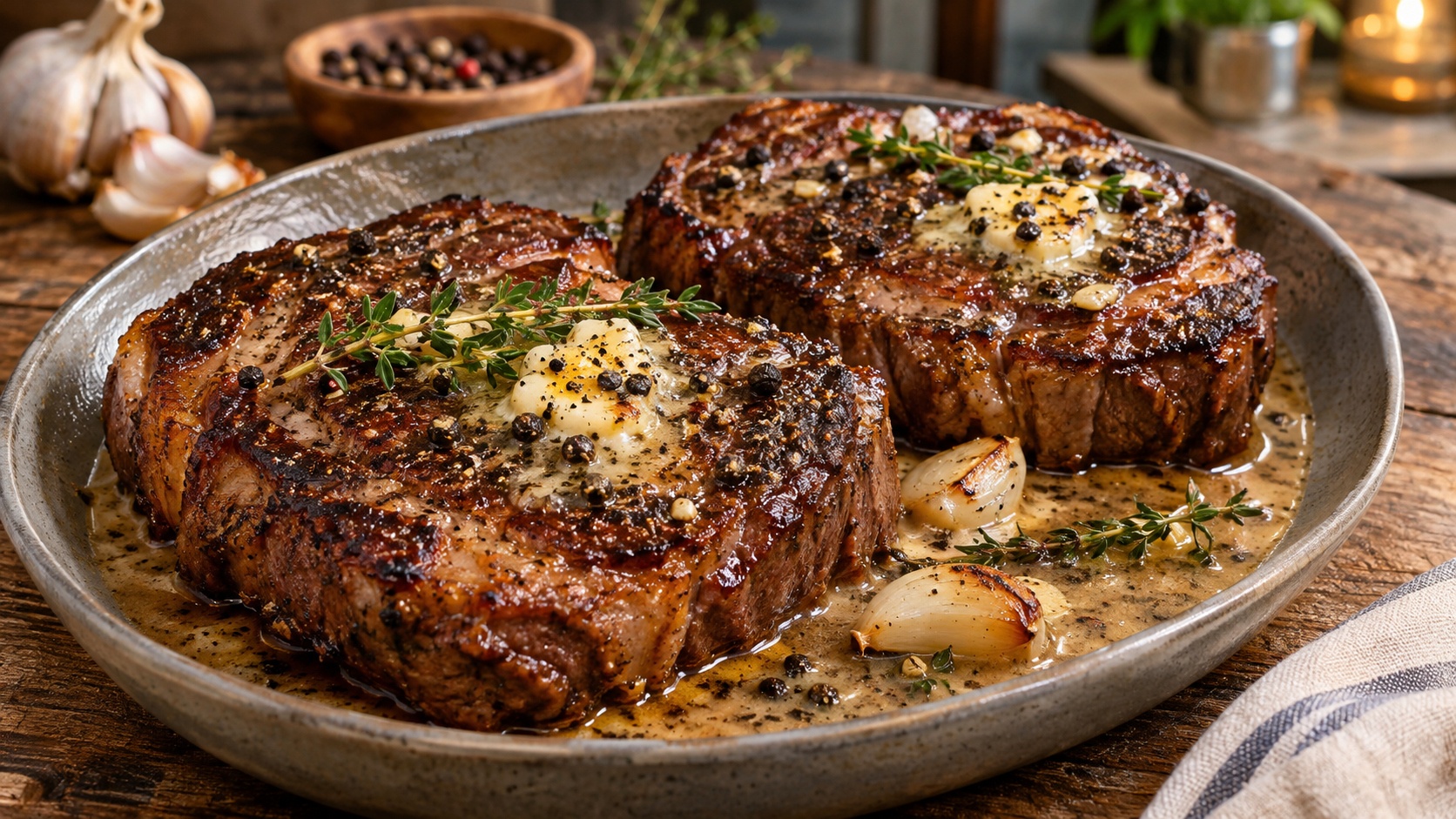
Peppercorn & Garlic Butter Ribeye Steak
Thick, juicy ribeye steaks with a golden crust, cracked black pepper, fragrant garlic butter, and creamy peppercorn sauce make a delicious steakhouse-style dinner at home. Inspired by your photo, this recipe combines simple ingredients with a careful searing method to create tender beef and a rich, flavorful sauce.
The steaks cook first, allowing their browned juices to flavor the sauce. Fresh thyme adds a gentle herbal aroma, while garlic butter gives the meat a glossy finish. Serve everything in a shallow dish with the sauce underneath so the crisp steak crust stays visible.
Recipe Information
- Prep Time: 15 minutes
- Cook Time: 20–25 minutes
- Resting Time: 5–10 minutes
- Total Time: Approximately 45–50 minutes
- Servings: 4
- Cooking Method: Pan-seared with butter basting
- Cuisine: Steakhouse-inspired
Ingredients
For the Ribeye Steaks
- 2 boneless ribeye steaks, approximately 12 ounces (340 g) each and 1–1½ inches thick
- 1 teaspoon kosher salt, or to taste
- 2 teaspoons coarsely cracked black pepper
- 1 tablespoon avocado oil or another high-heat cooking oil
- 3 tablespoons unsalted butter
- 5 garlic cloves, lightly crushed
- 4 fresh thyme sprigs
For the Creamy Peppercorn Sauce
- 1 small shallot, finely chopped
- ½ cup low-sodium beef broth
- ½ cup heavy cream
- 1 teaspoon coarsely cracked black pepper
- 1 teaspoon Dijon mustard
This recipe uses two large steaks divided into four portions. If you prefer serving one whole steak per person, it makes two generous servings instead.
Step-by-Step Instructions
🥩 1. Prepare the Steaks
Remove the steaks from their packaging and pat every surface thoroughly dry with paper towels. Pay particular attention to the sides and any folds around the fatty edges.
A dry surface helps the beef brown properly. Excess moisture creates steam and can prevent a flavorful crust from developing.
Season both sides and the edges with the salt and cracked black pepper. Press the pepper gently onto the meat so it sticks. Prepare the remaining ingredients before you start cooking because the butter-basting stage moves quickly.
🔥 2. Heat the Skillet
Place a large, heavy skillet over medium-high heat. Cast iron works especially well because it holds heat, but a heavy stainless steel pan is also suitable.
Add the oil and allow it to become hot and shimmering. It should move easily across the pan without producing heavy smoke.
Choose a skillet large enough to hold both steaks with a little space between them. If they fit tightly, cook them separately. Crowding lowers the pan temperature and makes browning more difficult.
🍳 3. Sear the First Side
Carefully lower the steaks into the hot skillet, placing them away from you to reduce splashing.
Let them cook undisturbed for approximately 3–4 minutes. Avoid sliding them around or repeatedly lifting them to check underneath.
When a deep brown crust has formed, the steaks should release more easily from the pan. If they still stick firmly, allow another short moment before trying again.
The goal is a browned, flavorful surface without burning the pepper.
🔄 4. Turn and Brown the Edges
Turn the steaks using tongs and sear the second side for approximately 3 minutes.
Hold each steak upright briefly to brown its fatty edge. This helps soften and render some of the exterior fat.
These times are starting points rather than exact instructions for doneness. Steak thickness, starting temperature, and skillet heat all affect cooking time. Use a meat thermometer to judge the center accurately.
🧈 5. Add Garlic Butter and Thyme
Reduce the heat to medium-low. Add the butter, crushed garlic cloves, and thyme sprigs.
Allow the butter to melt and foam gently. Tilt the skillet slightly so the butter collects on one side, then use a spoon to pour it repeatedly over the steaks.
Continue basting for approximately 1–3 minutes, checking the internal temperature as you go. The garlic should become lightly golden and fragrant. If it darkens quickly, reduce the heat further.
For food safety, cook whole beef steaks to 145°F (63°C), followed by at least a 3-minute rest.
⏲️ 6. Rest the Steaks
Transfer the cooked steaks to a warm plate. Spoon a little garlic butter over them and loosely cover with foil.
Rest for 5–10 minutes while preparing the sauce. Avoid wrapping the plate tightly because trapped steam can soften the crust.
Leave the browned cooking juices in the skillet. Remove the thyme stems and set the cooked garlic aside for serving. If there is a large amount of rendered fat, carefully spoon off the excess, leaving approximately 1 tablespoon.
🧅 7. Cook the Shallot
Keep the skillet over medium-low heat and add the finely chopped shallot.
Cook for approximately 2 minutes, stirring frequently, until softened. The shallot adds a mild sweetness that balances the pepper and cream.
Check the bottom of the skillet before continuing. Browned bits add flavor, but genuinely blackened or burnt residue can make the sauce bitter. If necessary, wipe away burnt areas before adding the sauce ingredients.
🥣 8. Make the Peppercorn Sauce
Pour in the beef broth and gently scrape the browned bits from the skillet with a wooden spoon.
Simmer for 2–3 minutes to reduce the broth slightly. Stir in the heavy cream, Dijon mustard, and remaining cracked black pepper.
Cook at a gentle simmer for another 3–5 minutes, stirring occasionally, until the sauce lightly coats the back of a spoon.
Avoid a vigorous boil. Gentle heat helps the sauce stay smooth and gives you better control over its thickness.
🍽️ 9. Finish and Serve
Stir any juices collected on the resting plate into the sauce. Taste before adding more salt, since the seasoned steaks and broth already contribute saltiness.
Spoon the sauce into a warm serving dish. Place the steaks on top and add the cooked garlic cloves and a few fresh thyme leaves.
Slice the steaks across the grain into thick strips, then divide between four plates. Spoon extra sauce around the meat and serve immediately with your chosen sides.
Helpful Cooking Tips
- Choose steaks of similar thickness. They will cook more evenly and finish at approximately the same time.
- Crack the pepper coarsely. This creates a noticeable peppercorn texture without covering the meat in fine pepper dust.
- Add butter after searing. Butter can burn at the high temperature needed to establish the initial crust.
- Use a thermometer. Color alone does not reliably indicate the internal temperature.
- Keep the sauce slightly loose. It will thicken further as it cools on the plate.
- Warm the serving plates. This helps the steak and cream sauce stay pleasantly hot while you serve.
- Slice only after resting. Cutting immediately allows more juices to escape onto the board.
Recipe Notes
Choosing the Beef
Ribeye contains natural marbling that gives it a rich flavor and tender texture. Look for steaks with small streaks of fat distributed throughout the meat.
Sirloin or New York strip can also work, although leaner steaks will have a different texture and may cook faster. Keep the thermometer handy when changing cuts.
Adjusting the Pepper
For a milder sauce, start with ½ teaspoon of pepper instead of the full teaspoon. Taste after simmering and add more if needed.
Avoid whole, uncracked peppercorns unless you specifically enjoy their hard texture. Coarsely crushed peppercorns release their flavor more evenly.
Adjusting the Sauce
If the sauce becomes too thick, stir in beef broth one tablespoon at a time. If it is too thin, simmer a little longer before adding the steak juices.
Heavy cream produces the richest result. Lighter cream creates a thinner sauce and needs especially gentle heating.
What to Serve With It
Creamy mashed potatoes are a classic choice because they catch the peppercorn sauce beautifully. Roasted baby potatoes also work well and add a crisp texture.
For a vegetable-focused plate, serve the steak with roasted broccoli, green beans, sautéed spinach, or asparagus. A simple cucumber and leafy green salad adds freshness alongside the rich beef.
Keep side dishes lightly seasoned so the garlic, peppercorns, and beef remain the main flavors.
Estimated Nutritional Information
Per serving, based on four servings and all sauce being consumed:
- Calories: Approximately 650
- Protein: Approximately 35 g
- Total Fat: Approximately 55 g
- Saturated Fat: Approximately 26 g
- Carbohydrates: Approximately 5 g
- Fiber: Less than 1 g
- Sugar: Approximately 2 g
- Sodium: Approximately 500–700 mg
These are estimates. Actual values depend on the steaks’ marbling, how much fat is trimmed or left in the skillet, the salt used, and the amount of sauce served. Side dishes are not included.
Nutrition Benefits
Provides protein: Beef supplies protein needed for normal muscle maintenance and tissue repair. Dividing the steaks into four portions still provides a substantial protein serving.
Contains iron: Beef provides heme iron, a form the body absorbs readily. Iron supports normal oxygen transport in the blood.
Supplies vitamin B12 and zinc: These nutrients contribute to normal nerve function and immune function.
Contains few carbohydrates: The steak and sauce contain relatively little carbohydrate when served without bread or potatoes.
The butter, cream, and ribeye also make this a rich meal with substantial saturated fat. Vegetable sides and moderate sauce portions help create a more balanced plate.
Questions & Answers
Can I use a different cut of steak?
Yes. New York strip, sirloin, or tenderloin can be prepared using the same general method. Adjust the cooking time for thickness and check the internal temperature instead of relying on the clock.
Why did my steak turn gray instead of brown?
The surface may have been wet, the skillet may not have been hot enough, or the pan may have been overcrowded. Dry the steaks thoroughly and leave space around them.
Can I prepare the sauce ahead?
Yes. Prepare it up to one day ahead and refrigerate promptly in a covered container. Reheat gently, stirring in a splash of broth if needed. Freshly cooked steaks will give the best texture.
How do I store and reheat leftovers?
Refrigerate steak and sauce within two hours and use within 3–4 days. Reheat covered over gentle heat until leftovers reach 165°F (74°C). Add a little broth to loosen the sauce and prevent it from drying out.