
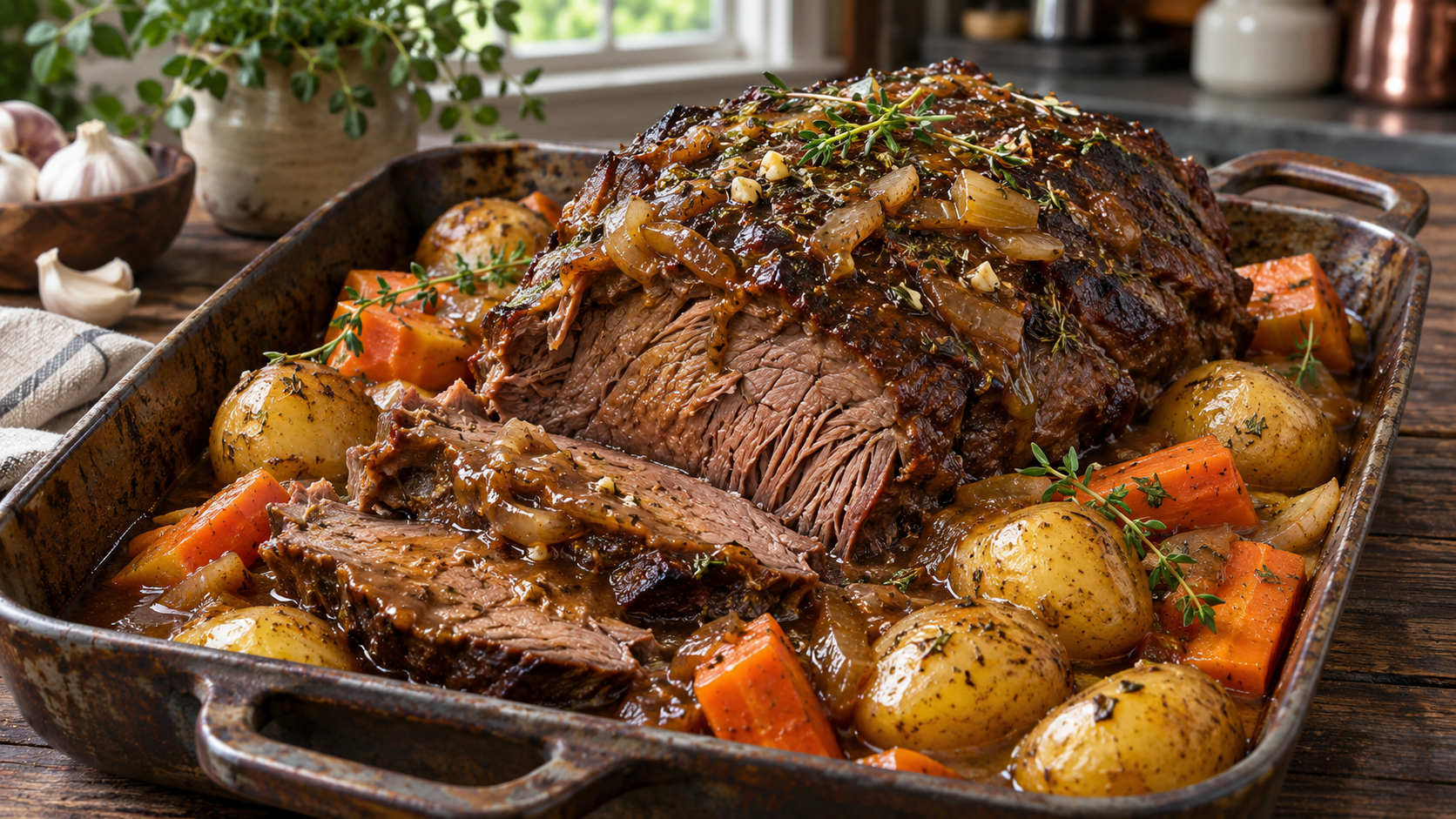
Garlic Herb Beef Pot Roast with Potatoes, Carrots & Gravy
Description
Garlic Herb Beef Pot Roast is a comforting family dinner made with tender beef, buttery potatoes, sweet carrots, and rich homemade gravy. Inspired by your photo, this recipe features a deeply browned roast coated in glossy garlic and onion gravy, surrounded by vegetables that absorb the flavorful cooking juices.
The secret is slow, covered cooking. A beef chuck roast needs time for its connective tissue to soften, creating tender meat that you can serve in thick slices or gently pull apart. Searing the beef first develops a savory crust, while garlic, onion, thyme, and rosemary build flavor throughout the dish.
This recipe is ideal for Sunday dinner, a family gathering, or a cozy evening meal. Most of the cooking happens in the oven, leaving you free to prepare the table while the roast slowly becomes tender.
Recipe Information
- Prep Time: 25 minutes
- Cook Time: Approximately 3½–4½ hours
- Resting Time: 15 minutes
- Total Time: Approximately 4–5 hours
- Servings: 8
- Cooking Method: Searing and oven braising
- Oven Temperature: 325°F / 160°C conventional
Ingredients
For the Beef and Vegetables
- 3½–4 pounds boneless beef chuck roast
- 2 teaspoons kosher salt, divided, plus more to taste
- 1 teaspoon freshly ground black pepper
- 2 tablespoons olive oil
- 1 large yellow onion, chopped
- 6 garlic cloves, minced
- 2 tablespoons tomato paste
- 3 cups low-sodium beef broth
- 1 tablespoon Worcestershire sauce
- 4 fresh thyme sprigs
- 2 fresh rosemary sprigs
- 1½ pounds baby potatoes, washed
- 1 pound carrots, peeled and cut into thick 2-inch pieces
For the Gravy
- 2 tablespoons cornstarch
- 2 tablespoons cold water
- 1 tablespoon unsalted butter
Step-by-Step Instructions
🥩 1. Prepare and Season the Beef
Preheat your oven to 325°F / 160°C.
Pat the chuck roast thoroughly dry with paper towels. Removing surface moisture helps the beef develop a rich brown crust during searing.
Trim away any unusually thick, hard pieces of exterior fat, but leave the natural marbling inside the meat. This contributes flavor and tenderness during cooking.
Season the roast on every side with 1½ teaspoons of the salt and all the black pepper. Press the seasoning gently onto the surface.
🔥 2. Sear the Roast
Heat the olive oil in a large Dutch oven over medium-high heat. Choose a pot with a tight-fitting, oven-safe lid.
When the oil shimmers, carefully add the beef. Sear for approximately 4–5 minutes on each broad side, then briefly brown the edges.
Turn the meat with sturdy tongs. Avoid moving it constantly because undisturbed contact with the hot pot helps create a deeper crust.
Transfer the browned roast to a plate. Leave the flavorful browned bits in the pot, but remove any genuinely burnt residue.
🧅 3. Cook the Onion and Garlic
Reduce the heat to medium. Add the chopped onion and cook for 4–5 minutes, stirring regularly, until softened and lightly golden.
Add the minced garlic and cook for approximately 30 seconds, just until fragrant.
Stir in the tomato paste and cook for another minute. This takes away its raw flavor and adds depth to the finished gravy.
Keep stirring so the garlic and tomato paste do not catch on the bottom of the pot.
🥣 4. Build the Braising Liquid
Pour in about ½ cup of the beef broth. Scrape the bottom of the pot with a wooden spoon to release the browned cooking juices.
Add the remaining broth and Worcestershire sauce. Stir well, then return the beef and any juices from its plate to the pot.
Place the thyme and rosemary around the roast. The liquid should reach approximately one-third to halfway up the meat rather than completely covering it.
Bring to a gentle simmer before covering.
♨️ 5. Start the Slow Cooking
Cover the pot tightly and transfer it to the oven.
Cook for approximately 2½ hours before checking the beef. Keep the lid closed during most of this time so moisture stays inside.
The roast will usually still need more cooking at this stage. You are looking for the meat to begin softening before adding the vegetables.
If the liquid has reduced significantly, add a little hot broth or water. There should always be enough liquid to maintain a moist braising environment.
🥔 6. Add the Potatoes and Carrots
Carefully remove the pot from the oven and open the lid away from your face.
Arrange the baby potatoes and carrot pieces around the roast, nestling them partly into the liquid. Halve any potatoes larger than approximately 2 inches so they cook evenly.
Sprinkle the vegetables with the remaining ½ teaspoon salt.
Cover again and return to the oven for approximately 60–90 minutes, or until the vegetables are tender and the beef yields easily to a fork.
🍴 7. Check for Tenderness
Insert a fork into the thickest part of the roast and twist gently. Properly cooked chuck roast should offer very little resistance.
It commonly becomes tender around 195–205°F / 90–96°C, although texture is the most useful guide for this cooking method.
If the vegetables are ready but the beef remains firm, transfer the vegetables to a covered dish. Continue cooking the beef in 20–30-minute intervals.
A tough pot roast often needs additional covered cooking time.
⏲️ 8. Rest the Beef
Transfer the tender roast to a serving board or platter. Arrange the cooked vegetables nearby and cover loosely with foil.
Rest the beef for approximately 15 minutes while making the gravy.
Remove the rosemary and thyme stems from the cooking liquid. Skim excess fat from the surface using a spoon, or pour the liquid into a fat separator.
Keep the softened onion and garlic if you enjoy a gravy with texture.
🥄 9. Prepare the Gravy
Measure approximately 2 cups of cooking liquid into a saucepan. Add broth if needed, or reserve any extra liquid for reheating leftovers.
Bring to a gentle simmer.
Mix the cornstarch with the cold water in a small bowl until completely smooth. Slowly whisk the mixture into the simmering liquid.
Cook for 2–4 minutes, stirring, until the gravy lightly coats a spoon. Stir in the butter for a glossy finish.
Taste before adding extra salt or pepper.
🍽️ 10. Slice and Serve
Remove any butcher’s string from the roast. Slice across the grain into thick portions, or gently separate the beef into large pieces if it is too tender to slice neatly.
Arrange the meat with the potatoes and carrots in a warm serving dish.
Spoon some gravy over the beef and serve the remainder separately. Add a few fresh thyme leaves for a simple finish.
Serve immediately while the vegetables are hot and the gravy is silky.
Helpful Cooking Tips
- Use chuck roast: Its connective tissue softens beautifully during slow, moist cooking.
- Brown the beef properly: A good sear adds flavor to both the roast and gravy.
- Keep the pot covered: A tight lid limits evaporation and helps prevent dry meat.
- Add vegetables later: Cooking potatoes and carrots for the entire time can make them fall apart.
- Check texture before serving: The cooking time varies with the roast’s shape and thickness.
- Use cold water for the slurry: Cornstarch mixed directly into hot gravy can form lumps.
- Season the gravy last: Its saltiness increases as the cooking liquid reduces.
Recipe Notes
Choosing the Right Pot
A heavy Dutch oven distributes heat evenly and holds moisture well. A deep roasting pan also works if it is covered tightly with a double layer of foil.
Only place a roasting pan on the stovetop if the manufacturer confirms it is suitable. Otherwise, sear the beef in a skillet and transfer everything to the roasting pan.
Ingredient Substitutions
Yukon Gold potatoes cut into large chunks can replace baby potatoes. Avoid small pieces, which soften too quickly.
If fresh herbs are unavailable, use 1 teaspoon dried thyme and ½ teaspoon dried rosemary. Their flavor is more concentrated, so smaller amounts are sufficient.
Gravy Texture
For smoother gravy, strain the cooking liquid before thickening. For a rustic version like the photo, leave the softened onion and garlic in the sauce.
Add broth a tablespoon at a time if the gravy becomes too thick.
Serving Suggestions
This roast already includes potatoes and carrots, making it a complete main dish. Steamed green beans, roasted broccoli, or a crisp green salad add freshness and variety.
For a larger gathering, serve warm bread alongside the meal to soak up the gravy. Keep additional sides simple so the beef remains the focus.
Estimated Nutritional Information
Per serving, based on eight servings:
- Calories: Approximately 560
- Protein: Approximately 45 g
- Carbohydrates: Approximately 25 g
- Total Fat: Approximately 30 g
- Saturated Fat: Approximately 11 g
- Fiber: Approximately 4 g
- Sugar: Approximately 5 g
- Sodium: Approximately 650–850 mg
Values vary depending on the roast’s fat content, trimming, broth, salt brand, and the amount of gravy consumed.
Nutrition Benefits
Protein: Beef provides protein needed for normal muscle maintenance and tissue repair.
Iron and vitamin B12: Beef supplies these nutrients, which support normal red blood cell formation.
Vegetables: Carrots contribute beta-carotene, which the body can convert to vitamin A. Potatoes provide potassium and carbohydrates for energy.
Fiber: Potatoes with their skins, carrots, and onion contribute dietary fiber.
The meal also contains saturated fat. Trimming excess exterior fat and skimming the cooking liquid can reduce the amount served.
Questions & Answers
Why is my pot roast still tough?
Chuck roast needs enough time for connective tissue to soften. If it remains firm, check that liquid remains in the pot, cover tightly, and continue cooking until fork-tender.
Can I make this in a slow cooker?
Yes. Sear the beef and cook the aromatics first, then transfer them to the slow cooker with the remaining ingredients, using about 2 cups broth. Cook on low for approximately 8–10 hours, until tender. Keep vegetables in large pieces and check their texture before serving.
Can I prepare it ahead?
Yes. Refrigerate the cooked beef with its juices and store the vegetables separately. Remove hardened fat from the chilled liquid before reheating. Slice cold beef for neater portions, then warm it gently in the gravy.
How should I store leftovers?
Refrigerate within two hours in shallow, covered containers. Use within 3–4 days or freeze the beef and gravy for up to 3 months for best quality. Reheat leftovers to 165°F / 74°C, adding broth as ne